
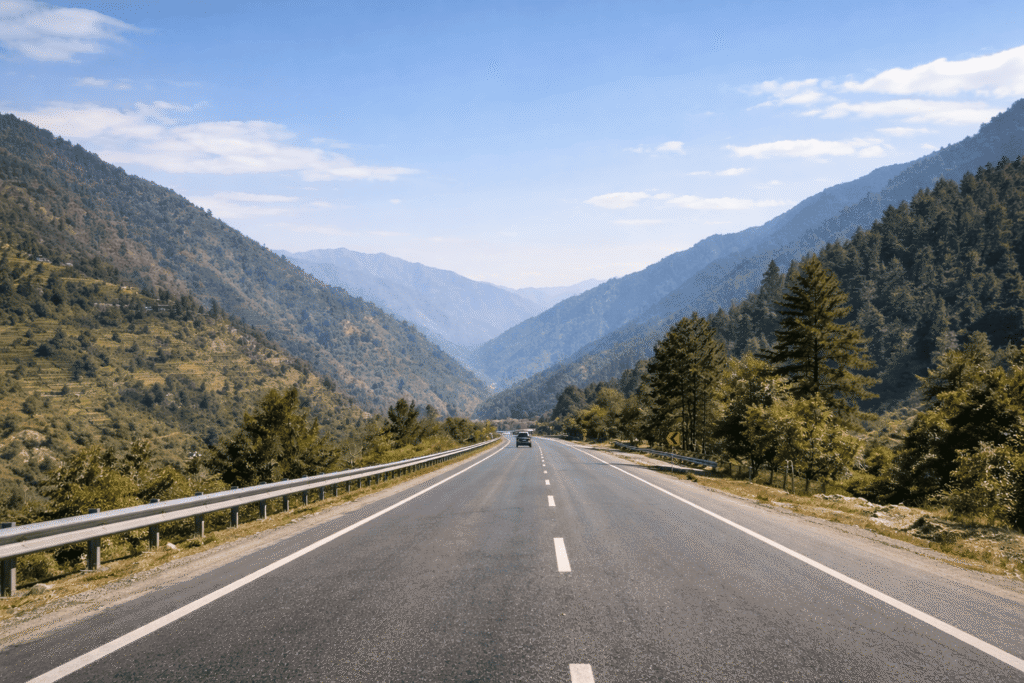
This 7-Day Himachal Pradesh Itinerary is carefully crafted for travelers who want to explore the Himalayan state without rushing through destinations. From scenic mountain roads and charming hill towns to peaceful valleys and cultural landmarks, Himachal Pradesh offers a perfect mix of nature, adventure, and relaxation in just one week.
Designed for first-time visitors as well as repeat travelers, this itinerary covers some of the most rewarding experiences across Himachal Pradesh, with balanced travel days and immersive sightseeing. Expect stunning landscapes, authentic local experiences, and memorable moments at every stop of your journey.
Day 1: Shimla—The Hill Station That Started It All
Arrival and Orientation
Most travelers reach Himachal through Chandigarh (train or flight), then bus or taxi the 115 kilometers to Shimla. The drive takes 3-4 hours through increasingly dramatic terrain as the plains give way to pine-covered hills. Alternatively, the narrow-gauge Kalka-Shimla Railway—a UNESCO World Heritage toy train—covers the route in 5-6 scenic hours through 103 tunnels and across 864 bridges. The train moves slowly enough to watch eagles circling ridges and villages clinging to impossible slopes.
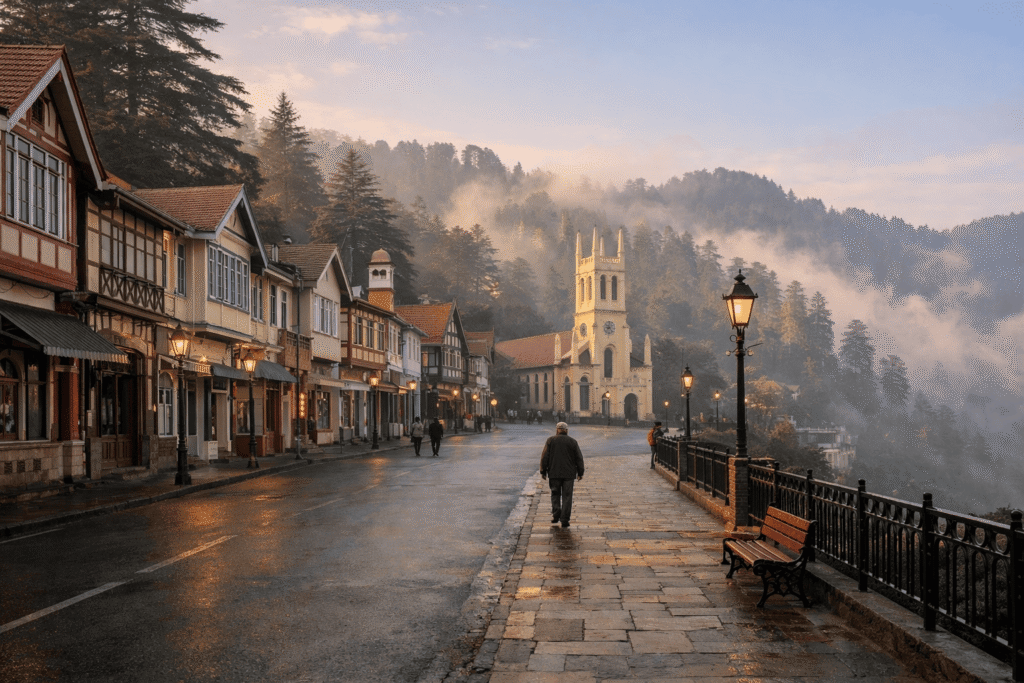
Shimla sprawls across several hills at 2,200 meters. The town that served as British India’s summer capital retains that colonial architecture—half-timbered buildings, Gothic churches, Victorian lampposts—though the infrastructure now strains under tourist pressure and unplanned development.
What Actually Matters in Shimla
The Mall Road and Ridge form Shimla’s tourist center—a pedestrian zone where half of North India seems to converge on weekends. Christ Church’s neo-Gothic spire dominates the Ridge. Built in 1857, it’s India’s second-oldest church, though the stained glass windows and pipe organ probably matter less than the views across forested valleys.
The Viceregal Lodge (Rashtrapati Niwas) sits 2 kilometers from town center, an imposing Renaissance-style mansion where British viceroys once decided India’s fate. Now it houses the Indian Institute of Advanced Study. The building itself—all Scottish baronial architecture and manicured gardens—justifies the visit. Guided tours run hourly (₹50 for Indians, ₹200 for foreigners). The exhibits inside feel bureaucratic, but the architecture and grounds deliver.
Jakhoo Temple crowns Shimla’s highest peak at 2,455 meters. The 2.5-kilometer hike from town center passes through thick deodar forests before reaching the Hanuman shrine. The 33-meter Hanuman statue visible from across Shimla feels garish up close, but views from the hilltop span the entire town and surrounding ranges. Langur monkeys patrol the area aggressively—keep food hidden and bags zipped.
Skip the toy train museum unless you’re genuinely passionate about narrow-gauge railway history. Skip the wax museum entirely—it’s as underwhelming as every wax museum everywhere.
Evening Strategy
Shimla’s restaurant scene offers adequate Indian and Chinese food without inspiration. Mall Road concentrations like Ashiana and Alfa ensure you won’t starve. The real evening activity is walking—the Ridge at sunset, the Lower Bazaar’s steep lanes where actual Shimla residents shop for vegetables and household goods, the quiet residential areas where colonial-era homes still stand.
Accommodation Reality
Shimla’s hotels range from ₹800 backpacker dives to ₹15,000 heritage properties. Mid-range (₹2,500-4,000) gets clean rooms with hot water and ridge views. The Oberoi Cecil and Wildflower Hall offer luxury if budgets allow. Budget travelers find adequate options near the bus stand, though noise and stairs are guaranteed.
Book ahead during peak season (May-June, December-January). Walk-ins during shoulder seasons score better deals.
One Day Is Enough
Shimla works as an acclimatization stop and orientation point. The town itself no longer justifies multiple days unless you’re deeply interested in colonial architecture or need to decompress from plains heat. Use it as a gateway, see the highlights, then move toward less-developed mountain areas.
Day 2: Shimla to Manali—The Scenic Route
The Journey Itself
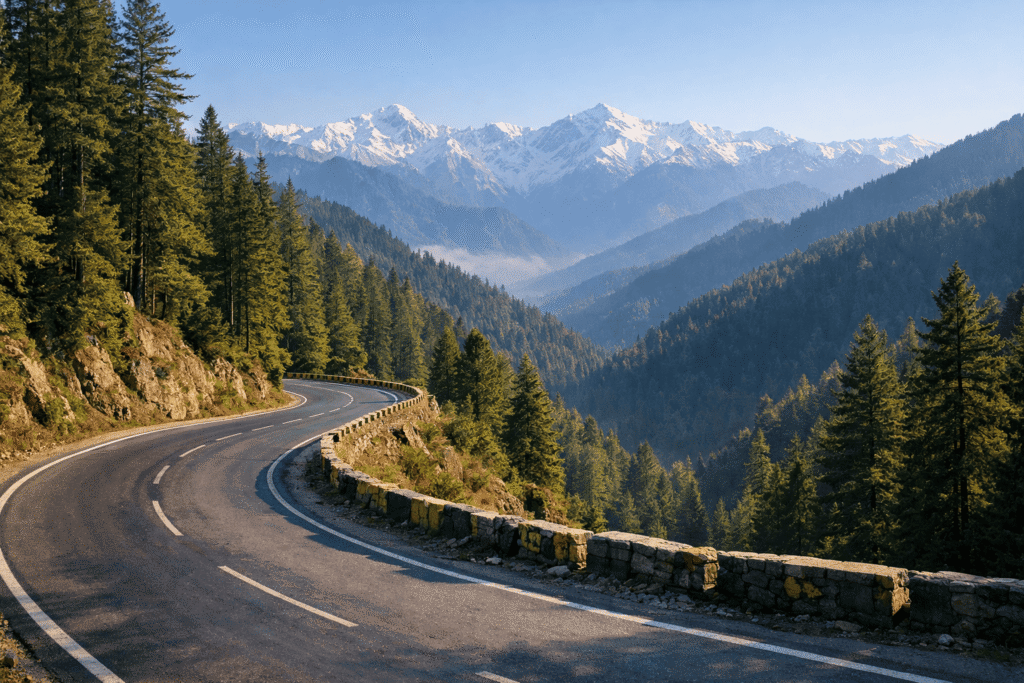
The 250-kilometer drive from Shimla to Manali takes 7-9 hours depending on traffic, road conditions, and your driver’s relationship with honking. This isn’t dead time—the route ranks among Himachal’s most scenic drives, climbing through apple orchards, deodar forests, and eventually into the Kullu Valley.
State transport buses (₹400-500) leave regularly but pack uncomfortably full. Private buses (₹600-800) offer slightly more space. Hiring a taxi (₹4,000-5,000) lets you stop for photos at Pandoh Dam, walk through Kullu’s apple orchards, or detour to Kasol if hippie valley culture intrigues you.
The route crosses the Jalori Pass if weather permits—a spectacular detour adding 2-3 hours but worth it for the high-altitude forests and village glimpses. The main highway stays lower, following the Beas River through increasingly dramatic gorges.
Kullu Stopover Option
Kullu town itself offers little beyond a base for river rafting (September-June, ₹500-1,500 depending on stretch). The Raghunath Temple’s 17th-century architecture interests history focused travelers. Otherwise, use Kullu as a lunch stop before continuing to Manali.
Arriving in Manali
You’ll reach Manali by late afternoon or early evening. The town sprawls across several distinct areas: Old Manali (backpacker central with cafes and guesthouses), Manali town (the main commercial area with Mall Road shopping), and Vashisht (hot springs and quieter guesthouses). Choose your base according to what you want—party atmosphere, convenience, or relative peace.
Check into your accommodation, walk around your chosen area to orient yourself, find dinner, and rest. Tomorrow requires energy.
Day 3: Manali—Adventure or Culture, Pick Your Path
Understanding Manali’s Split Personality
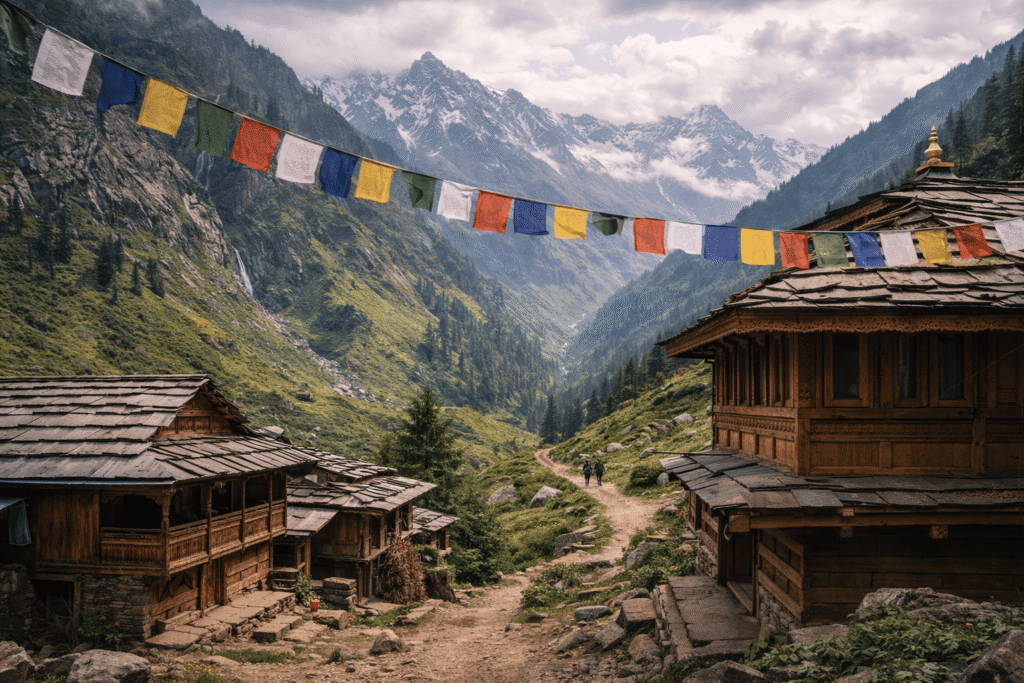
Modern Manali exists in two incompatible versions. One is an adventure sports hub—paragliding, rafting, trekking, mountain biking, skiing (winter only). The other is a cultural and natural destination—temples, hot springs, cedar forests, and Tibetan refugee communities. One day forces choices.
Option A: The Adventure Day
Solang Valley sits 14 kilometers from Manali, a natural amphitheater surrounded by snow-capped peaks. In winter (December-February), basic skiing and snowboarding operate here—nothing approaching Alps-level infrastructure, but adequate for beginners. In summer, the valley pivots to paragliding (₹2,000-3,000 for 15-20 minute tandem flights), zorbing (₹500), and cable car rides (₹700 return) to viewpoints.
The adventure activities are professionally run with safety equipment and trained instructors. The scenery delivers regardless of whether you jump off mountains or watch from cafes.
Option B: The Cultural Circuit
Start at Hadimba Devi Temple, set in a cedar forest 2 kilometers from town center. This four-story pagoda-style temple built in 1553 honors Hadimba, wife of Bhima from the Mahabharata. The architecture—wood carved with deities and animals—demonstrates Himachali temple craft. The forest setting and relative quiet (arrive before 9 AM) create contemplative space.
Walk downhill to Manu Temple, dedicated to the sage Manu who supposedly meditated here. The temple sees fewer tourists and offers better views across the valley.
Cross to Old Manali and climb to the Tibetan Monastery. The Gadhan Thekchhokling Gompa houses a large golden Buddha statue and demonstrates Tibetan Buddhist architecture transplanted to India after 1959. Morning prayers (6-7 AM) allow respectful observation of monastic life. The monastery handicraft center sells genuine Tibetan carpets, thangkas, and prayer wheels—quality varies but serious pieces are available if you know what you’re looking at.
Finish at Vashisht’s natural hot springs, channeled into separate bathing areas for men and women. The sulfurous water, believed to have healing properties, stays hot year-round from geothermal springs. The setting is basic—concrete baths, minimal changing facilities—but after a day of walking, the hot water works miracles. Free entry; donations appreciated.
Option C: The Hiking Day
Manali’s real asset is its position as a trekking hub. One-day hikes suit those who aren’t ready for multi-day treks but want mountain immersion.
The Lama Dugh trek climbs 7 kilometers from Vashisht to alpine meadows at 3,500 meters. The trail ascends steeply through pine and oak forests before emerging onto grasslands where shepherds graze cattle in summer. Views extend across the Kullu Valley to snowbound peaks. Pack lunch, start early (7 AM), return by evening.
The Jogini Falls trek from Vashisht offers easier terrain—5 kilometers to waterfalls dropping 150 feet. The path passes through small villages where locals still farm terraced fields. The falls themselves provide swimming opportunities in summer, dramatic ice formations in winter.
Evening in Old Manali
Old Manali’s cafe culture thrives on extended travelers, Israeli tourists, and local entrepreneurs who figured out that good coffee, WiFi, and relaxed vibes generate repeat business. Cafe 1947, Dylan’s Toasted and Roasted, and Johnson’s Cafe serve competent food in pleasant settings. The riverside location and mountain views compensate for menus that blur together into international comfort food.
This is also Himachal’s cannabis tourism center, though openly discussing this risks trouble with police who tolerate traditional use while cracking down on tourist consumption. The ubiquitous marijuana plants growing wild everywhere predate tourism by centuries—local communities have used cannabis in religious and medicinal contexts forever.
Day 4: Rohtang Pass and Return (Summer Only)
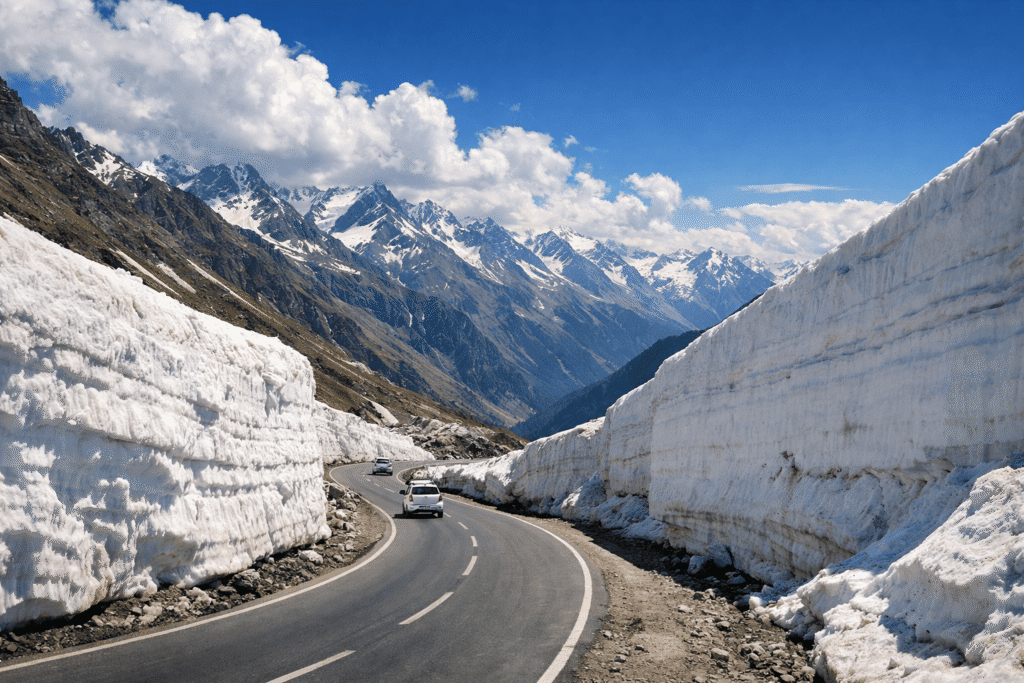
The Rohtang Reality Check
Rohtang Pass (3,978 meters) connects the Kullu Valley with Lahaul-Spiti, remaining accessible roughly May through October before snow closes the route. The pass name translates to “pile of corpses,” referencing travelers who died attempting the crossing before modern roads.
Today’s version involves permits (₹500 per vehicle, required April-October, obtainable online or through tour operators), traffic restrictions (500 vehicles daily limit), and potential altitude sickness for those ascending from sea level too quickly.
Why Go Anyway
The journey climbs 51 kilometers from Manali through dramatic landscape transitions—pine forests giving way to birch and then to treeless snowfields. Views from the pass span glaciers, distant peaks, and the barren Lahaul landscape beyond. Snow remains year-round at these altitudes; tourists photograph themselves in summer jackets throwing snowballs.
The drive takes 3-4 hours up, slightly less returning. Tour operators run day trips (₹1,500-2,000 per person in shared vehicles, ₹4,000-5,000 for private). Start early (6 AM) to avoid peak crowding at the pass.
Altitude Awareness
Ascending from 2,000 meters to nearly 4,000 meters in a few hours can trigger acute mountain sickness—headaches, nausea, dizziness. The symptoms are real and potentially dangerous. Stay hydrated, avoid alcohol the night before, carry altitude sickness medication (acetazolamide/Diamox), and descend immediately if symptoms worsen.
The pass gets extremely cold even in summer—temperatures hover around freezing. Bring warm layers, including gloves and a hat. Sunglasses and sunscreen are mandatory; the UV radiation at this altitude burns exposed skin rapidly.
Alternative: Naggar and Kasol
If Rohtang feels like too much hassle or altitude concerns you, spend the day exploring nearby destinations. Naggar village (20 kilometers from Manali) offers the Naggar Castle—a medieval stone fortress converted into a heritage hotel with museum sections open to visitors (₹50 entry). The Nicholas Roerich Art Gallery displays works by the Russian painter who settled here, capturing Himalayan landscapes in dreamlike style.
Kasol (75 kilometers south of Manali) sits in the Parvati Valley, serving as base for Kheerganga and other treks. The village itself is famous for its Israeli cafe culture and as a backpacker hangout. The Parvati River’s turquoise waters and mountain backdrop create genuine beauty despite tourist development.
Day 5: Manali to Dharamshala—Cultural Shift
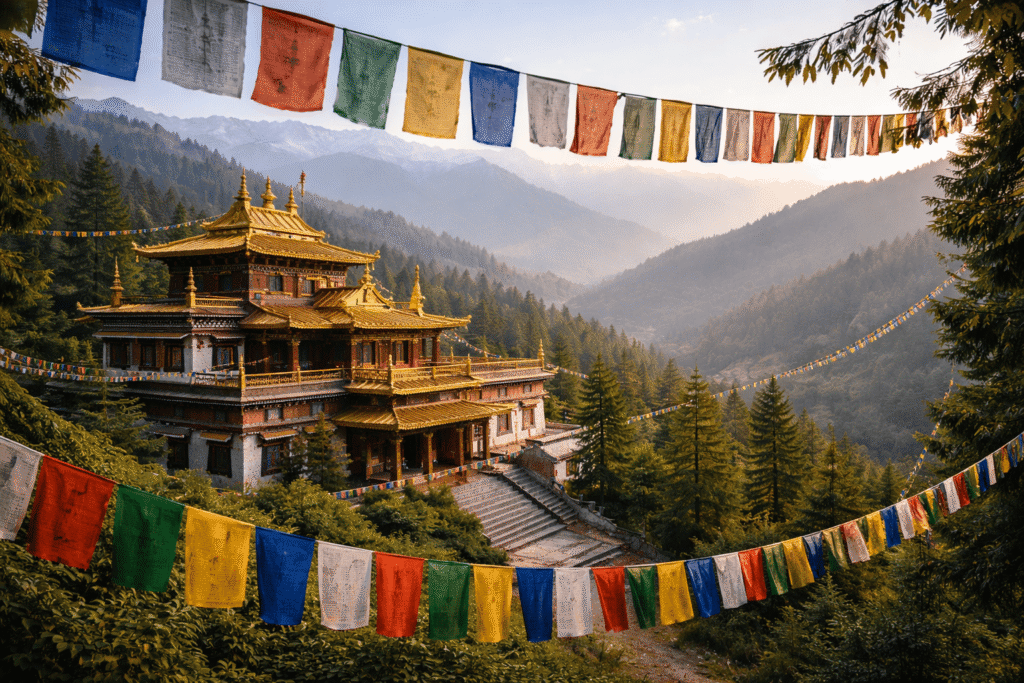
The Journey: 235 Kilometers of Perspective
The drive from Manali to Dharamshala takes 7-8 hours, retracing your route partially before branching west toward Kangra Valley. This stretch sees less tourist traffic and more of Himachal’s regular agricultural life—terraced fields, roadside dhabas serving truck drivers, small market towns where English signage disappears.
State buses (₹300-400) run regularly but require tolerance for crowded conditions. Private buses (₹500-700) offer slight comfort improvements. Taxis (₹4,500-6,000) provide flexibility to stop at Baijnath Temple’s 13th-century stone carvings or walk through tea estates near Palampur.
Arrival in McLeod Ganj
Dharamshala splits into lower Dharamshala (administrative town with minimal tourist interest) and McLeod Ganj (upper Dharamshala, Tibetan government-in-exile headquarters, tourist/pilgrim center). Most travelers head directly to McLeod Ganj at 2,082 meters.
The atmosphere shifts dramatically from Manali’s adventure-tourism vibe. McLeod Ganj exists as a Tibetan cultural island—prayer flags, momos, Buddhist monasteries, and the ever-present possibility of spotting the Dalai Lama. The Indian government’s hosting of Tibetan refugees since 1959 created this unique enclave.
Check into guesthouses concentrated around the main square (₹800-2,500 for decent mid-range) or explore options in Bhagsu (1 kilometer away, quieter, cheaper). Evening in McLeod Ganj means walking the circuit—main square to temple to monastery—absorbing the blend of Tibetan refugees, Indian tourists, long-term Western travelers, and the hawkers who serve them all.
Day 6: McLeod Ganj—Tibetan Culture and Mountain Walks
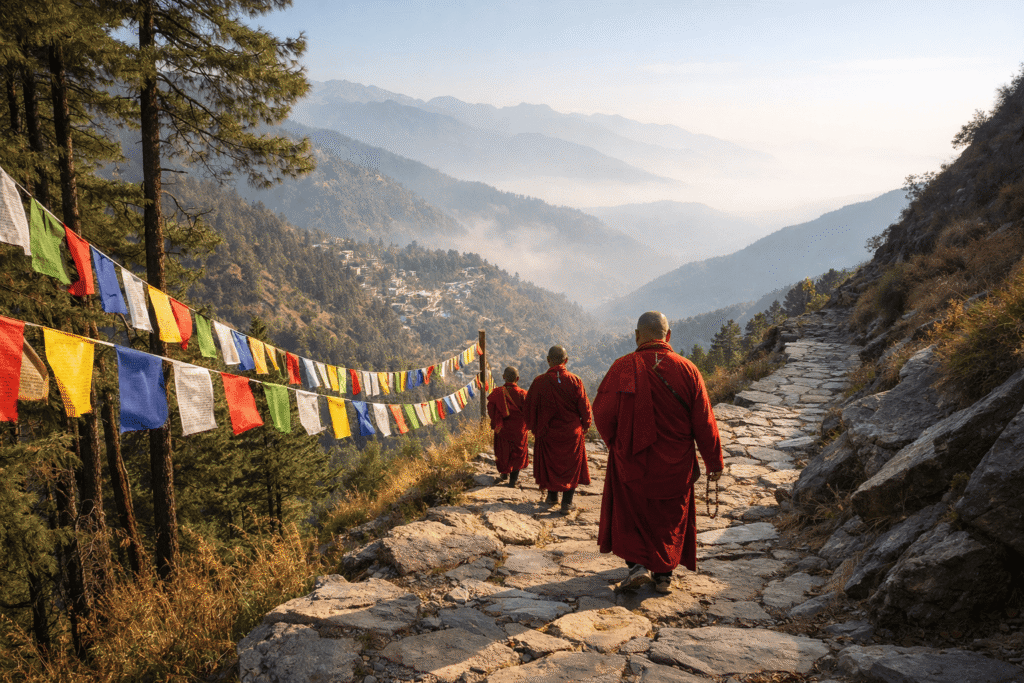
Morning: The Tibetan Institutions
Start at Tsuglagkhang Complex, the Dalai Lama’s official residence and McLeod Ganj’s spiritual center. The complex includes the Tsuglagkhang Temple (main temple), the Dalai Lama’s residence (not accessible), and the Tibet Museum documenting Tibetan history and Chinese occupation.
The temple welcomes visitors with reasonable dress (covered shoulders and knees) and behavior (no photos during prayers, remove shoes, walk clockwise around stupas). Morning prayers (5-6 AM) offer the most authentic experience, though afternoon visits (2-5 PM) work fine. The museum (₹15 entry, closed Sundays) presents Tibetan history from the Chinese invasion through the refugee experience—sobering documentation of cultural destruction and survival.
The Namgyal Monastery adjacent to the temple complex houses monks of the Gelug school. Visitors can observe prayer sessions and circumambulate the monastery complex. The monastery shop sells authentic Tibetan religious items—singing bowls, prayer wheels, thangka paintings—with proceeds supporting monastic operations.
Understanding the Tibetan Government in Exile
McLeod Ganj houses the Central Tibetan Administration—essentially a government without a country. The Library of Tibetan Works and Archives (₹20 entry, closed Sundays) preserves Tibetan texts, art, and culture that might otherwise have been destroyed. The library’s museum displays thangkas, manuscripts, and bronze statues, while the reading room offers serious research resources.
For deeper engagement, the library offers introductory courses on Buddhism, Tibetan language, and philosophy. These range from single lectures to month-long programs. Check their schedule if interested in structured learning.
Afternoon: The Bhagsu Circuit
Walk (or take the short taxi ride) to Bhagsu village. The Bhagsunath Temple sits at the village base—an ancient Shiva temple with a natural spring. The spring water feeds the temple tank where devotees bathe before prayers.
From here, the trail climbs 2 kilometers to Bhagsu Falls. The path gets crowded during peak season—everyone from serious trekkers to families in sandals attempts it. The falls themselves cascade 30 feet over rocks into pools where swimming is possible (and popular) in summer. The surrounding cafes blast music and serve standard tourist fare—this isn’t wilderness, but the setting still delivers.
For more challenging hiking, continue past the falls on the trail toward Triund (9 kilometers, 4-5 hours). This popular overnight trek can be done as a long day hike if you start early. The trail climbs to 2,842 meters, offering panoramic views across the Kangra Valley and toward the Dhauladhar range. Most hikers camp overnight at Triund, but strong walkers can summit and return to McLeod Ganj in a day.
Evening: Food and Reflection
McLeod Ganj’s restaurants reflect its diverse population. Jimmy’s Italian Kitchen, Lung Ta Japanese Restaurant, and Common Ground Cafe serve competent international food. But the real draw is Tibetan food—momos (steamed dumplings), thukpa (noodle soup), and tingmo (steamed bread). Lhamo’s Croisserie and Taste of India (despite the misleading name) offer authentic Tibetan meals.
The evening circumambulation around Tsuglagkhang Complex joins locals and long-term residents spinning prayer wheels and murmuring mantras. Participating requires no belief—the ritual’s meditative quality works regardless of religious conviction.
Day 7: McLeod Ganj to Departure
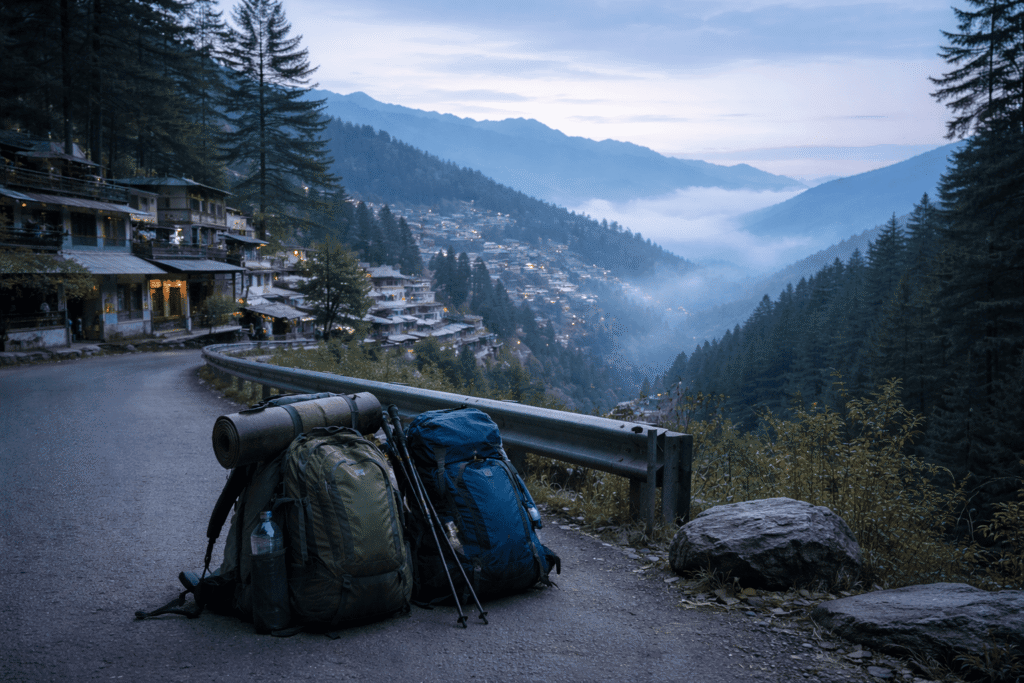
Morning Options Before Leaving
If departing afternoon or evening, use the morning productively. The Norbulingka Institute (6 kilometers from McLeod Ganj) preserves Tibetan arts—thangka painting, woodcarving, statue making, embroidery.
The complex includes workshops where artisans work, a temple with beautiful murals, and a museum. The doll museum showcasing Tibetan culture through miniatures feels unexpectedly compelling. Entry ₹100, well worth it for the craftsmanship on display.
Alternatively, the Kangra Fort (20 kilometers away) offers massive fortifications dating to the ancient Trigarta Kingdom, though the 1905 earthquake damaged much of the complex. The fort spreads across a ridge with views over the Kangra Valley. It’s one of India’s oldest forts, though extensive destruction means impressive scale rather than intact architecture.
Departure Logistics
Buses from McLeod Ganj to Pathankot (90 kilometers, 3-4 hours) connect to trains heading toward Delhi or Amritsar. The Kangra Airport near Dharamshala offers limited flights to Delhi. Most travelers bus or taxi to Chandigarh (250 kilometers, 6-7 hours) for better flight and train connections.
If time permits, Chamunda Devi Temple (15 kilometers) and Masroor Rock Cut Temple (40 kilometers) both offer worthwhile stops on the way to Kangra Valley. The latter’s 8th-century rock-cut architecture demonstrates sophisticated stone carving, though visiting requires a detour.
Making This Itinerary Work: Practical Considerations
Transport Between Destinations
Himachal’s roads twist endlessly—distances look short on maps but consume hours. The 115 kilometers from Chandigarh to Shimla takes 3-4 hours. The 250 kilometers from Shimla to Manali takes 7-9 hours. Everything takes longer than expected. Build buffer time into schedules.
State transport buses serve all major routes, running frequently and cheaply. Comfort ranges from adequate to punishing depending on bus age and crowding. Private buses cost slightly more for marginal comfort improvements. Hiring drivers provides maximum flexibility—stops for photos, detours to waterfalls, ability to change plans. Expect ₹4,000-6,000 daily for car plus driver.
Weather Considerations
Himachal’s seasons matter enormously. Summer (April-June) brings pleasant temperatures (15-25°C) and full tourist infrastructure. This is peak season—book accommodation ahead, expect crowds at major sites, pay premium prices.
Monsoon (July-September) reduces tourists dramatically. The mountains turn impossibly green, waterfalls flow powerfully, and humidity sits heavy. Landslides occasionally close roads. Adventure activities get curtailed. Many travelers avoid monsoon entirely; those who embrace it find a quieter, cheaper, greener Himachal.
Winter (December-February) adds snow, particularly at higher elevations. Manali’s temperature drops to -5 to 5°C; skiing becomes possible. McLeod Ganj stays milder but still cold. Rohtang Pass closes completely. Some guesthouses shut down. Bring serious cold-weather gear.
Shoulder seasons (March, October-November) offer the best compromise—decent weather, fewer crowds, moderate prices. October after monsoon delivers clear skies and spectacular mountain views.
Budget Reality
This seven-day itinerary costs approximately ₹20,000-30,000 per person for budget-conscious travelers using state buses, staying in basic guesthouses (₹800-1,500), eating at local restaurants, and skipping expensive activities. Mid-range comfort—private transport, better hotels (₹2,500-4,000), regular restaurant meals—pushes costs to ₹40,000-60,000. Luxury experiences multiply these figures quickly.
Major expenses: transport between cities (₹300-6,000 per segment depending on method), accommodation (₹800-15,000 per night per room), food (₹400-1,500 daily), activities like paragliding (₹2,000-3,000) or rafting (₹1,000-1,500).
What This Itinerary Sacrifices
Seven days means choices. This route skips Spiti Valley entirely—that magnificent high-altitude desert requires its own dedicated itinerary. It bypasses Kinnaur Valley’s apple orchards and ancient villages. It misses Kasauli’s quiet colonial charm and Chail’s forests.
The Parvati Valley deserves more than a day trip from Manali—Kasol, Tosh, Malana, and Kheerganga each offer distinct experiences. The Great Himalayan National Park provides serious trekking for those wanting wilderness over tourist circuits.
Accept these limitations or extend your trip. Ten days allows Spiti inclusion. Two weeks covers most of Himachal’s highlights properly. One week requires focus on either Kullu-Manali-Dharamshala circuit (this itinerary) or Shimla-Kinnaur-Spiti circuit (completely different experience).
Alternative Seven-Day Configurations
The Adventure Focus
Skip Shimla entirely. Fly to Kullu-Manali airport, spend four days in Manali doing serious activities—multi-day treks (Hampta Pass, Beas Kund), white water rafting in Kullu, paragliding in Solang, mountain biking trails. Move to Bir-Billing (paragliding capital) for two days. End with a night in Dharamshala before departing.
The Cultural Deep Dive
Chandigarh to Dharamshala directly (7 hours). Spend three days in McLeod Ganj and surrounding Tibetan settlements, attending teachings if the Dalai Lama is in residence, taking courses at the Library. Move to Shimla for colonial history (two days). End in Kasauli for quiet walks and British-era architecture.
The Off-Beat Route
Skip the main tourist circuit. Chandigarh to Kasauli (one day). Kasauli to Chail (one day). Chail to Shimla (one day). Shimla to Kinnaur Valley via the Hindustan-Tibet Road—Nako, Kalpa, Sangla Valley (three days). Return via Rampur. This requires accepting longer drives and basic infrastructure but rewards with genuine mountain culture and extraordinary scenery.
Final Thoughts: What Seven Days Can Actually Deliver
This 7-Day Himachal Pradesh Itinerary offers a well-balanced journey through the state’s most scenic landscapes, cultural hubs, and peaceful mountain towns. By thoughtfully combining travel time with meaningful experiences, it allows you to enjoy Himachal Pradesh without feeling rushed or overwhelmed.
Whether you are drawn by natural beauty, quiet hill stations, or unforgettable road journeys, this itinerary provides a practical and rewarding way to explore Himachal Pradesh in just one week. With the right planning and a flexible mindset, your trip will leave you with lasting memories of the Himalayas and a strong desire to return.