
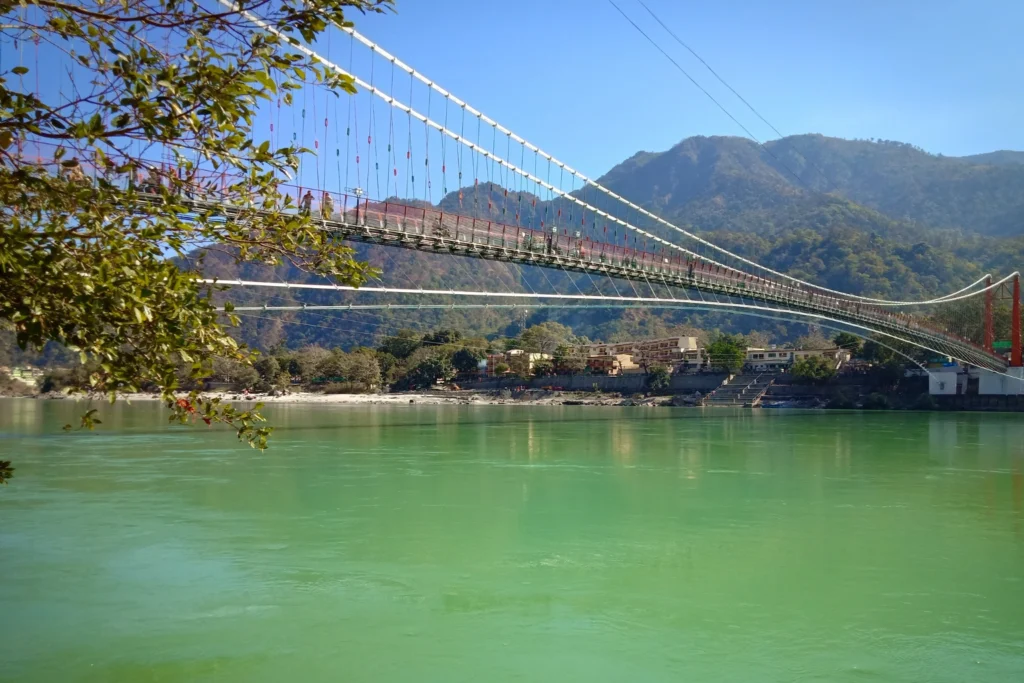
Rishikesh has no shortage of “top places to visit” lists, but many of them feel like they were copied from the same brochure.
We’ve visited these places across different trips and wanted to share what we actually experienced, including the small practical details most guides leave out.
If you’re visiting Rishikesh for the first time, these are the five places we’d personally recommend. They’re a mix of spiritual landmarks, scenic viewpoints, and local experiences that we genuinely enjoyed during our own trips.
1. Bajrang Setu
When we visited in 2022, Laxman Jhula was already closed. We’d heard people say it was shut for repairs because the old bridge, built back in 1929, had simply aged out of safe use. That part turned out to be accurate.
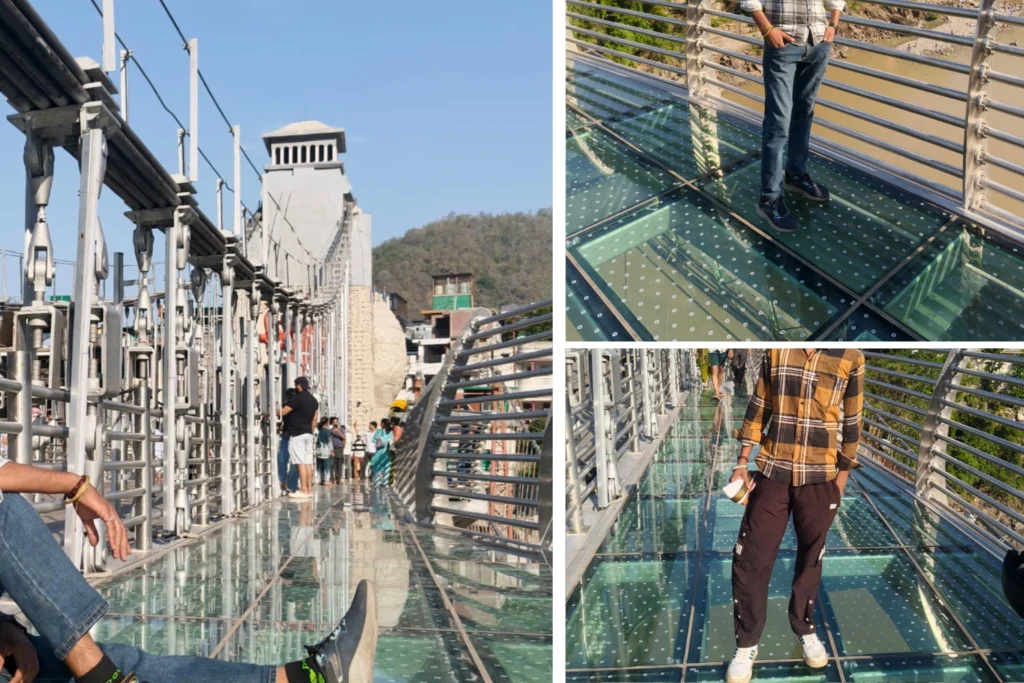
By 2026, we found out the bridge has been permanently closed, and in its place stands Bajrang Setu, India’s first glass-floor suspension bridge, built at the same spot. It’s a genuinely striking piece of engineering.
But almost as soon as it opened to the public, visitors started testing it in ways you’d expect and some you wouldn’t. Soon after opening, some visitors began dragging luggage across the glass, throwing stones onto it, and even jumping repeatedly just to test its strength.
Some of the glass panels developed surface cracks and scratches, which eventually led to repairs and temporary restrictions.
So if you’re planning a trip around walking across either bridge, it’s worth checking current status before you go. When we were last there, Laxman Jhula was closed, and Bajrang Setu’s glass walkway wasn’t fully accessible either. Both are worth seeing from the riverbank even if you can’t cross.
2. Ram Jhula’s Ghat
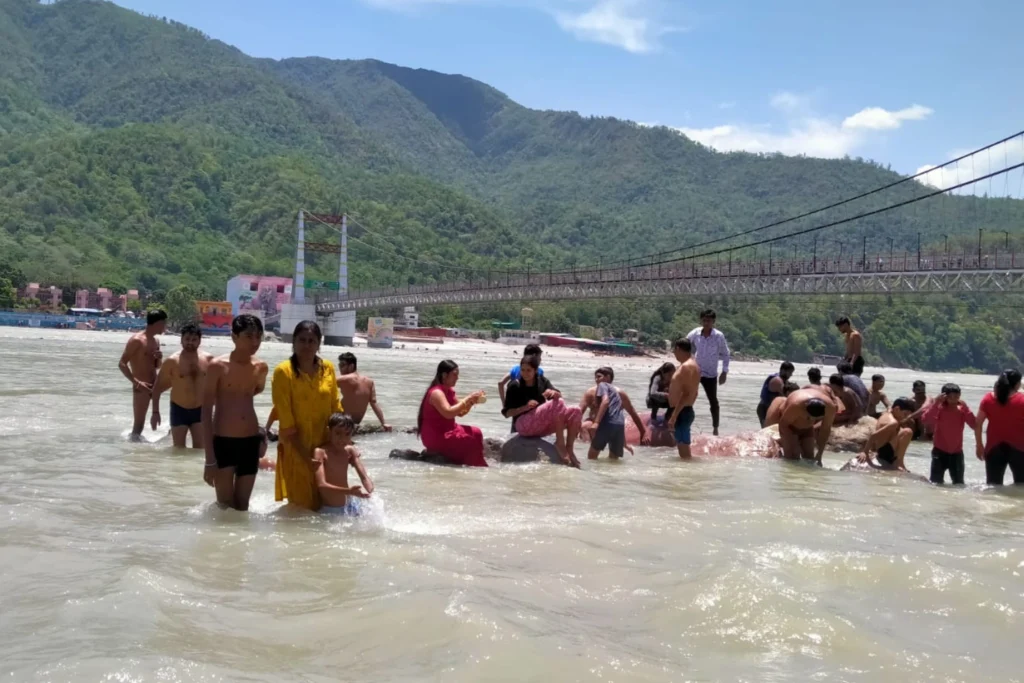
Near Ram Jhula, we bathed at one of the ghats. While we were bathing, rafting boats kept passing by in the river just a short distance away.
It felt unusual but made for a memorable experience. Compared to some of the more crowded ghats in Rishikesh, this one had noticeably fewer people.
One practical thing worth knowing: there was no working arrangement for changing clothes at the ghat itself. The changing rooms that existed were locked when we were there. We ended up walking to a nearby dharamshala and changing there instead.
If you’re planning to bathe at this ghat, it’s worth carrying a change of clothes and having a backup plan for where to change, rather than assuming facilities will be open.
3. Triveni Ghat and the Evening Aarti
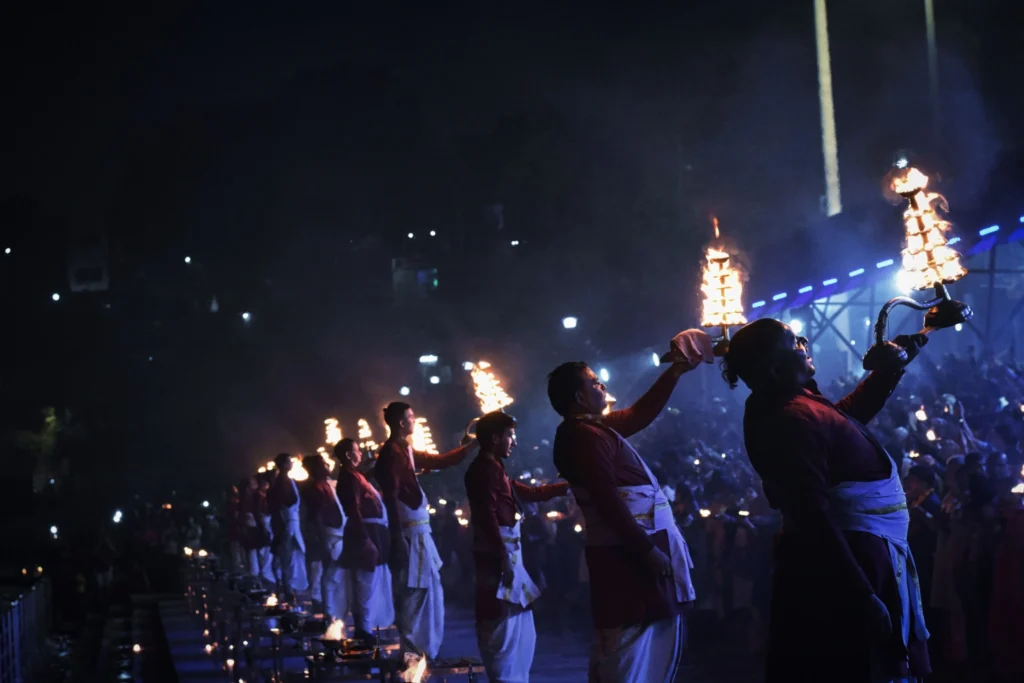
The aarti at Triveni Ghat has a particular quality that’s hard to fully capture in photos. The ceremony happens on one side of the ghat, while directly across, the Ganga flows calmly with almost no crowd on the opposite bank.
Sitting there and watching the contrast between the peaceful river and the glowing aarti is what makes the experience memorable. If you only have time for one aarti in Rishikesh, this is the one we’d recommend.
4. Neelkanth Mahadev Temple
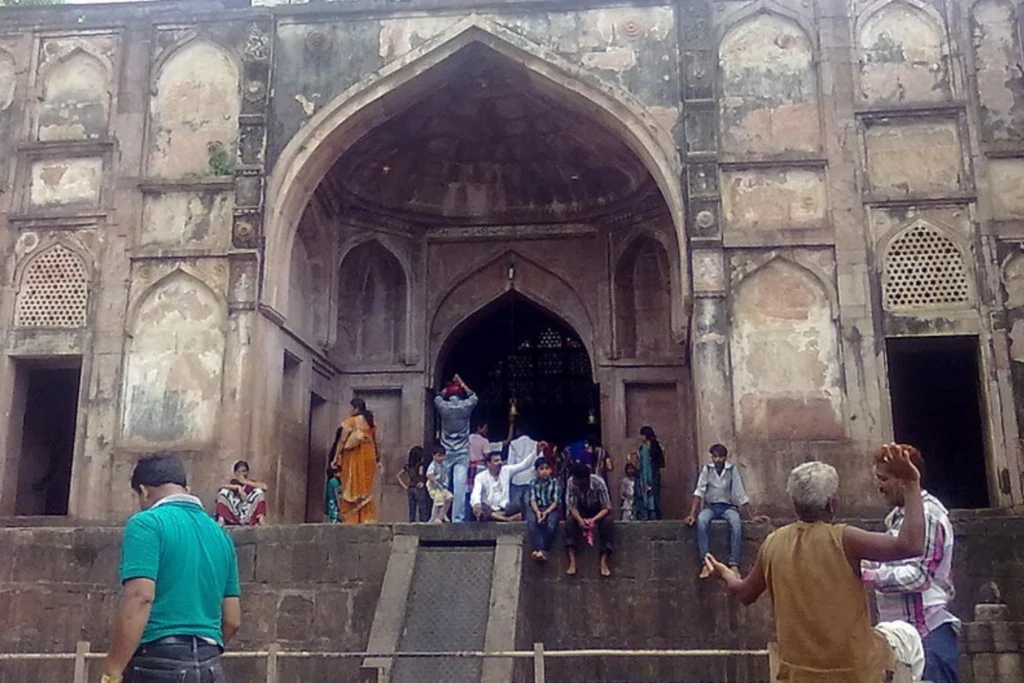
The temple sits at altitude, and the weather when we visited was noticeably pleasant compared to lower Rishikesh. The road up is narrow, though, and during peak hours it backs up into heavy traffic, so it’s worth planning around that if you’re driving up yourself rather than going early or late in the day.
Around the temple there’s a small but genuinely nice market, restaurants, and shops selling prasad and floral garlands. It’s a good stop for food and a short walk even outside of darshan hours.
The temple’s significance comes from the story of Samudra Manthan, the churning of the ocean.
According to the legend, this is where Lord Shiva consumed the deadly Halahala poison that emerged during the churning, saving the universe but leaving his throat permanently blue, which is where the name Neelkanth, meaning blue throat, comes from.
5. Neer Garh Waterfall
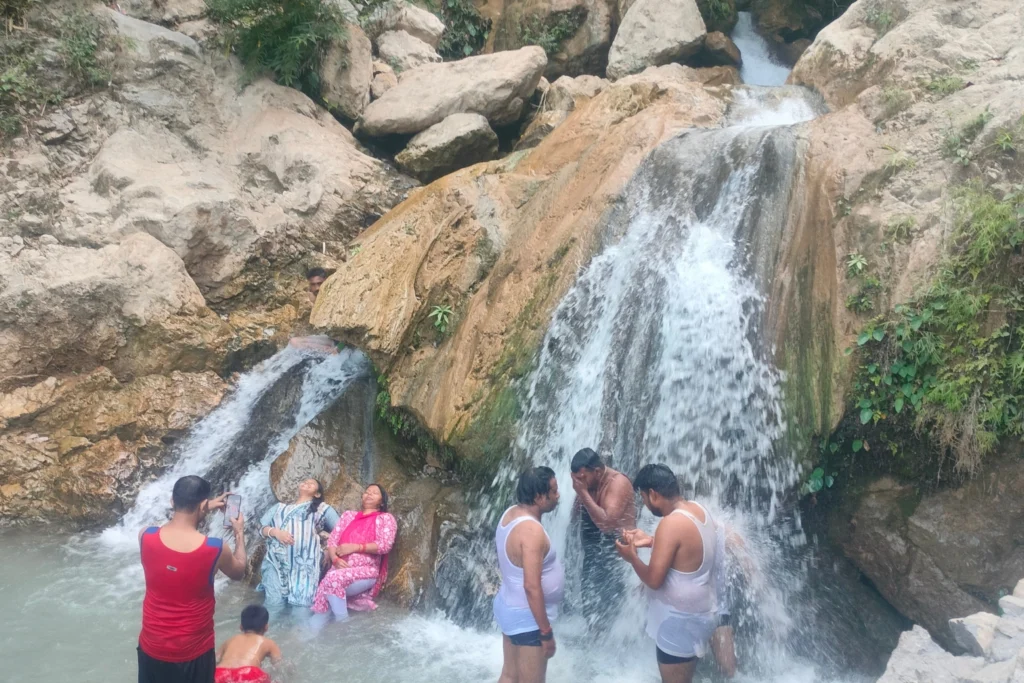
This one takes more effort than most guides mention. It’s roughly a 2 km walk uphill from where the road ends, and it’s worth sticking to the path shown on the map pin rather than following other tourists further than that, since beyond the marked point you’re essentially off any maintained trail.
When we went, the water was very clean. Along the way up, there are three or four smaller waterfalls before you reach the main one, and the water at the top comes down from higher above than it looks from below.
We climbed all the way to the top level. There’s a small setup selling Maggi and chai up there. Quite a few people were relaxing in the water, while a few kids sat nearby eating Maggi. It felt simple and refreshingly local.
One practical note: the climb involves a fair amount of uneven, uphill walking, so if you or anyone in your group has knee problems, it’s worth thinking twice before attempting it, or at least planning to stop at a lower point rather than pushing to the top.
FAQ
March–April and September–November offer the best weather for sightseeing and adventure activities.
Yes. Rishikesh is considered one of the safest destinations in North India, especially for solo and female travelers.
2–3 days are ideal for covering major attractions and adventure activities.
Because of its large number of internationally recognized yoga schools and ashrams.
Most of the city is designated alcohol-free due to its religious significance.
A Few Honest Takeaways
None of these places are hidden gems, and that’s perfectly fine. They’re popular because they’re genuinely worth visiting. Knowing a few practical details beforehand—like bridge closures, changing room availability, traffic, and the uphill walk—simply makes the experience smoother.
Last updated: July 2026. Bridge access, in particular, has changed multiple times in recent years, so it’s worth checking current status before building a trip around it.