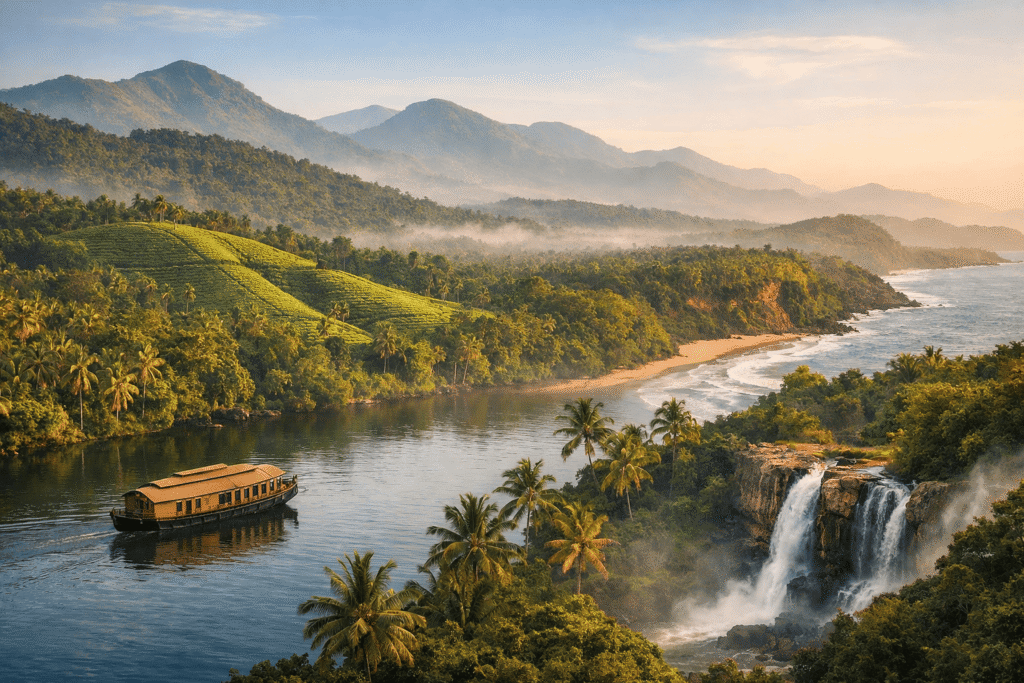
Kerala travel opens the door to one of India’s most diverse and breathtaking destinations. Nestled along the southwestern coast, Kerala is a land of striking contrasts.
Serene backwaters wind through lush green landscapes. Misty hill stations rise above endless tea and spice plantations. Pristine beaches stretch along the Arabian Sea coastline.
Known as “God’s Own Country,” Kerala offers something for every type of traveler. Culture enthusiasts can explore ancient temples and vibrant festivals.
Food lovers can dive into one of India’s richest culinary traditions. Adventure seekers can trek through dense wildlife sanctuaries and rolling hills.
Whether you are planning a romantic honeymoon, a family vacation, or a solo adventure, Kerala never disappoints.
This complete Kerala travel guide covers everything you need — from the best places to visit and things to do, to practical tips that make planning effortless.
Munnar: Where Tea Grows and Tourists Flock
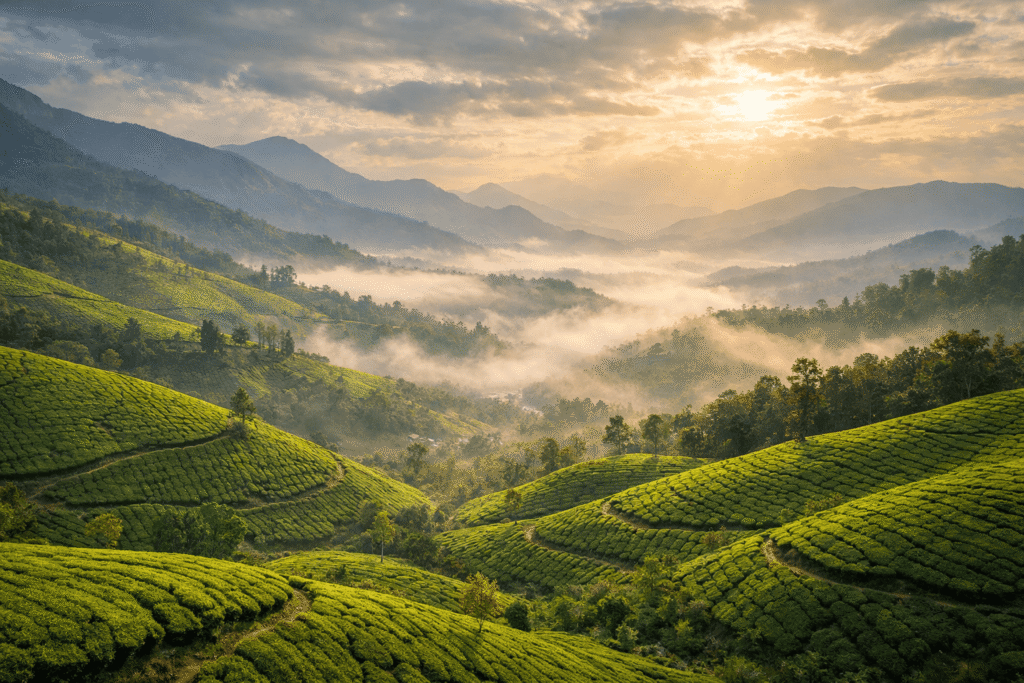
At 1,600 meters in the Western Ghats, Munnar built its identity on tea. Rolling hills covered in manicured tea plantations create landscapes so photographically perfect they look manipulated.
Early morning mist turns everything dreamlike. The air smells of eucalyptus and tea leaves.
This is Kerala’s most popular hill station, which means crowds during peak season (December-January, April-May) and the infrastructure to handle them.
The town itself sprawls unremarkably—concrete buildings, traffic, uninspired restaurants. But venture fifteen minutes in any direction and you remember why people come.
What Actually Matters in Munnar
Tea plantations and factories: The Tata Tea Museum offers genuine insight into tea production history without feeling overly corporate. Several estates conduct tours showing the journey from leaf to cup.
The Kolukkumalai Tea Estate, at 2,400 meters, claims to be the world’s highest organic tea plantation. The journey there—steep roads, dramatic views—justifies the trip even if tea bores you.
Eravikulam National Park: Home to the endangered Nilgiri Tahr, this park protects 97 square kilometers of grasslands and shola forests. The Tahr are surprisingly habituated—you’ll likely spot them grazing near the trails.
Neelakurinji flowers bloom here once every twelve years (next in 2030), turning hillsides purple and bringing massive crowds. Visit during off-years for better wildlife viewing.
Anamudi Peak: South India’s highest point at 2,695 meters. Access requires permits and guides through the forest department. The trek challenges moderately fit hikers without requiring technical climbing skills. Views from the summit span across Tamil Nadu and Kerala when weather cooperates.
Mattupetty Dam and Kundala Lake: Standard tourist circuit stops. Both offer boating in scenic settings. Not essential, but pleasant enough if you have time. Echo Point lives up to its name but gets overrun with tourists testing the acoustics simultaneously.
Reality check: Munnar has been “discovered” thoroughly. The charm persists, but you’ll share it with busloads of domestic tourists and Instagram photographers seeking that perfect tea plantation shot.
Visit during monsoon (June-September) for fewer crowds and dramatically green landscapes, though mist may obscure views.
Alleppey (Alappuzha): Backwater Central
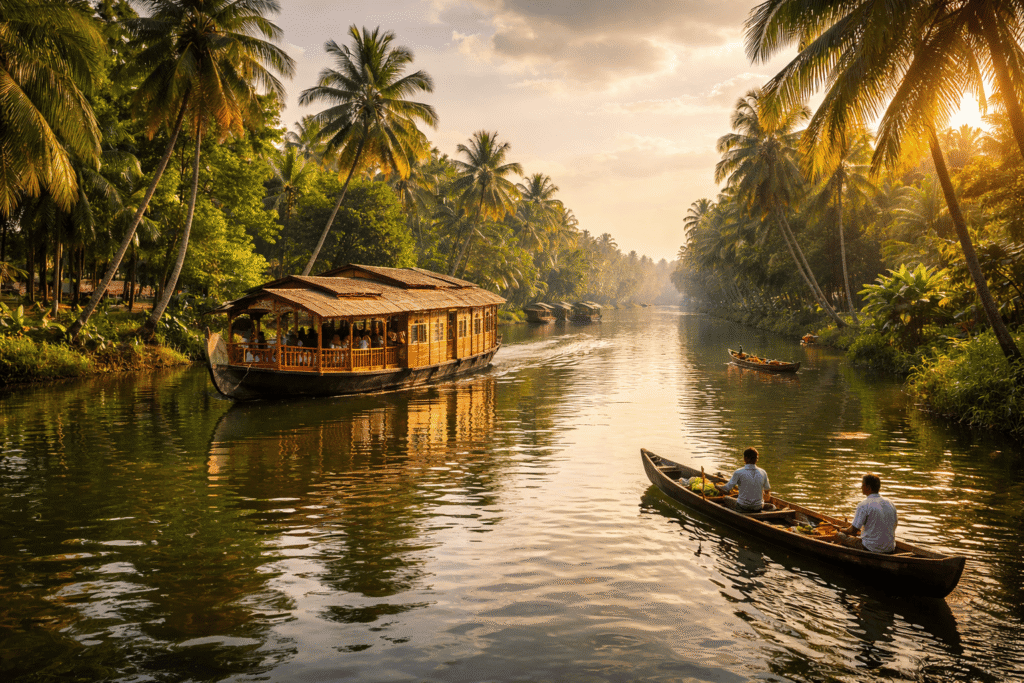
Venice comparisons are inevitable and mostly unhelpful, but Alleppey’s network of canals, lakes, and lagoons does create something unique.
This is Kerala’s backwater headquarters, where houseboat tourism reached full commercial maturity and somehow retained much of its appeal.
The Houseboat Experience
Here’s what actually happens: You board a converted kettuvallam (traditional rice barge) that’s been transformed into floating accommodation.
Your crew—typically a captain, cook, and helper—navigates through narrow canals and wider lakes while you watch village life unfold along the banks.
People washing clothes, children swimming, fishermen casting nets, toddy tappers climbing palms. The pace is deliberately slow. The engine noise becomes white noise. Hours pass watching water and sky.
The experience ranges from budget options (₹6,000-8,000 for an overnight trip) with basic amenities to luxury houseboats (₹15,000-30,000+) with air conditioning, premium food, and tasteful decor.
Quality varies dramatically—research operators carefully or book through reputable agents.
Practical truths: Peak season (December-January) sees hundreds of houseboats cruising the same routes. The romance of isolation requires off-season timing or premium pricing for less-traveled routes.
Food quality depends entirely on your cook’s skill and ingredients. Mosquitoes appear at dusk. Bathroom facilities can be… compact.
Despite these realities, it works. Something about the forced disconnection, the water-level perspective on rural life, the surrender to a pace that can’t be rushed—it delivers what it promises.
Beyond the Boats
Kumarakom Bird Sanctuary: Fourteen acres of wetland attracting migratory birds October through February. Siberian cranes, egrets, herons, and darters congregate here. Early morning visits reward serious birdwatchers; casual observers will still spot plenty.
The sanctuary sits on Vembanad Lake’s shores, offering walking trails through mangroves and waterside vegetation.
Nehru Trophy Snake Boat Race: Held annually on the second Saturday of August, this event transforms Alleppey. Teams of 100+ rowers power traditional snake boats (chundan vallams) in intense competition.
The energy, the synchronized rowing, the crowds—it’s one of Kerala’s most authentic spectacles. Book accommodation months ahead.
Alleppey Beach: Underwhelming compared to Kerala’s better beaches, but the 137-year-old pier extending into the Arabian Sea offers decent sunset views. The beach itself is more local hangout than tourist destination, which gives it unpretentious appeal.
Kochi (Cochin): Where History Left Layers
India’s first European settlement remains its most cosmopolitan Kerala city. Centuries of traders—Arab, Chinese, Portuguese, Dutch, British—left architectural and cultural layers that create something distinctly Kochi.
This is Kerala’s most urbane corner, where art galleries, boutique hotels, and quality restaurants coexist with centuries-old synagogues and spice markets.
Fort Kochi: The Historic Quarter
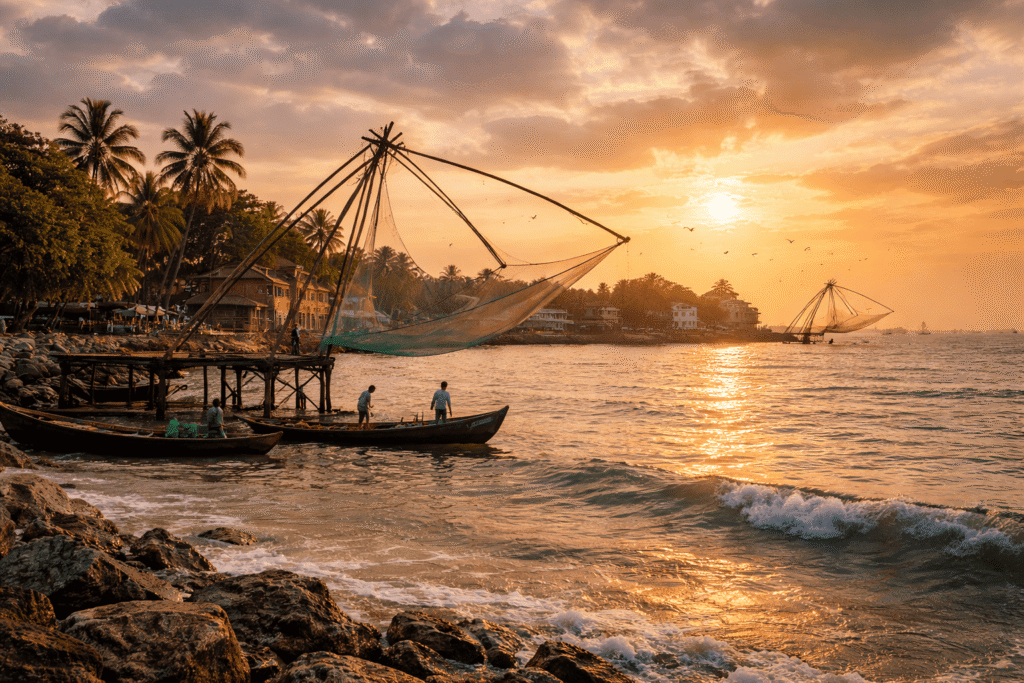
Chinese fishing nets: These cantilevered fishing nets lining the shore have become Kochi’s icon. Introduced by Chinese traders from Kublai Khan’s court, they require four-six operators to lower and raise the massive structures.
They’re still functional—fishermen sell their catch directly to tourists and restaurants—though tourism now probably generates more income than fishing.
Photographically irresistible at sunset, though you’ll compete for space with dozens of other photographers. Early morning offers better light and fewer crowds.
St. Francis Church: India’s oldest European church, built in 1503. Vasco da Gama was originally buried here before his remains were moved to Portugal.
The simple architecture and historical weight create a contemplative atmosphere rare in tourist-heavy sites. The adjacent cemetery’s weathered tombstones tell stories of early European settlers in India.
Mattancherry Palace (Dutch Palace): Built by Portuguese in 1555, renovated by Dutch in 1663, now a museum displaying Kerala murals, royal artifacts, and stunning ceiling paintings depicting Hindu epics.
The murals in the coronation hall rank among Kerala’s finest traditional art. Modest entry fee (₹5), strict photography restrictions.
Jewish Synagogue: Built in 1568, this is India’s oldest active synagogue. The interior features hand-painted Chinese tiles, Belgian chandeliers, and scrolls of the Old Testament.
Kochi’s once-thriving Jewish community has dwindled to fewer than ten families, making the synagogue feel both culturally significant and slightly mournful.
Opens 10 AM-1 PM and 3 PM-5 PM, closed Fridays and Saturdays. Entry ₹5. Dress modestly.
Spice markets: Jew Town’s narrow lanes overflow with spices, antiques, and tourist tat. The air smells of cardamom, pepper, and cinnamon.
Shops sell everything from genuine antiques to suspiciously aged “antiques” manufactured last month. Bargaining is expected and part of the theatre.
Beyond Fort Kochi
Kathakali performances: This classical dance-drama combines elaborate makeup, costumes, and stylized movements to tell stories from Hindu epics. Several centers offer evening performances with pre-show demonstrations of the makeup application.
The Kerala Kathakali Centre and Greenix Village offer quality shows (₹500-600, 6-8 PM). Even abbreviated tourist versions convey the art form’s intensity and precision.
Vypeen Island: Ferry from Fort Kochi (₹4, frequent departures) reaches this less-touristed island with fishing villages, beaches, and Portuguese-era churches. Cherai Beach offers Kerala’s best urban beach access—clean sand, decent swimming, fewer touts than elsewhere.
Kochi-Muziris Biennale: India’s largest contemporary art festival transforms Kochi every two years (December-March). Warehouses, heritage buildings, and public spaces become galleries. The scale and quality rival international biennales. If your timing aligns, extend your Kochi stay.
Wayanad: Kerala’s Wild Interior
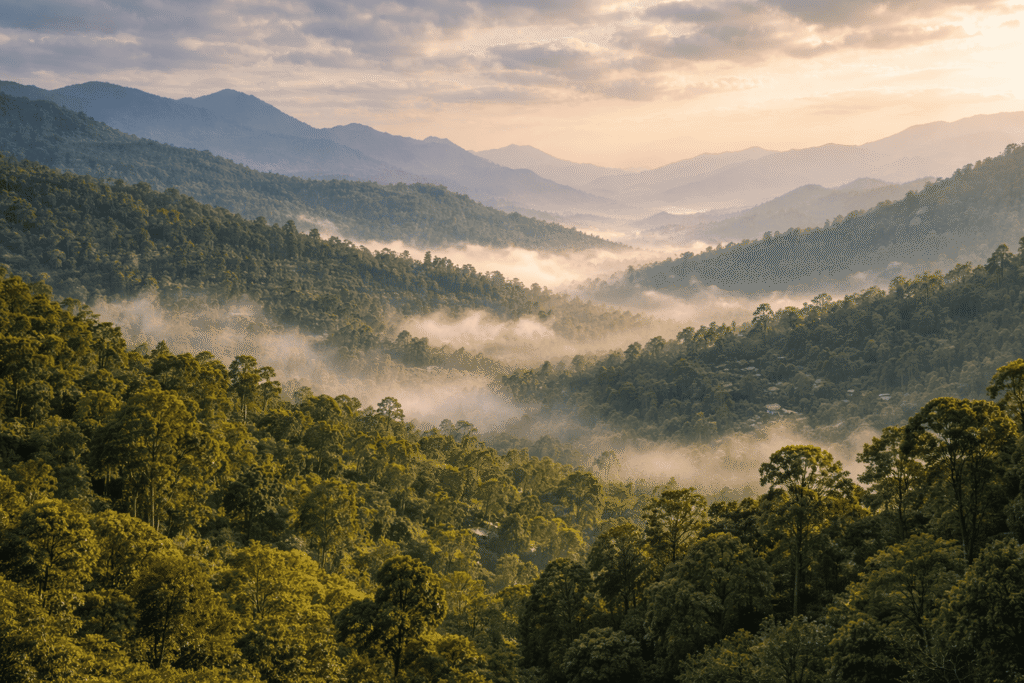
Most tourists stick to Kerala’s coast and backwaters. Wayanad—tucked into the Western Ghats near Karnataka and Tamil Nadu borders—rewards those who venture inland.
This is Kerala’s adventure and nature destination: trekking, wildlife safaris, tribal culture, and landscapes that trade palm trees for dense forests and coffee plantations.
What Wayanad Offers
Chembra Peak: At 2,100 meters, this is Wayanad’s highest point. The trek passes through tea plantations and forests to a heart-shaped lake (naturally occurring, tourist board promises) before the final ascent.
Permits required from District Tourism Office. Hire guides through official channels. The 7-km round trip takes 4-6 hours depending on fitness.
Edakkal Caves: Not actually caves but a cleft between two rocks, featuring prehistoric rock art dating back 6,000+ years.
The pictorial writings and petroglyphs—humans, animals, symbols—offer rare glimpses into ancient civilization. The 1-km uphill trek to reach them filters out the least motivated tourists.
Wayanad Wildlife Sanctuary: Part of the Nilgiri Biosphere Reserve, protecting 344 square kilometers of forests. Home to elephants, tigers, leopards, and gaur.
Morning safaris (₹1,500-2,000 per vehicle) offer best wildlife viewing. Elephant sightings are common; tigers require exceptional luck.
Tholpetty and Muthanga ranges both conduct safaris. Book through forest department to avoid middlemen markups.
Soochipara Falls: Three-tiered waterfall dropping 200 meters. The 2-km forest trek ends at pools perfect for swimming.
Peak flow during monsoon looks spectacular but swimming becomes dangerous. November-May offers the sweet spot of decent flow and safe swimming.
Pookode Lake: Natural freshwater lake surrounded by forests. Boating, walking trails, children’s park—essentially a pleasant family outing spot without deeper significance.
The park’s small aquarium and shopping complex feel unnecessary but don’t ruin the lake’s natural appeal.
Reality check: Wayanad sees less international tourism than coastal Kerala, giving it more authentic character. Infrastructure lags slightly—fewer luxury options, more homestays and mid-range resorts.
Road conditions vary. What you lose in polish, you gain in genuine interaction with Kerala’s less-touristed interior.
Varkala: Cliff Beach Excellence
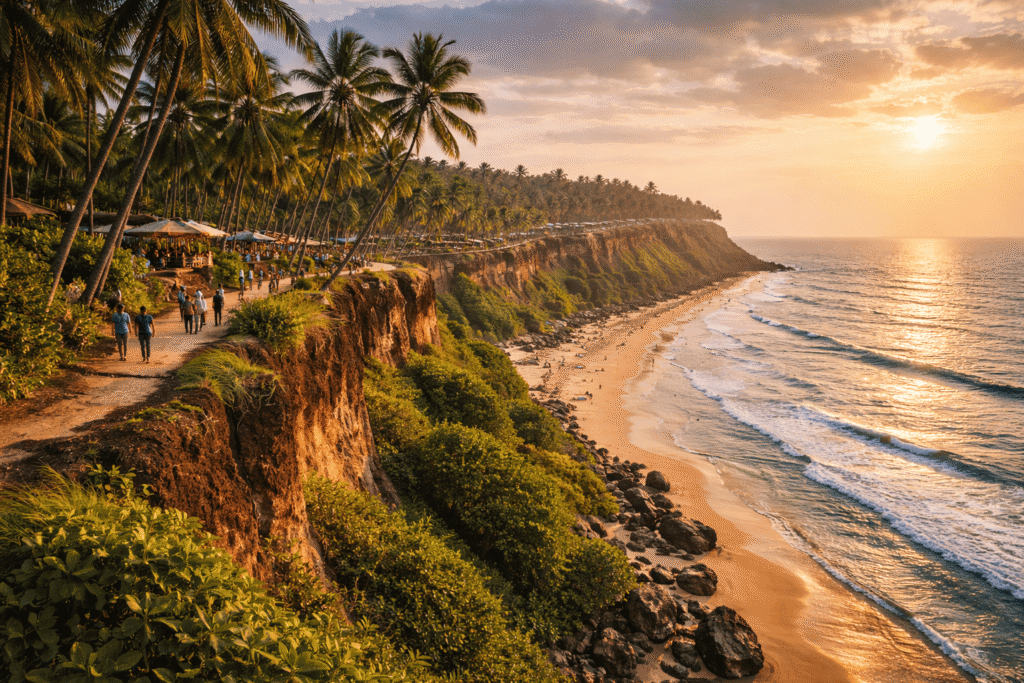
Kerala has prettier beaches, but Varkala found the winning combination: dramatic red cliffs rising 15 meters above golden sand, natural springs believed to hold healing properties, enough tourist infrastructure to be comfortable, not so much to feel overrun.
The cliff-top walkway concentrates restaurants, guesthouses, yoga studios, and shops selling the usual beach town mix of jewelry, clothing, and ayurvedic products.
Steps cut into the cliff provide beach access at multiple points. The beach itself stretches long enough that walking five minutes in either direction creates space from the central action.
Swimming is generally safe with normal caution. Lifeguards patrol during peak season. Rip currents exist—respect warning flags. The beach curves enough that strong swimmers can explore rocky sections at either end during low tide.
Janardhana Swamy Temple: This 2,000-year-old Vishnu temple overlooks the beach. Non-Hindus cannot enter the inner sanctum, but the complex’s architecture and seafront location make it worth visiting. Sunset prayers create atmospheric moments.
Varkala’s character: This falls somewhere between hippie beach hangout and upscale resort destination, leaning slightly toward the former.
Long-term travelers mix with Indian families on holiday. Russian tourists arrive in winter seeking warm weather. The vibe stays relaxed without tipping into full backpacker party scene.
Timing: October-March brings ideal weather and full occupancy. April-May gets hot. June-September monsoon empties the place and makes swimming dangerous. Some businesses close during monsoon; those remaining offer significant discounts.
Thekkady (Periyar): Where Elephants Actually Appear
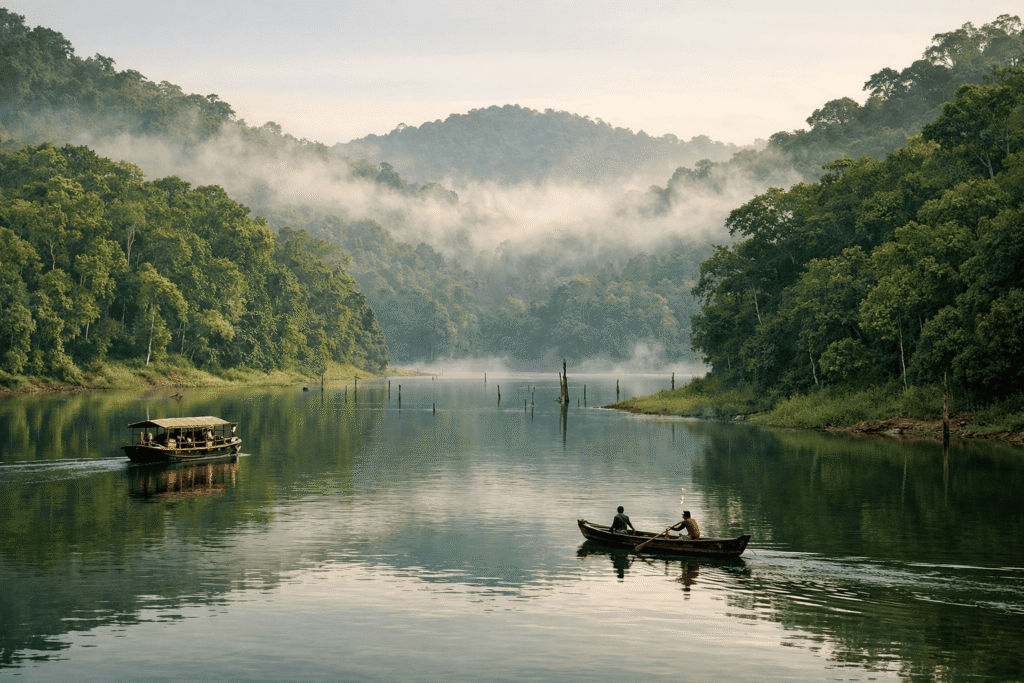
Periyar Wildlife Sanctuary, centered on a 26-square-kilometer artificial lake, offers Kerala’s most accessible serious wildlife experience.
The 777-square-kilometer reserve protects one of India’s few remaining tiger populations, though seeing one requires extreme luck. Elephants, however, appear reliably, along with gaur, sambar deer, wild boar, and over 260 bird species.
Boat safaris (₹150-300, 7:30 AM/9:30 AM/2 PM/4 PM) cruise the lake while animals come to drink at the shores. Early morning slots offer best viewing. The two-hour trips cover significant lake area, though engines mean loud approach. Bring binoculars.
Guided treks (₹300-600, various durations) venture deeper into forest. Border hiking, tiger trail, and nature walks each cover different terrain. Knowledgeable guides spot wildlife and explain forest ecology. Leech socks recommended during monsoon.
Bamboo rafting (₹2,000, full day) provides the quietest wildlife approach. Groups of 6-8 paddle traditional rafts through remote sections. Limited daily permits keep numbers low. Book well ahead.
Thekkady town itself exists purely for tourists—adequate restaurants, numerous spice shops, plantation tour operators.
The spice plantations (cardamom, pepper, vanilla, coffee) offer tours showing cultivation and processing. Quality varies, but the best operators provide genuine insight into spice agriculture.
Stay inside the sanctuary at the forest department’s Lake Palace or Tree House for immersive experience. Or choose Thekkady’s mid-range hotels for comfort and accessibility. Either works depending on your priorities.
Kovalam: Kerala’s Original Beach Resort
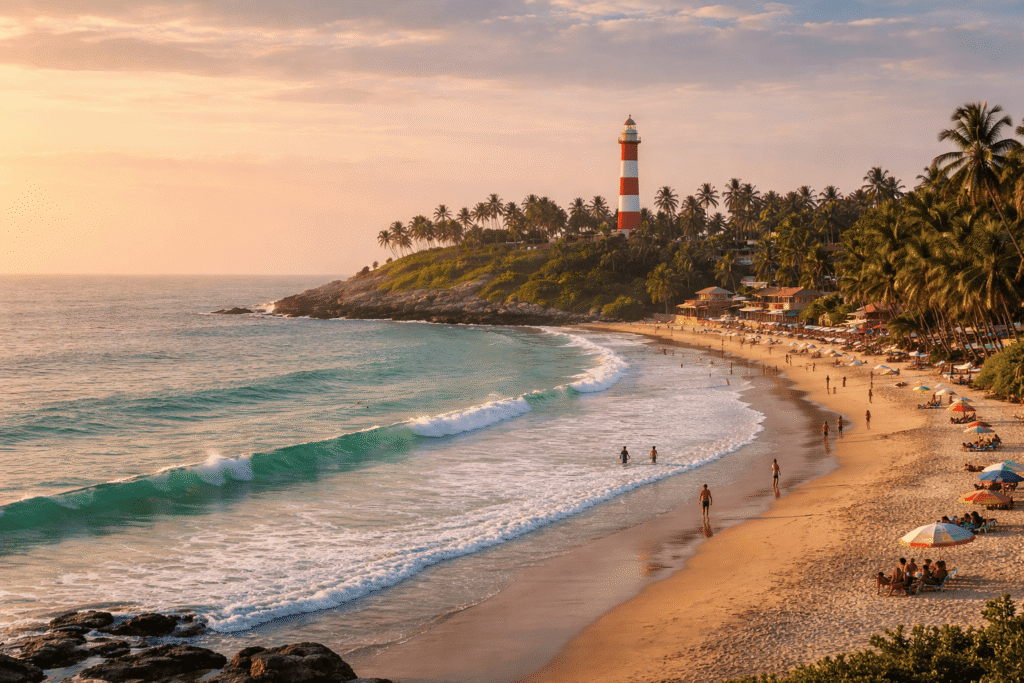
Before Varkala found its groove, Kovalam pioneered Kerala beach tourism in the 1930s. That history shows—the development is denser, the infrastructure more established, the tourist circuit more defined.
This is Kerala’s most developed beach destination, which works if you want services and convenience, less so if you seek undiscovered paradise.
Three crescent beaches—Lighthouse Beach, Hawah Beach, and Samudra Beach—curve one after another, separated by rocky headlands. Lighthouse Beach concentrates most hotels, restaurants, and tourists.
The red-and-white striped lighthouse climbing provides panoramic coastal views (₹20 entry, open 3-5 PM except Mondays).
Swimming is generally safe on Lighthouse Beach with lifeguards present. Hawah Beach (Eve’s Beach) gets rougher currents requiring more caution.
Samudra Beach sees fewer tourists and calmer waters—worth the walk for families with children.
What Kovalam does well: Ayurvedic treatments are ubiquitous and generally high quality. Numerous centers offer authentic treatments alongside tourist-oriented spa services. Research carefully—credentials vary dramatically.
What it doesn’t: The aggressive vendors, pushy touts, and constant sales pitches exhaust some visitors. This comes with established beach tourism everywhere, but Kovalam concentrated it early.
Alternatives nearby: Vizhinjam fishing village (3 km) offers authentic Kerala coastal life without tourism veneer. Poovar (27 km south) provides backwater-meets-beach experiences with less development.
Kozhikode (Calicut): Where Vasco da Gama Changed Everything
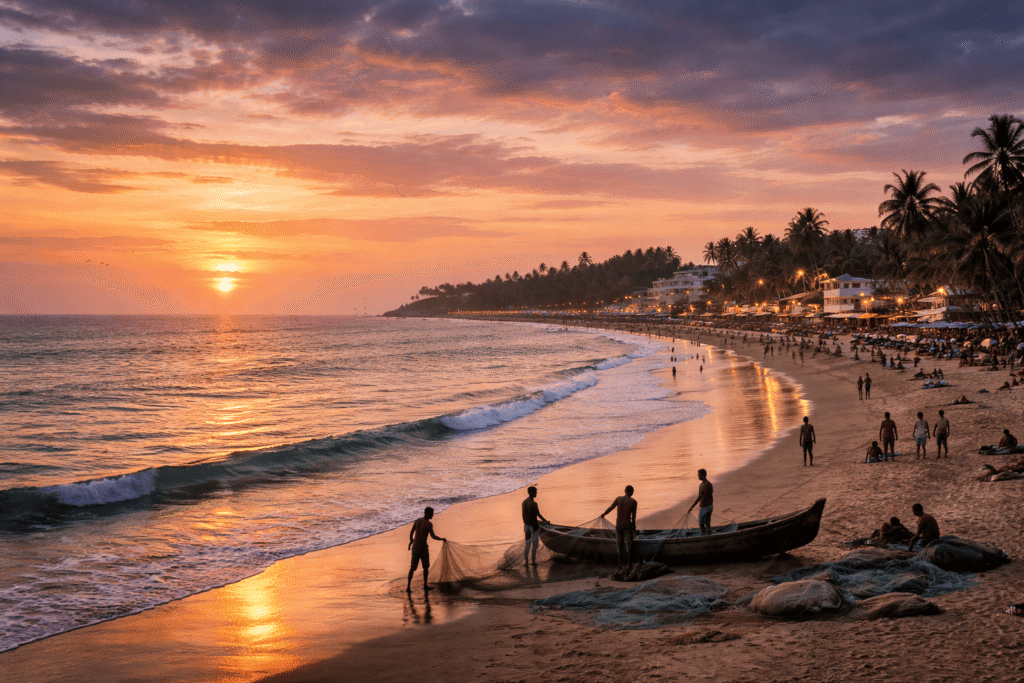
In 1498, Vasco da Gama landed at Kappad Beach, inaugurating direct European-Asian trade routes and changing global economics forever. Modern Kozhikode still feels like a trading city—bustling, commercial, focused on business rather than tourism.
What makes Kozhikode worthwhile: The food. Particularly Malabar cuisine—biryani, haleem, unnakaya, kozhikkodan halwa—reaches peak expression here.
Paragon Restaurant has achieved near-legendary status; the biryani justifies the hype. Sweet Meat Street (SM Street) concentrates sweets shops and snack vendors creating sensory overload in the best way.
Kozhikode Beach: More local gathering place than tourist destination. The twin piers extending into the Arabian Sea, the old lighthouse, the sunset views—it works as urban beach without pretending to compete with Kerala’s resort beaches.
Kappad Beach: The historic landing site sits 16 km from city center. A stone monument marks where Vasco da Gama stepped ashore. The beach itself is pleasant but unremarkable. The historical significance carries the weight.
Beypore: This ancient port (28 km south) still builds urus—traditional wooden ships—using centuries-old techniques.
Watching craftsmen hand-build massive vessels without modern tools provides rare glimpses into maritime heritage. The Beypore Beach and adjoining backwaters offer photography opportunities.
Kozhikode functions better as a cultural and culinary stop than a primary destination. Spend a day or two exploring the city’s character, eating phenomenally, then move on.
Thrissur: Kerala’s Cultural Capital
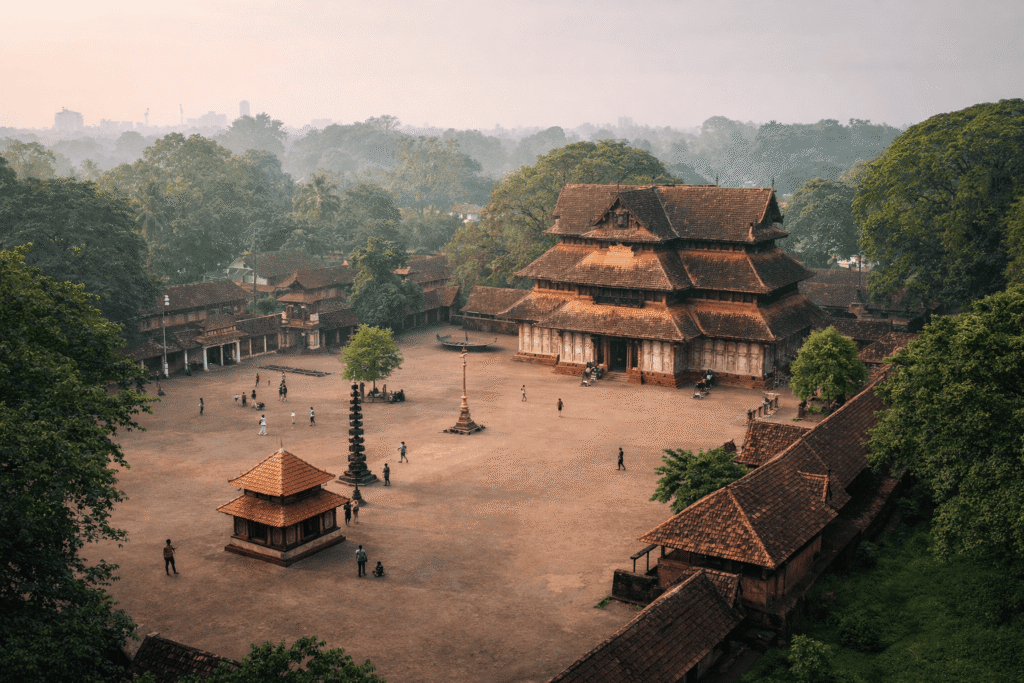
If you want to understand Kerala’s cultural heart, come to Thrissur. This mid-sized city claims the title “Cultural Capital of Kerala” with some justification—the concentration of art forms, festivals, temples, and traditional performances exceeds anywhere else in the state.
Thrissur Pooram: Held in April-May, this festival raises temple festivals to art form. Two temples—Thiruvambady and Paramekkavu—compete in elaborate displays featuring caparisoned elephants (30+ per temple), traditional drum orchestras (panchavadyam), and fireworks.
The energy, the crowds (hundreds of thousands), the sensory overload—it’s Kerala’s most spectacular festival.
If your timing doesn’t align, regular poorams at various temples throughout the year offer smaller-scale versions.
Kerala Kalamandalam: This deemed university dedicated to traditional arts teaches Kathakali, Mohiniyattam, Koodiyattam, and other classical forms.
Visitors can watch morning classes (8-11 AM) seeing serious students practice under master teachers. Photography restrictions apply. This isn’t performance for tourists—it’s genuine training, which makes it more valuable.
Vadakkunnathan Temple: This Shiva temple dating to 1000 CE sits at Thrissur’s center. Non-Hindus cannot enter the inner areas, but the architecture visible from outside demonstrates Kerala’s temple design principles. The temple grounds host Thrissur Pooram.
Thrissur’s appeal lies more in cultural immersion than specific sights. Attend a Kathakali performance, visit during festival season, explore the art schools—engage with the living cultural traditions rather than checking off monuments.
Kannur: Where Theyyam Lives
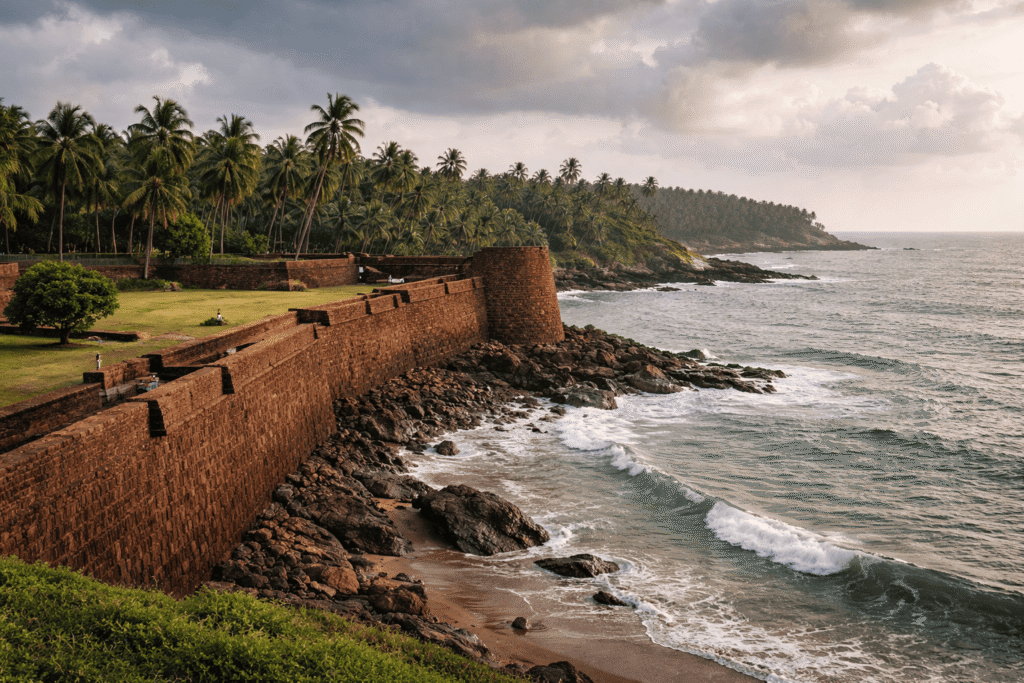
North Kerala’s largest city matters primarily for Theyyam—an ancient ritual art form combining dance, music, and worship.
Unlike Kathakali or Mohiniyattam performed in theaters, Theyyam happens in village shrines and temples, remaining deeply embedded in community religious life.
Understanding Theyyam: Performers enter trance states believing they embody deities. Elaborate costumes and face painting transform them into divine forms.
The performances—some lasting hours—include dramatic movements, fire walking, and blessing ceremonies. This isn’t theater; it’s living worship that predates Hinduism’s classical forms.
Experiencing Theyyam: The season runs November-May, with most performances in December-April. Performances start late night or early morning at small shrines across Kannur district.
Local guides help navigate the complex schedule and rural locations. Several tour operators specialize in Theyyam tours (₹2,000-3,000 per person).
Parassinikkadavu Muthappan Temple: This temple conducts Theyyam performances twice daily (6 AM and 7 PM) year-round. More accessible than rural shrine performances, though the controlled environment reduces some raw power. Still worth visiting if timing doesn’t allow village Theyyam experiences.
Muzhappilangad Drive-in Beach: India’s longest drive-in beach stretches 4 kilometers of hard-packed sand suitable for vehicles. The novelty attracts crowds on weekends. Come on weekdays for the unusual experience without traffic jams on beach sand.
Kannur’s appeal is specific: come for Theyyam or skip it. The city itself offers limited tourist infrastructure. Those making the effort find one of Kerala’s most authentic cultural experiences.
Silent Valley National Park: Rare Preservation
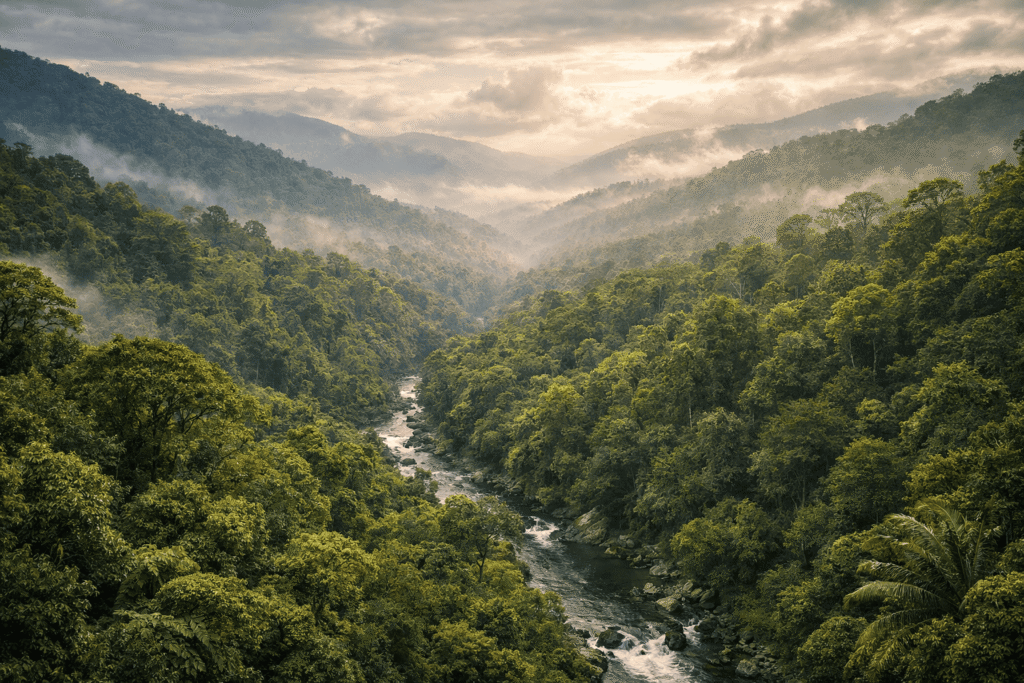
Tucked into the Nilgiri Hills, Silent Valley protects one of India’s last remaining tropical evergreen forests—90 square kilometers of pristine rainforest that was nearly dammed and submerged in the 1970s.
Environmental activism saved it, creating a sanctuary for lion-tailed macaques, Nilgiri langurs, tigers, and over 1,000 plant species.
Access requires permits from the forest department (₹175 for Indians, ₹1,450 for foreigners) and is genuinely restricted to protect the ecosystem.
The 12-km drive from park entrance to Sairandhri offers stunning views. From there, limited trekking trails venture into the forest with mandatory guides.
This isn’t easy tourism. The remoteness—nearest town Mannarkkad is 50 km away—filters out casual visitors. Facilities are minimal. You come here for rare biodiversity and one of Kerala’s least disturbed natural environments.
Practical note: The park closes during monsoon (June-September). Plan on a full day from wherever you’re based. Bring food, water, and rain gear regardless of season.
Kerala Backwaters: Beyond Alleppey
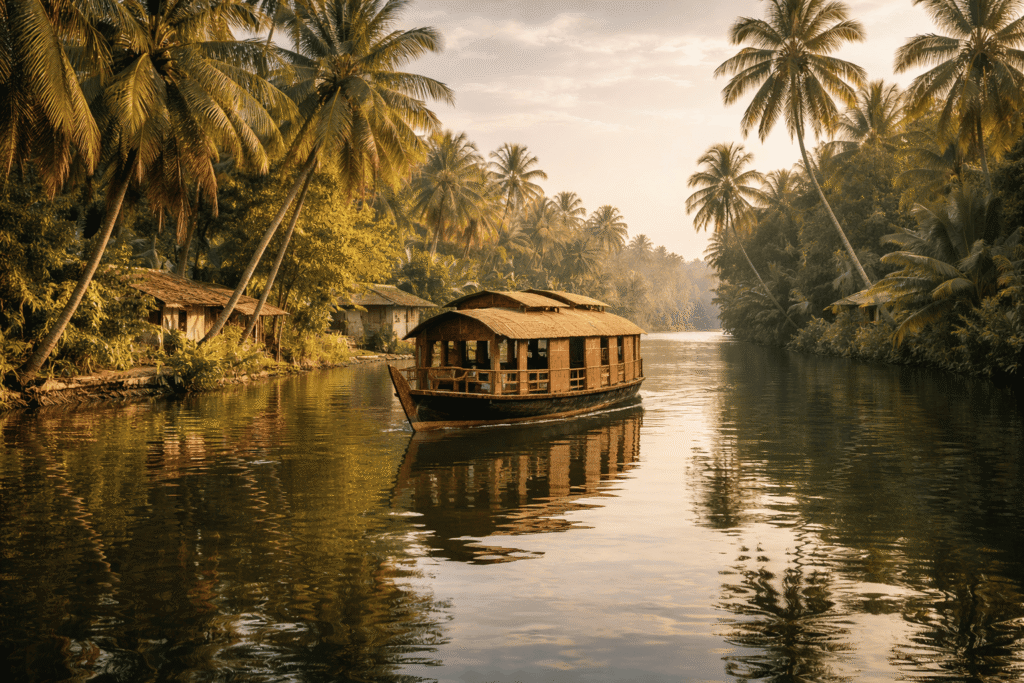
Alleppey dominates backwater tourism, but the network extends across Kerala. Alternative experiences exist for those wanting to avoid the main tourist circuit.
Kumarakom: On Vembanad Lake’s shores, this former rubber plantation town offers upscale backwater resort experiences.
The bird sanctuary attracts serious birdwatchers. Smaller houseboat operations provide more intimate experiences than Alleppey’s floating hotels. The trade-off: higher prices for more exclusivity.
Kollam (Quilon): This historic port city offers the longest backwater cruise—an eight-hour journey to Alleppey through the Kollam-Kottapuram canal.
The journey passes through villages rarely seeing tourists. Daily DTPC boats depart at 10:30 AM (₹400). Less luxurious than private houseboats but more authentic in showing daily backwater life.
Kuttanad: The “Rice Bowl of Kerala” sits below sea level, protected by dykes and bunds. Rice cultivation shaped the entire landscape.
The area offers home stays with farming families, canoe trips through narrow canals, and glimpses of agricultural life that feeds the state. Fewer tourists, more genuine interaction.
Athirapally Falls: Kerala’s Niagara (Sort Of)
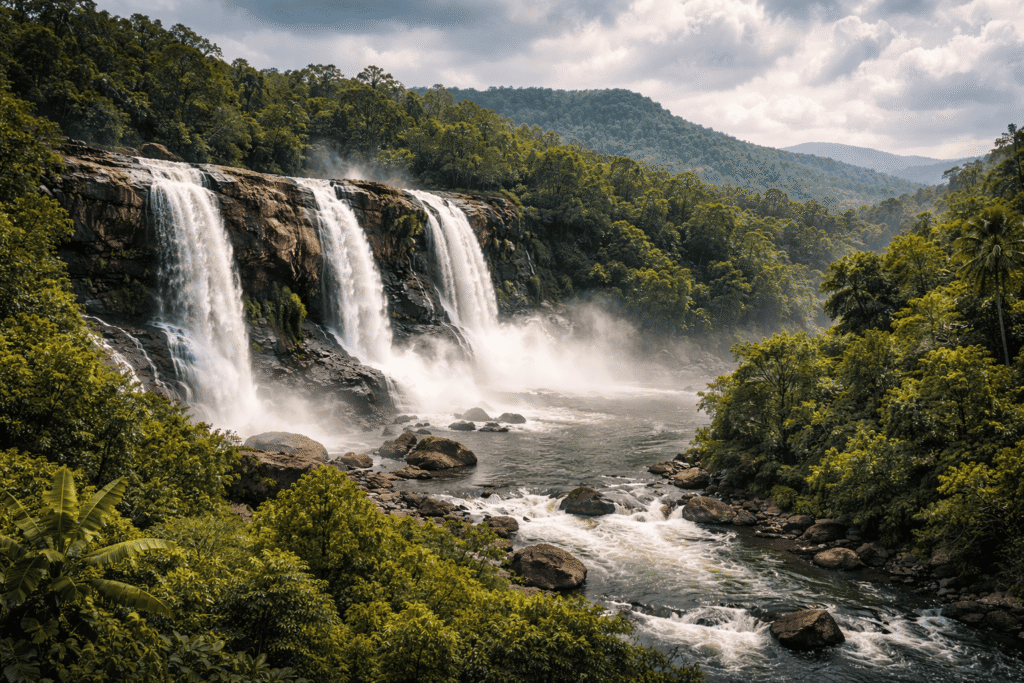
Kerala’s largest waterfall drops 80 feet through pristine Sholayar forest. Comparisons to Niagara are marketing exaggeration, but the falls remain impressive, especially during monsoon when flow reaches peak volume.
The falls sit 30 km from Thrissur and 55 km from Kochi—doable as a day trip from either. A well-maintained path leads to multiple viewpoints.
The roar of falling water, the mist rising, the surrounding forest—it creates genuine natural spectacle without requiring serious trekking.
Vazhachal Falls: Four kilometers from Athirapally, this waterfall spreads horizontally rather than dropping vertically, creating a different but equally photogenic scene. The forest section between the two falls offers trekking opportunities.
Timing: Monsoon (June-August) brings maximum flow but heavy rain and mist may obscure views. September-January offers the sweet spot—substantial flow with clear weather. Summer (March-May) reduces falls to a trickle.
The surrounding area remains relatively undeveloped. Basic restaurants and a few hotels service day-trippers. This benefits the falls’ natural character while limiting options for extended stays.
Planning Your Kerala Journey: What Works
Duration: Two weeks covers major highlights without feeling rushed. Three weeks allows depth. One week requires choosing between backwaters beaches or hill stations—trying to squeeze everything creates exhausting logistics.
Seasons: October-March offers ideal weather across Kerala—warm days, cool evenings, minimal rain. December-January peaks both in weather quality and tourist numbers.
April-May brings extreme heat (35-40°C) but fewer crowds and better deals. June-September monsoon transforms landscapes but curtails outdoor activities.
Getting around: Kerala’s compact size makes transport manageable. Buses reach everywhere, though comfort varies. Trains connect major towns—convenient and scenic.
Hiring a driver provides maximum flexibility (₹2,000-3,000 per day plus driver accommodation). Motorcycles rent easily if you’re comfortable with Indian roads.
Accommodation: Options span ₹500 homestays to ₹50,000+ luxury resorts. Mid-range (₹2,000-5,000) offers excellent value—clean, comfortable, usually including breakfast. Homestays provide the best cultural immersion and often include incredible home-cooked meals.
Food: Kerala’s cuisine balances coconut, spices, seafood, and local vegetables into something distinct. The banana leaf meals (sadhya)—especially during Onam—represent culinary culture at its peak.
Christian and Muslim communities contribute their own traditions—beef fry, appam and stew, Malabar biryani. Most tourist restaurants offer bland international food; seek out local places for authentic flavors.
Budget: Kerala’s costs sit mid-range for India. Budget travelers manage on ₹1,500-2,000 daily (basic accommodation, local transport, street food).
Mid-range comfort costs ₹3,000-5,000 daily. Luxury experiences—resort stays, private houseboats, ayurvedic treatments—push costs significantly higher.
Safety: Kerala ranks among India’s safest states. Violent crime against tourists is rare. Standard precautions apply: protect valuables, avoid deserted areas after dark, use licensed taxis.
Women traveling solo report fewer harassment issues here than elsewhere in India, though staying alert remains important.
Ayurveda: Kerala perfected this ancient medical system. Treatments range from tourist-oriented spa experiences to serious medical protocols.
Genuine panchakarma detoxification requires weeks-long commitment. Research practitioners carefully—legitimate Ayurvedic doctors underwent years of training; plenty of operators simply offer glorified massages.
Conclusion
A visit to Kerala offers far more than scenic beauty; it delivers a deeply enriching travel experience rooted in nature, culture, and well-being.
From tranquil backwaters and lush hill stations to sunlit beaches and wildlife reserves, every part of Kerala reflects balance and harmony.
The state’s strong connection to Ayurveda, yoga, and sustainable living encourages visitors to slow down and reconnect with themselves.
Kerala’s cultural depth, expressed through its traditions, cuisine, and festivals, adds meaning to every journey, while the warmth of local hospitality leaves a lasting impression.
Whether your focus is relaxation, exploration, or wellness, Kerala adapts seamlessly to your travel intentions. In the end, a Kerala visit is not simply a holiday—it is an experience that refreshes the mind, nourishes the body, and remains memorable long after the journey concludes.