
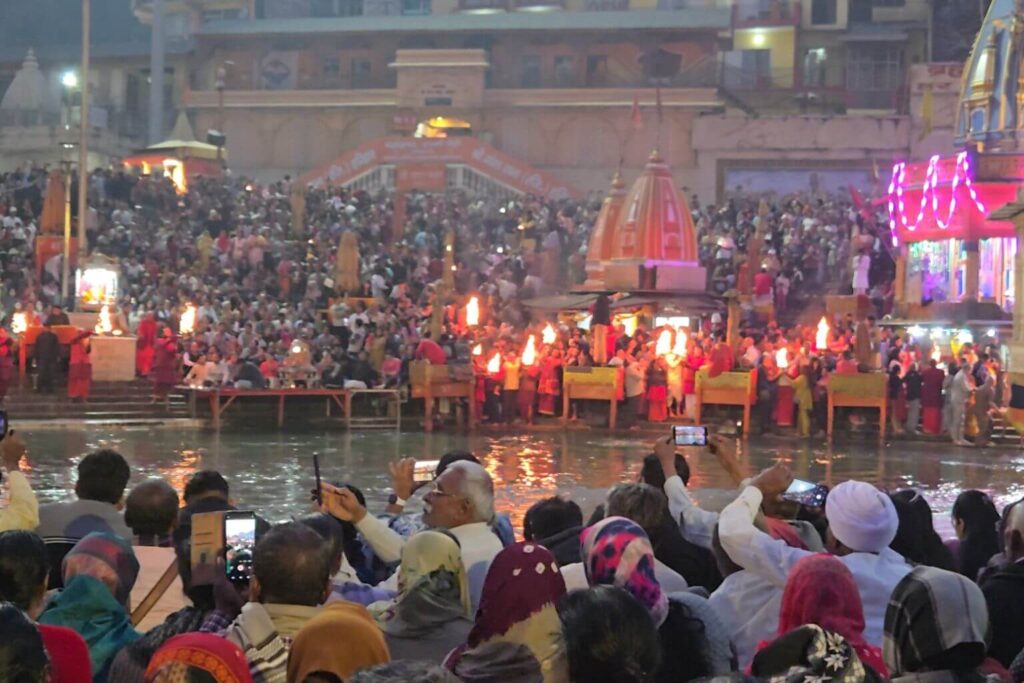
If you are planning a visit to Haridwar and want to witness the most sacred ritual on the banks of the Ganges, knowing the exact Ganga Aarti timing is the first thing you need.
I have attended this aarti more times than I can count — and every single time, it moves me in a way that is difficult to put into words. The evening Ganga Aarti at Har Ki Pauri is not just a religious ceremony — it is one of the most visually and spiritually overwhelming experiences in all of India.
Hundreds of brass lamps swaying over the river. Conch shells echoing off stone ghats. Thousands of devotees releasing diyas onto the current. This is Haridwar at its most alive.
This guide covers everything you need to know for 2026 — month-by-month timings, morning versus evening aarti, the best spots to watch, and the small details that make all the difference once you’re actually standing on the ghat.
Ganga Aarti Timing in Haridwar: Month by Month
The Ganga Aarti in Haridwar takes place twice every day — once at dawn and once at sunset — without exception, 365 days a year.
Because the ceremony is tied to sunrise and sunset, the timing shifts with the seasons. Below is a month-by-month breakdown of the evening aarti timings for 2026:
| Month | Evening Aarti Time |
|---|---|
| January | 6:00 PM |
| February | 6:30 PM |
| March | 6:30 PM |
| April | 7:00 PM |
| May | 7:00 PM |
| June | 7:15 PM |
| July | 7:15 PM |
| August | 7:00 PM |
| September | 6:30 PM |
| October | 6:00 PM |
| November | 5:45 PM |
| December | 5:30 PM |
Important note: These timings are approximate and follow the local sunset schedule.
Always verify the exact time on the day of your visit with your hotel or at the ghat itself, as timings can shift by 10–15 minutes around seasonal transitions.
The morning aarti (dawn aarti) is held at sunrise, typically between 5:00 AM and 6:30 AM depending on the season.
Where Is the Ganga Aarti Held?
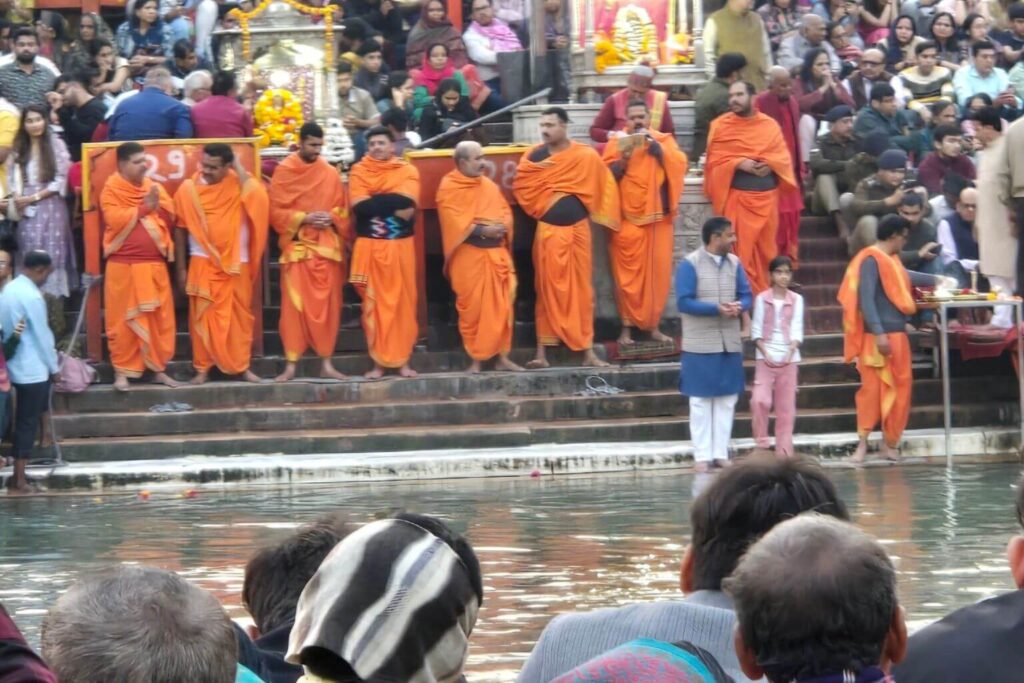
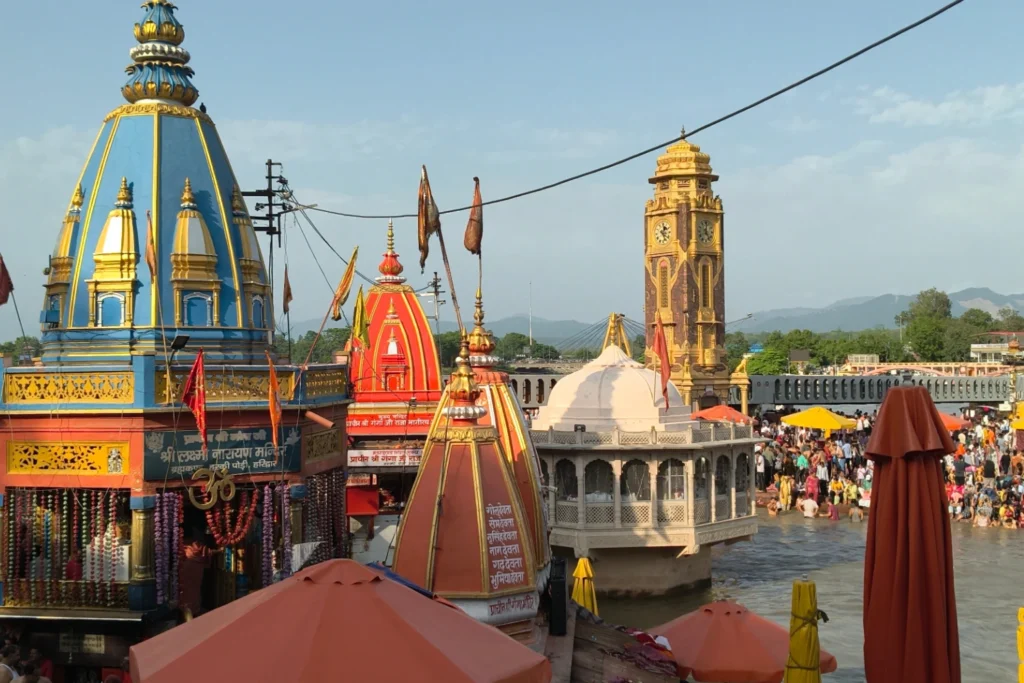
The Ganga Aarti in Haridwar takes place at Har Ki Pauri — the steps of God. It is considered one of the holiest ghats in all of India, believed to be the exact spot where the Ganges exits the Himalayas and enters the plains.
A large clock tower marks its entrance. You will hear the bells before you see it.
There is also a smaller aarti at Kushavarta Ghat in Kankhal, about 4 km south — far fewer crowds, much more intimate. Worth knowing if you want a quieter experience.
Morning Aarti vs Evening Aarti: Which Should You Attend?
Morning Aarti
A quieter aarti also takes place each morning at sunrise — around 5:30 AM to 6:00 AM. The crowds are smaller, the air is cold and misty, and the stillness is something the evening aarti cannot replicate. For serious seekers, the morning aarti is arguably the more moving experience.
Evening Aarti (The Main Event)
The evening aarti is the one everyone comes for. The timing shifts with the seasons:
| Season | Approximate Time |
|---|---|
| Summer (April – June) | 7:00 PM – 7:30 PM |
| Monsoon (July – September) | 6:30 PM – 7:00 PM |
| Autumn (October – November) | 6:00 PM – 6:30 PM |
| Winter (December – March) | 5:30 PM – 6:00 PM |
Always verify locally when you arrive — timing shifts with sunset. Ask at your hotel or check with the Ganga Sabha.
🕔 Local Tip — Arrive by 5 PM:
The ghat sanchalaks begin preparing well before the aarti. They first clear the steps — asking all bathers to finish their snan and move back so the ghat can be cleaned. After cleaning, people settle in for the ceremony. By 5 PM the front spots are filling. Come early or you will be watching from the back.
Arrive at least 45 minutes early. The ghats fill up fast. By the time the aarti begins, prime viewing spots are long gone.
What Happens During the Ganga Aarti?
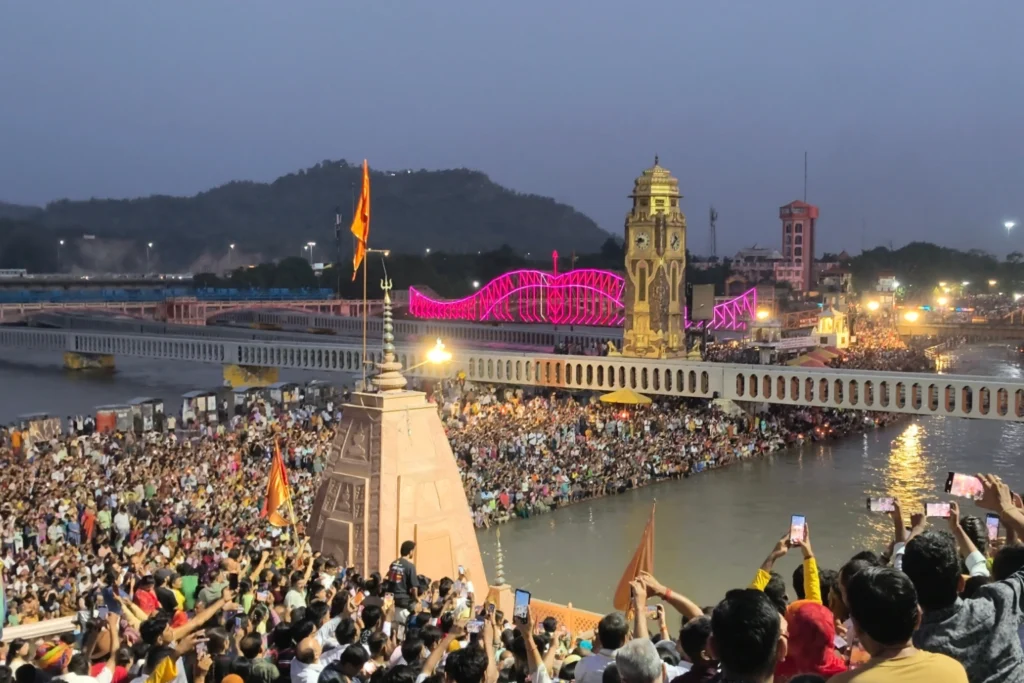
The ceremony lasts roughly 45 minutes to an hour.
Five to seven priests — dressed in saffron orange dhoti and kurta — take their positions on the ghat. They lift enormous brass lamps blazing with fire. These are not small candles. They are towering multi-tiered structures, sometimes with dozens of wicks burning simultaneously.
What most visitors don’t notice: seva workers stand alongside the priests, repeatedly changing wet cloth pads to keep the bases of the lamps cool. The brass gets extremely hot from the sustained flame, and this quiet, continuous work happens throughout the entire ceremony — largely unseen by the crowd.
The chanting begins — Om Jai Gange Mata, the beloved Hindi aarti that every devotee knows by heart, fills the air alongside conch shells, bells, and drums.
The priests perform circular movements with the lamps in perfect synchronization, tracing spirals of fire in the darkening air. The flames reflect off the moving water below — fire in the air, fire in the river.
Best Spots to Watch the Ganga Aarti at Har Ki Pauri
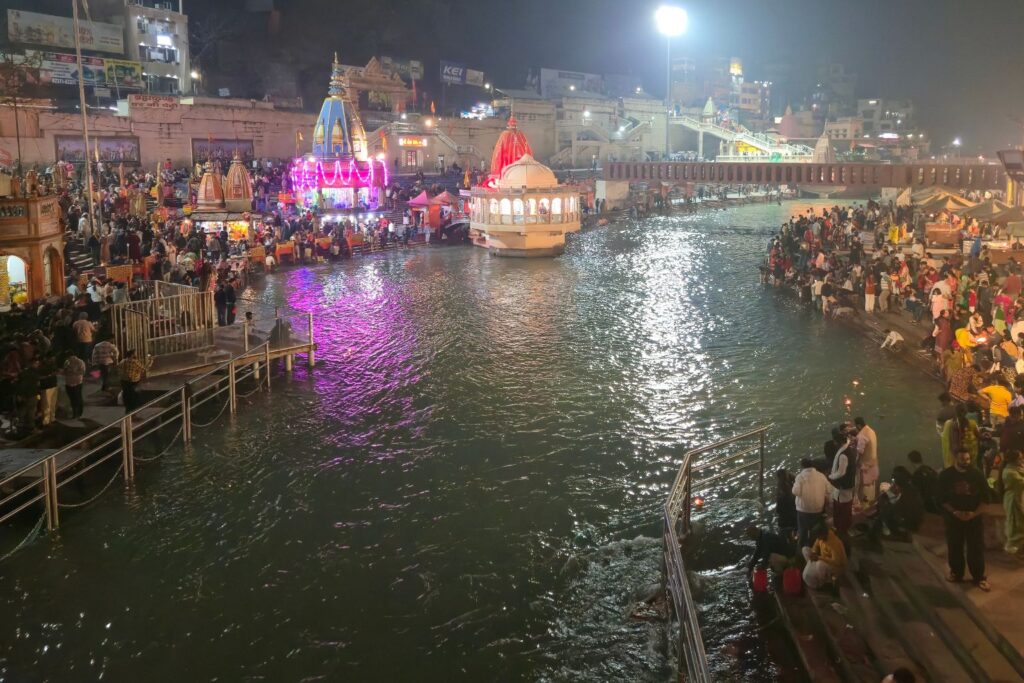
The geography of Har Ki Pauri gives you several options depending on what kind of experience you want.
Upper Ghat Steps: The elevated stone steps on the eastern bank offer the best elevated view of the entire ceremony.
You can see the priests, the river, and the crowd simultaneously. Arrive 45 minutes early to claim a good position here, especially on weekends.
Riverside at Ghat Level: Standing at the water’s edge gives the most immersive experience. You are among the devotees, close to the priests, and every nuance of the chanting and bells reaches you clearly.
This is the most crowded position and requires patience, but the proximity is unmatched.
Bridge Over the Ghat: The footbridge adjacent to Har Ki Pauri offers an aerial view of the ceremony and the river. This is an excellent position for photography and for watching the diya boats float downstream. The bridge fills up quickly; arrive early.
Opposite Bank: The western bank of the Ganges offers a view of the ghat from across the water. The perspective here is different — you see the entire ghat face illuminated by the aarti lamps reflected in the river.
🏛️ Local Tip — Clock Tower Ghat:
Come to the Clock Tower ghat for a direct, unobstructed view of the entire ceremony. This is something I discovered only after a few visits — most people crowd the wrong side and miss the best angle entirely.
If you arrive late and the front steps are full — prasad stalls near the ghat set up stools for ₹250 per person, aarti thali included. The stall owner will even help you hold the deepak — because those lamps get very hot.
Floating a Diya — Do This
At key moments during the aarti, devotees float small diyas on the river. Vendors on the ghat sell leaf boats with a diya and flowers for around ₹30.
I want to share what actually happened to me the first time I did this. I released my diya gently onto the water — and a strong wave immediately extinguished it. I felt genuinely sad watching that small flame go dark.
But there is no need to worry. Simply go back to the vendor, buy another one for ₹30, and try again. I did exactly that. The second one caught the current and drifted away still burning. I pressed my hands together and watched it go.
That small moment — the failed first attempt, the second try, the little flame finally floating downstream — stayed with me far longer than any photograph from that evening.
🪔 Local Tip — Diya Floating:
Buy your diya from ghat vendors for ₹30. Release it gently and close to the water surface. If the flame goes out in the waves — don’t feel bad, it happens often. Simply buy another and try again. The act matters more than the outcome.
After the Aarti — Leave Carefully
⚠️ Important Tip:
When the aarti ends, the entire crowd begins moving at once. The bridges near Har Ki Pauri can get very congested and there is real pushing. Move slowly, stay to one side, keep your bag in front of you, and don’t rush. Taking your time protects you from both the crowd crush and pickpockets. Let the initial surge pass before you move.
Best Time of Year to Visit Haridwar
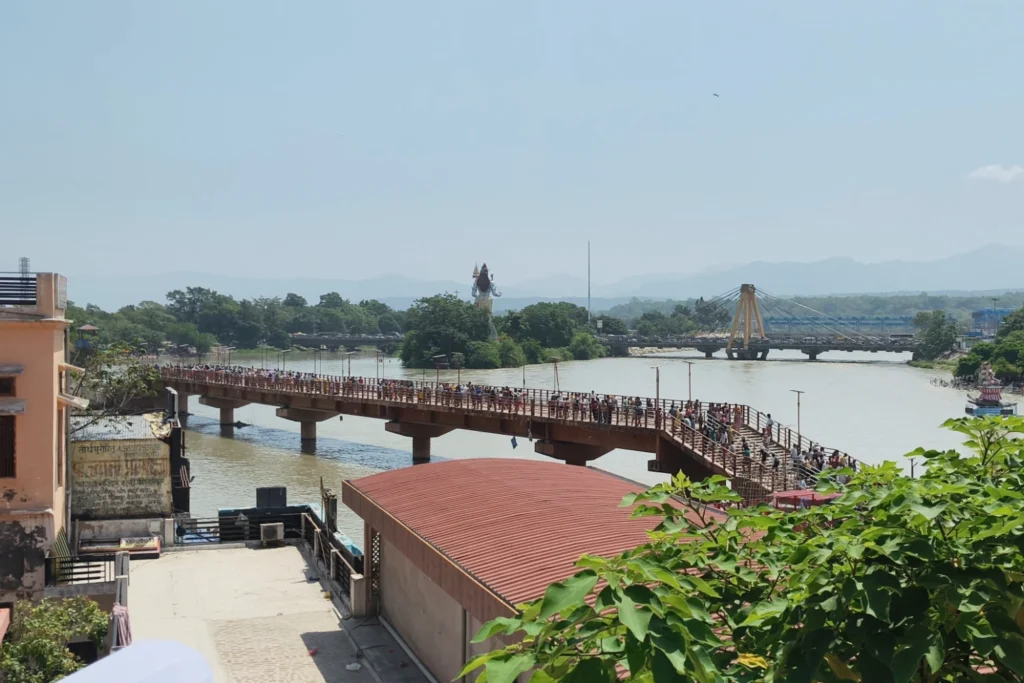
October to February is the best period — cool weather, clear air, post-monsoon Ganga running clean and blue-green. Winter evenings at the aarti, with cold air and blazing lamps, are particularly powerful.
March–April brings large festival crowds. May–June is hot but less touristy. July–September monsoon brings heavy rain — the aarti continues, but logistics are harder.
Kumbh Mela years (next Ardh Kumbh in 2027) bring tens of millions of pilgrims. A once-in-a-lifetime spectacle — but book accommodation well in advance.
Tips for Attending the Ganga Aarti
Arrive Early: For the evening aarti, aim to arrive at Har Ki Pauri at least 30 to 45 minutes before the scheduled time. The area fills rapidly, especially on Saturdays, Sundays, and any festival day.
Staying close to the ghat makes this much easier — check out the best hotels near Har Ki Pauri to wake up just minutes from the action.
On a busy weekend evening, the crowd can make movement near the ghat almost impossible if you arrive late.
Remove Footwear: Shoes and sandals must be removed before entering the ghat area. Bring a small bag or use the paid shoe storage counters near the ghat entrance (typically ₹10–₹20). Wearing slip-on footwear makes this easier.
Dress Modestly: Covered shoulders and legs are expected and respected. Avoid shorts and sleeveless tops. A light dupatta or shawl serves multiple purposes — modesty, warmth in winter evenings, and sitting on ghat steps.
Photography: Photography and videography are permitted at the Ganga Aarti. However, be mindful that you are in the middle of a living religious ceremony, not a staged show.
Keep your phone or camera unobtrusive during the most devotional moments and avoid using flash close to the priests or the lamps.
Diya Offering: You can purchase small diya boats from vendors near the ghat for ₹10–₹20. Lighting and releasing a diya on the Ganges is a simple act that most visitors find unexpectedly moving, regardless of their religious background.
Avoid Festival Weekends If Crowds Overwhelm You: Mahashivaratri, Kumbh Mela dates, Diwali, and long weekends bring enormous crowds to Har Ki Pauri.
The aarti on these occasions is spectacular but the density of people requires significant patience. If you prefer a calmer experience, visit on a Tuesday or Wednesday in the off-season.
Security and Belongings: The crowd at the evening aarti is dense enough to warrant keeping your valuables — phone, wallet, passport — in a secure inner pocket or money belt. Pickpocketing, while not rampant, is a minor risk in any large Indian crowd.
Ganga Aarti on Special Occasions
The Ganga Aarti takes on an even greater scale and significance on certain dates throughout the year.
Mahashivaratri (February/March): The night-long festival of Shiva draws hundreds of thousands to Haridwar. The aarti on Mahashivaratri night is performed with additional priests and extended chanting — an overwhelming sensory and spiritual experience.
Ganga Dussehra (May/June): This ten-day festival celebrates the descent of the Ganges from heaven to earth. The aarti during Ganga Dussehra is performed with special elaborate rituals and the ghats are decorated with flowers and lights from dusk to midnight.
Kartik Purnima (October/November): The full moon in the month of Kartik is one of the most auspicious bathing days in the Hindu calendar.
The evening aarti on Kartik Purnima, performed under a full moon with the entire ghat area illuminated, is considered among the most beautiful of the year.
Diwali (October/November): Diwali transforms Har Ki Pauri into something extraordinary. The ghat steps line with diyas, the river fills with floating lamps, and the aarti performs against a backdrop of light that is genuinely difficult to describe
FAQ
Between 5:30 AM and 6:30 AM depending on season. Fewer crowds, deeply peaceful — worth attending if you’re staying overnight.
At Har Ki Pauri, the most sacred ghat on the Ganges. The Clock Tower at the entrance is your landmark.
Summer (April–October): 6:30–7:00 PM. Winter (November–March): 5:30–6:00 PM. Confirm locally as it varies with sunset.
At Parmarth Niketan Ashram (most popular): 5:30–6:30 PM winter, 6:00–7:00 PM summer. At Triveni Ghat: around 6:00–7:00 PM.
Yes — vendors sell leaf boats with diya and flowers for ₹30 on the ghat. Release gently close to the water. If the flame goes out, simply buy another and try again.
Practical Summary
The Ganga Aarti Timing in Haridwar ranges from 5:30 PM in December to 7:15 PM in June and July, always aligned with sunset. The ceremony is held at Har Ki Pauri twice daily — at dawn and at dusk — every single day of the year without interruption.
Arrive early, dress modestly, leave your shoes at the entrance, and if possible attend both the morning and evening versions during your stay.
However you arrive at Haridwar — by faith, by curiosity, or simply by chance — the Ganga Aarti will be the moment you remember longest.
Last updated: February 2026. Timings are approximate and may vary by 10–15 minutes around seasonal transitions.