
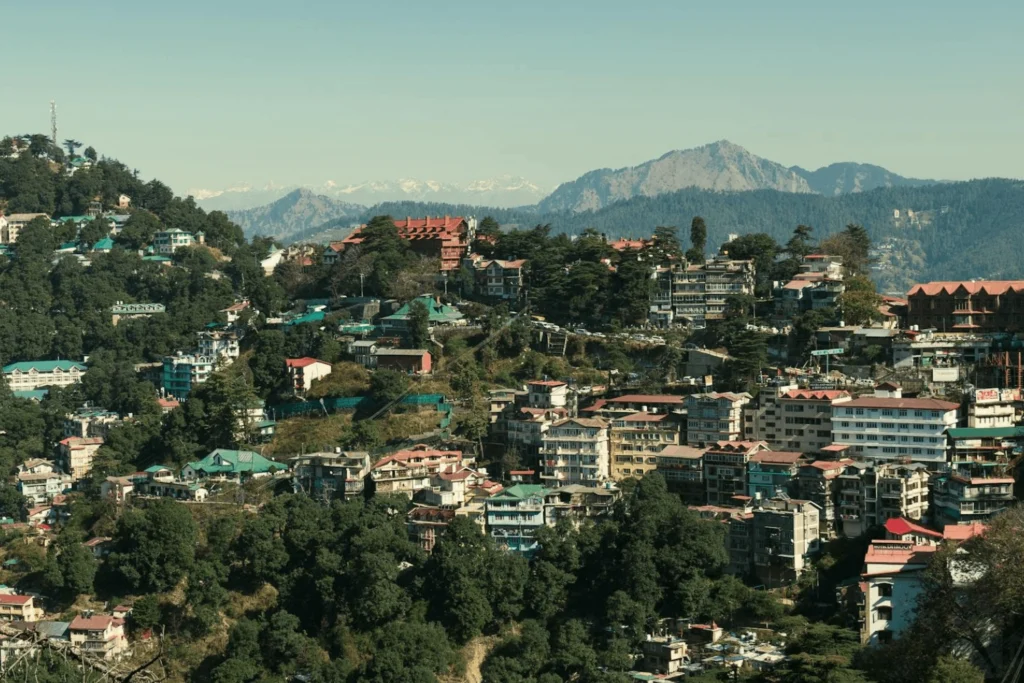
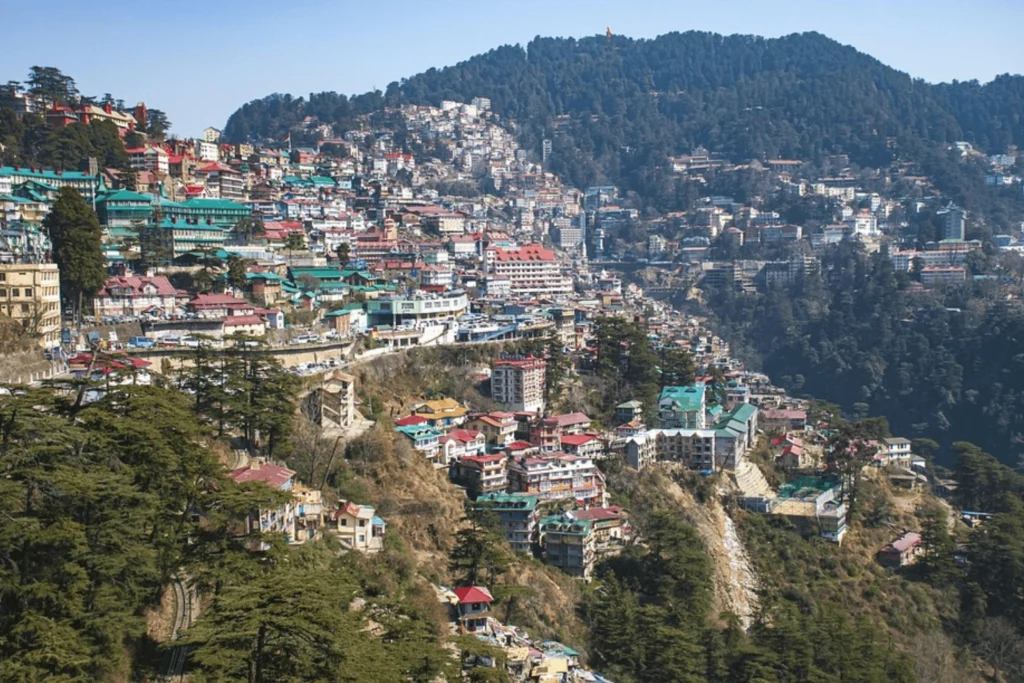
Planning a trip to the mountains? This Shimla travel guide for 2026 covers everything you need before visiting one of India’s most iconic hill stations.
Nestled at an elevation of 2,206 metres in the Himachal Pradesh ranges of northern India, Shimla was once the summer capital of British India and continues to draw millions of travellers each year.
Shimla continues to evolve as a travel destination. Improvements in transport, better accommodation options, and growing interest in offbeat experiences mean visitors today have far more choices than they did a few years ago.
This guide gives you honest budget breakdowns, a day-by-day itinerary, the best hotels across price ranges, and the hidden places most visitors walk right past.
If you’re visiting Shimla for the first time, it also helps to understand the overall Himachal Pradesh trip cost and choose the best time to visit Himachal Pradesh, especially if you’re planning to explore nearby destinations after Shimla.
Quick Answer: The best time to visit Shimla is from April to June for pleasant weather and sightseeing, October to November for clear mountain views and fewer crowds, or December to February if you’re hoping to experience snowfall.
Getting to Shimla in 2026
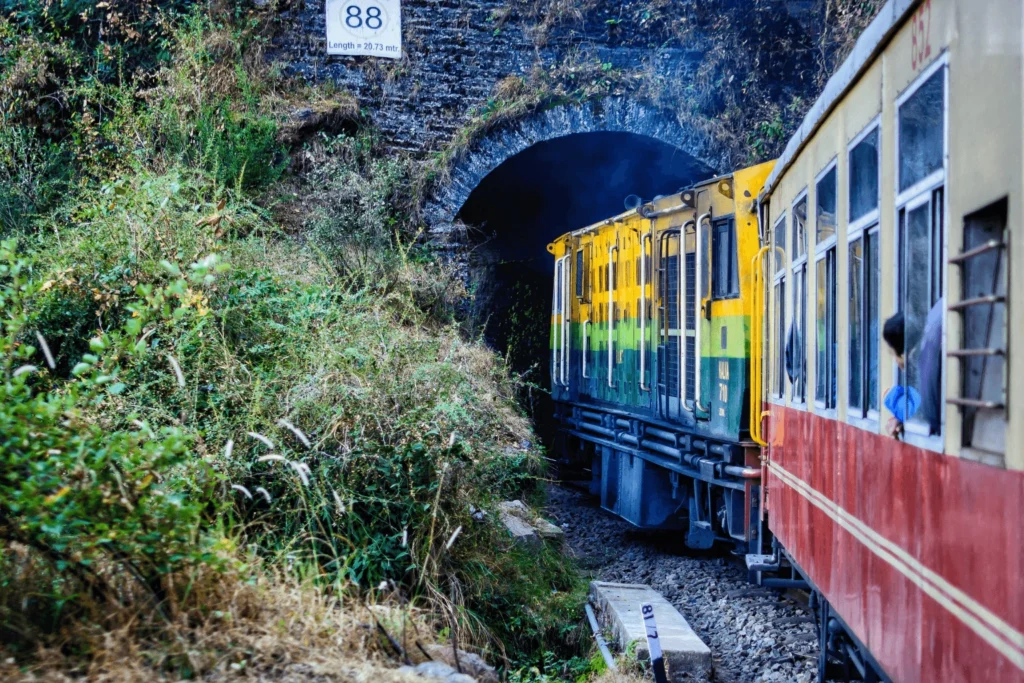
By train: The Kalka–Shimla Narrow Gauge Railway, a UNESCO World Heritage route, remains the most atmospheric way to arrive. The toy train passes through more than 100 tunnels and over 800 bridges on its scenic five-hour journey from Kalka to Shimla.
Book the Shivalik Deluxe Express for panoramic views — tickets sell out weeks in advance during peak season (April–June and October–November), so reserve early on the IRCTC portal.
By road: Volvo buses from Delhi’s ISBT Kashmere Gate depart nightly and cover the roughly 350 kilometres in eight to nine hours, arriving at the Shimla ISBT on Cart Road. Himachal Road Transport Corporation (HRTC) buses are cheaper but take longer.
If you’re driving from Chandigarh, the NH5 via Solan is the standard route — allow four to five hours. Keep in mind that private vehicles have long been restricted from the core Mall Road and several surrounding lanes; this isn’t new, but enforcement has tightened recently.
Visitors should avoid driving into restricted areas around Mall Road without checking the latest traffic rules, as penalties for violations can be significant. Use the designated parking at Tutikandi or New ISBT and take a local bus or walk up.
By air: Shimla’s Jubbarhatti Airport handles limited flights from Delhi and Chandigarh. Seats are expensive and the runway’s mountain approach means frequent weather cancellations. Most travellers find flying impractical unless they have a specific need.
How to Get Around Shimla
Once you’re in Shimla, walking is the default. The Mall Road and the Ridge are pedestrian-only, and most of the central attractions — Christ Church, Scandal Point, Lakkar Bazaar — sit within easy walking distance of each other, if you don’t mind a few steep inclines.
For anything further out, local HRTC buses run frequent routes connecting Cart Road, the ISBT, and the main suburbs, and are by far the cheapest way to get around — usually under ₹30 a ride. Shared taxis cover similar ground for a bit more, and are useful when buses are infrequent or you’re carrying luggage.
Private taxis are the easiest option for day trips to Kufri, Chail, or Naldehra, typically running ₹800–₹1,500 for a half or full day depending on distance; negotiate the fare upfront or book through your hotel.
Since private vehicles can’t drive into the Mall Road core, park at Lift Car Parking, the High Court parking, or near the ISBT, and either walk in or take the Mall Road lift — a small ropeway-style elevator connecting Cart Road to the Mall — which saves a genuinely steep climb for a few rupees.
Best Time to Visit
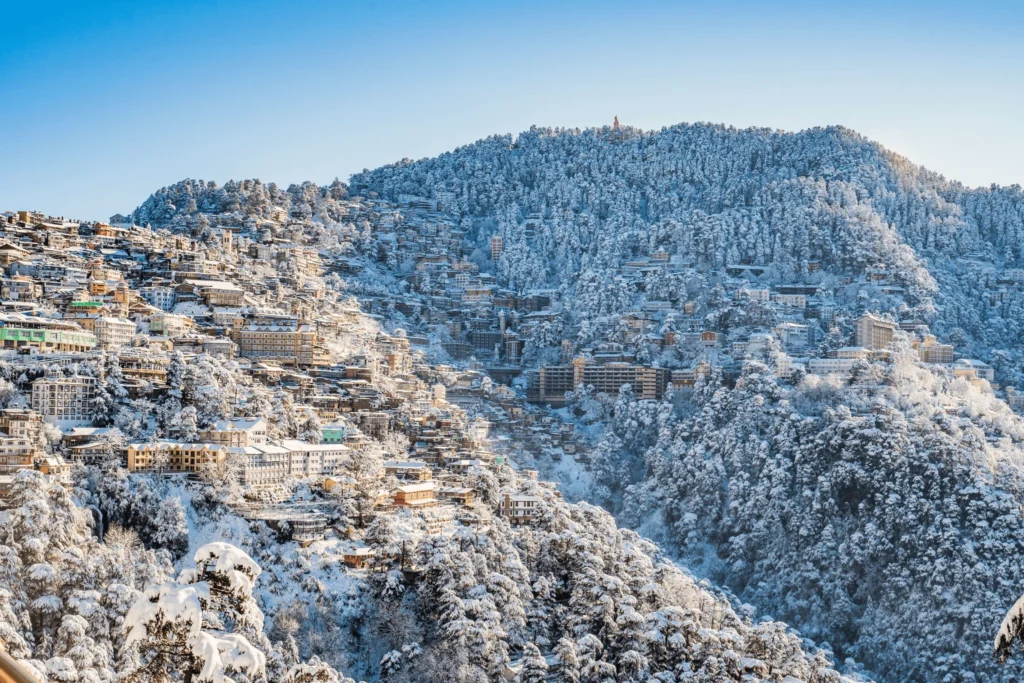
Shimla has four distinct seasons, each with its own appeal.
Summer (April–June) is peak season. Temperatures hover between 15°C and 30°C, making it a refuge from the plains. Expect crowds, higher hotel rates, and a festive atmosphere. Book accommodation two to three months in advance.
Monsoon (July–September) brings lush green hillsides, near-empty tourist infrastructure, and significant discounts — often 40 to 50 percent off peak rates. Landslides can occasionally disrupt road access and the toy train, so keep flexibility in your itinerary.
Autumn (October–November) is arguably the finest time to visit. The skies are usually clear, visibility improves, and the surrounding cedar forests look especially beautiful after the monsoon. This is the sweet spot for photographers and hikers, and the summer crowds are long gone.
Winter (December–March) brings snowfall, which typically transforms the ridge and surrounding peaks between late December and February. Snowfall attracts domestic tourists on long weekends, spiking prices briefly, but weekday visits in January or February can be remarkably peaceful.
Budget Breakdown (Per Person, Per Day)

Understanding what Shimla costs in 2026 is essential for planning without unpleasant surprises.
Budget traveller (₹1,200–₹2,000/day): Dorm beds at hostels on Cart Road or near ISBT run ₹400–₹700 per night. Eating at dhabas and local Himachali restaurants keeps food costs around ₹300–₹500. Local buses, walking, and the occasional shared taxi handle transport for under ₹200. Entry fees to sights are minimal — Jakhu Temple, the Ridge, and most viewpoints are free.
Mid-range traveller (₹3,000–₹6,000/day): Private rooms at guesthouses and heritage properties cost ₹1,800–₹3,500. Dining at mid-range restaurants (Café Simla Times, Indian Coffee House, Ashiana) adds ₹700–₹1,200. Budget for a private taxi for day trips — Kufri is typically ₹800–₹1,200 for a round trip.
Luxury traveller (₹10,000–₹25,000+/day): Colonial-era properties such as Wildflower Hall and Cecil Hotel charge upwards of ₹12,000 per night. Prices vary significantly depending on the season and room category. Fine dining, spa treatments, and private guided tours add significantly to this.
On money: ATMs are available on the Mall and at Sanjauli Chowk. Many smaller guesthouses still prefer cash. Fuel costs and parking fees have risen in 2026, making it cheaper to leave your vehicle at the base of town and use local transport.
4-Day Shimla Itinerary
Day 1: Arrival and The Ridge
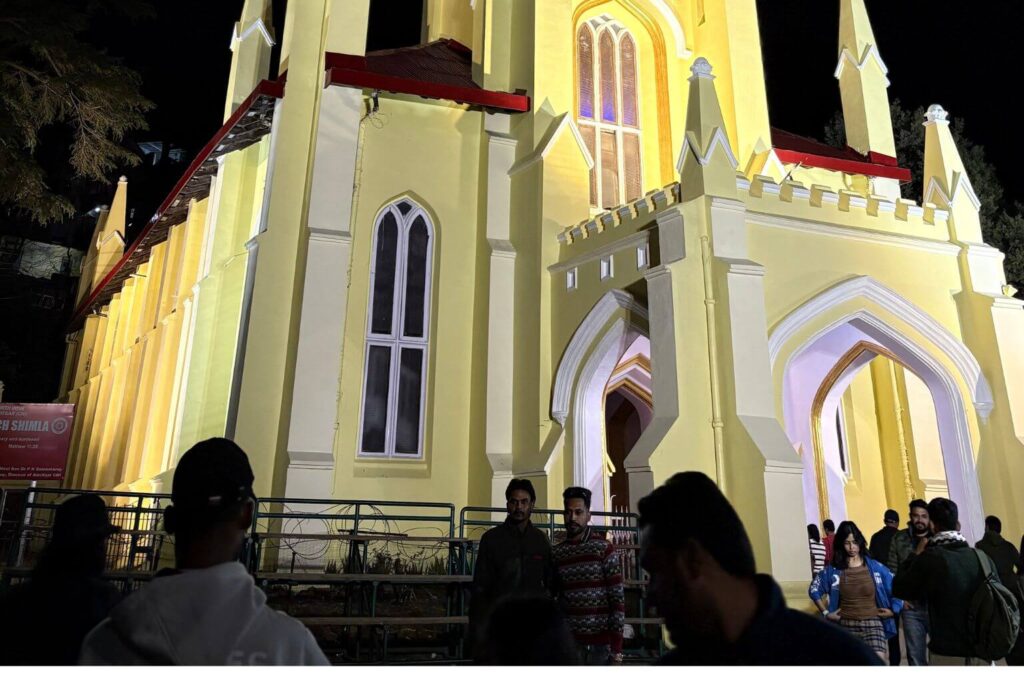
Arrive by the morning toy train for maximum atmosphere. Check in, freshen up, and walk the famous Mall Road — pedestrianised in its core and generally calmer than the surrounding restricted lanes, where private vehicle access stays limited.
Visit Christ Church, one of the finest colonial churches in north India, built in 1857 and still holding services.
Walk along the Ridge for sweeping Himalayan views. In the evening, visit the Gaiety Theatre if a performance is scheduled — this restored 1887 Victorian venue hosts some of Himachal Pradesh’s best cultural events. Dinner at Café Simla Times on the Mall for Himachali trout and local rajma-chawal.
Day 2: Jakhu Temple and Scandal Point
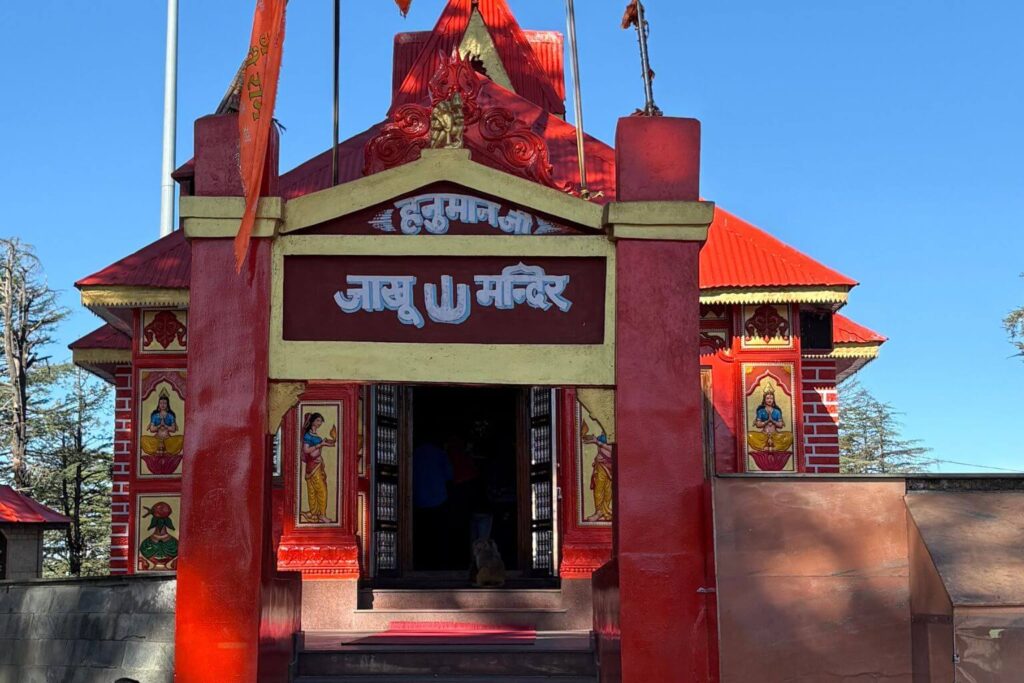
Start early for the Jakhu Temple hike. The 2.5-kilometre trail through rhododendron and oak forest leads to the summit, where the 33-metre Hanuman statue dominates the skyline.
The temple itself is ancient and atmospheric — watch for the famously bold rhesus monkeys that inhabit the ridge, and keep your sunglasses and snacks close.
Back down by 10am, spend the mid-morning at the State Museum on Chaura Maidan, which houses an excellent collection of Pahari miniature paintings, Kangra textiles, and colonial-era artefacts.
In the afternoon, explore the Scandal Point area and Lakkar Bazaar for wooden handicrafts and Himachali shawls.
Day 3: Kufri and Chail
Hire a taxi for a full-day excursion. Kufri, 16 kilometres from Shimla, sits at 2,622 metres and offers pony rides and, in winter, basic skiing. The real draw here is the Himalayan Nature Park, home to snow leopards, Himalayan black bears, and several pheasant species.
Continue to Chail (45 kilometres from Shimla) — a quieter hill station known for the world’s highest cricket ground, built by the Maharaja of Patiala in 1893, and the Chail Wildlife Sanctuary.
Lunch at the Chail Palace Hotel restaurant is worth the splurge. Return to Shimla by early evening.
If you’re continuing your journey beyond Shimla, many travelers combine this itinerary with a Delhi to Manali road trip or a longer Himachal itinerary covering Manali, Kasol, and Dharamshala.
Day 4: Naldehra and Tattapani
Another taxi day. Drive 22 kilometres to Naldehra, home to one of India’s oldest golf courses, established in 1905. Non-golfers come for the cedar forests and the small but charming Shiv Temple.
From Naldehra, descend 65 kilometres to Tattapani on the Sutlej River, known for its hot sulfur springs. The river canyon scenery is dramatic and quite different from the highland views you’ll have had all trip.
If you have time, stop at Chadwick Falls on the return — a 67-metre waterfall that’s at its best after monsoon but remains a lovely picnic spot year-round.
Where to Stay: Hotels for Every Budget
Budget (₹500–₹2,000/night)
Hotel Doegar near Cart Road is a clean, no-frills option with mountain-facing rooms and helpful staff. Zostel Shimla, a short walk from the bus stand, remains the best hostel in town, with reliable Wi-Fi, a lively common area, and organised day trips.
Hotel Holiday Home, run by HPTDC on Elysium Hill, offers government-fixed rates, reasonable cleanliness, and a canteen.
Mid-Range (₹2,500–₹7,000/night)
Hotel Combermere on the Mall is a colonial-era property with large rooms, wooden furniture, and genuine heritage character without the premium price of the big names.
Woodville Palace Hotel, owned by the descendants of the Raja of Jubbal, is set in a Victorian mansion surrounded by cedar gardens — one of Shimla’s more charming and underrated stays.
HPTDC’s Hotel Peterhoff provides solid comfort, good views, and proximity to the Secretariat area.
Luxury (₹10,000–₹40,000+/night)
The Oberoi Cecil on Chaura Maidan is Shimla’s flagship luxury address — an 1884-built property with elegant rooms, an indoor heated pool, a fine-dining restaurant, and service that justifies the rates.
Wildflower Hall by Oberoi, 13 kilometres from town at Mashobra, is the most spectacular option: a former residence of Lord Kitchener set in 23 acres of cedar forest, with a full-service spa, an infinity pool, and some of the best mountain views in Himachal.
Chapslee, a boutique property with only six rooms near the IGMC, is preferred by those who want something genuinely aristocratic — it was once a maharaja’s estate and still feels like one.
Hidden Places Most Tourists Miss
Shankara Acharya Temple (Jakhu’s smaller sibling): Few visitors know about this 8th-century shrine tucked into a forested slope above Sanjauli, dedicated to the philosopher Adi Shankaracharya, who is said to have meditated here. The path through old deodar trees and near-zero tourist traffic makes the walk itself the attraction.
Kamna Devi Temple: Sitting at 2,200 metres above Prospect Hill, this temple is reached by a forest trail from Boileauganj. The view from the temple terrace on a clear morning — Shimla’s rooftops below, white peaks beyond — is one of the most striking panoramas you can get without a taxi.
Tara Devi Temple: About 11 kilometres from the main town on the Shimla–Kalka highway, this 250-year-old hilltop temple is significant in local worship but rarely visited by tourists. The hilltop is quiet, the architecture is traditional Himachali with a pagoda-style roof, and the drive up is pleasant.
Summer Hill: A peaceful suburb five kilometres from the Ridge, Summer Hill is where Mahatma Gandhi stayed at the Rajkumari Amrit Kaur residence during his Shimla visits. The area retains a residential, unhurried quality, and the Himachal Pradesh University campus here is leafy and open for walking.
Glen Forest: This densely wooded ravine about three kilometres from the Ridge is one of Shimla’s best-kept secrets for a quiet morning. A forest track winds along a stream through enormous cedars and mixed broadleaf forest. It rarely appears in tourist literature and is almost always empty.
Annandale Ground: Annandale was once a colonial racetrack and polo ground. It’s now a helipad and sports ground used by the army — not strictly open to casual visitors, but the views from the access road above are historically interesting and worth the short detour.
Food and Where to Eat
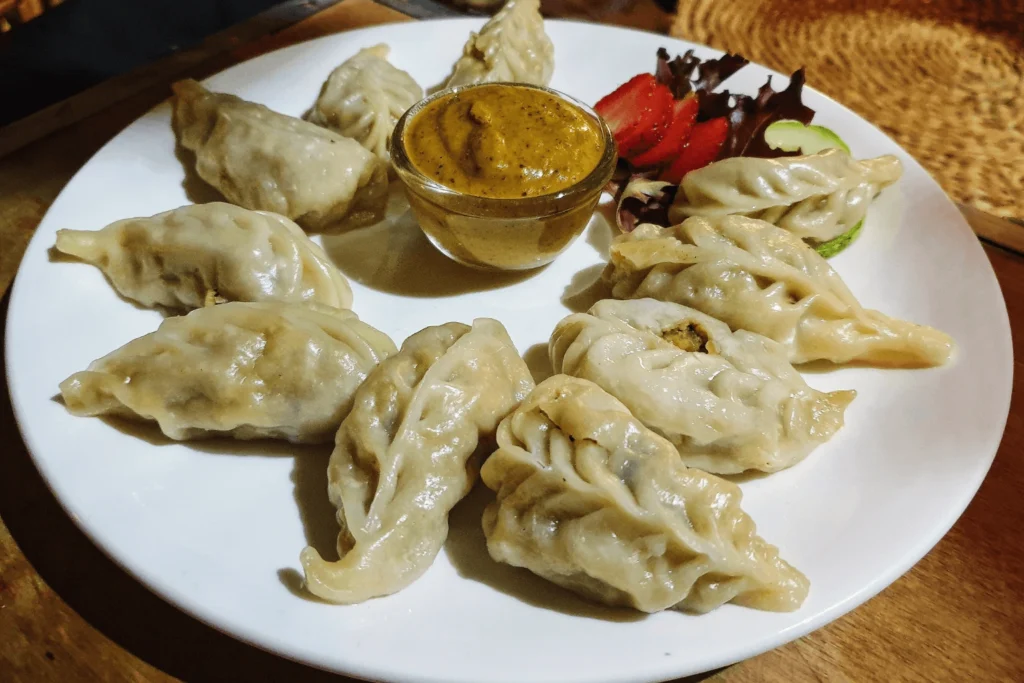
For Himachali cuisine, seek out Himachali Rasoi near Lakkar Bazaar or Satluj Restaurant in the lower bazaar. Both serve regional classics — dham, siddu, chha gosht, and madra — that are rarely done well outside the state.
For café culture, the Indian Coffee House on the Mall is a Shimla institution — the red-turbaned waiters, the strong south Indian filter coffee, the masala dosas. It’s been here since 1958 and deserves your visit.
Wake and Bake Café near the Ridge is newer, popular with younger travellers, and does solid Western breakfasts and excellent Kangra tea. For a splurge dinner, Eighteen71 at The Cecil serves modern Indian cuisine in a beautifully restored dining hall.
Apples are Himachal’s most famous agricultural product. Between August and October, roadside sellers along the Naldehra road sell locally grown varieties — Delicious, Fuji, Royal Gala — for a fraction of plains prices.
FAQ
The best time to visit Shimla is October to November for clear skies and pleasant weather, or April to June if you want to escape the summer heat of the plains. December to February is ideal for snowfall experiences.
A budget traveller can manage in ₹1,200–₹2,000 per day including accommodation, food, and local transport. Mid-range travellers should budget ₹3,000–₹6,000, while luxury stays and private tours can cost ₹10,000–₹25,000 or more per day.
The most popular options are the overnight Volvo bus from ISBT Kashmere Gate (8–9 hours) or the Kalka–Shimla toy train from Kalka, which connects to Delhi via the main rail network. The toy train journey takes around five hours and is a UNESCO World Heritage experience in itself.
For budget stays, Zostel Shimla and Hotel Doegar are reliable picks. Mid-range travellers should consider Woodville Palace Hotel or Hotel Combermere. For luxury, The Oberoi Cecil and Wildflower Hall by Oberoi are the top choices in Shimla.
Beyond the Mall and Jakhu Temple, Shimla has several offbeat gems including Glen Forest, Kamna Devi Temple, Shankara Acharya Temple, Summer Hill, and Tara Devi Temple — all offering peaceful trails and stunning views with very few tourists.
Practical Tips for 2026
Local tip: If you’re staying near Mall Road, avoid bringing a large suitcase unless your hotel provides porter service. Many hotels are located on steep lanes where vehicles can’t reach directly, so you may need to walk the final stretch.
Shimla’s roads are steep and the old city is best explored on foot — wear comfortable shoes with grip. The police enforce littering fines on the Mall and Ridge, so carry a small bag for your rubbish.
Mobile data is strong on Jio and Airtel networks in the main town but can be patchy in forest areas and on the road to Tattapani.
Altitude can cause mild headaches in visitors arriving quickly from the plains, particularly those not accustomed to elevations above 2,000 metres. Hydrate well and take your first day gently.
Winter visitors should be aware that snowfall can close the Shimla–Chandigarh road for 12 to 48 hours at a time; always check the Himachal Pradesh Public Works Department road status before you travel.
Many visitors spend most of their time around Mall Road, but Shimla’s quieter temples, forest trails, old neighbourhoods, and colonial buildings reveal a very different side of the city. If you have an extra day, it’s well worth exploring beyond the usual tourist circuit.
Last updated: February 2026. Prices are approximate and subject to seasonal variation.