
If you’re planning a break from Delhi, Shimla is one of the easiest hill stations to reach. In just a few hours, the busy city roads give way to winding mountain highways, cool weather, and some of Himachal Pradesh’s most familiar landscapes.
This guide covers the routes, transport options, best time to visit, places to see, where to stay, and a few things we’ve picked up along the way — enough to make the journey as smooth as it is memorable.
Delhi to Shimla at a Glance
| Detail | Info |
|---|---|
| Distance | ~365 km |
| Travel Time | 7–10 hours (by road) / ~5.5 hours (by train + toy train) |
| Best Time to Visit | March–June and September–November |
| Altitude of Shimla | 2,206 metres above sea level |
| Language | Hindi, Pahari |
| Currency | Indian Rupee (INR) |
How to Get from Delhi to Shimla
There are three real ways to make this journey, and each has its own trade-offs worth weighing before you book.
1. By Road (Most Popular)
The road journey covers roughly 350–370 km, depending on the exact route. Most travellers take the NH44–NH5 corridor through Chandigarh, which is both the fastest and best-maintained way in.
Via Chandigarh (Recommended): Delhi → Ambala → Chandigarh → Kalka → Shimla
Expect the drive to take around 7–8 hours, traffic depending. The stretch up to Kalka is smooth highway; from Kalka to Shimla, you’re winding up 85 km of mountain road with something in the range of 170 sharp turns — not a drive to attempt half-asleep.
A few ways to cover this leg:
- Private taxi or self-drive: the most comfortable and flexible option. Budget ₹4,000–₹7,000 one-way from Delhi.
- HRTC Volvo bus: Himachal Road Transport Corporation runs overnight and day Volvo buses from ISBT Kashmere Gate. Tickets run ₹700–₹1,200, and reliability is generally good.
- Private bus operators: several run semi-sleeper and sleeper coaches. Book 2–3 days ahead during peak season, since seats go fast.
If you’re driving, leave Delhi by 5–6 AM to clear city traffic and reach Shimla well before sunset — mountain roads after dark aren’t something to figure out for the first time in the dark.
2. By Train (The Scenic Way)
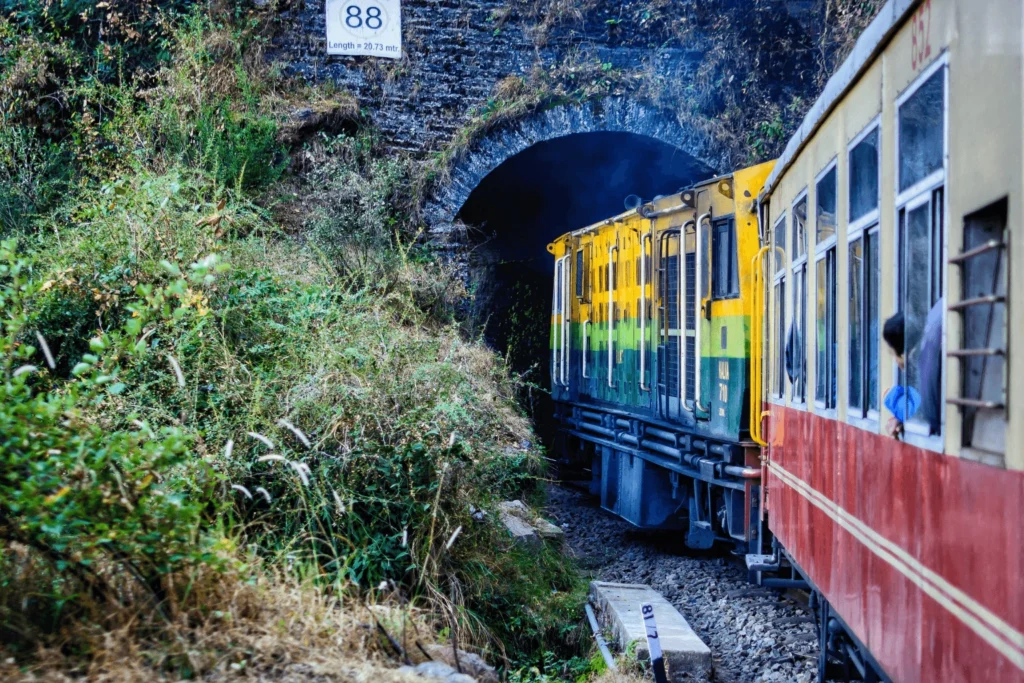
Of the three options, this one tends to leave the biggest impression, especially once you’re on the Kalka–Shimla Toy Train, a UNESCO World Heritage route in its own right.
Step 1 — Delhi to Kalka by express train
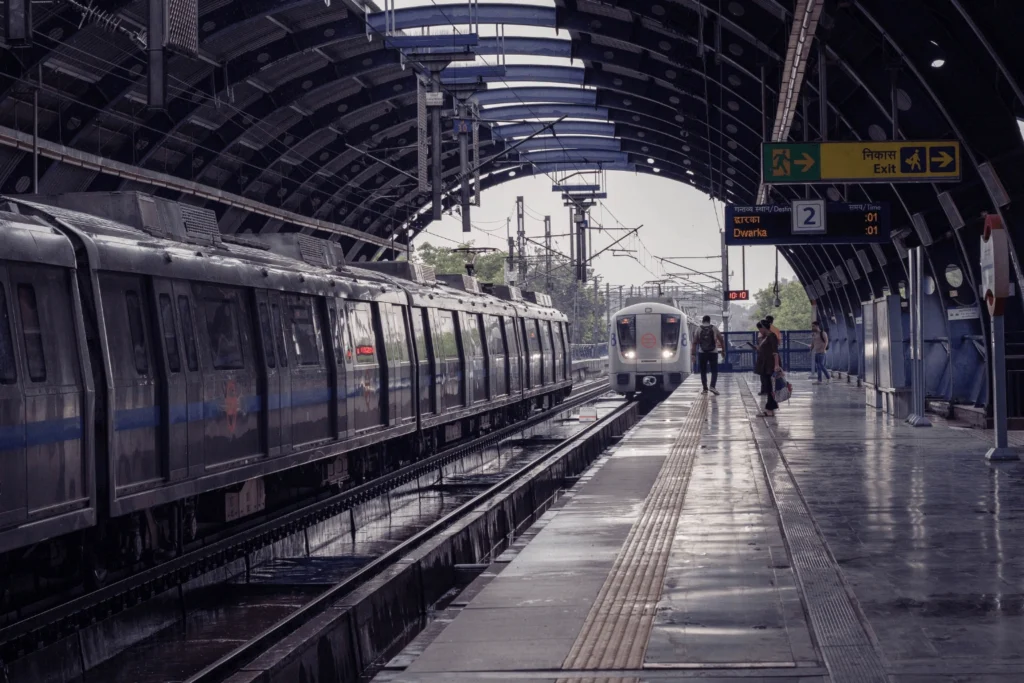
A few trains connect Delhi (New Delhi, Hazrat Nizamuddin, or Delhi Sarai Rohilla) to Kalka:
- 12011 Kalka Shatabdi Express – one of the fastest and most popular options.
- 12005 Kalka Shatabdi Express – another fast daily service that’s a good choice if timings suit your itinerary.
- 13051 Netaji Express (formerly Kalka Mail) – an overnight option preferred by travellers who want to reach Kalka early in the morning.
- Shatabdi Express to Chandigarh, followed by a taxi to Kalka (around 1 hour), is another convenient alternative.
Getting from Delhi to Kalka by express train takes roughly 4–5 hours.
Step 2 — Kalka to Shimla by toy train (UNESCO World Heritage)
From Kalka onwards, the journey feels completely different as the narrow-gauge train begins climbing into the hills — 96 km through 103 tunnels, 864 bridges, and dense pine forest, and it lives up to its reputation.
| Service | Duration | Notes |
|---|---|---|
| Shivalik Deluxe Express | ~5.5–6 hours | Panoramic windows, the most scenic option |
| Himalayan Queen | ~5–5.5 hours | The popular daytime choice |
| Rail Motor Car (Railcar) | ~3.5 hours | Fastest, with fewer stops and smaller capacity |
The Railcar gets you there quickest simply by skipping stops, but the slower services give you a lot more time to take in the scenery — both make sense, just for different reasons. Book toy train tickets in advance on IRCTC, since weekend and holiday seats disappear quickly.
3. By Air
Shimla technically has an airport — Jubbarhatti — but flights from Delhi are limited and get cancelled often enough due to weather that it’s not a dependable option for most travellers. If flying makes sense for your trip, land in Chandigarh instead and take a taxi from there (~3.5 hours).
Best Time to Visit Shimla
Shimla works as a year-round destination, but the experience shifts a lot depending on when you go.
If you’re combining Shimla with destinations like Manali, Spiti, or Dharamshala, our guide to the best time to visit Himachal Pradesh explains how the weather changes across different regions and seasons.
Summer (March–June) — peak season. This is when most people make the trip. Shimla sits at 15–30°C while Delhi is pushing past 40°C, which explains the crowds, especially in May and June. Book accommodation 2–3 weeks ahead if you’re travelling in this window.
Monsoon (July–September). The hills turn properly green and the landscape looks stunning, but landslides can block roads — the Kalka–Shimla highway included. Check road conditions before you set out, and this probably isn’t the best window for a first visit.
Autumn (September–November). This might be the best-kept secret of the four seasons. Skies clear up, crowds thin out, and the apple orchards around town are loaded with fruit. Temperatures sit at a comfortable 10–22°C. If your dates are flexible, this is the window to aim for.
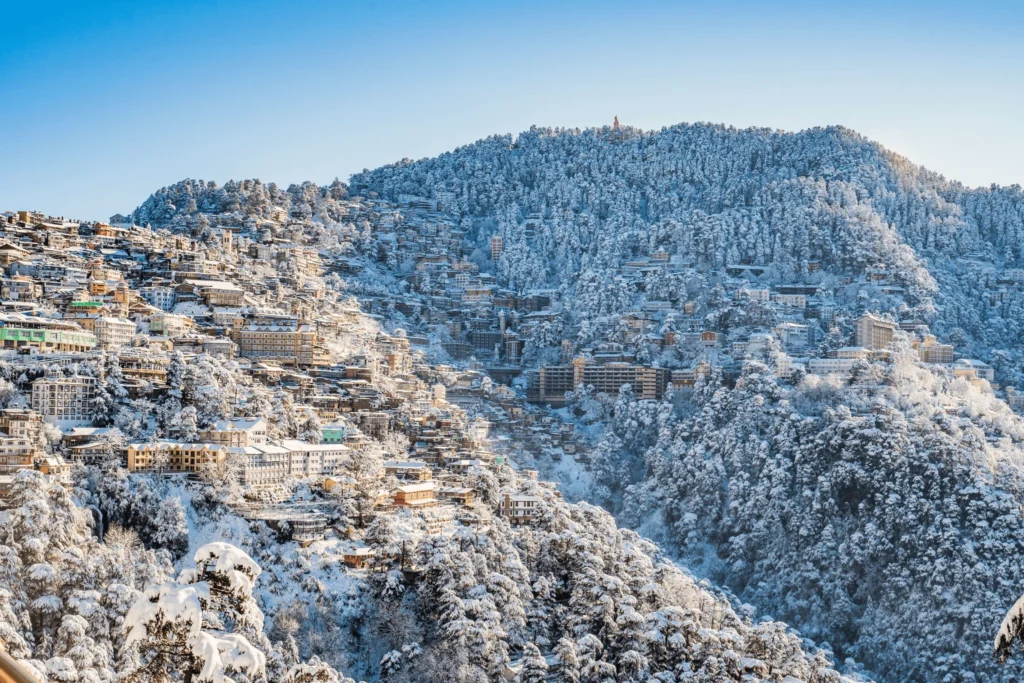
Winter (December–February). Snowfall turns Shimla into something close to a postcard, and the Mall Road, Ridge, and Jakhu Hill all look striking under a blanket of white. Temperatures can drop to -5°C, so pack heavy woollens and confirm road accessibility before leaving Delhi.
Top Places to Visit in Shimla
Once you’re actually there, Shimla doesn’t leave you short on things to do.
The Mall Road is the social heart of the town — a pedestrian promenade lined with colonial-era shops, cafés, and restaurants, and a good place for an evening stroll. Baljees is worth stopping at for hot chocolate and a pastry.
The Ridge is the open plaza connected to the Mall, with sweeping views across the Himalayan ranges. Christ Church here, built in 1857, is one of the oldest in North India, and it’s easy to spend a few quiet minutes inside.
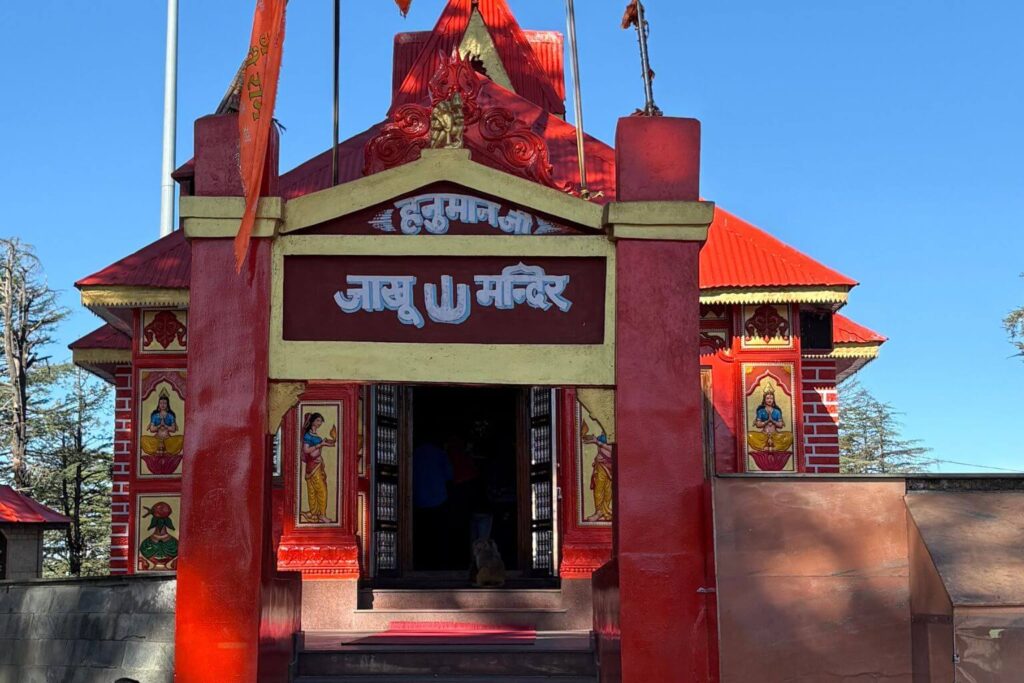
Jakhu Temple and Jakhu Hill, at 2,455 metres, is the highest point in Shimla city. A 2.5 km hike from the Ridge (or a ropeway ride if you’d rather skip the climb) takes you up to the ancient Jakhu Temple, dedicated to Lord Hanuman — the 33-metre statue here is visible from much of the city below. Keep a close eye on your belongings; the resident monkeys have a well-earned reputation.
Kufri, a small hill station 16 km out at 2,662 metres, is known for skiing in winter and horse rides in summer. The Himalayan views from here are spectacular on a clear day.
Chail, 70 km from Shimla, is quieter and far less touristy. It’s home to the world’s highest cricket ground (built 1893) and the Chail Palace, now a heritage hotel — a solid half-day trip if you have the time.
Naldehra, 45 km out, has one of India’s oldest golf courses, laid out in 1905 by Lord Curzon himself. The deodar forest surrounding it makes the whole place unusually peaceful.
The Indian Institute of Advanced Study (Viceregal Lodge) was originally the summer residence of British Viceroys, and the building — set in beautifully kept gardens — offers guided tours. A good stop for anyone interested in the colonial history here.
Chadwick Falls, 7 km from the centre, drops 67 metres and is best seen just after the monsoon, when the water flow is at its heaviest.
If you have more than a weekend, consider extending your trip with our complete Shimla Travel Guide, which covers additional viewpoints, local markets, and hidden attractions around the city.
Where to Stay in Shimla
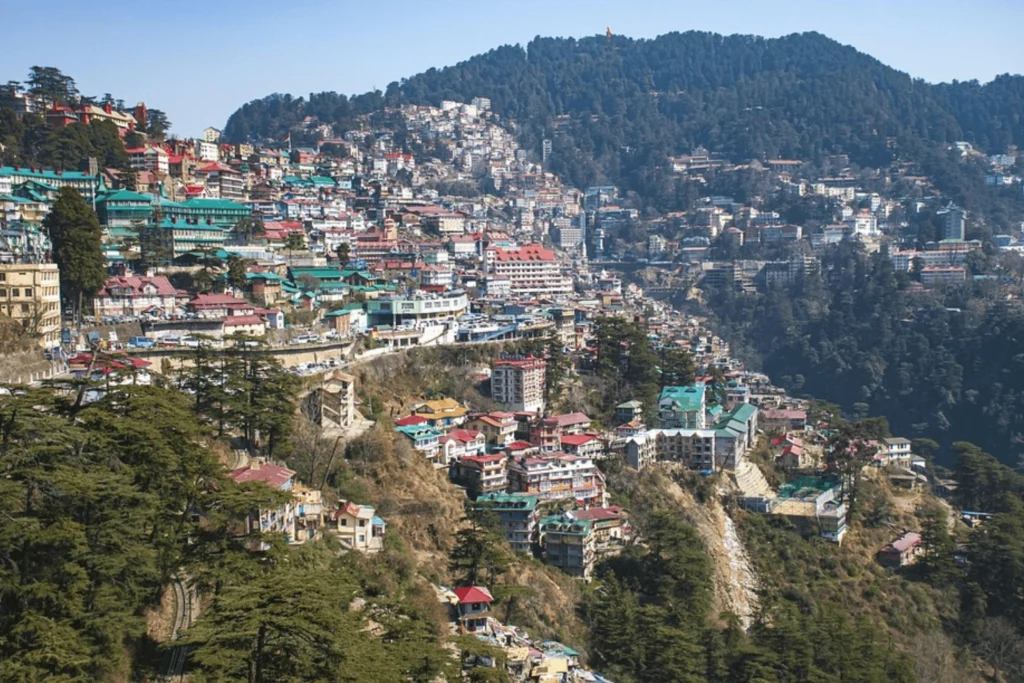
Shimla covers every budget without much difficulty.
Luxury
- Oberoi Cecil — a heritage grande dame right on the Mall, with the service to match
- Wildflower Hall, Mashobra — possibly the most beautiful resort in Himachal Pradesh, set among cedar forests at 2,500m
Mid-range
- Hotel Combermere — well-located, good views, dependable service
- Honeymoon Inn — a favourite with families and couples alike
Budget
- Hotel Dreamland — clean, central, and easy on the wallet
- Zostel Shimla — a lively hostel if meeting other travellers is part of the appeal
Properties on or near the Mall and Ridge charge a premium, but they save you the trouble of hauling luggage up Shimla’s steep lanes — something to factor in when you’re comparing rates.
What to Eat in Shimla
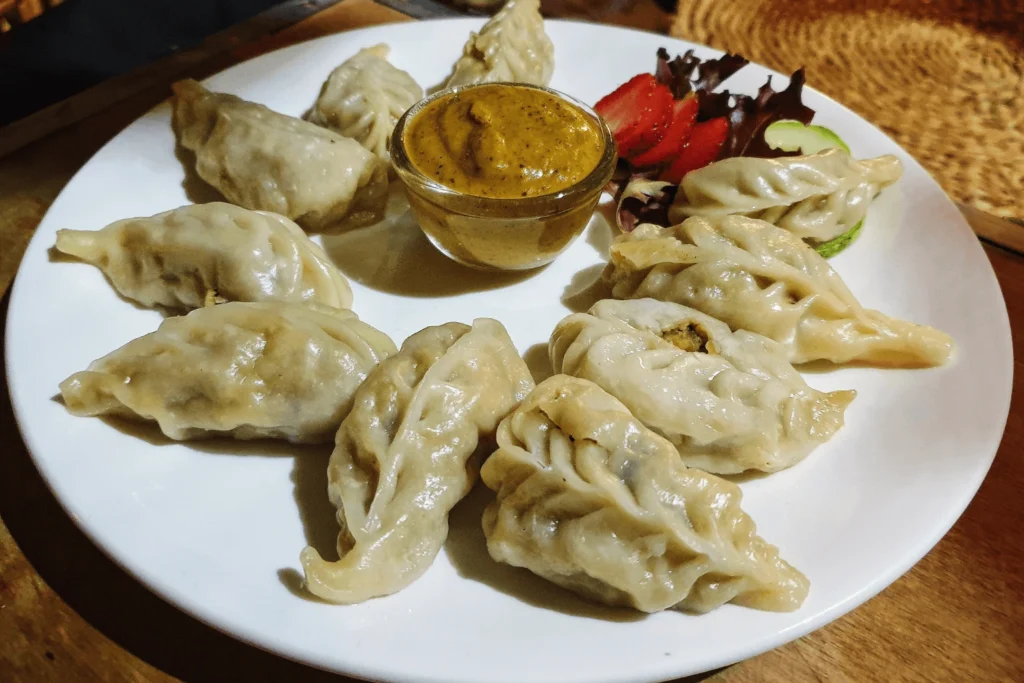
Shimla’s food scene doesn’t shout about itself, but it’s a genuinely enjoyable one to explore, with mountain flavours layered over a strong Tibetan influence.
Tibetan food — momos, thukpa, and tingmo are everywhere, and rightly so. The small Tibetan dhabas tucked into the lanes below Mall Road tend to be the most authentic version of all three.
Himachali Dham is the traditional festive meal, served on leaf plates — rice, dal, rajma, kadhi, and a sweet boli. The flavours here are comforting in a way that doesn’t really compare to anything in Delhi. It’s best found at a local dhaba rather than a tourist restaurant; some homestays will also make it on request.
Trout, pulled fresh from local rivers, is a regional favourite — usually grilled or pan-fried with minimal seasoning. Restaurants near Mashobra and Naldehra tend to serve it freshest.
Sidu, a steamed bread stuffed with poppy seed paste or walnut, is Himachali comfort food in its purest form, usually eaten with ghee and a cup of chai. Don’t skip it.
What to Pack for Shimla
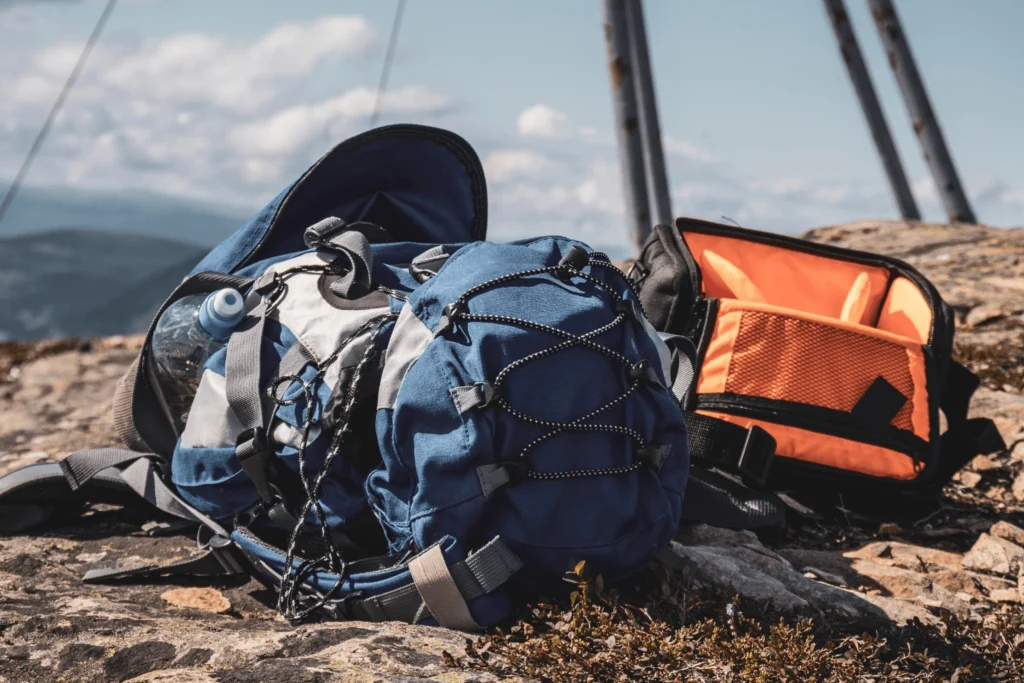
The weather here shifts quickly and the terrain is steep in places, so a bit of planning on packing goes a long way.
Clothing:
- Light layers for daytime — mornings and evenings stay cool even in summer
- A fleece or wool sweater as a mid-layer, useful year-round
- A windproof, waterproof outer jacket
- In winter: thermals, heavy woollens, gloves, a warm hat, and a scarf
- Comfortable walking shoes with good grip — Shimla’s lanes are steep and can get slippery
Documents and money:
- A government-issued photo ID (Aadhaar, passport, or driving licence)
- Printed or downloaded copies of train/bus tickets and hotel bookings
- Enough cash on hand — smaller dhabas and shops off the Mall often don’t take cards, and ATMs near the Mall can get busy in peak season
Health and essentials:
- Basic personal medication and a small first-aid kit
- Sunscreen — UV intensity is higher at this altitude even on cloudy days
- Lip balm and moisturiser, since mountain air dries you out fast
- A reusable water bottle
- A power bank for long travel days and toy train journeys
Worth bringing along:
- Binoculars, for the views from Jakhu Hill and Kufri
- A light daypack for excursions to Chail or Naldehra
- Earplugs if you’re a light sleeper — some Mall Road hotels pick up noise from the promenade below
Total Trip Budget Estimate (3 Days / 2 Nights — Per Person)

| Category | Budget 🎒 | Mid-Range 🏨 | Luxury ✨ |
|---|---|---|---|
| Transport (Delhi–Shimla–Delhi) | ₹1,400–₹2,000 (HRTC bus) | ₹3,500–₹5,000 (taxi/train) | ₹8,000–₹14,000 (private cab + toy train) |
| Accommodation (per night) | ₹600–₹1,200 | ₹2,500–₹5,000 | ₹10,000–₹30,000+ |
| Food (per day) | ₹300–₹500 | ₹800–₹1,500 | ₹2,500–₹5,000 |
| Sightseeing & Activities | ₹500–₹800 | ₹1,500–₹3,000 | ₹5,000–₹10,000 |
| Miscellaneous | ₹300–₹500 | ₹800–₹1,500 | ₹2,000–₹4,000 |
Total Estimated Cost (3 Days)
| Budget Level | Approximate Total |
|---|---|
| 🎒 Budget | ₹5,000 – ₹8,000 per person |
| 🏨 Mid-Range | ₹18,000 – ₹28,000 per person |
| ✨ Luxury | ₹55,000 – ₹1,00,000+ per person |
Travelling in the shoulder season — March or October — is the easiest way to get mid-range comfort at close to budget prices, since hotels drop rates noticeably outside peak summer and the winter holiday rush.
If you’re planning to visit more destinations after Shimla, comparing your expenses with our Himachal Pradesh Trip Cost guide can help you estimate the total budget for a longer trip.
A Few Essential Travel Tips
Documents: carry a government-issued photo ID. Some restricted areas near Shimla, like the Chail cantonment zones, may require registration.
Altitude: Shimla sits at 2,200 metres, and most people adjust without any trouble — but take day one easy if you’re coming straight from sea level.
Connectivity: mobile networks hold up well in central Shimla, but coverage thins out noticeably around Naldehra and Chail.
ATMs: available on and near the Mall. Carry some cash regardless, since smaller establishments further out may not take cards.
Clothing: even in summer, keep a light jacket or fleece on hand for the evenings. In winter, layer properly — thermals, sweaters, and a windproof shell.
Getting around Shimla: the centre is largely pedestrianised, so local taxis handle trips out to Kufri, Chail, and Naldehra. Negotiate the rate up front, or let your hotel arrange it for you.
A Sample 3-Day Shimla Itinerary
Day 1 — Arrival, the Mall, and the Ridge. Leave Delhi early and aim to arrive by afternoon. Check in, stroll the Mall, and catch sunset from the Ridge before dinner at one of the cafés nearby.
Day 2 — Shimla’s highlights. Morning: the Jakhu Temple hike or ropeway. Midday: a tour of the Viceregal Lodge. Afternoon: Chadwick Falls. Evening: browse Lakkar Bazaar, known for its wooden crafts.
Day 3 — A day trip to Kufri or Chail. Spend the day out of town, then head back to Shimla by evening for an early dinner ahead of your return journey to Delhi the next day.
FAQ
Yes, 2 days are enough to explore Shimla’s main attractions like Mall Road, Ridge, Jakhoo Temple, and Kufri. However, staying 3 days allows a more relaxed trip and time to explore nearby viewpoints.
Popular things to buy in Shimla include woollen shawls, Himachali caps, wooden handicrafts, locally made jams, and Tibetan jewellery. Mall Road and Lakkar Bazaar are the best places for shopping.
It depends on which service you choose. The Rail Motor Car (Railcar) is the fastest, completing the 96 km journey in approximately 3.5 hours. Regular services like the Shivalik Deluxe Express and Himalayan Queen take 5–6 hours — slower, but far more scenic and the preferred choice for most visitors.
Final Thoughts
The Delhi to Shimla journey is more than just a trip from the city to the hills — it’s a genuine shift in pace. Whether you take the winding highway through Chandigarh, the slow clatter of the Kalka–Shimla toy train, or some combination of both, what’s waiting at the other end is a town that’s been winning people over for well over a century.
Whether it’s your first visit or another weekend escape from Delhi, Shimla is one of those destinations that’s easy to revisit. Plan your journey acc the mountain roads, and enjoy the trip at your own pace.