
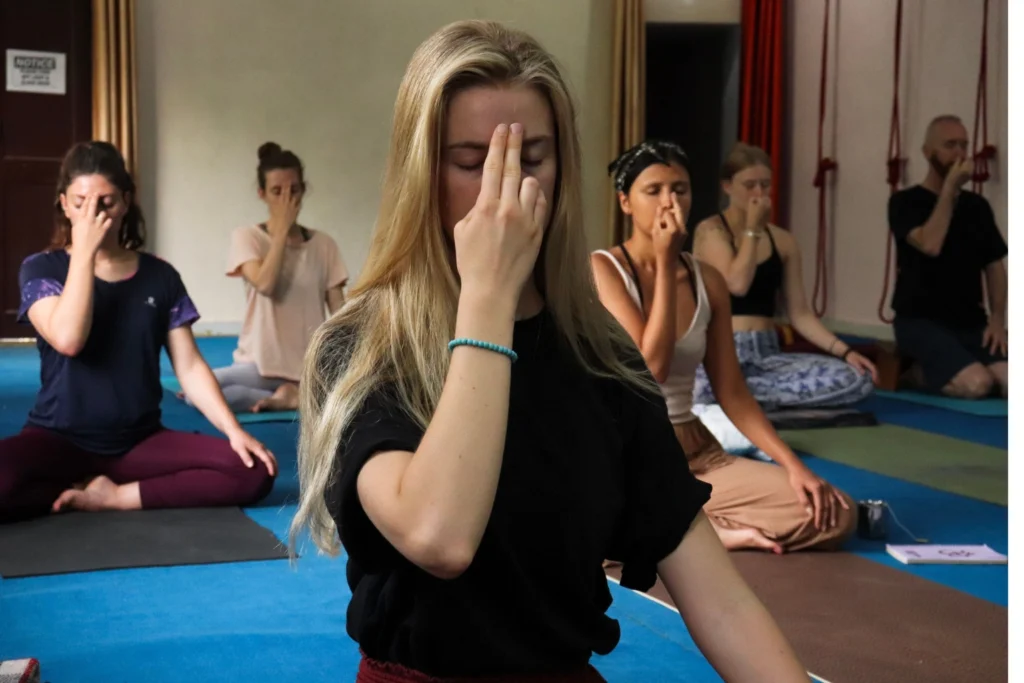
A friend of ours went to Rishikesh for a yoga retreat. Coming back, the thing she talked about most wasn’t the postures. It was the rhythm of the days: early mornings, simple food, long stretches without a phone in hand. That’s what pushed us to put together a proper guide, instead of another generic list of ashram names.
Rishikesh has been a serious yoga destination for over a century, and it’s not because of marketing. The lineage is genuinely here.
Swami Sivananda founded the Divine Life Society on these riverbanks in 1936, and classical traditions like Vedanta, Hatha, Ashtanga, and Kundalini have been taught continuously in ashrams that never really stopped operating. It’s also considerably cheaper than comparable retreats in Bali or southern France, and the teachers are just as experienced.
Here’s what the different formats look like, what they cost, and what usually catches first-timers off guard.
The Three Main Formats
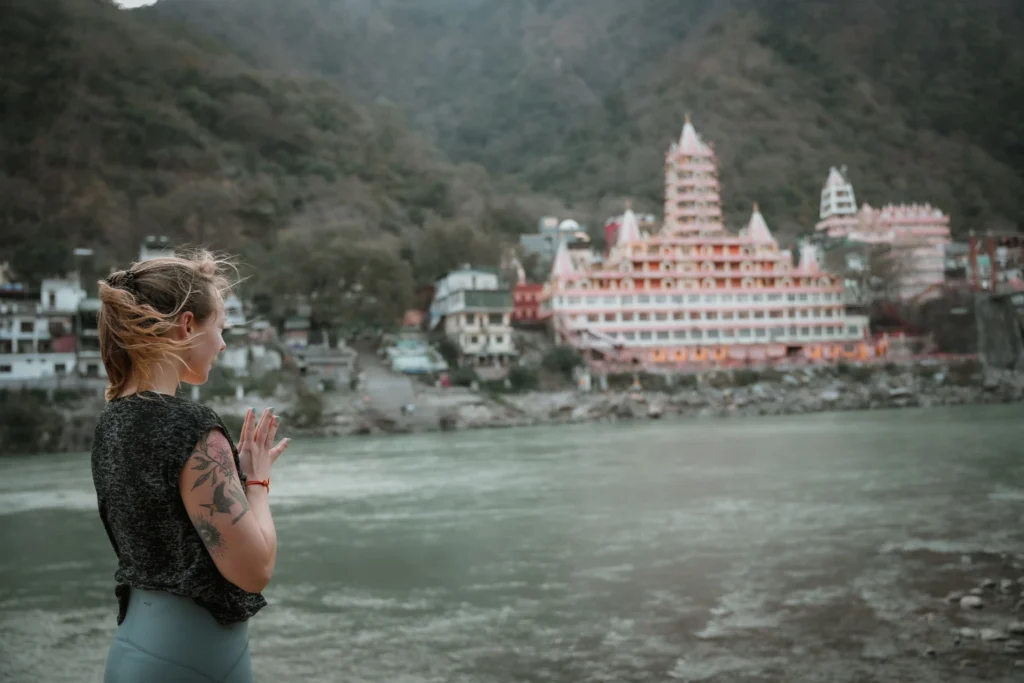
Short retreats (3–7 days) are ideal for beginners who want to experience a yoga retreat without committing to a longer program. Most run two sessions a day: a morning Hatha or Ashtanga practice and an evening restorative or Yin class, with guided meditation and simple vegetarian meals filling the rest. These typically run ₹8,000–₹20,000 all-in.
Intensive retreats (7–14 days) go beyond the physical practice. Programs usually add pranayama, yoga nidra, mantra chanting, and some introductory Ayurveda alongside the asana work.
The schedule is more demanding, so these suit people who already have a consistent home practice rather than complete beginners. Expect ₹18,000–₹45,000 depending on the school and accommodation level.
200-hour Teacher Training (TTC) is the biggest commitment. It runs 21 to 28 days, requires full attendance, and usually ends with a written and practical assessment. Reputable programs affiliated with Yoga Alliance cost ₹70,000 to ₹1,50,000, depending on accommodation and how established the school is.
Cheaper TTCs do exist, but it’s worth being cautious of anything priced well below this range. Group size and teacher attention are usually the first things that suffer.
| Format | Duration | Typical Cost |
|---|---|---|
| Short retreat | 3–7 days | ₹8,000–₹20,000 |
| Intensive retreat | 7–14 days | ₹18,000–₹45,000 |
| 200-hour TTC | 21–28 days | ₹70,000–₹1,50,000 |
Most packages include shared or private accommodation, two to three vegetarian meals a day, mats and props, and course materials. Airport transfers, one-on-one Ayurvedic treatments, and excursions are almost always extra, so it’s worth confirming these before you book.
Where to Base Yourself
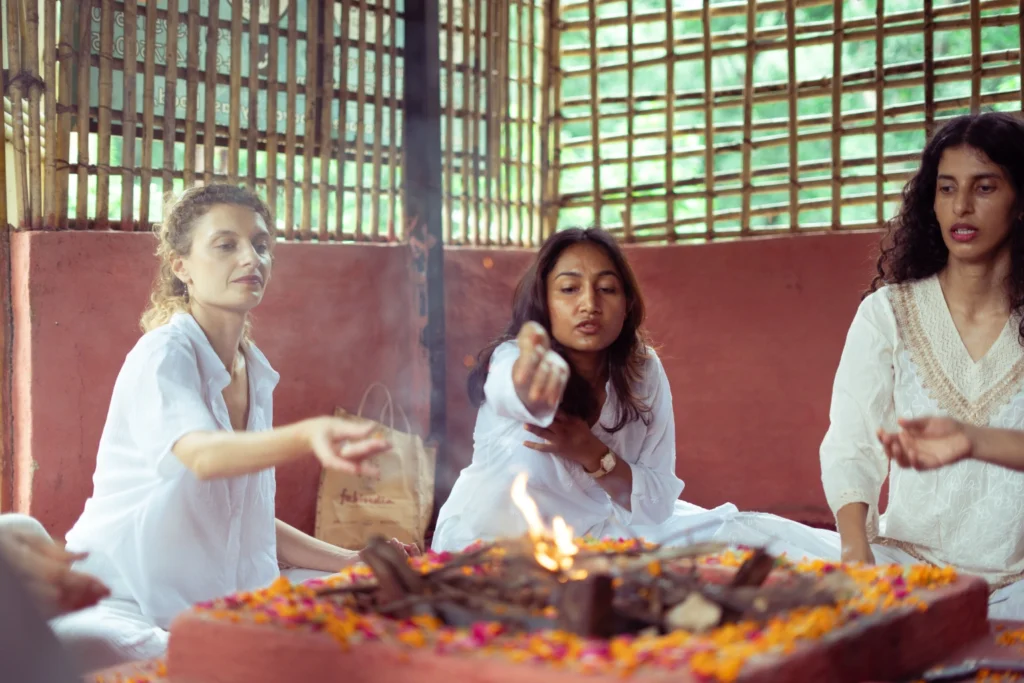
The two main areas have quite different atmospheres, and which one suits you depends on what you’re actually looking for.
Tapovan, near Laxman Jhula, is the busier, more social side of things. It has cafés, small shops, and a steady stream of other practitioners around. If you’re travelling solo and want easy conversation and company, this is the natural base.
Swarg Ashram is a vehicle-free stretch along the east bank of the Ganga with a much quieter, more contemplative feel. The traditional ashrams here, including Parmarth Niketan, sit close to the river, and the day is shaped more by bells and chanting than café hours. It takes a bit more effort to get around, since you’ll be carrying your bags in on foot, but if minimal distraction matters to you, it’s worth it.
The Ashrams Themselves
Parmarth Niketan is one of India’s largest ashrams and a solid choice for a first visit. It’s immersive without requiring a fully residential commitment. It sits directly on the river and hosts the evening Ganga Aarti, which is worth experiencing regardless of your own beliefs.
Short retreats here start around ₹15,000, including meals, accommodation, and daily classes. It also runs the International Yoga Festival each March.
Sivananda Ashram follows Swami Sivananda’s classical five-point system: exercise, breathing, relaxation, diet, and positive thinking. The schedule is structured and fairly disciplined.
It suits people who want teaching grounded specifically in Vedanta philosophy and don’t mind a more community-oriented, less flexible environment.
What a Typical Day Looks Like
Most centres follow a similar rhythm, shaped by traditional practice times rather than convenience. Wake-up is early, usually around 5:30am, followed by pranayama and meditation before the first asana session.
Breakfast comes mid-morning and is typically sattvic: light, vegetarian, and easy on digestion. Philosophy or anatomy classes fill the late morning.
After lunch there’s usually free time for rest or sitting by the river. A second session in the late afternoon leads into evening chanting or meditation, dinner, and an early lights-out.
Phones are generally discouraged during sessions. It sounds like a small detail until you’re a few days in and notice how different the pace feels without one.
How to Choose a Retreat
The most useful thing you can check is whether a school’s Yoga Alliance certification is genuine. Search the international registry directly instead of trusting a badge on their website. It takes two minutes and rules out schools that claim an affiliation they don’t actually have.
Beyond that, ask about the lead teacher’s actual training background. Read recent Google reviews instead of only the testimonials on the school’s own site. Pay attention to group size specifically, since anything above 20 students in a TTC noticeably reduces the individual attention you’re paying for.
The most common mistakes first-timers make are booking based on how a place looks on Instagram, underestimating how demanding an intensive program actually is, and not reading the cancellation policy closely before their travel dates shift.
For anything running a full month, it’s also worth checking your visa. A standard tourist visa doesn’t automatically cover an extended residential program, and this catches people out more often than you’d expect.
Best Time to Go
March and April tend to offer the most balanced conditions: moderate temperatures, clear skies, and the Yoga Festival falling in early March.
October and November are generally preferred by more experienced practitioners, mainly for the quieter, more focused atmosphere once the peak season crowds thin out.
Winter (December to February) is cold, but brings empty ghats and a sharper sense of solitude that some people specifically seek out.
Monsoon (July and August) is worth avoiding if you don’t like sustained heavy rain, though the landscape does turn genuinely lush during this stretch.
A Few Honest Questions People Ask
How much does yoga actually cost in Rishikesh? Drop-in classes run ₹200–₹500 a session, weekly courses ₹3,000–₹8,000, and a legitimate 200-hour TTC generally falls between ₹70,000 and ₹1,50,000 depending on the school and accommodation. Treat anything advertised well below that range with some caution.
Can you stay for free at Geeta Bhawan? Yes, on a donation basis. Rooms are simple, availability isn’t guaranteed, and priority tends to go to religious visitors rather than yoga tourists specifically.
Where should I actually go for yoga? Tapovan and Laxman Jhula have the highest concentration of schools and cafés. Parmarth Niketan combines yoga with the Ganga Aarti. Sivananda Ashram offers a more traditional, structured program. Upper Tapovan also has a cluster of dedicated Teacher Training schools if that’s specifically what you’re after.
FAQ
The cost of learning yoga in Rishikesh varies based on the type of course:
Drop-in yoga classes: ₹200–₹500 per session
Weekly courses: ₹3,000–₹8,000
200-hour Yoga Teacher Training (YTT): ₹20,000–₹60,000 (budget to mid-range)
Luxury yoga retreats: ₹50,000–₹1,50,000+
👉 Prices depend on the school, facilities, and duration of the program.
Yes, you can stay at Geeta Bhawan for free, but it operates on a donation (daan) basis. Basic rooms are provided to pilgrims, especially for short stays.
👉 Keep in mind:
-Facilities are simple (non-luxury)
-Rooms are subject to availability
-Priority may be given to religious visitors
Rishikesh has many well-known yoga centers and ashrams. Popular areas include:
–Tapovan & Laxman Jhula: Most yoga schools and cafes
–Parmarth Niketan Ashram: Famous for Ganga Aarti + yoga sessions
–Sivananda Ashram: Traditional and structured yoga programs
–Yoga Teacher Training Schools: Multiple options in Upper Tapovan
👉 Tapovan is the best area to stay for easy access to classes.
Bottom Line
A yoga retreat in Rishikesh is very different from a regular vacation. The focus is on building a daily routine through yoga, meditation, healthy meals, and mindful living. Whether you join for a few days or complete a teacher training course, the experience can be both relaxing and personally rewarding.
Last updated: July 2026. Prices are indicative. Confirm current rates directly with your chosen school before booking.