Budget Travel Guide to Himachal Pradesh — Himachal Pradesh doesn’t care how much money you have. The mountains don’t charge entry fees.
The rivers don’t ask for tickets. And the kind of peace you find sitting on a boulder above Kasol at 6am, watching mist roll through the Parvati Valley — that costs nothing.
What does cost money is getting there, sleeping somewhere warm, and eating enough to fuel a day of walking, exploring, and being genuinely alive in one of India’s most beautiful states.
And here’s the truth most travel blogs won’t tell you plainly: ₹2000 a day in Himachal Pradesh is not a tight budget — it’s a comfortable one.
This guide is for the solo traveller counting days against their bank balance. For the college student who said yes before checking their account.
For the couple who wants real mountains, not resort mountains. We’ll tell you exactly where to sleep, what to eat, how to move between towns, and which experiences are completely free — because in Himachal, the best ones almost always are.
No fluff. Just the hills, and how to get there without going broke.
Why Himachal Pradesh is a Budget Traveller’s Paradise
Himachal Pradesh sits in a sweet spot that very few Indian states occupy. The cost of living in the hills is significantly lower than metro cities, locals are warm and welcoming to travellers, and the state’s tourism infrastructure has evolved in a way that caters to every budget.
Guesthouses here rent rooms for as little as ₹300–₹500 per night in off-season. Dal-rice and Maggi are available at every dhaba for under ₹80. And nature — the single biggest draw of Himachal — is entirely free.
The state also has a well-established backpacker trail, which means hostels, budget cafes, and travel communities have naturally developed around the most popular routes.
You’re never far from someone who’s done it cheaper, faster, and smarter than you — and they’re almost always willing to share tips.
Best Budget Destinations in Himachal Pradesh
1. Kasol — The Backpacker Capital
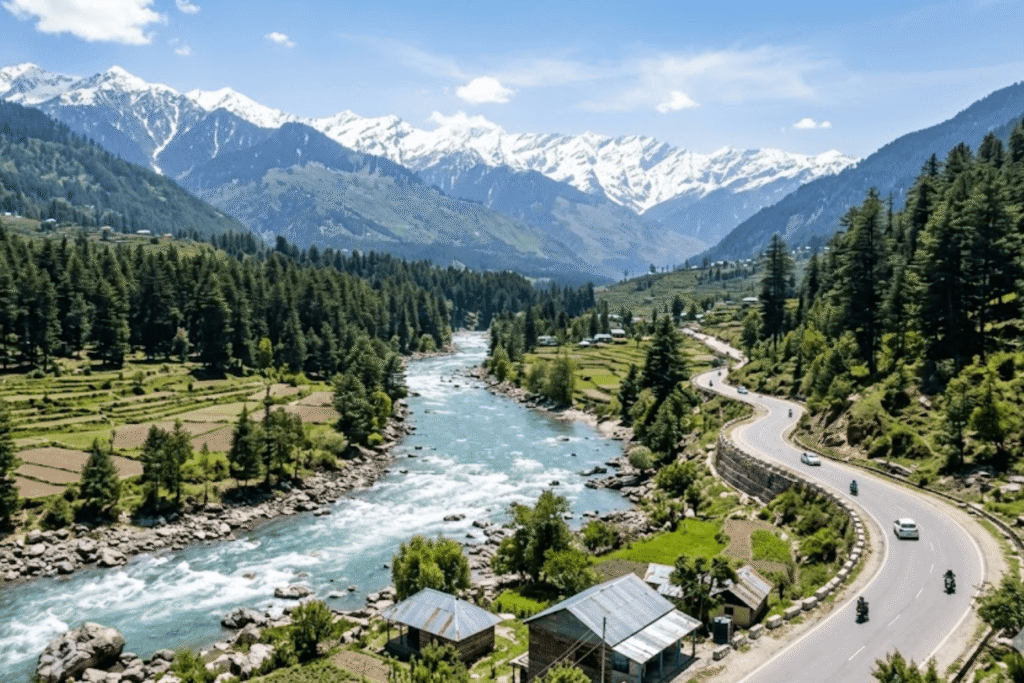
Kasol is the undisputed king of budget travel in Himachal Pradesh. Nestled along the Parvati River, this tiny village attracts thousands of budget travellers every year.
Guesthouses here offer basic rooms for ₹300–₹600 per night, and the Israeli-influenced cafe scene means falafel wraps and hummus plates are available for ₹120–₹200.
What to do for free or cheap:
- Walk along the Parvati riverbank at sunrise
- Trek to Kheerganga (entry is free, only nominal charges apply at the top)
- Explore the nearby village of Chalal on foot
- Visit Manikaran Sahib Gurudwara — langar (free community meal) is served to all visitors
Daily budget in Kasol: ₹800–₹1,400
2. Manali — More Affordable Than You Think
Manali has a reputation for being expensive, but that’s largely because of the luxury hotels and overpriced tourist traps concentrated in Mall Road. Step even slightly off the beaten path into Old Manali, and the budget travel options open up dramatically.
Old Manali is lined with guesthouses charging ₹400–₹800 for a clean room with mountain views. The cafes here serve wood-fired pizzas, momos, and thukpa at very reasonable prices.
Many travellers base themselves in Old Manali for 4–5 days and spend almost nothing on sightseeing because the mountains themselves are the main attraction.
Free and low-cost things to do in Manali:
- Hadimba Devi Temple (entry free, small shoe-keeping charge of ₹10)
- Vashisht hot springs and temple
- Walk to Jogini Waterfall — a stunning 2-km trail from Vashisht village
- Solang Valley viewpoints (the valley itself is free; adventure sports are optional)
- Explore Manu Temple in Old Manali
Daily budget in Manali: ₹1,000–₹1,800
3. Dharamshala & McLeod Ganj — Culture on a Budget
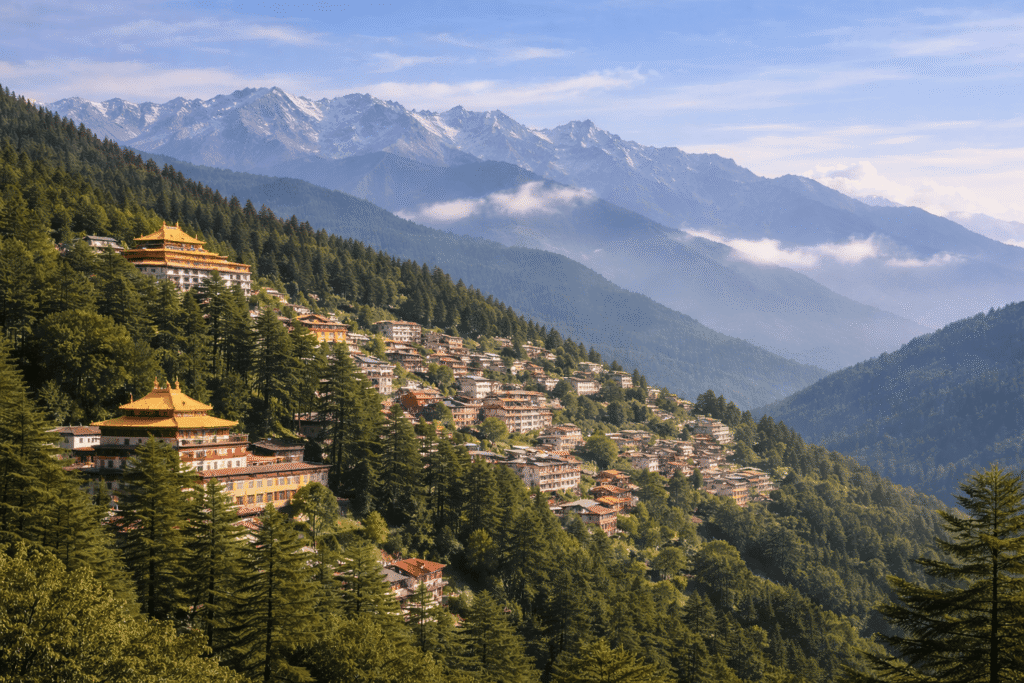
Home to the Dalai Lama and a thriving Tibetan refugee community, McLeod Ganj is a culturally rich destination that rewards slow, budget-conscious travel. The town has dozens of budget guesthouses and dharamshalas (pilgrim rest houses) where rooms cost ₹400–₹700.
Food here leans heavily Tibetan — thukpa, momos, thenthuk, and butter tea are available everywhere for ₹60–₹150. The famous McLlo Restaurant and several rooftop cafes offer views of the Dhauladhar range for the price of a coffee.
Free sights and activities:
- Tsuglagkhang Complex (Dalai Lama’s temple — free entry)
- Tibet Museum (free entry)
- Bhagsu Waterfall trek (free)
- Triund trek starts right from McLeod Ganj — no entry fee for the trail
- Attend a teaching session at the Tibetan library (nominal donation suggested)
Daily budget in McLeod Ganj: ₹900–₹1,600
4. Spiti Valley — The High-Altitude Budget Frontier
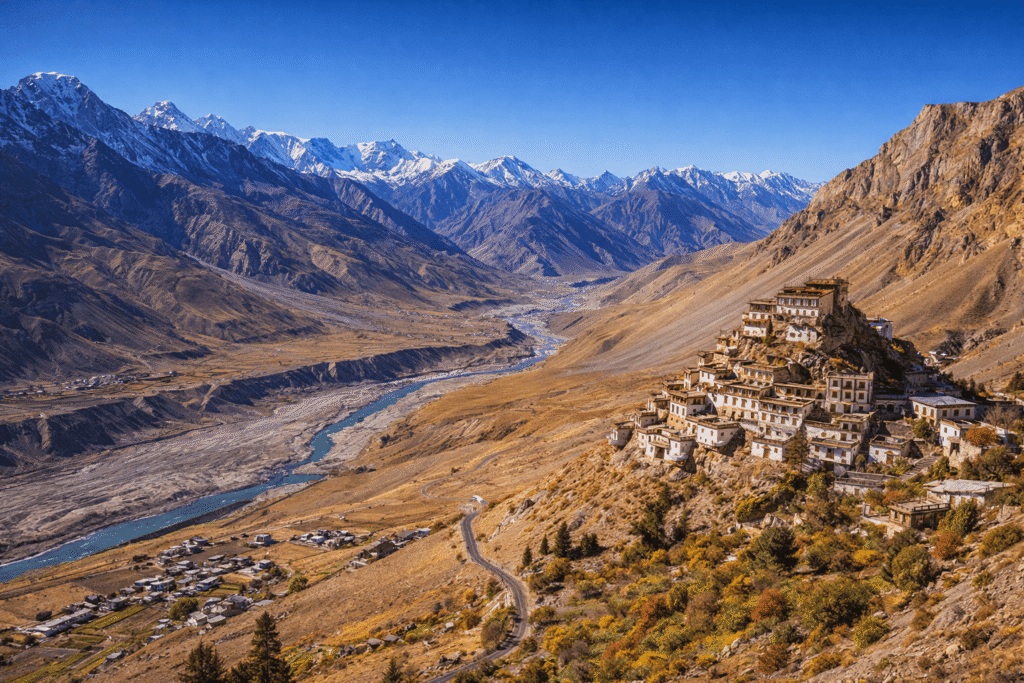
Spiti is Himachal Pradesh’s most dramatic landscape — a cold desert at 12,000–14,000 feet that looks more like Mars than India.
It’s slightly more expensive to reach, but once you’re there, homestays in villages like Kaza, Kibber, Langza, and Komic are extremely affordable at ₹500–₹800 per night, often including home-cooked meals.
Spiti is the destination that surprises budget travellers most — because despite its remoteness, the local homestay culture keeps costs remarkably low while offering an authentic, deeply rewarding experience.
Budget tips for Spiti:
- Stay in village homestays rather than hotels in Kaza
- Eat where locals eat — dal, rice, sabzi, and roti for ₹80–₹120
- Hire a shared taxi or hitch rides between villages
- Most monasteries (Ki, Tabo, Dhankar) have free entry or a small donation box
Daily budget in Spiti: ₹1,200–₹1,900
5. Bir Billing — Paragliding Capital Without the Price Tag
Bir is a small, laid-back village that has quietly become one of the world’s top paragliding destinations — and what separates it from every other “chill village” in Himachal is that it actually has three distinct identities layered into one place: a Tibetan refugee colony with active monasteries, a paragliding launch site that draws pilots from across the world, and a meditation retreat circuit that attracts long-stay travellers who come for a weekend and leave a month later.
The best time to visit is October–November, when the skies are clear, paragliding conditions are ideal, and the valley turns golden.
Stop at Nirvana Cafe near the Tibetan colony — it’s become a quiet landmark for travellers, serves excellent thukpa and filter coffee, and has the kind of slow afternoon energy that makes you miss your bus on purpose.
Rooms in Bir start at ₹350, cafes around the main chowk serve food at dhaba prices, and if you do want to paraglide, group packages in off-season can drop to ₹1,500–₹2,000.
Daily budget in Bir: ₹700–₹1,300
Where to Stay on a Budget in Himachal Pradesh
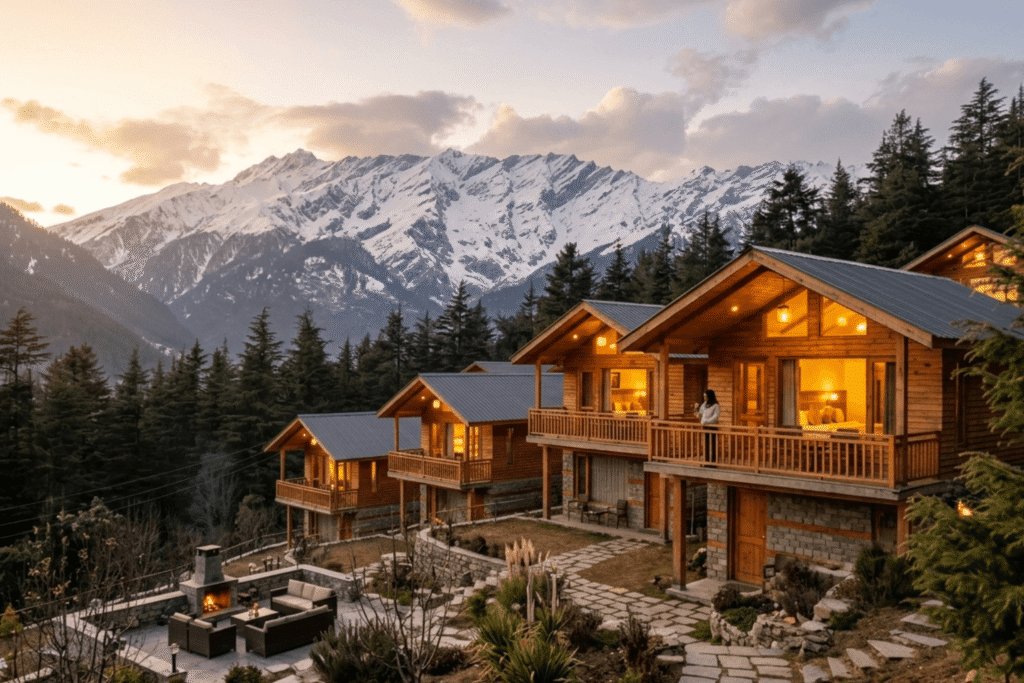
Accommodation is almost always the biggest expense in travel, and Himachal Pradesh gives you excellent options at every price point below ₹1,000.
Types of budget accommodation:
Hostels: Rapidly growing across Manali, Kasol, and McLeod Ganj. Dorm beds typically cost ₹300–₹500 per night and often include common areas, free Wi-Fi, and a social atmosphere. Great for solo travellers.
Guesthouses: The backbone of Himachal’s budget accommodation. Family-run guesthouses offer private rooms for ₹400–₹800. Many include a balcony with mountain views. Always negotiate, especially for stays of 3+ nights.
Homestays: Particularly strong in Spiti, Kinnaur, and remote valleys. Expect to pay ₹500–₹800 per person including dinner and breakfast. These are often the most memorable stays of any Himachal trip.
Dharamshalas and temple guesthouses: Near major religious sites, these offer very basic but free or near-free accommodation. Manikaran Gurudwara, for example, offers free lodging to pilgrims and travellers on a donation basis.
Pro tip: Always book a night or two in advance during peak season (May–June and October), but travel off-peak (November to March, excluding Christmas–New Year) and you’ll get rooms for 30–50% less with zero advance booking needed.
Food Budget: Eating Well Under ₹300/Day
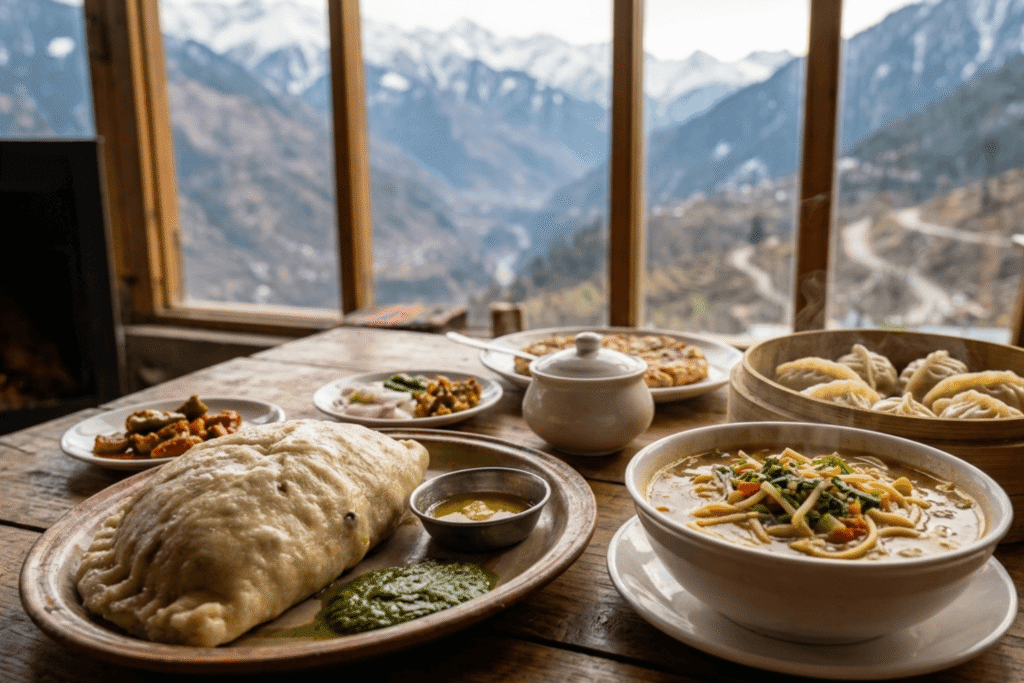
Himachal Pradesh’s food scene is tailor-made for budget travellers. Here’s how to eat well without spending more than ₹250–₹300 per day:
Breakfast (₹50–₹100):
- Aloo paratha with curd and pickle at a local dhaba: ₹60–₹80
- Bread-omelette and chai: ₹50–₹70
- Maggi with chai: ₹50–₹60
Lunch (₹80–₹120):
- Dal-chawal (dal rice) at any dhaba: ₹70–₹90
- Rajma-chawal (especially in the hills): ₹80–₹100
- Momos (6 pieces) with chutney: ₹60–₹80
Dinner (₹100–₹150):
- Thali at a local restaurant: ₹120–₹160
- Thukpa or thenthuk: ₹100–₹130
- Roti-sabzi at a dhaba: ₹80–₹100
Free food: Don’t overlook langar at Gurudwaras. Manikaran Sahib, Rewalsar, and many others serve free hot meals to anyone regardless of religion or background. This alone can save ₹150–₹200 per day.
How to Get Around Himachal Pradesh Cheaply
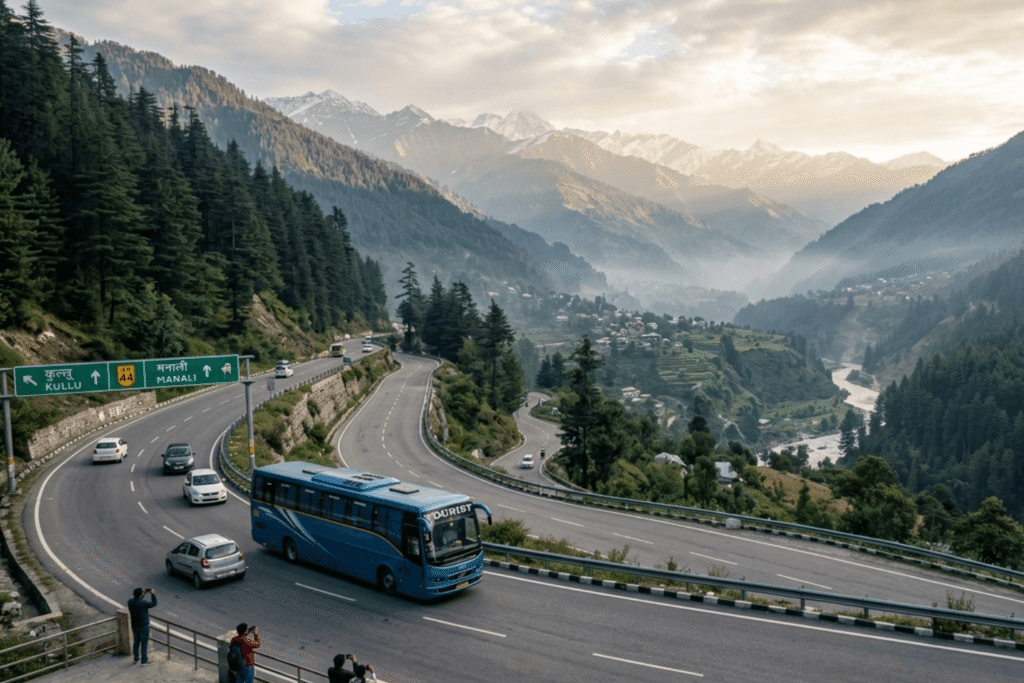
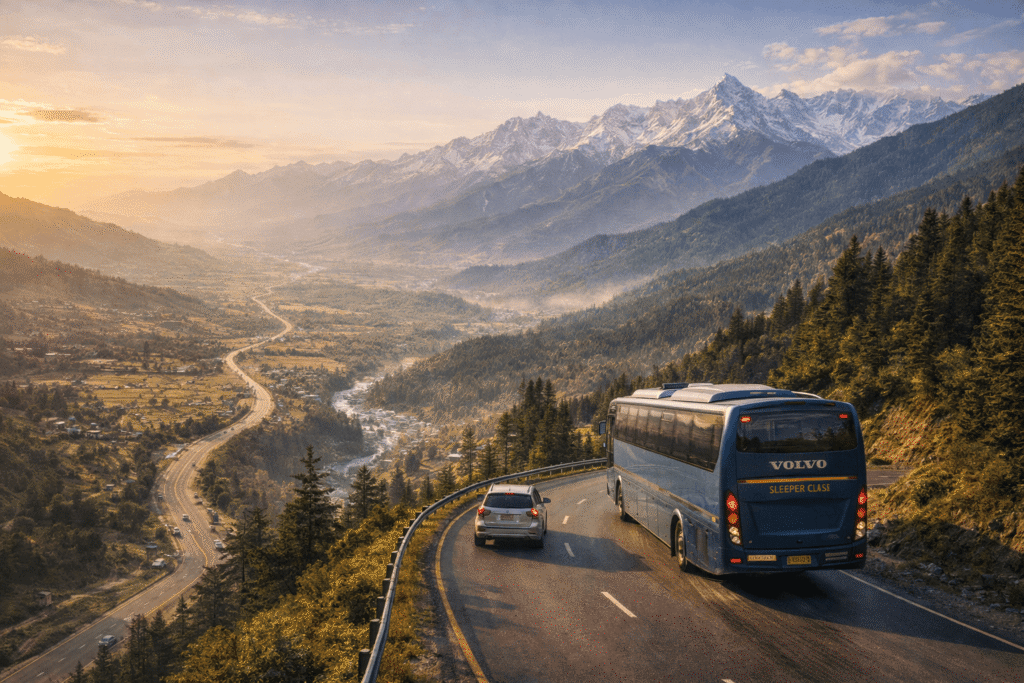
HRTC Buses: The Himachal Road Transport Corporation runs buses across the entire state. These are the cheapest way to travel between towns. Manali to Kasol costs around ₹250–₹300. Delhi to Manali on a HRTC Volvo costs ₹700–₹900.
Shared taxis: In remote areas like Spiti and Kinnaur, shared taxis are the norm. Splitting a cab between 4–5 people makes it nearly as cheap as a bus while being far faster and more flexible.
Local buses: Within districts, local buses run frequently and cost ₹10–₹50 for most journeys. Slow but very cheap.
Hitchhiking: Widely practiced and generally safe in Himachal Pradesh, especially in Spiti and Lahaul where public transport is limited. Truck drivers and locals are usually happy to give lifts.
Avoid: Private taxis booked through hotels — they charge 3–4x the shared rate. Always ask locals about the shared cab stand.
Free Attractions and Activities in Himachal Pradesh
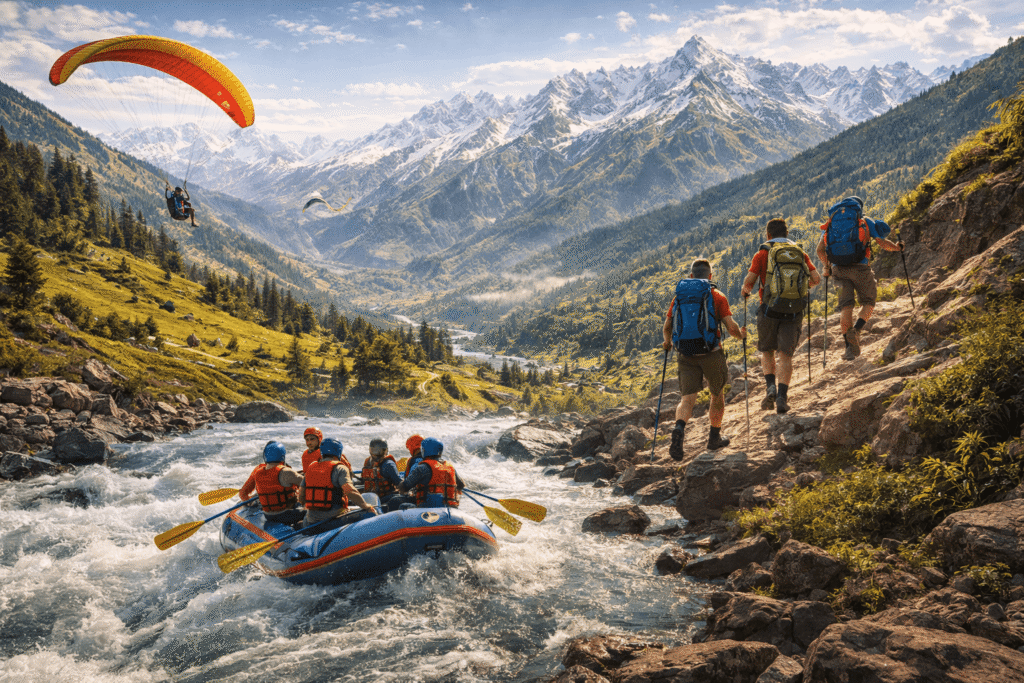
This is where the budget travel guide to Himachal Pradesh pays off most — the state’s greatest treasures cost nothing:
- Trekking: Kheerganga, Triund, Hampta Pass (base trekking), Beas Kund, Chandrakhani Pass, Bhrigu Lake — most trails have zero entry fees
- Monasteries: Key Monastery (Spiti), Tabo Monastery, Namgyal Monastery (McLeod Ganj) — all free entry
- Waterfalls: Bhagsu Waterfall, Jogini Waterfall, Rahala Falls near Rohtang — all free
- Rivers and valleys: Parvati Valley, Kullu Valley, Pin Valley — simply being there is the experience
- Sunrises and sunsets: Sunrise from Triund, sunset over Rohtang Pass viewpoint, golden hour at Chandratal Lake — priceless and free
- Cultural immersion: Old Manali lanes, Tibetan market in McLeod Ganj, Kinnauri villages — walk, observe, engage
Sample ₹2000/Day Budget Breakdown
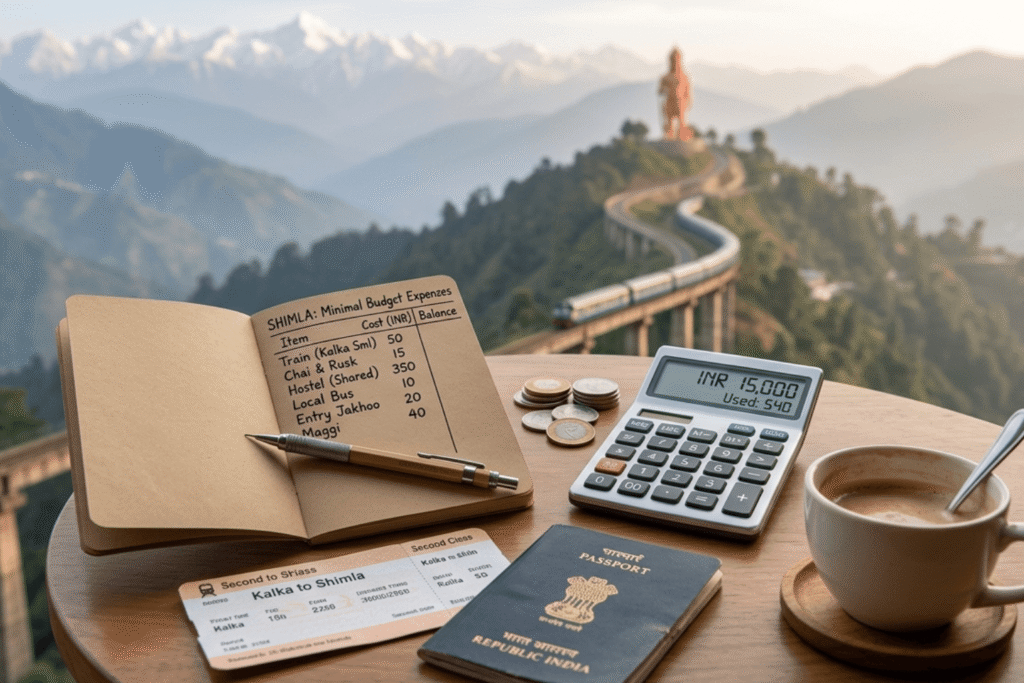
Here’s a realistic daily budget for a solo traveller in Himachal Pradesh:
| Expense | Amount |
|---|---|
| Accommodation (guesthouse/hostel dorm) | ₹400–₹600 |
| Breakfast | ₹70–₹100 |
| Lunch | ₹90–₹120 |
| Dinner | ₹120–₹160 |
| Local transport | ₹100–₹200 |
| Chai + snacks | ₹50–₹80 |
| Miscellaneous (entry fees, tips) | ₹50–₹100 |
| Total | ₹880–₹1,360 |
As you can see, ₹2,000/day is actually generous — most budget travellers come in well under that, leaving buffer for a splurge activity or an extra night somewhere beautiful.
Permits You Need to Know About
This is the part most travel blogs skip, and it’s the part that can derail your trip if you ignore it.
Spiti Valley via Kinnaur (Inner Line Permit): The route from Shimla through Kinnaur into Spiti passes close to the China border. Indian nationals require an Inner Line Permit (ILP) for this stretch — specifically for areas like Sangla, Chitkul, and beyond Sumdo.
- Where to get it: District Magistrate or SDM office in Recong Peo (Kinnaur) or Kaza
- Cost: ₹20–₹50 per person — almost free, but skipping it risks fines or being turned back at checkpoints
- Format: You’ll need passport-size photos and a government ID. Some checkposts are strict, others relaxed — don’t gamble on it
- Group requirement: Solo travellers are technically required to travel in groups of two or more in certain restricted zones — check current rules before you go as these change seasonally
Foreign Nationals: The rules are significantly stricter. Several zones in Spiti and upper Kinnaur are completely off-limits to foreign nationals without a Protected Area Permit (PAP), which requires applying through a registered travel agent.
If you’re travelling with a foreign friend, plan this well in advance — walk-in permits are not available for foreigners in restricted zones.
Rohtang Pass: A separate permit is required to cross Rohtang from Manali side — this is an NGT (National Green Tribunal) permit to control tourist vehicles.
It costs around ₹500–₹600 for a non-AC vehicle and must be booked online at least a day in advance through the official Rohtang permit portal.
Best Time to Visit for Budget Travellers
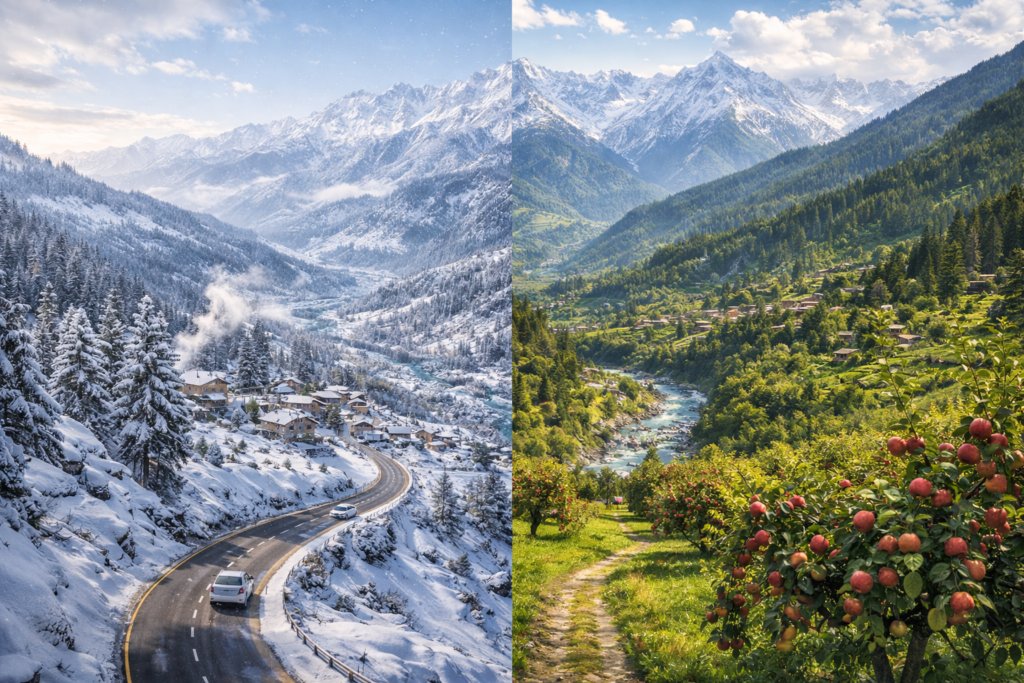
October–November: Post-monsoon, skies are crystal clear, crowds are thinning, and guesthouses are dropping prices rapidly. One of the best windows for budget travel.
February–March: Deep off-season in most areas. Prices are at their lowest. Manali and Kasol are quieter, colder, and strikingly beautiful under snow. You’ll find rooms for half the peak price.
Avoid May–June and long weekends: Peak season means doubled accommodation rates, crowded trails, and tourist-inflated prices everywhere.
Monsoon (July–August): Landslides can disrupt travel in Kullu and Manali regions, but Spiti and Lahaul remain largely rain-shadow zones and are actually excellent during this period. Prices stay low.
Money-Saving Tips from Experienced Himachal Travellers
- Carry cash. ATMs are scarce in remote areas like Spiti, Kinnaur, and upper Parvati Valley. Stock up in Kaza, Kullu, or Dharamshala before heading deeper.
- Cook occasionally. Many hostels and guesthouses offer kitchen access. Buying groceries from local markets and cooking one meal a day can cut food costs by 40%.
- Travel in a group. Accommodation, taxis, and supplies all get cheaper when split. Even a group of two makes a significant difference.
- Go slow. The biggest budget killer in Himachal is moving too fast. Transportation is the priciest line item. Spend 4–5 days in one place and your daily average drops significantly.
- Use HRTC’s tourist passes. HRTC offers multi-day bus passes for tourists which can save 20–30% on transport across long distances.
- Negotiate respectfully. In markets and with local taxi drivers, polite negotiation is expected and accepted. You’re not being rude — you’re participating in local commerce.
- Eat where locals eat. If there’s a TV on the wall and the menu is written in Hindi, you’re in the right place. If the menu is laminated and in English only, expect to pay double.
FAQ
A budget trip to Himachal Pradesh can cost around ₹800 to ₹2,000 per day per person. This includes budget accommodation (₹300–₹800), food (₹200–₹300), and local transport. If you choose hostels, eat at local dhabas, and use HRTC buses, you can easily keep your daily expenses under ₹1,500.
To travel cheaply in Himachal Pradesh, use HRTC buses or shared taxis instead of private cabs. Stay in guesthouses or hostels, eat at local dhabas, and avoid peak tourist seasons. Traveling slow, splitting costs with others, and choosing free activities like trekking and exploring villages can significantly reduce expenses.
Yes, Himachal Pradesh is one of the best destinations in India for budget travel. With affordable stays, cheap local food, and plenty of free natural attractions like mountains, rivers, and trekking trails, you can comfortably explore Himachal even on a tight budget.
In Himachali (which includes several local dialects like Pahari), a wife is commonly referred to as “Gharwali” or “Lugai” in some regions. The exact word can vary depending on the specific dialect and area within Himachal Pradesh.
Conclusion
Himachal Pradesh is proof that the most spectacular travel experiences don’t require a fat wallet — they require good planning, flexibility, and a willingness to go local.
Whether you’re trekking through alpine meadows above Kasol, sipping butter tea in a Spiti homestay, or watching the Dhauladhar range turn pink at sunset from McLeod Ganj, every moment here feels like a reward that cost far more than it actually did.
₹2,000 a day in Himachal isn’t a constraint — it’s more than enough. You’ll figure that out on your last night, doing the math in some guesthouse in Old Manali or a homestay in Kaza, realising you came in under budget.
And that the best day of the entire trip — the sunrise, the trail, the chai from a roadside stall — cost you almost nothing.