
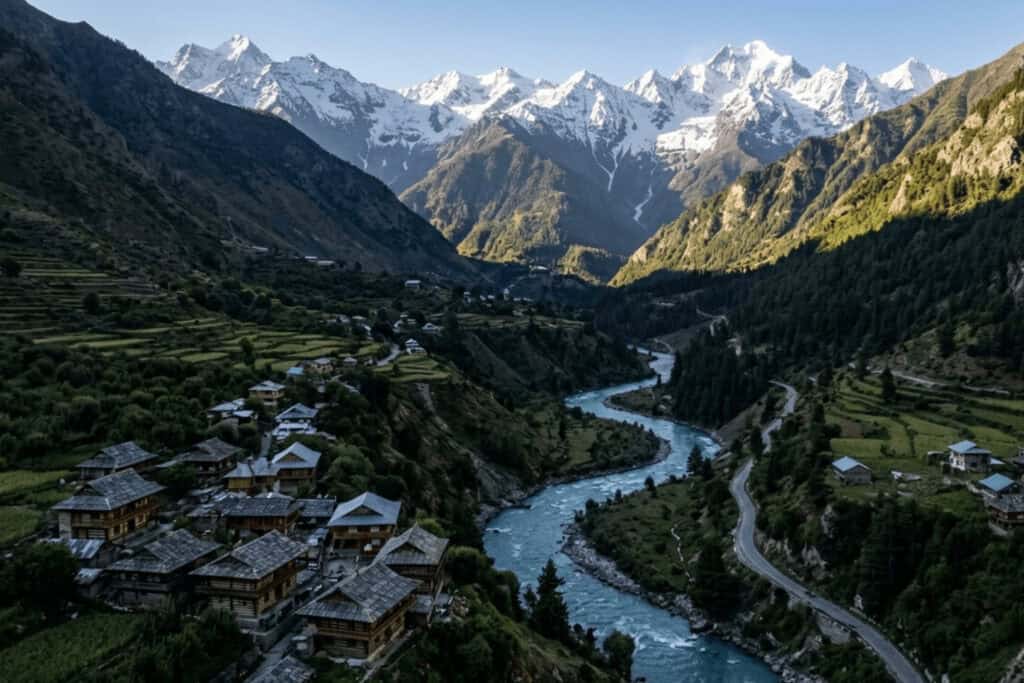
When most people think of the most beautiful villages in Himachal Pradesh, they often picture popular hill stations like Shimla’s colonial streets, Manali’s bustling cafes, or Dharamsala’s crowded monasteries.
These are beautiful places, certainly — but they tell only a fraction of Himachal’s story.
Hidden among its folds of pine forests, ancient glaciers, and terraced fields are villages that most travelers walk right past on their way to somewhere else. This guide invites you to stop walking — and start arriving.
There is a kind of magic in Himachal’s villages that no hill station can replicate.
A magic that lives in the smell of apple blossoms at dawn in Kalpa, the silence of Nako Lake at dusk, or the way the fog curls around a Malana rooftop before the first snowfall.
These places don’t advertise themselves. They simply wait for travelers who are ready.
This guide covers eight of the best villages in Himachal — from the high-altitude fossil beds of Langza to the misty riverside campsites of Gada Gushaini.
You’ll find out why these villages offer richer, more authentic experiences than their famous counterparts, how to choose the right village for your travel personality, the best time to visit, and everything you need to plan a memorable, respectful, and awe-inspiring Himalayan village journey.
Whether you’re a solo backpacker, a family traveler, a photographer chasing golden hour, or simply someone who wants to breathe clean mountain air and feel genuinely at peace — there’s a Himachali village waiting for you.
Why Explore Villages in Himachal Pradesh
Peaceful and Less Crowded
Himachal Pradesh’s popular destinations have paid the price of fame. In peak season, Manali’s Mall Road is indistinguishable from a city market, and Shimla’s Ridge can feel more like a Delhi street than a Himalayan retreat.
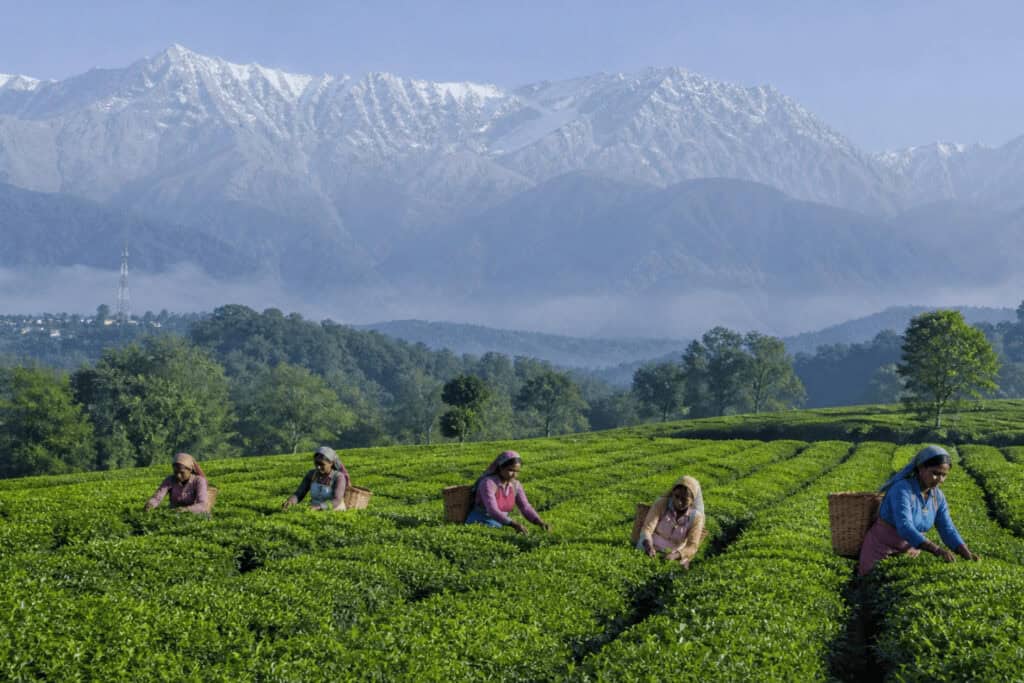
The villages are different. In Tosh, you can sit on a guesthouse terrace and count the peaks all the way to the horizon without another tourist in your frame.
In Komic, the silence is so complete that your own heartbeat sounds loud. This isn’t isolation — it’s space. Space to think, breathe, and be.
Authentic Himachali Culture
Village life in Himachal operates on its own rhythm, largely unchanged by tourism trends. In Malana, residents follow customs that predate modern India by centuries. In Kalpa, you’ll see families harvest apples the same way their grandparents did.
Village women in traditional Pahari dress gather at water sources before sunrise, monks blow conch shells to mark monastery prayers, and elders in Nako sit in charpai chairs outside mud-brick homes that have stood for five hundred years.
This is culture you participate in, not culture you observe behind a glass panel.
Stunning Untouched Landscapes
Himachal has 77 peaks above 6,000 metres, and many of the best views of them belong to villagers who live in their shadow.
From Kalpa, Kinnaur Kailash dominates the entire eastern skyline. From Langza, the Spiti Valley spreads out like a moonscape painted gold. From Tosh, the twin peaks of the Parvati Valley frame every photograph.
These are views that require neither a cable car nor an early morning queue. You simply look up.
Budget-Friendly Travel
Village travel is, almost uniformly, far more affordable than a stay in Shimla or Manali. Guesthouses in Tosh or Chitkul charge between ₹400 and ₹1,200 per night for clean, comfortable rooms with mountain views.
Home-cooked Himachali meals — dal, rice, seasonal vegetables, and the extraordinary siddu flatbread with ghee — cost a fraction of what a tourist restaurant charges in a hill station.
Transport options like local buses and shared taxis are not only cheap but also a cultural experience in themselves.
How to Choose the Right Village for Your Trip
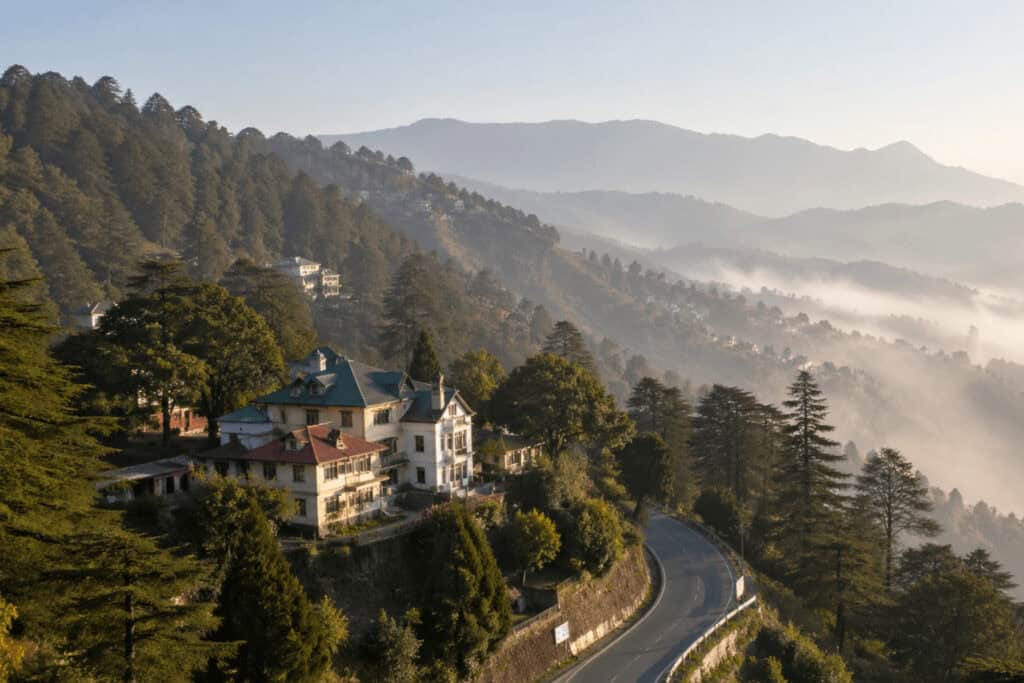
Based on Your Travel Style
- Adventure Seekers: Malana (trekking), Komic (high-altitude exploration), Tosh (Parvati Valley hikes)
- Peace & Wellness: Nako, Langza, Gada Gushaini — minimal crowds, meditative settings
- Photography: Kalpa (sunrise over Kinnaur Kailash), Langza (Buddha statue & fossils), Chitkul (river & meadows)
- Solo Backpackers: Tosh and Chitkul, with active backpacker communities and easy guesthouses
- Families: Kalpa and Gada Gushaini offer gentle terrain, clean stays, and child-friendly activities
- Culture & History: Malana (ancient republic traditions), Nako (monastery), Komic (Buddhist heritage)
Accessibility
- Easy Access: Kalpa, Chitkul, and Gada Gushaini are reachable by regular taxis and buses
- Moderate: Tosh requires a short trek from Barsheni; Nako involves mountain hairpin roads
- Remote: Malana, Komic, and Langza involve rough mountain roads or treks — rewarding but demanding
Best Season to Visit
- Summer (April–June): Ideal for most villages; snow melts, flowers bloom, roads open
- Monsoon (July–September): Beautiful green landscapes but risky landslide-prone roads in some regions
- Autumn (October–November): Clear skies, golden light, peak photography season — arguably the finest
- Winter (December–March): Only for experienced travelers; many villages are snowbound and cut off
Most Beautiful Villages in Himachal Pradesh
1 Kalpa – Views of Kinnaur Kailash
📍 District: Kinnaur | Altitude: ~2,960 m | Distance from Shimla: ~235 km
Scenic Beauty and Mountain Views
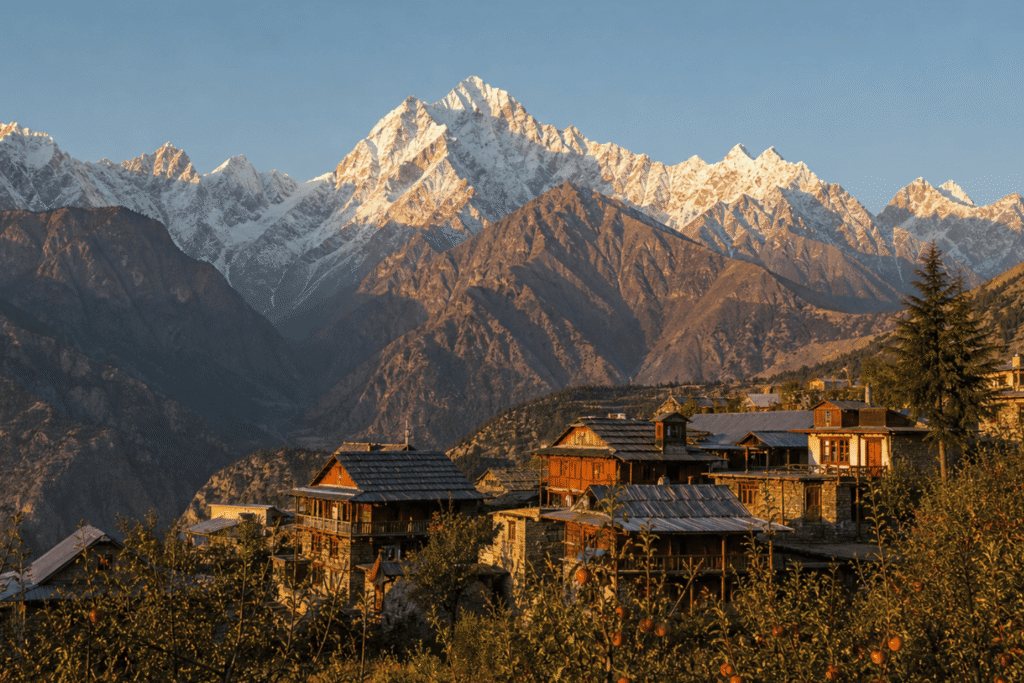
Kalpa is a village that rewards patience. Arrive in the evening, check into your guesthouse, and wake before sunrise — what greets you will stop your breath.
Kinnaur Kailash, a towering 6,050-metre peak sacred to both Hindus and Buddhists, turns from deep indigo to fiery orange to blinding white in the span of thirty minutes at dawn.
No photograph fully captures the scale of it. The village itself is a cluster of slate-roofed homes, ancient deodar trees, and terraced apple orchards tumbling down the hillside toward the Sutlej River valley far below.
Apple Orchards and Peaceful Vibe
Kalpa is part of Himachal’s famous apple belt, and from late summer through October, the orchards are heavy with fruit. Locals sell freshly picked apples by the roadside, and the air carries a cidery sweetness that is intoxicating.
The old village has a Hu-Bu-Lan-Kar monastery dating back centuries, carved wooden balconies, and streets narrow enough that two people must turn sideways to pass. Life here is slow, warm, and deeply rooted.
Best Time to Visit
- April–June: Rhododendrons in bloom, snowcaps clearly visible
- September–October: Apple harvest season, crisp mountain air
- Winter: Road usually accessible but bitterly cold; snowfall possible
💡 Travel Tip: Stay at least two nights. The first sunset and second sunrise are both essential.
2 Chitkul – Last Village of India
📍 District: Kinnaur | Altitude: ~3,450 m | Distance from Shimla: ~250 km
Unique Location Near the Indo-Tibet Border
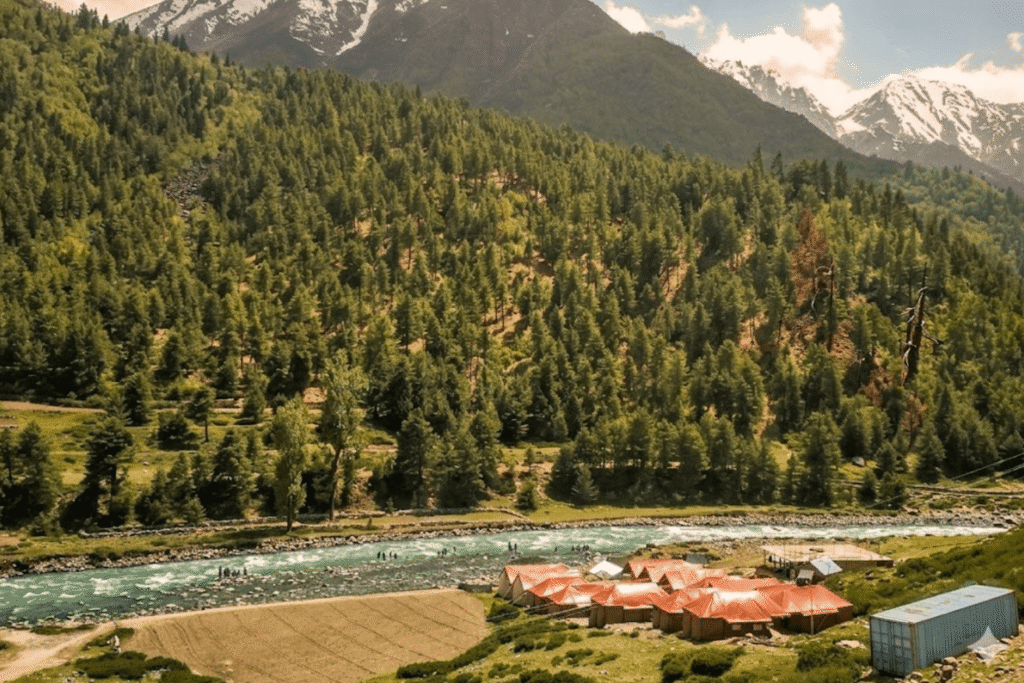
Chitkul carries an extraordinary distinction — it is the last inhabited village before India’s border with Tibet on the Hindustan-Tibet Highway. Beyond its wooden homes and potato fields, a signboard announces that civilian movement is no longer permitted.
This edge-of-the-world quality gives Chitkul a peculiar energy that travelers find hard to articulate but impossible to forget. You are, quite literally, at the end of India.
Baspa River Views
The Baspa River, fed by glaciers and snowmelt, flows glacier-clear and intensely cold through the valley below the village. Its banks are lined with birch and pine, and on calm days the water reflects the surrounding peaks in perfect detail.
Walking along the river at golden hour, with the ancient Mathi Devi temple visible on the hill above and the sound of bells drifting down, is one of those rare travel moments that becomes a permanent part of you.
Travel Tips
- Inner Line Permit: Not required for Chitkul but required for areas further toward the border
- Accommodation: Simple guesthouses and homestays; book ahead in peak season (June–September)
- Food: Local women cook remarkably good Himachali food in homestays — always opt for it
- Connectivity: Limited mobile signal (mostly BSNL); embrace the digital detox
💡 Travel Tip: Arrive from Sangla, not directly from Shimla — the Sangla Valley approach is one of India’s most beautiful valley drives.
3 Malana – Ancient Culture & Mystery
📍 District: Kullu | Altitude: ~2,652 m | Distance from Bhuntar: ~22 km + trek
Unique Traditions and History
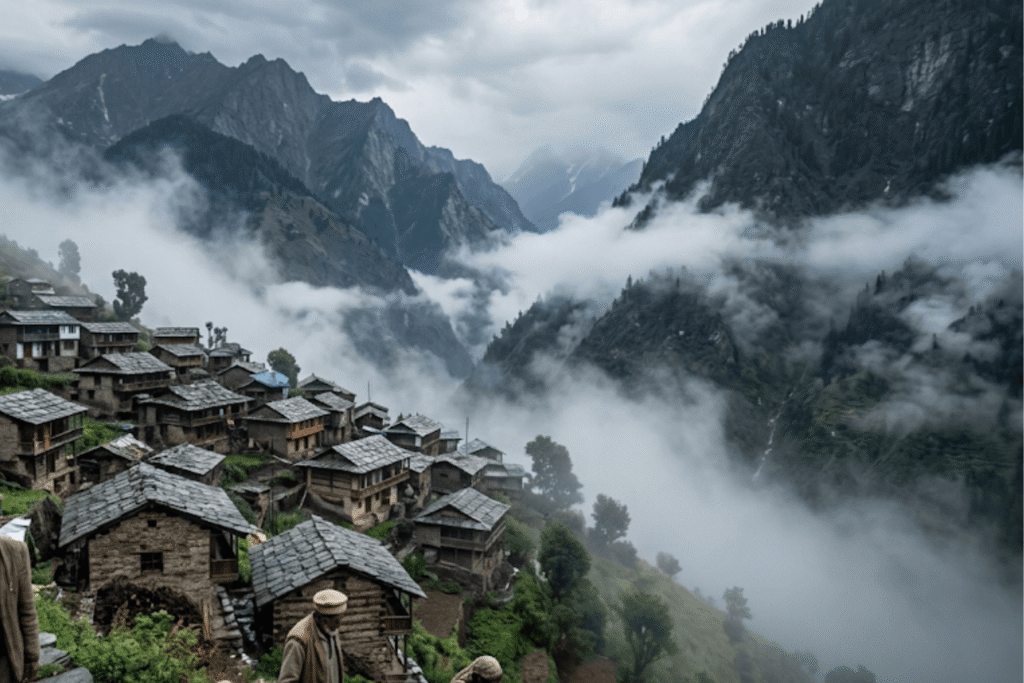
Malana is not a village you visit casually. It is an ancient mountain republic — believed by its inhabitants to have been founded by soldiers of Alexander the Great — that has maintained customs, a judicial system, and a social structure entirely independent of the outside world for millennia.
The villagers speak Kanashi, a language with no known linguistic relatives. Their deity, Jamlu Devta, is believed to govern the village through a council of elders, and his word is considered final over any state or national law.
Trekking Route
Access to Malana requires a trek of approximately three to four hours from Jari village near Kasol in the Parvati Valley. The trail climbs steeply through rhododendron and oak forest before opening into the dramatic Malana Glacier cirque.
The village appears suddenly — a dense cluster of wooden homes on a rocky spur with views that would stop any trekker in their tracks. Some trekkers combine this with the Chanderkhani Pass route for a multi-day circuit.
Important Do’s and Don’ts
- ❌ Do NOT touch any structure, wall, person, or animal in the village — this is a hard cultural rule
- ❌ Do NOT attempt to enter restricted areas of the village
- ✅ DO pay the nominal entry fee — it goes directly to the village
- ✅ DO stay on designated paths and in designated guesthouses
- ✅ DO greet locals respectfully from a distance and ask before photographing anyone
- ✅ DO hire a local guide — they enrich the experience enormously
💡 Important: Approach Malana with deep humility and respect. It is a privilege to visit, not a right.
4 Nako – A Hidden Himalayan Gem
📍 District: Kinnaur | Altitude: ~3,662 m | Distance from Reckong Peo: ~65 km
Nako Lake and Monastery
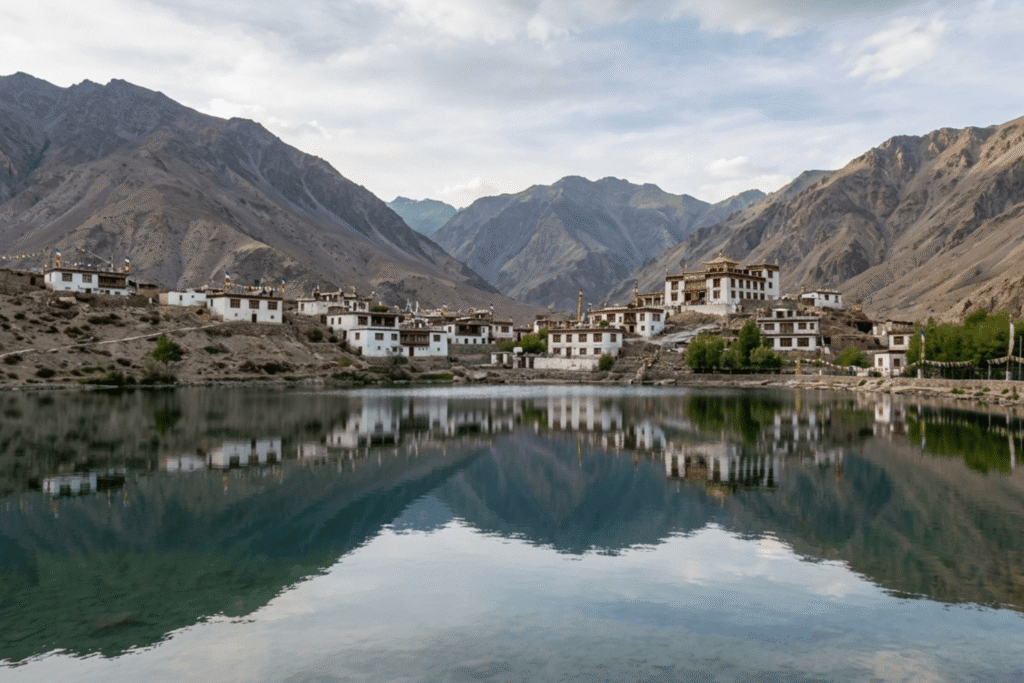
Nako is built around one of the most beautiful little lakes in all of Himachal Pradesh — a small, impossibly blue body of water ringed by willow trees and overlooked by ancient mud-brick homes.
The Nako Monastery, believed to have been founded by the great Tibetan translator Rinchen Zangpo in the 10th century, houses remarkable murals, clay statues, and manuscripts of immense historical significance.
Monks in saffron robes crossing the courtyard as the prayer drums sound at dawn is an image that stays with you for a very long time.
Calm and Scenic Environment
Nako sits at the crossroads of two worlds — the lush Kinnauri valleys to the south and the stark, arid Spiti landscape to the north.
This transition gives it a singular character: you can sit by the lake and watch the mountains shift from forested green to bare brown to silver-white in the same panorama.
The village itself is small enough to walk completely in under twenty minutes, yet rich enough in texture and history to absorb an entire day.
Ideal for Peaceful Travelers
There are no discos, no crowded cafes, no Instagram crowds here. Nako is for people who like to sit still and think. Bring a good book, a journal, or simply a willingness to watch the light move across the mountains for hours. You will not be bored. You will be restored.
💡 Travel Tip: Nako makes an excellent overnight stop on the Shimla–Spiti circuit via Kinnaur. Don’t rush through it.
5 Tosh – Backpacker’s Paradise
📍 District: Kullu | Altitude: ~2,400 m | Distance from Kasol: ~23 km
Views of Parvati Valley
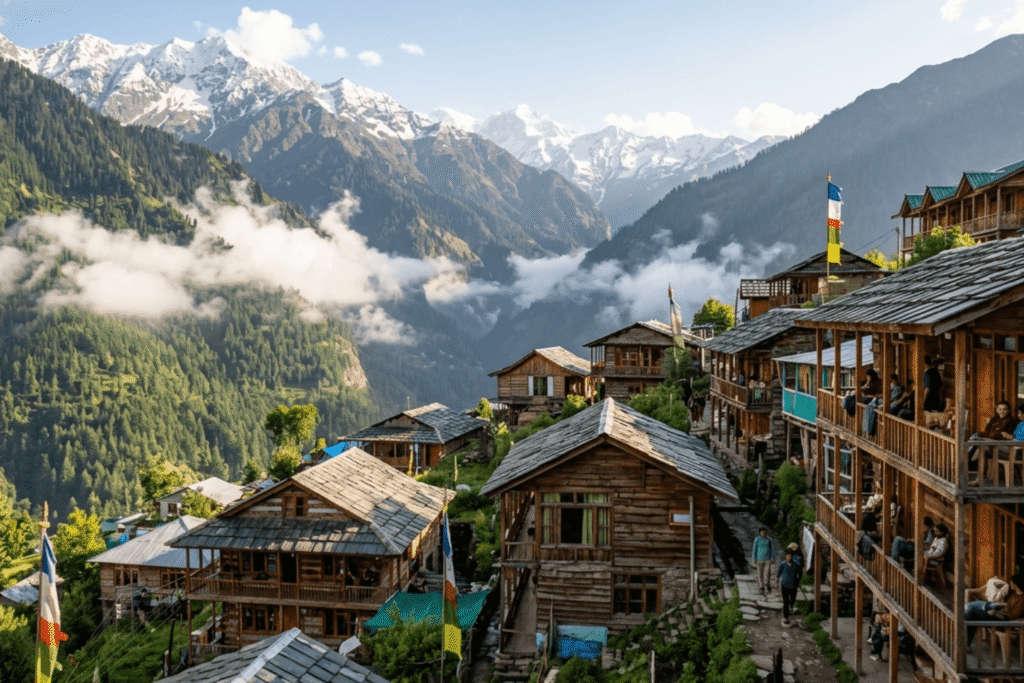
Tosh sits at the head of the Parvati Valley, perched on a ridge that offers one of the most dramatic panoramas in Himachal. To the east, Parvati Glacier fills the horizon. To the north, peaks bristle above the treeline like jagged teeth.
To the south, the valley drops steeply toward the Parvati River, and on a clear day you can see all the way to Kasol, 23 kilometres away.
Getting here requires a short but steep uphill walk from the roadhead at Barsheni — about 30 minutes that feels completely worth it the moment you see the view.
Cafes and Chill Vibe
Tosh has developed a small but vibrant backpacker culture without losing its essential village character.
A handful of guesthouses serve excellent thukpa, momos, and pancakes from tiny kitchens. Rooftop cafes with mountain views have become legendary among backpackers who arrive for a night and stay for a week.
The pace of life is deeply relaxed — most guests spend mornings hiking and afternoons in conversation with fellow travelers or simply staring at the peaks.
Best for Solo Travelers
- Easy to meet other travelers at guesthouses and cafes
- Several day-trek options — Tosh Glacier hike, alternate Kheerganga route
- Safe and welcoming for women traveling solo
- Excellent connectivity to Kasol and Manikaran for onward travel
💡 Travel Tip: Visit in May before the summer rush, or October for clear skies and near-solitude.
6 Gada Gushaini – Offbeat Escape
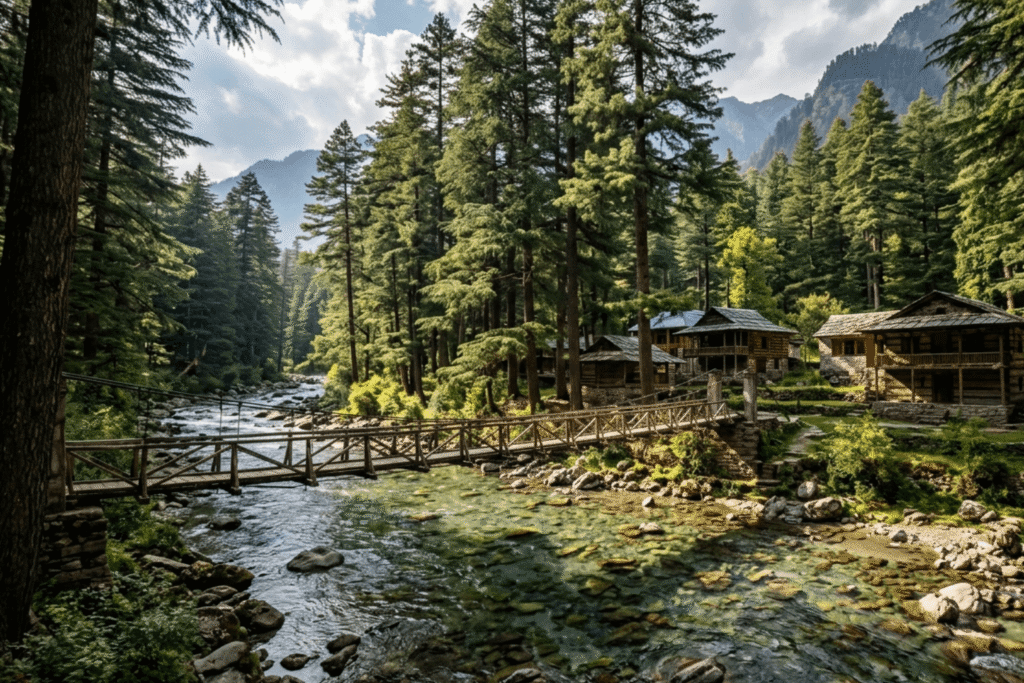
📍 District: Kullu | Altitude: ~1,600 m | Distance from Aut: ~65 km via Banjar
Near Tirthan Valley
Gada Gushaini is the gateway village to the Great Himalayan National Park, a UNESCO World Heritage Site, nestled along the crystal-clear Tirthan River.
Far less visited than its neighbors in the Kullu Valley, it offers an experience of Himalayan nature that feels genuinely raw and uncurated.
The village itself is a loose cluster of wooden homes, orchards, and farmland on the riverbank — more a state of mind than a destination with clear boundaries.
Perfect for Nature Lovers
The Tirthan River here is a fly-fisherman’s paradise, home to the Western Himalayan Mahseer and Brown Trout. Even if you don’t fish, the experience of sitting by its jade-green water while dippers and kingfishers patrol the banks is deeply restorative.
The surrounding forests — a mix of oak, rhododendron, ban khubani, and horse chestnut — hold an extraordinary variety of birds, including the elusive Western Tragopan, the state bird of Himachal.
Activities to Do
- Trekking into the Great Himalayan National Park (permit required)
- River fishing with local guides — one of India’s finest trout rivers
- Wildlife spotting: Snow Leopard, Himalayan Tahr, Monal Pheasant
- Village walks along the Tirthan to Shilt Hut and Rolla
- Relaxed camping on the riverbanks
💡 Permit Note: Entry into GHNP requires a permit from the Forest Department office in Sai Ropa village nearby.
7 Komic – One of the Highest Villages in the World
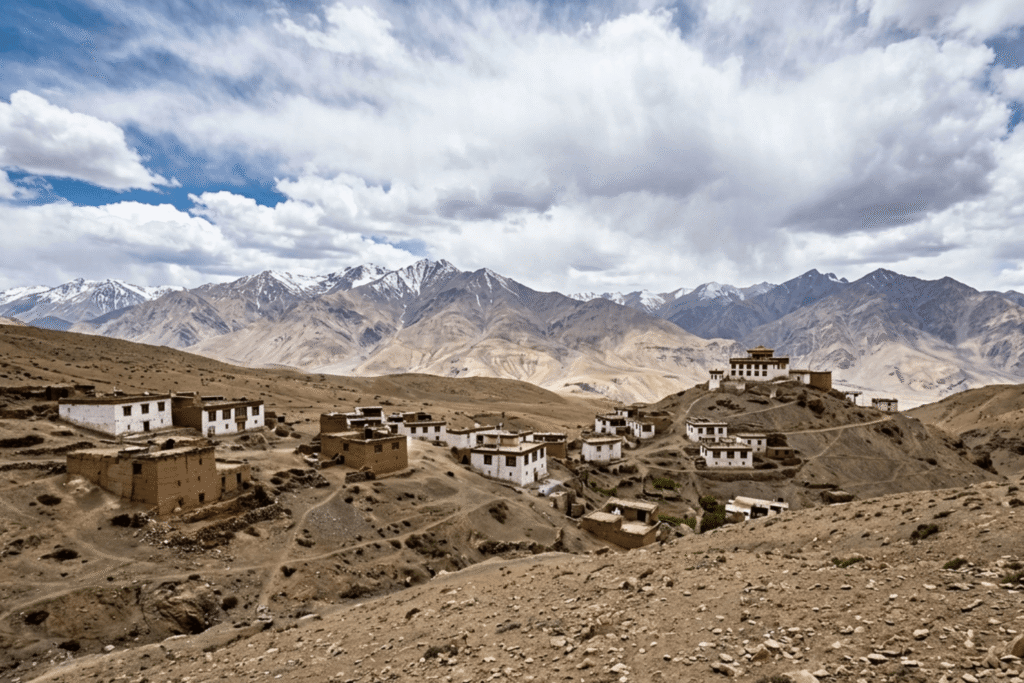
📍 District: Lahaul & Spiti | Altitude: ~4,587 m | Distance from Kaza: ~23 km
High-Altitude Experience
Komic competes for the title of the highest motorable village in the world — a fact that takes on real meaning when you arrive and realize that breathing normally requires conscious effort.
The landscape is otherworldly: barren, brown, windswept, and vast in a way that makes you feel simultaneously very small and incredibly alive. Snow lies on the ground for nine months of the year.
The remaining three months are a frantic burst of cultivation, tourism, and preparation for the next winter.
Monasteries and Landscapes
The Tangyud Monastery, believed to be one of the oldest in Spiti, crowns the village on its highest point and is visible from miles away.
Inside, ancient thangkas, butter lamps, and statues of Shakyamuni Buddha create an atmosphere of intense, almost physical peace.
From the monastery’s roof, the entire Spiti Valley spreads below — a vast canvas of brown mountains, silver rivers, and impossibly blue sky that constitutes one of the finest views in all of India.
Travel Precautions
- Acclimatize properly — spend at least one night in Kaza (3,800 m) before ascending
- Altitude sickness is a real risk; carry Diamox if prescribed and know the symptoms
- Open only June–September; road is snowbound and impassable the rest of the year
- Fuel up at Kaza — there are no petrol stations beyond
- Night temperatures can drop below freezing even in summer — pack warm layers
💡 Health Tip: Stay hydrated, avoid alcohol on the first day, and ascend gradually.
8 Langza – The Fossil Village
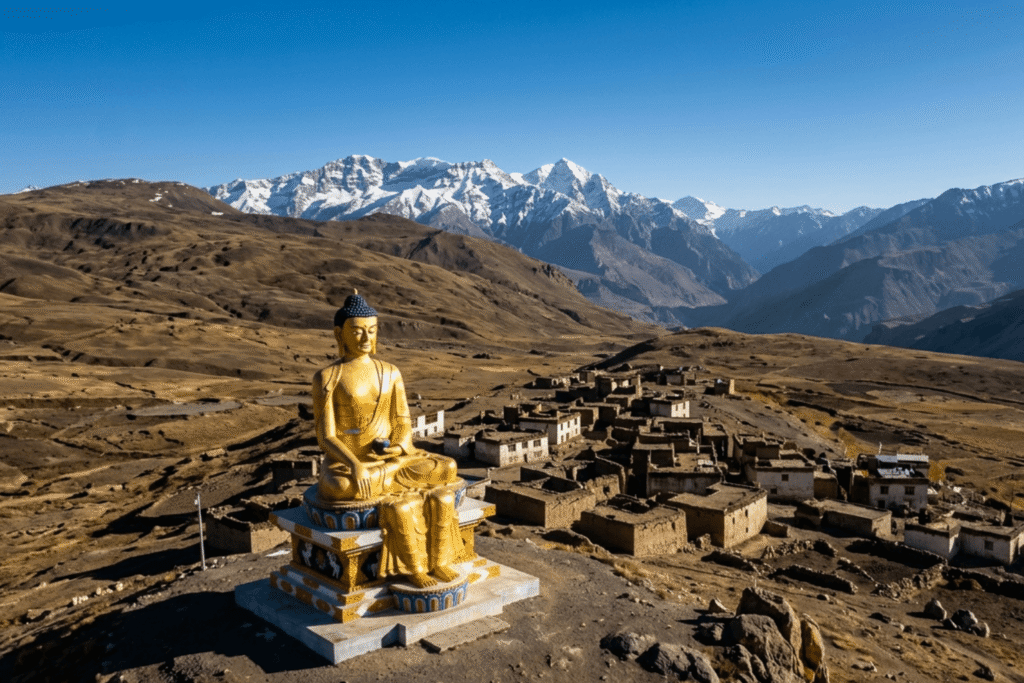
📍 District: Lahaul & Spiti | Altitude: ~4,400 m | Distance from Kaza: ~18 km
Famous Buddha Statue
Langza is defined by two icons: the magnificent gilt Buddha statue that stands sentinel on the village’s highest point, looking out across the Spiti Valley with an expression of absolute calm, and the ancient marine fossils embedded in the very ground you walk on.
The Buddha catches the morning light in a way that is achingly beautiful — many photographers consider this the finest dawn shot in all of Spiti.
The statue is visible from the valley floor far below, and arriving at it on foot, panting slightly at this altitude, feels like a genuine pilgrimage.
Fossil Hunting and Views
Langza sits at the bottom of what was, 70 million years ago, the Tethys Sea — the ancient ocean compressed into the Himalayas when the Indian subcontinent crashed into Asia.
The fossils left behind — ammonites, bivalves, and marine invertebrates now found at 4,400 metres above sea level — are a reminder of geological time so vast that the human mind simply refuses to hold it properly.
Local guides delight in showing visitors the best fossil sites on the hillsides around the village.
Photography Spots
- The golden Buddha statue at sunrise — position yourself to the east before dawn
- Village rooftops with Chau Chau Kang Nilda peak (6,303 m) behind
- Fossil-embedded rock faces on the hillside above the village
- Milky Way photography — zero light pollution makes this one of India’s best dark-sky sites
💡 Photography Tip: A full moon over the Langza Buddha against snowy peaks is a once-in-a-lifetime shot — plan your lunar calendar accordingly.
Best Time to Visit Himachal’s Villages
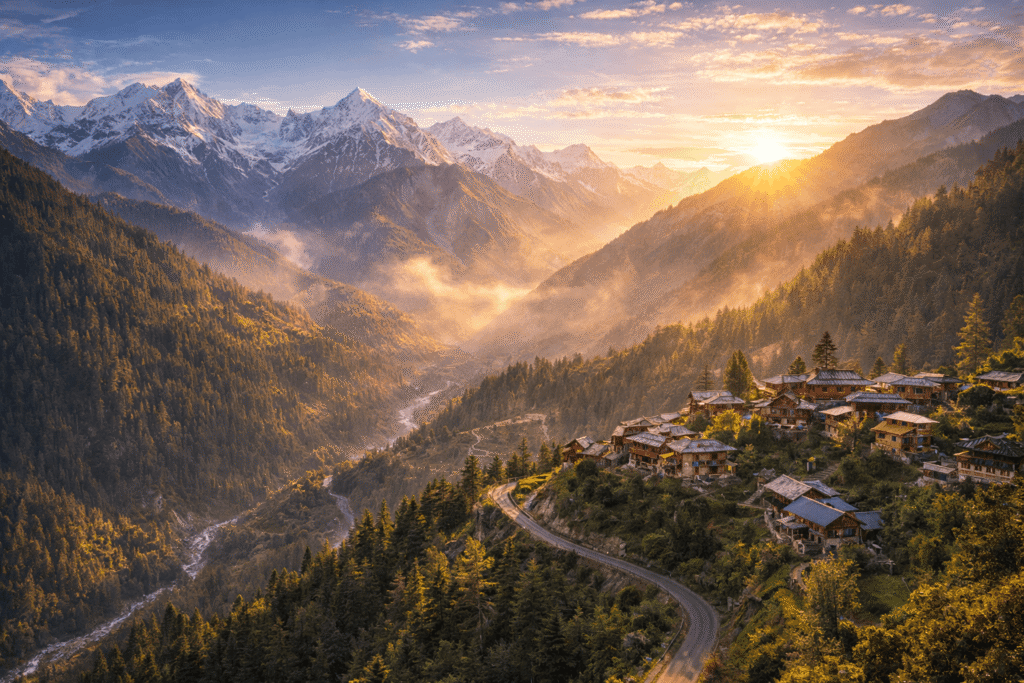
Summer (April – June) is the most popular and accessible season. Roads open, valleys turn green, wildflowers carpet the meadows, and temperatures are comfortable. Chitkul, Kalpa, Tosh, and Gada Gushaini are at their most inviting. Komic and Langza open from late May.
Monsoon (July – September) transforms lower Himalayan villages into lush, mist-draped landscapes of extraordinary beauty — but landslides are a real hazard on mountain roads. The Spiti Valley (Komic, Langza, Nako) lies in a rain shadow and actually experiences its clearest, most pleasant weather during this period.
Autumn (October – November) is arguably the best time to visit for most travelers. Skies are crystal clear, light is golden and perfect for photography, crowds have dissolved, and the apple harvest in Kalpa and Kinnaur transforms the landscape. The Spiti villages are in their final weeks before winter closure, giving everything a poignant, luminous quality.
Winter (December – March) is for experienced, well-equipped travelers only. Most roads to higher villages are completely impassable under snow. Lower villages like Tosh may be accessible but offer severe cold, limited services, and a profound, bone-deep solitude that some travelers actively seek — and others deeply regret.
Travel Tips for Visiting Himachal Villages
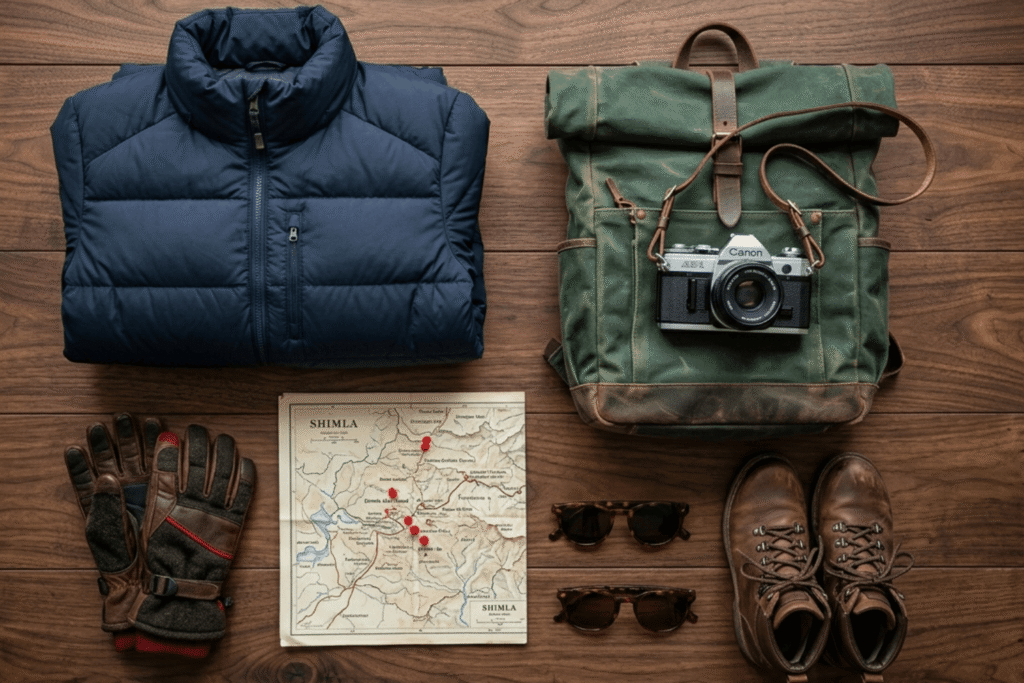
Packing Essentials
- Warm layers regardless of season — mountain temperatures drop sharply after sunset
- Good quality waterproof trekking boots — essential even without a serious trek planned
- Personal first aid kit including altitude medication (consult your doctor for Diamox)
- Sunscreen, sunglasses, and lip balm — high-altitude UV radiation is intense
- Portable water filter or purification tablets
- Cash — ATMs are absent in most villages; carry sufficient rupees from the nearest town
- Power bank — electricity can be unreliable in remote villages
- Offline maps (Maps.me or OsmAnd) — mobile data is unreliable or absent in most areas
- Locally appropriate, modest clothing for cultural and monastery settings
Road Conditions and Permits
Himachal’s mountain roads are genuinely challenging — narrow, unpaved in stretches, subject to seasonal closure, and occasionally blocked by landslides without notice.
Always check current road conditions through local taxi drivers or the HPPWD before setting out. Inner Line Permits (ILP) are required for travel to certain restricted areas near the Chinese border — parts of Spiti, Kinnaur, and Lahaul.
These are obtained from district headquarters (Reckong Peo for Kinnaur, Kaza for Spiti) with valid government ID. The process is usually straightforward and same-day.
Respecting Local Culture
- Ask permission before photographing people, especially women, monks, and elders
- Remove your shoes before entering homes, temples, and monasteries
- Dress conservatively — covered shoulders and knees are appropriate in all village settings
- Do not litter — carry your own trash out, as village waste infrastructure is minimal
- Buy local — choose homestays, eat at local dhabas, buy from village shops
- Follow all posted rules in restricted areas and cultural sites without exception
💡 Golden Rule: You are a guest in someone’s home. Travel with the awareness that your behavior shapes how the next traveler will be received.
Suggested Itinerary: 7 Days in Himachal’s Villages
This 7-day itinerary follows a scenic mountain route through Himachal’s villages, combining long drives, riverside stops, monasteries, and high-altitude landscapes into one continuous journey.
Route: Shimla → Kalpa → Chitkul → Nako → Kaza → Langza & Komic → Return
Day 1 — Shimla to Kalpa: Depart Shimla early. Drive via Narkanda and Rampur along the Sutlej River into Kinnaur. Arrive in Kalpa by late afternoon. Watch the sunset over Kinnaur Kailash and walk through old Roghi village.
Day 2 — Kalpa to Chitkul via Sangla Valley: Drive into the stunning Baspa Valley. Stop at Kamru Fort and Sangla village. Continue to Chitkul in the afternoon. Walk along the Baspa River at golden hour. Overnight at Chitkul.
Day 3 — Chitkul to Nako (Long Drive Day): Return to the main highway, cross into upper Kinnaur via the dramatic Khab Sangam confluence — where the Sutlej meets the Spiti River — and continue to Nako. Visit the monastery in the evening.
Day 4 — Nako to Kaza (Acclimatization Stop): Drive into the Spiti Valley proper, crossing the Sumdo border into the tribal district. Stop at the ancient Tabo Monastery (circa 996 AD) before arriving in Kaza. Rest and acclimatize.
Day 5 — Kaza Day Trip: Langza & Komic: Drive up to Langza for sunrise at the Buddha statue. Continue to Komic for the Tangyud Monastery and sweeping valley views. Return to Kaza for lunch, then visit Key Monastery in the afternoon.
Days 6–7 — Return or Extend: Take the Rohtang Pass route to Manali and onward to Tosh in the Parvati Valley for a final night in an entirely different landscape — lush and forested after the arid Spiti. Or return to Shimla via Kinnaur for onward travel.
💡 Note: Verify road and permit conditions before finalizing this route. The Rohtang Pass direction closes frequently. Always carry a flexible plan.
FAQ
There is no single answer, but villages like Kalpa, Chitkul, Langza, and Khajjiar are often considered among the most beautiful in Himachal Pradesh due to their stunning mountain views, peaceful surroundings, and unique cultural charm.
Shimla is famously known as the “Queen of Hills” because of its colonial charm, scenic landscapes, and popularity as a hill station since British times.
Malana is often regarded as one of the richest villages in Himachal Pradesh, mainly due to its unique local economy and agricultural practices, although it is more widely known for its distinct culture and traditions.
Beauty is subjective, but villages like Chitkul (the last inhabited village near the Indo-Tibet border), Langza (known for its Buddha statue and fossils), and Kalpa (with views of Kinnaur Kailash) are widely considered among the most beautiful villages in the region.
Conclusion
Himachal Pradesh’s famous hill stations are beautiful — but they will still be there next year, and the year after that, drawing the same crowds, offering the same photographs, telling the same stories.
The villages are different. The most beautiful villages in Himachal Pradesh change slowly, yes, but they are already changing — each year more travelers discover them, more guesthouses open, more signs appear in English.
The version of Chitkul or Malana or Langza that exists today is the most pristine it will ever be, from this moment forward.
That is not a reason to stay away. It is a reason to go thoughtfully, carefully, and soon. To travel not as a consumer of experiences but as a guest of communities.
To carry out your trash, support local businesses, follow local rules, and leave each place exactly as you found it — ideally, fractionally better for your having been there.
The reward for this kind of travel is immense and real. You will return from the best villages in Himachal not merely rested, not merely photographed, but genuinely changed.
Go beyond the brochure. Travel smart. Travel offbeat. Travel responsibly.
The real Himachal Pradesh is waiting for you.