
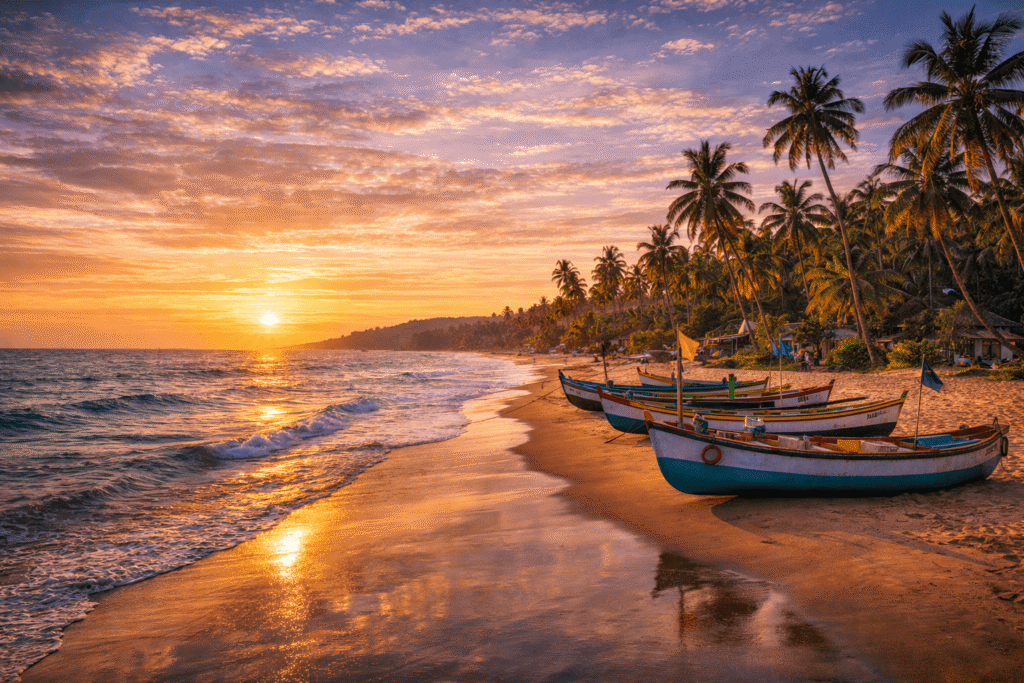
Goa has over 100 kilometres of coastline. Some of it is world-class. Some of it is overrated. And a few stretches are genuinely hidden — the kind of beach you find, sit on for three hours, and tell nobody about.
Not every beach here offers the same experience. Some are built for nightlife, some for couples, some for families, and a handful exist mainly for people who want to be left alone.
Instead of trying to visit every beach, it’s better to choose the ones that match your travel style — that’s exactly what this guide helps you do.
Quick List — Top Beaches in Goa
| Beach | Region | Best For | Crowd |
|---|---|---|---|
| Baga Beach | North Goa | Nightlife & water sports | ⭐⭐⭐⭐⭐ |
| Calangute Beach | North Goa | First-time visitors | ⭐⭐⭐⭐⭐ |
| Anjuna Beach | North Goa | Flea market & backpacker vibe | ⭐⭐⭐⭐ |
| Vagator Beach | North Goa | Sunset views & cliffs | ⭐⭐⭐ |
| Palolem Beach | South Goa | Peaceful beauty & couples | ⭐⭐⭐ |
| Agonda Beach | South Goa | Quiet, clean, no crowds | ⭐⭐ |
| Colva Beach | South Goa | Families & easy access | ⭐⭐⭐ |
| Morjim Beach | North Goa | Relaxed vibe & turtles | ⭐⭐ |
| Arambol Beach | North Goa | Bohemian & budget stays | ⭐⭐⭐ |
| Butterfly Beach | South Goa | Hidden gem & Instagram | ⭐ |
Short on time? If you only have 2–3 days in Goa, visit Baga, Vagator, Palolem, and Agonda to experience both North and South Goa.
Best Beaches in North Goa – Party, Activities & Energy
North Goa beaches are built for doing things. Water sports, beach hopping, market browsing, nightclub crawling — the beaches here are as much social infrastructure as they are scenery.
Baga Beach
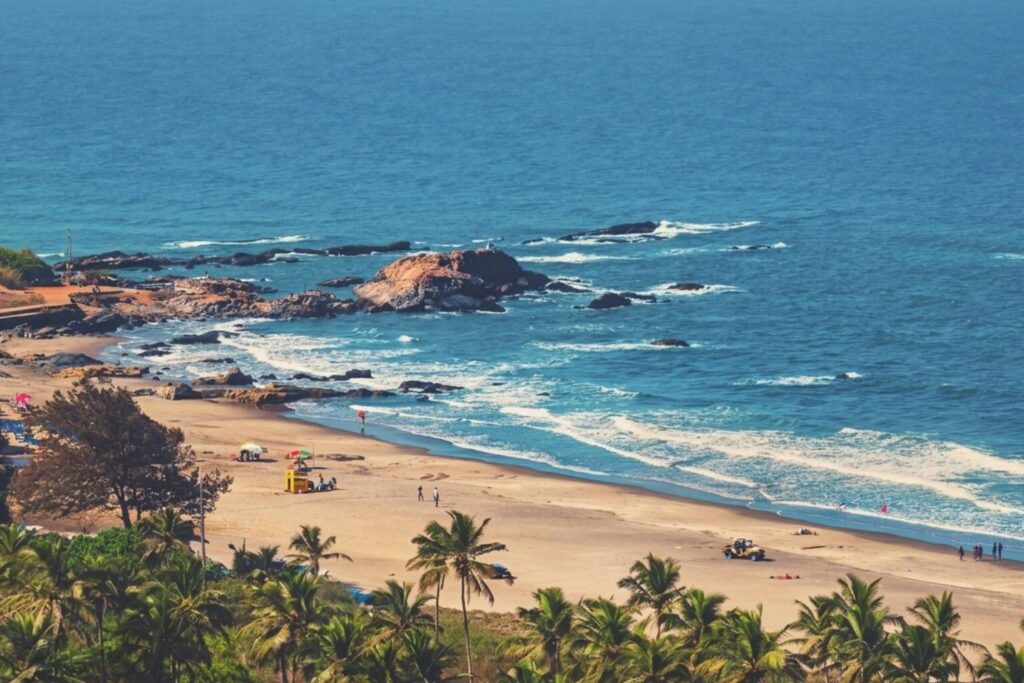
If you’ve seen a photo of Goa on any travel blog, there’s a good chance it was taken at Baga. This is North Goa’s most famous stretch, and it earns that reputation by offering more per square metre than almost anywhere else in India.
Highlights:
- Water sports right on the beach — jet skiing, parasailing, banana boats, and scuba, all within walking distance of each other. Most operators start around 9 AM, and booking two or more activities together usually works out cheaper than paying for each separately
- Beach shacks serving cold beer and fresh seafood from early morning until late at night
- Tito’s Lane, India’s most famous nightlife strip, is a two-minute walk away
Best for: Nightlife, water sports, first-timers who want the full Goa experience.
Good to know: Go early. By 10 AM in peak season, Baga fills up fast. The golden hour just after sunrise is genuinely beautiful and almost crowd-free.
Calangute Beach
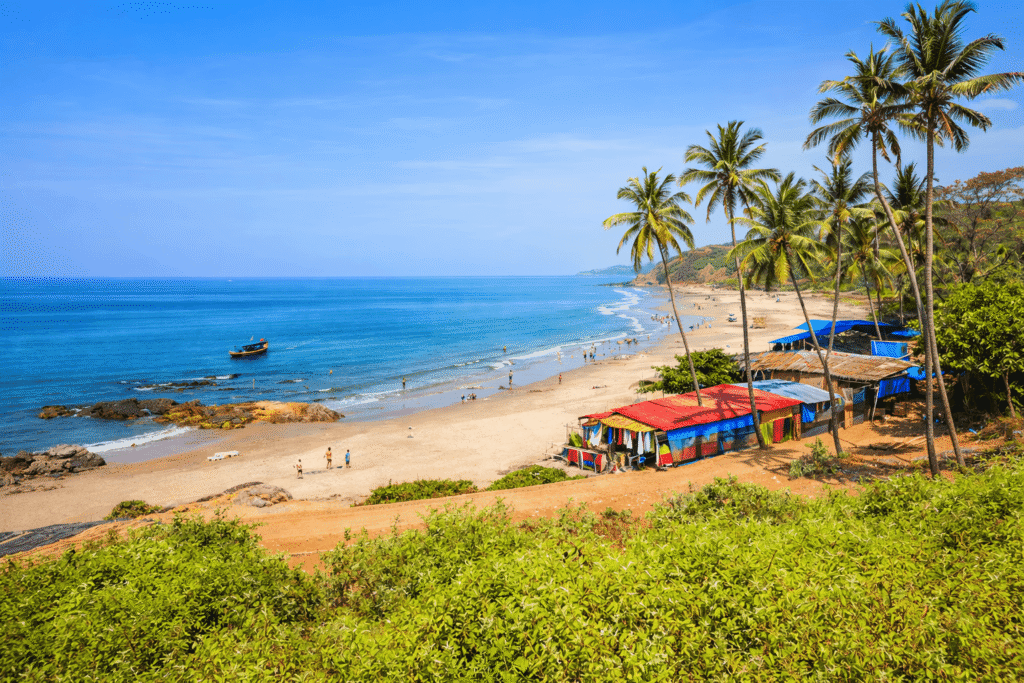
Calangute calls itself the Queen of Beaches, and the marketing isn’t entirely wrong — this is Goa’s largest beach, and in peak season it shows. What it lacks in exclusivity, it makes up for in convenience.
Why visit:
- A massive stretch of sand means there’s usually space somewhere, even when it’s crowded
- The best-connected beach in Goa — every taxi and tour operator knows exactly where you mean
- Lined with shacks serving everything from Goan fish curry to wood-fired pizza
Best for: First-time visitors, groups who want maximum options, travellers who like being where everyone else is.
Good to know: Calangute road traffic during December–January is genuinely painful. Use a scooter or walk from nearby accommodation rather than trying to park.
Anjuna Beach
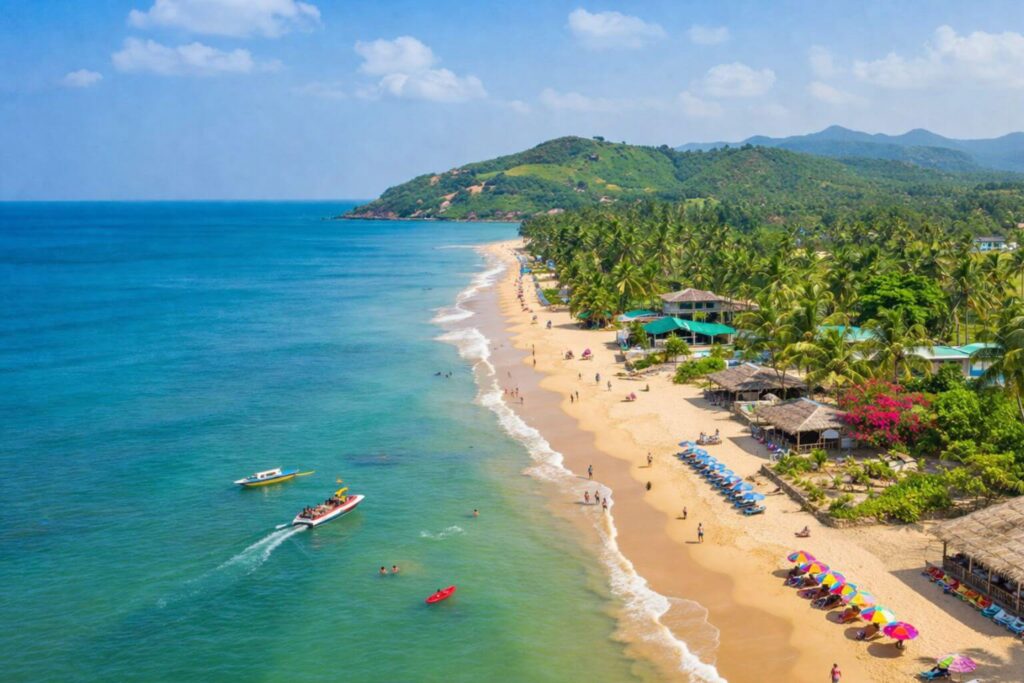
Anjuna is where Goa’s original counterculture put down roots in the 1970s, and some of that energy never left. The beach itself is smaller and rockier than Baga or Calangute — which is exactly why its regulars love it.
Don’t miss:
- The Wednesday Flea Market — one of the best travel experiences in India, a sprawling mix of crafts, vintage clothing, spices, and food stalls
- Curlies beach club at the southern end, a long-running favourite among long-stay travellers
- A crowd that skews younger and more international than the bigger beaches
Best for: Backpackers, solo travellers, anyone who wants a beach with character rather than just sand and sunbeds.
Good to know: Go on a Wednesday if you can. Anjuna on any other day is nice; Anjuna on flea-market day is unforgettable.
Vagator Beach
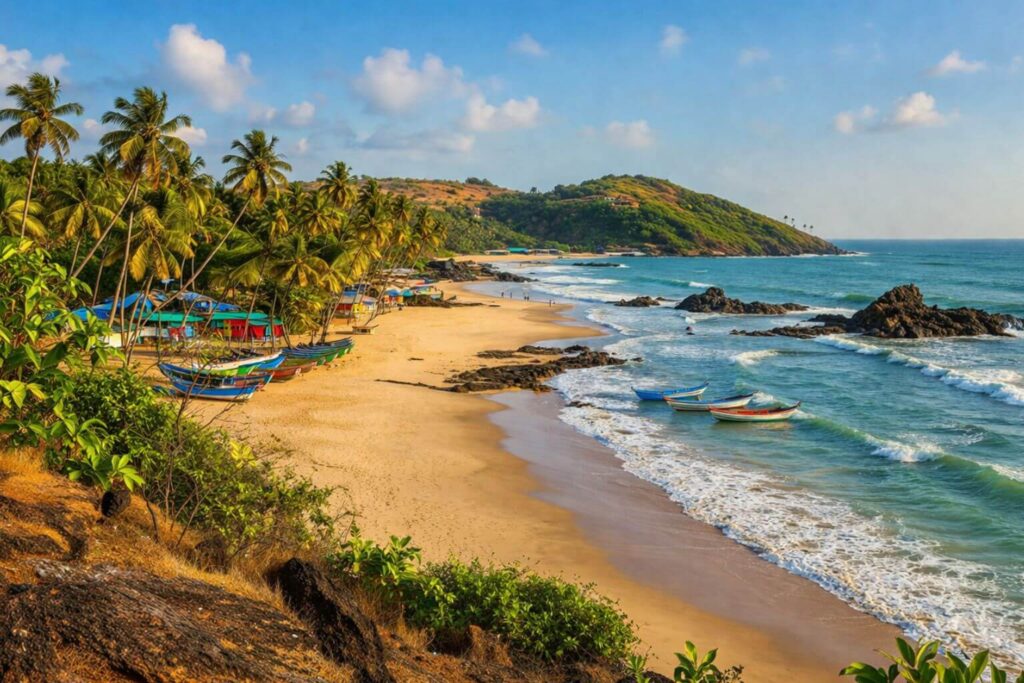
Vagator is what happens when the cliffs meet the sea and nobody over-develops it. Split into Big Vagator and Little Vagator (also called Ozran), this is North Goa’s most dramatic beach — and its best sunset spot.
Best experiences:
- The red-clay cliffs that frame the beach, among Goa’s most photographed landscapes
- Chapora Fort directly above — a short climb for views across the whole northern coastline
- A noticeably calmer vibe than Baga or Calangute despite being only 15 minutes away
Best for: Sunset chasers, photographers, couples wanting something quieter than the main strip.
Good to know: Vagator has fewer beach shacks than other North Goa beaches — eat before you arrive, or head to one of the rooftop restaurants on the ridge above.
Best Beaches in South Goa – Peaceful, Scenic & Unhurried
South Goa beaches operate at a different frequency: wider sand, calmer water, fewer vendors. If North Goa beaches are concerts, these are the morning after — quiet, beautiful, and exactly what you needed.
Palolem Beach
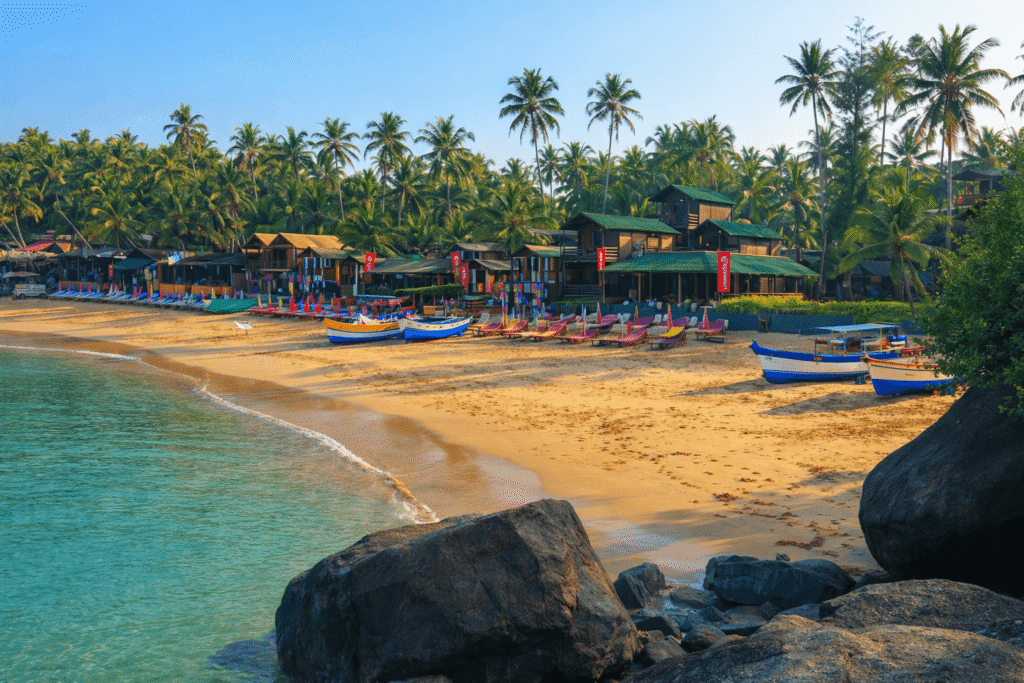
Palolem is South Goa’s centrepiece — a near-perfect crescent bay that appears near the top of every “best beaches in India” list, and deservedly so. What’s less talked about is how well-rounded it is: pretty enough for a honeymoon, social enough to enjoy solo, and calm enough for families.
Highlights:
- Naturally calm, shallow water from the shape of the bay — safe even for nervous swimmers
- Dawn kayaking, when the mist still sits low on the water, is one of those experiences that stays with you
- Morning dolphin-spotting cruises, with spinner dolphins a near-guaranteed sighting
- Silent Noise — Palolem’s famous headphone disco, unlike anything else in Goa
Best for: Couples, solo travellers who want peace without isolation, families, second-time visitors.
Good to know: Stay at least two nights — one is an introduction, two is when it starts to feel like yours. If you’re visiting between November and February, book beach huts in advance; they sell out quickly on weekends.
Agonda Beach
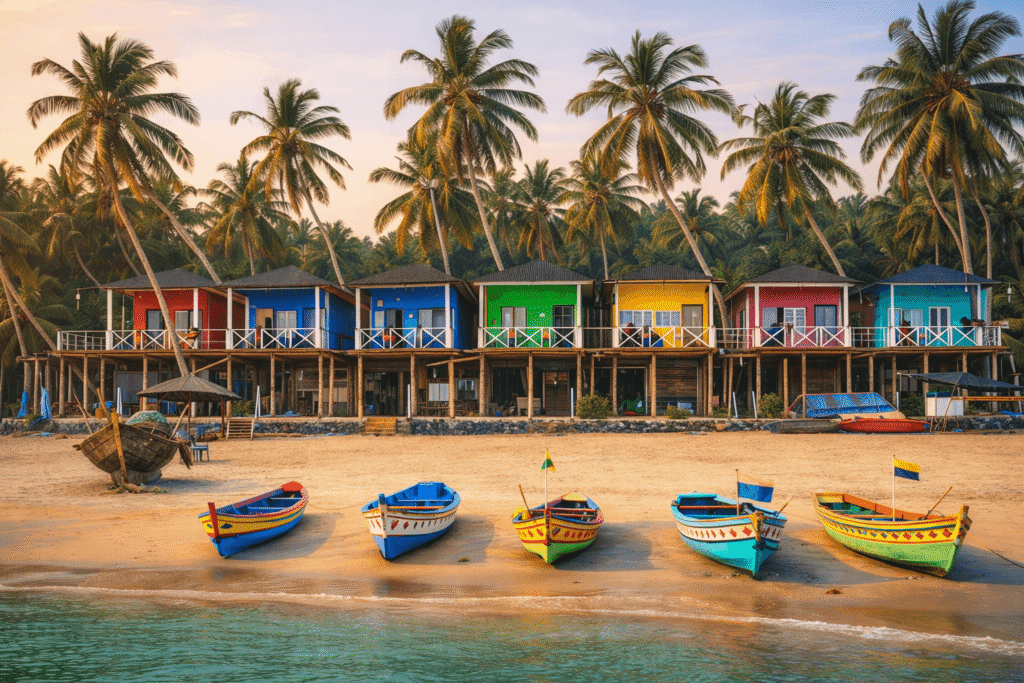
Agonda is what Palolem might have been if nobody had built anything on it — wider, emptier, almost entirely undeveloped. This is the beach experienced travellers come back to Goa for.
Why visit:
- Consistently ranked among Asia’s top beaches, and the ranking holds up
- Almost no vendors or hawkers — just the beach
- Olive Ridley sea turtles nest here between October and February
- A pace slow enough that guests regularly extend their stay by days
Best for: Couples wanting real privacy, solo travellers who need to properly decompress.
Good to know: Carry cash — there are no ATMs at Agonda and phone signal can be patchy.
Colva Beach
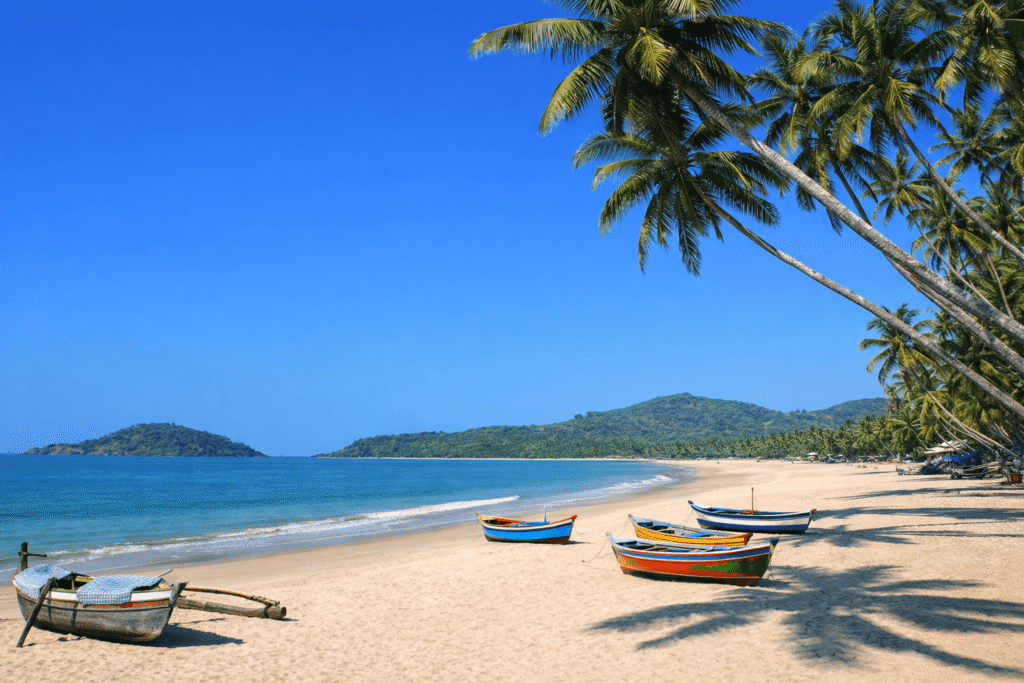
Colva is South Goa’s longest beach and its most practical. It doesn’t have Palolem’s drama or Agonda’s solitude — what it has is easy access, decent infrastructure, and enough going on to keep a family entertained without being overwhelming.
Good to know:
- A long, flat stretch of white sand with calm water — good for kids
- Well connected to Margao, South Goa’s main town, with hospitals, banks, and shopping
- Benaulim and Betalbatim, two quieter beaches just south, are worth an afternoon
Best for: Families with children, travellers who want South Goa’s calm with North Goa’s convenience.
Hidden Gems: Goa’s Beaches Most Tourists Skip
Beyond the well-known names, a handful of beaches stay quiet simply because they’re harder to reach — no direct road access, or a walk through forest to get there. If you have a spare afternoon, these are worth the effort.
- Butterfly Beach — Accessible only by boat from Palolem. A small, secluded bay that rewards the trip with genuinely untouched beauty. Go at high tide for the best approach.
- Kakolem Beach — Tucked below a cliff south of Cabo de Rama, reached by a short but steep forest trail. Almost always empty, with clear water and no facilities at all — bring your own food and water. The trail is steep and uneven, so avoid it during or right after heavy rain.
- Cola Beach — A lagoon-backed beach near Canacona with turquoise water and a handful of basic huts. Quiet even in peak season, and one of the prettiest lesser-known spots in the south.
- Galgibaga Beach — Also known as Turtle Beach, close to the Karnataka border. A protected Olive Ridley nesting site with a long, undisturbed stretch of sand and almost no development.
- Morjim Beach — North Goa’s quieter, more established “hidden” beach — calmer water, turtle nesting, and a noticeably less commercial feel than its neighbours.
Best Beaches in Goa by Category
Not sure which specific beach matches your trip? Here’s the shortcut.
- Best for nature → Agonda, Morjim, Galgibaga — turtle nesting and quieter coastline throughout.
- Best for nightlife → Baga, Calangute — the clubs, the shacks, the late nights.
- Best for sunsets → Vagator, Palolem — cliffs and sea at Vagator, a golden crescent bay at Palolem.
- Best for couples → Agonda, Palolem — solitude at Agonda, romance-with-comfort at Palolem.
- Best for families → Colva, Palolem — easy access at Colva, calm water and child-friendly stays at Palolem.
- Best for budget travellers → Anjuna, Arambol — cheap stays, great food, easy solo travel.
- Best for photography → Vagator, Butterfly Beach — red cliffs and a boat-only secret bay.
Which Goa Beach Is Right for You?
| Want… | Visit |
|---|---|
| Nightlife | Baga |
| Sunset views | Vagator |
| Solo travel | Anjuna |
| Couples’ getaway | Agonda |
| Family-friendly | Colva |
| Peace & quiet | Palolem |
| Budget stay | Arambol |
| A hidden beach | Butterfly / Cola |
North Goa vs South Goa Beaches — Quick Comparison
| Feature | North Goa | South Goa |
|---|---|---|
| Crowd level | High | Low to moderate |
| Cleanliness | Moderate | High |
| Activities | Water sports, markets, clubs | Yoga, kayaking, dolphin trips |
| Accommodation | Hostels to mid-range | Mid-range to luxury |
| Vibe | Party & social | Peaceful & private |
| Budget | ₹1,500–₹3,000/day | ₹3,000–₹8,000/day |
| Best for | First visits, groups, nightlife | Couples, families, wellness |
If you’re still deciding where to stay, compare North Goa vs South Goa before booking your hotel — it breaks down budget, vibe, and who each region actually suits.
Planning Your Trip
Best time to visit: November to February is the best window overall — good weather, everything open, and a festive atmosphere around Christmas and New Year, though it’s worth booking ahead for that stretch. October and March are quieter and cheaper if you don’t mind slightly patchier shack openings.
Travel Tips for Goa Beaches
- Respect the flag system. Red flag means don’t swim. Currents off some North Goa beaches are stronger than they look, and this isn’t a suggestion.
- Go early or go at sunset. The best light, calmest water, and thinnest crowds are all in the first two hours after sunrise. Midday on a peak-season beach is the worst of your options.
- Carry cash. Beach shacks across Goa are mostly cash-only, and ATMs run out on busy weekends — withdraw before you head out, not after.
FAQ
Palolem Beach, in South Goa.
Baga, Calangute, Anjuna, Palolem, and Vagator.
Calangute Beach
Yes — beaches like Colva and Palolem have calm water, and most resorts are set up well for families.
Final Verdict – Which Beach in Goa Should You Visit?
There’s no single best beach in Goa. There’s the best beach for what you’re actually looking for.
First-time visitor? Start with Baga and Calangute. Looking for peace? Palolem, then Agonda. On a budget? Anjuna and Arambol. On a honeymoon? Agonda, full stop — nothing else in Goa matches it for privacy. Have five or more days? Do both regions; three nights north, two south, and you’ll understand why people keep coming back.
The only wrong answer is spending your whole trip on one beach because you couldn’t decide. Goa is small, connections are easy, and every beach on this list is worth a day of your time.