
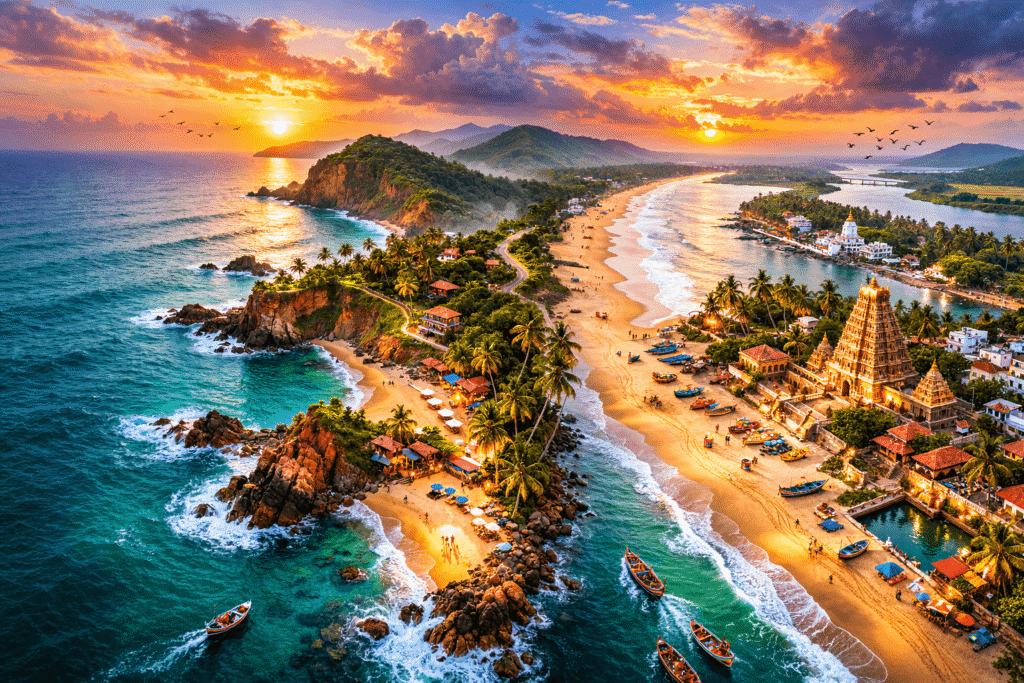
East Coast vs West Coast India Travel Guide: India’s coastline stretches for more than 7,500 kilometres — a staggering ribbon of sand, cliffs, mangroves, and fishing towns divided between two very different seas.
To the west, the Arabian Sea crashes against rugged cliffs and lush, palm-thick hills. To the east, the Bay of Bengal laps at wide, flat beaches backed by ancient temple towns and quiet fishing communities.
Both coasts are worth exploring, but they offer genuinely different experiences. The west coast pulls you in with tropical drama and beach-holiday energy.
The east coast rewards the curious traveller with history, heritage, and a sense that tourism hasn’t yet smoothed away the edges.
West Coast of India: Dramatic Landscapes and Tropical Beaches
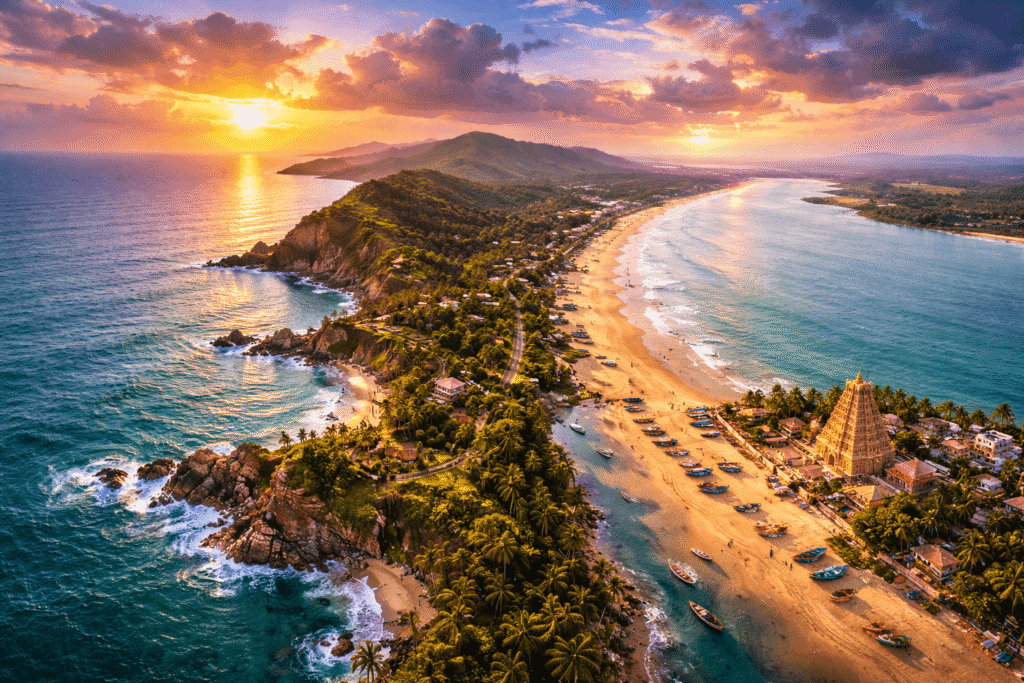
The west coast runs from the glittering chaos of Mumbai down through the lush Konkan belt, into the beach-party world of Goa, and finally unravels into the quiet backwaters and red-clay shores of Kerala.
The Western Ghats rise sharply behind the shore, forcing rivers through narrow gorges — the result is a coastline full of cliffs, coves, and rocky outcrops that makes even a short coastal drive feel cinematic.
Highlights of the West Coast
1. Goa’s Beach Culture Goa is many things at once: a former Portuguese colony with whitewashed churches and spice-scented lanes; a party destination with clubs that don’t close until dawn; and a quieter side of fishing villages like Morjim and Agonda where the main activity is watching the sun sink into the sea.
Deciding which Goa you want before you arrive will save you from disappointment.
2. Kerala’s Backwaters The coast around Alleppey (Alappuzha) is unlike anywhere else in India. A dense network of lagoons, canals, and lakes runs parallel to the sea, lined with coconut palms and small homesteads.
Hiring a houseboat for a night lets you drift through this landscape at a pace that feels genuinely unhurried. Even a half-day public ferry from Alleppey to Kottayam gives you a strong taste of it for almost nothing.
3. The Konkan Coast Sandwiched between Mumbai and Goa, the Konkan region is the west coast’s best-kept secret. The NH66 highway threads through cashew plantations and sleepy villages, occasionally dropping you at an empty beach backed by a crumbling Maratha fort.
Tarkarli is the standout — a clean sandy spit where the Karli River meets the sea — but Ganpatipule and Malvan are both worth detours if you have the time.
Best Places on the West Coast
- Gokarna, Karnataka — A smaller, more relaxed alternative to Goa with beautiful cove beaches accessible only by foot or boat. Budget around ₹800–1,500/night for a guesthouse.
- Varkala, Kerala — Dramatic red cliffs above the Arabian Sea, popular for yoga retreats and long lazy lunches on clifftop cafes.
- Tarkarli, Maharashtra — Excellent snorkelling, white sand, and the confluence of river and sea. Far fewer tourists than Goa.
- Kovalam, Kerala — Three crescent beaches near Thiruvananthapuram, well set up for longer stays with good transport links.
Getting Around
The Konkan Railway is one of India’s most scenic train routes, running from Mumbai to Mangalore through tunnels, bridges, and riverside stretches — an affordable way to hop between coastal towns. In Goa, renting a scooter (around ₹300–400/day) gives you the most freedom.
East Coast of India: Cultural Cities and Wide Beaches
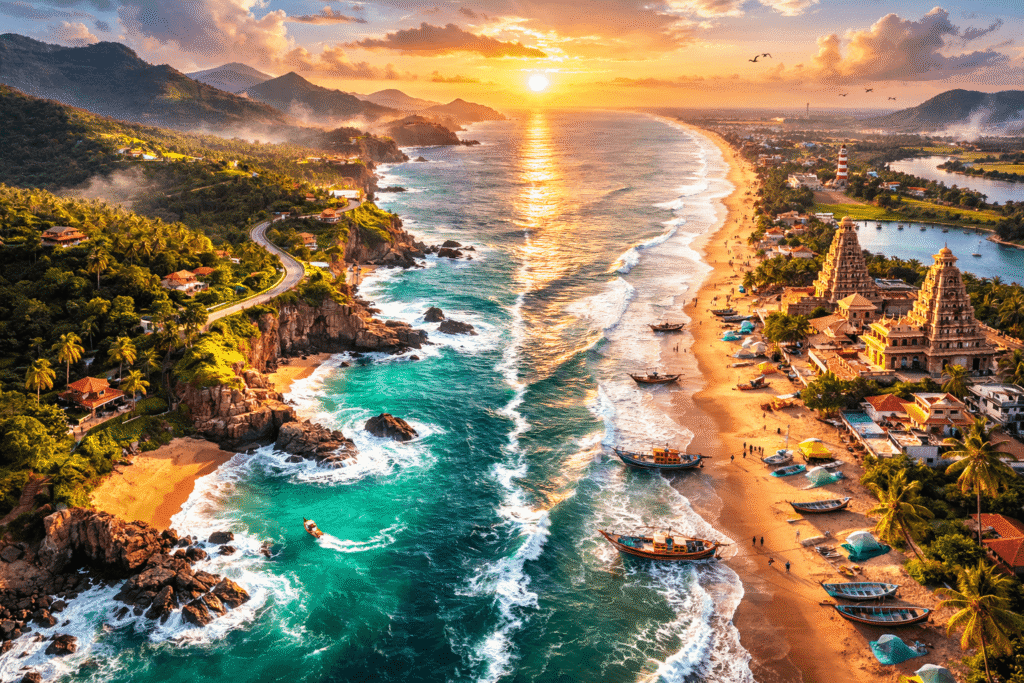
India’s east coast doesn’t shout. It doesn’t have Goa’s reputation or Kerala’s postcard imagery. What it has instead is scale, depth, and a sense that you’re somewhere that hasn’t been polished for tourist consumption.
The Bay of Bengal stretches wide and grey-green, and the beaches here are long, flat, and often near-empty.
Highlights of the East Coast
1. Mahabalipuram (Mamallapuram) About 60 kilometres south of Chennai, Mahabalipuram is the single best reason to explore the east coast.
The 7th-century rock-cut temples and sculptures are extraordinary — carved directly into granite boulders by Pallava craftsmen and sitting right on the beach.
The Shore Temple at sunrise, with waves behind it and almost no one else around, is one of those experiences that stays with you.
2. Puducherry (Pondicherry) The former French colonial enclave sits about 160 kilometres south of Chennai.
The French Quarter’s grid of yellow and white buildings, bougainvillea-draped walls, and genuinely good French bakeries make it feel unlike anywhere else in India.
It’s compact enough to explore on foot or bicycle, and the Auroville experimental township nearby makes for an interesting half-day excursion.
3. The Odisha Coast — An Underrated Stretch Beyond the well-known stops, Odisha’s coastline deserves far more attention than it gets. Chilika Lake is Asia’s largest coastal lagoon and home to Irrawaddy dolphins and migratory flamingos.
Bhitarkanika is a mangrove sanctuary with saltwater crocodiles. Gopalpur-on-Sea is a drowsy, old-fashioned beach town that feels frozen in the 1970s — in the best possible way.
Puri anchors it all as one of Hinduism’s four sacred dhams, drawing millions of pilgrims to the Jagannath Temple each year.
4. The Andaman Islands Reached by flight or ferry from Chennai or Kolkata, the Andamans represent the Bay of Bengal at its most spectacular. Radhanagar Beach on Havelock Island consistently ranks among Asia’s best beaches.
The diving and snorkelling here — clear water, healthy coral, sea turtles — is in a different league from anything on the mainland coast. Budget at least five to seven days; the journey alone takes a day each way by ferry.
Best Places on the East Coast
- Mahabalipuram, Tamil Nadu — Ancient temples on a beach, a charming town, and easy access from Chennai (day trip or overnight).
- Puducherry — French colonial architecture, good coffee, and an easy-going pace. Well connected by bus and the East Coast Road.
- Puri, Odisha — Sacred pilgrimage town with a vast beach; combine with Chilika Lake for a memorable few days.
- Visakhapatnam (Vizag), Andhra Pradesh — Large port city with good beaches and access to the scenic Araku Valley hills inland.
- Havelock Island, Andamans — The benchmark for beaches in this part of India. Fly from Chennai or Kolkata (1.5 hrs).
Getting Around
The East Coast Road (ECR) between Chennai and Puducherry is one of India’s most enjoyable coastal drives — smooth, scenic, and lined with seafood shacks.
Further north, the Chennai–Kolkata main rail line passes through Visakhapatnam and Bhubaneswar, making it easy to string multiple east coast stops together. Budget around ₹500–800 for a sleeper berth between major cities.
Key Differences: East Coast vs West Coast
| Feature | West Coast | East Coast |
|---|---|---|
| Landscape | Hills, cliffs, tropical forest | Flat coastline, wide beaches, lagoons |
| Sea | Arabian Sea — warm, calm in peak season | Bay of Bengal — rougher surf, cyclone-prone Oct–Nov |
| Famous Destinations | Goa, Kerala, Gokarna | Mahabalipuram, Puducherry, Puri, Andamans |
| Crowd Levels | Busy (especially Dec–Jan) | Much quieter; fewer foreign tourists |
| Travel Style | Beach holidays, relaxation | Culture, temples, wildlife, off-beat travel |
| Budget (mid-range) | ₹2,500–5,000/day | ₹1,500–3,500/day |
Best Time to Visit
West Coast: October to March is the sweet spot. The monsoon exits by late September in most of Goa and Kerala, leaving the air clean and the sea calm.
December–January is peak season — prices rise and beaches fill up, but the weather is reliably good. Avoid June to September unless you’re drawn to the dramatic spectacle of the monsoon itself.
East Coast: November to February offers the most comfortable temperatures. Note that the northeast monsoon (October–December) brings rain to the east coast while the west is dry — timing your visit around this is worth doing.
The Andaman Islands have a longer good season (November to April), with the best underwater visibility from December to March. Cyclone season (October–November) can occasionally disrupt travel along the Andhra Pradesh and Odisha coasts.
Which Coast Should You Choose?
The honest answer depends on what kind of traveller you are.
If you’re visiting India for the first time and want a proper beach holiday — warm water, scenic landscape, and a well-developed tourist infrastructure — the west coast is the safer bet.
Goa and Kerala have been hosting visitors for decades and show it: transport is easy, accommodation options are wide, and you’ll never struggle to find a good meal.
If you’ve been to India before, or you travel primarily to seek out history, wildlife, and places that haven’t yet been reshaped around visitor expectations, the east coast will give you more.
The temples at Mahabalipuram, the dolphins at Chilika, the surreal stillness of a beach in Odisha at dawn — these are experiences that reward patience and curiosity in a way that a sun-lounger in Goa simply doesn’t.
And if you have the time: do both. India’s two coastlines aren’t rivals — they’re complements, each revealing a side of the country the other can’t.
Conclusion
Choosing between India’s east and west coasts ultimately depends on the kind of travel experience you’re looking for. The East Coast vs West Coast India travel guide shows that both regions offer stunning coastlines, unique cultures, and unforgettable destinations.
India’s west coast is known for its lively beach towns, dramatic cliffs, Portuguese heritage, and vibrant tourism hubs like Goa, Gokarna, and Kerala.
In contrast, the east coast offers quieter beaches, rich temple culture, historic coastal towns, and wildlife-rich landscapes across states like Odisha, Tamil Nadu, and Andhra Pradesh.
Travelers who enjoy nightlife, luxury resorts, and lively beach scenes may prefer the west coast, while those seeking history, solitude, and cultural depth may find the east coast more rewarding. Both coasts reveal a different side of India’s maritime beauty.
Ultimately, the best choice depends on your travel style—but exploring both sides of India’s coastline is the perfect way to experience the country’s incredible coastal diversity.
FAQ
The west coast is generally considered more beautiful. Goa, Kerala, and Konkan coastline offer cleaner beaches, clearer water, and more dramatic scenery. The east coast has its own charm but is quieter and less developed.
The east coast faces the Bay of Bengal, which brings rougher surf and murkier water compared to the Arabian Sea. The beaches are also flatter and less scenic. However, Andaman Islands and parts of Odisha are genuine exceptions worth visiting.
The west coast wins for beach quality, water clarity, and tourism infrastructure. Kerala backwaters, Goa’s beach scene, and Karnataka’s Coastal Highway all make it hard to beat. The east coast is better for temples, culture, and off-the-beaten-path exploration.
In most comparisons, no. West coast beaches are cleaner, more accessible, and better developed for tourism. That said, Puri in Odisha and Marina Beach in Chennai have their own character and cultural significance that west coast beaches simply do not offer.