
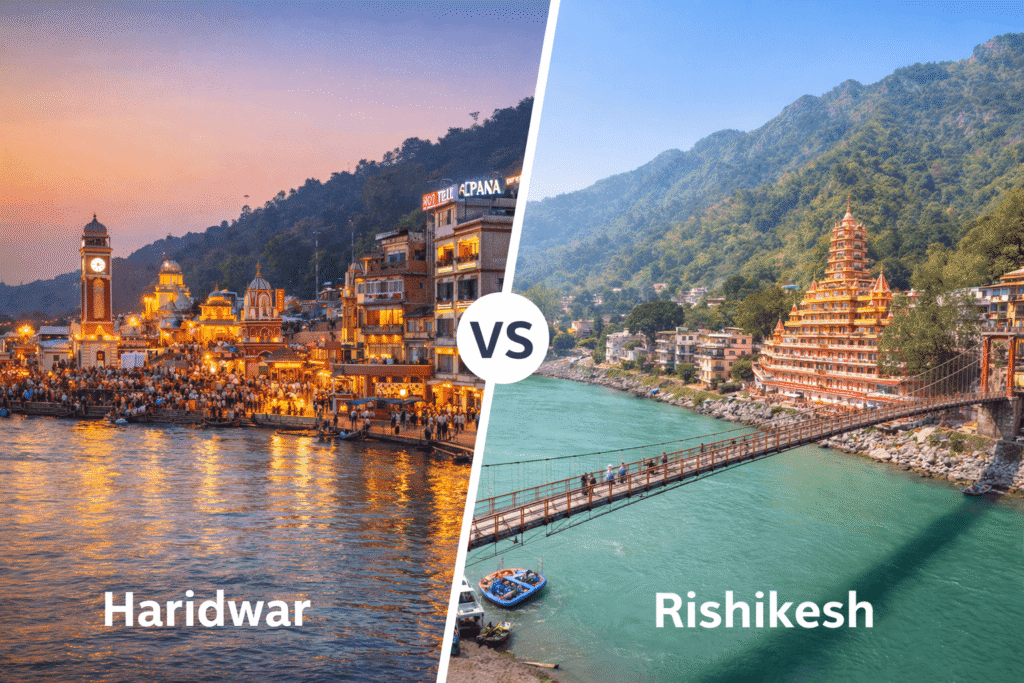
Haridwar vs Rishikesh is one of the most common travel comparisons for visitors planning a trip to Uttarakhand. Separated by just 24 kilometres and connected by the sacred Ganga, Haridwar and Rishikesh are two of India’s most visited pilgrimage towns.
Both sit in the Uttarakhand foothills where the river descends from the Himalayas onto the plains, and both draw millions of visitors every year.
Yet despite their proximity, the difference between Haridwar and Rishikesh could hardly be more pronounced — in character, energy, and purpose.
When comparing Haridwar vs Rishikesh, the decision ultimately depends on whether you prioritise traditional pilgrimage rituals or yoga and adventure activities. Is Haridwar better than Rishikesh? Or is Rishikesh the smarter choice for first-time visitors? This guide answers all of that.
Choosing between them depends entirely on what you are looking for — and in many cases, the smartest answer is to visit both. But if you must pick one, this honest, detailed comparison should help you decide.
Quick Comparison: Haridwar vs Rishikesh at a Glance
| Category | Haridwar | Rishikesh |
| Best For | Pilgrimage & Rituals | Yoga & Adventure |
| Ganga Aarti | Grand & Powerful | Smaller & Peaceful |
| Adventure | Very Limited | Rafting, Bungee, Trekking |
| Yoga & Wellness | Limited | World-Class Ashrams |
| Food Scene | Traditional North Indian | Diverse International Cafes |
| Connectivity | Better by Train | Better for Mountain Access |
| Atmosphere | Traditional & Intense | Relaxed & International |
| Crowd Level | Very High | Moderate to High |
| Accommodation | Dharamshalas & Hotels | Hostels to Luxury Retreats |
The Spiritual Atmosphere
Haridwar is, above all else, a city of pure devotion. Its name literally means ‘Gateway to God,’ and the moment you step off the train or bus you are enveloped by the unmistakable energy of a working pilgrimage city.
The streets are lined with priests, flower sellers, and vendors of ritual paraphernalia. Nothing about Haridwar is casual or touristic — it is intensely, unapologetically sacred.
The faithful come here to cremate loved ones, immerse ashes in the Ganga, perform ancestor rites, and seek blessings from ghats that have served Hindu pilgrims for thousands of years.
Rishikesh has a fundamentally different spiritual identity. It calls itself the Yoga Capital of the World, and that title is well earned.
The town became globally famous after the Beatles visited Maharishi Mahesh Yogi’s ashram here in 1968, and it has never looked back.
The spirituality of Rishikesh is less ritualistically Hindu and more broadly philosophical — you will find ashrams teaching Advaita Vedanta alongside meditation centres offering Buddhist mindfulness, yoga studios blending traditional Hatha with modern Vinyasa, and spiritual seekers from every corner of the globe.
If you are looking for an immersive experience in traditional Hindu ritual and pilgrimage culture, Haridwar wins without question. If you are drawn to yoga, meditation, and a more internationally minded spiritual environment, Rishikesh is the natural choice.
The Ganga Aarti
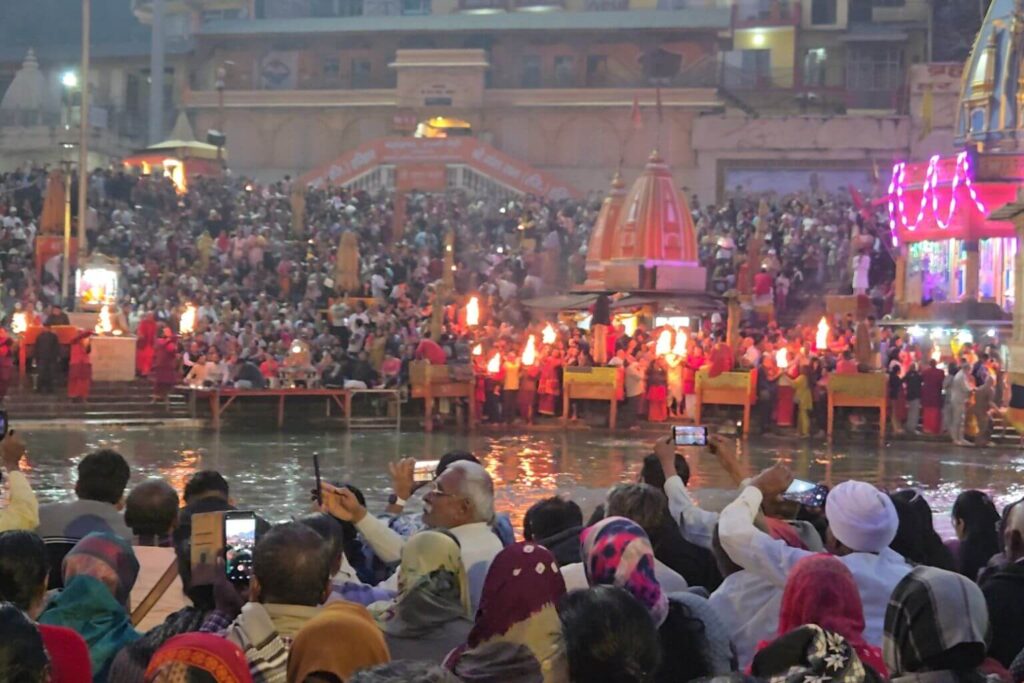
Both towns perform the Ganga Aarti — the magnificent evening fire ceremony offered to the river — and both are worth witnessing. But they offer very different experiences.
Haridwar’s aarti at Har Ki Pauri is one of the grandest spectacles in all of India. Thousands of devotees crowd the stepped ghats as priests swing enormous flaming lamps over the river, conch shells echo off the surrounding hills, and the Ganga runs swift and icy straight down from the mountains.
The belief here is that Har Ki Pauri is the exact spot where the Ganga touches the earth from heaven, making the aarti extraordinarily potent for pilgrims.
The atmosphere during the aarti is less like a tourist attraction and more like a living, breathing act of collective faith that has continued uninterrupted for centuries.
Rishikesh’s aarti at Triveni Ghat is smaller, more intimate, and gentler in tone. The ceremony feels more accessible to first-time visitors who might feel overwhelmed by the sheer crowd intensity of Haridwar. For the aarti experience specifically, Haridwar edges ahead in terms of raw spectacle and spiritual power.
Adventure and Outdoor Activities

This is where Rishikesh dominates entirely and without contest in the Haridwar vs Rishikesh comparison. The town has established itself as the adventure capital of North India, and it earns that reputation every single day.
The Ganga’s rapids between Shivpuri and Rishikesh are among the best white-water rafting runs in Asia, with grades ranging from the gentle Grade II to the genuinely challenging Grade IV.
Rafting here is affordable, extremely well organized, and suitable for both beginners and experienced rafters.
Beyond rafting, Rishikesh offers bungee jumping from a purpose-built platform over a forested gorge — one of India’s highest fixed bungee jumps.
There is camping along the river, cliff jumping, kayaking, mountain biking through the jungle, and trekking routes that lead deep into the Garhwal Himalaya.
The nearby trailheads for serious mountain treks — including routes to Kedarnath, Badrinath, and Hemkund Sahib — are also accessible from Rishikesh.
Haridwar has virtually no adventure activities to speak of. It is a city of prayer and pilgrimage, and outdoor thrills are not on its agenda. If adventure is any part of your travel plans, Rishikesh wins by a wide margin.
Yoga and Wellness
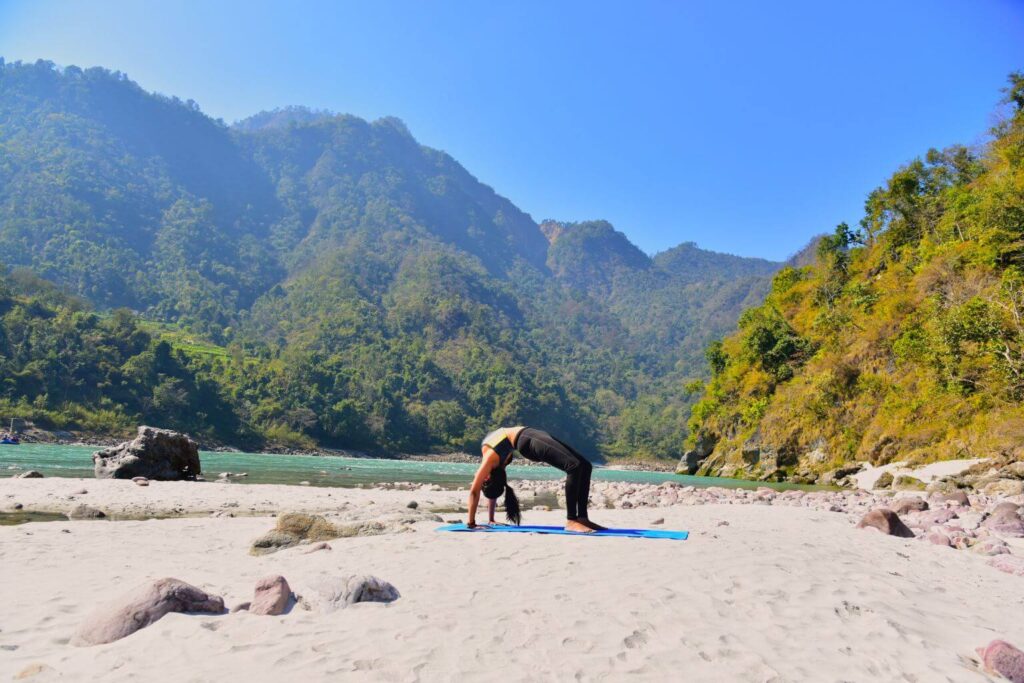
Again, Rishikesh has no serious competition in this category.
The town is home to hundreds of yoga schools and ashrams, ranging from the rigorous residential programs at institutions like Parmarth Niketan, Sivananda Ashram, and Yoga Niketan to short drop-in classes catering to backpackers passing through.
You can study yoga at every level of depth and commitment — from a single morning class to a month-long 200-hour teacher training certification recognized internationally.
Haridwar has some ashrams and dharamshalas, and the Patanjali Yogpeeth — the massive yoga and Ayurveda institute founded by Baba Ramdev — is technically located just outside Haridwar.
But as a day-to-day yoga and wellness destination for travellers, Haridwar lags significantly behind its neighbour.
Food and Eating Culture
Both towns are strictly vegetarian. Meat, fish, and eggs are prohibited within their holy precincts, and alcohol is banned in both — a non-negotiable aspect of the experience that all visitors should be prepared for.
Haridwar’s eating culture is almost entirely traditional North Indian — excellent thali meals, fresh puri sabzi, kachoris, jalebis, lassi, and street snacks at every turn. Eating in Haridwar feels like an authentic local experience rather than a curated one.
Rishikesh has evolved significantly under the influence of its international visitor base. Alongside traditional South Indian breakfasts and North Indian thalis, you will find cafes serving wood-fired pizzas, Israeli falafel, banana pancakes, cold brew coffee, and organic salads.
The stretch of restaurants near Laxman Jhula and in Tapovan caters to long-term yoga retreat guests and international backpackers. For food variety and quality of cafes, Rishikesh has the clear edge.
Rishikesh or Haridwar for First-Time Visitors?
This is one of the most-asked questions by travellers planning their first trip to Uttarakhand. The honest answer: it depends on your travel style.
Rishikesh is generally better for first-time international visitors. The town is more accustomed to foreign tourists, English is widely spoken, cafes and accommodation cater to a wide range of preferences, and the pace of life is a little more relaxed.
First-timers can ease into the spiritual culture of the region without feeling overwhelmed. The Ganga Aarti is accessible, the bridges and ghats are beautiful, and adventure activities are available whenever you want a break from contemplation.
Haridwar, on the other hand, is better for first-time visitors who are specifically on a Hindu pilgrimage, or those who want an unfiltered encounter with India’s religious heartbeat.
The experience can be intense, crowded, and deeply moving all at once. It is not a gentle introduction — but for many visitors, that rawness is precisely what makes it unforgettable.
Connectivity and Getting There
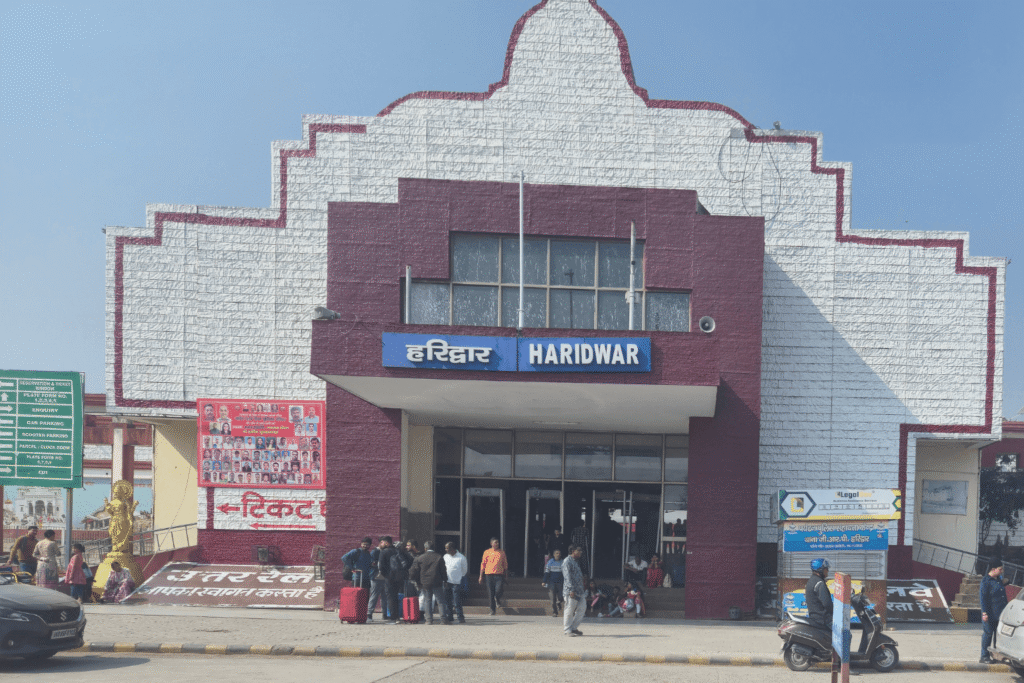
Haridwar is significantly better connected than Rishikesh. It has a major railway station on the main Delhi-Dehradun trunk line, with fast trains running from New Delhi, Lucknow, Varanasi, and most major Indian cities.
The bus stand is also large and well connected, making it easy to arrive and depart.
Rishikesh has a small, poorly connected railway station. Most visitors arrive by bus or shared taxi from Haridwar or Dehradun — about 20 to 40 minutes depending on traffic.
In practice, many travellers use Haridwar as the arrival point before heading upstream to Rishikesh. The two towns are easy to combine in a single trip.
Crowds, Noise, and Atmosphere
Haridwar is louder, busier, and more crowded than Rishikesh, particularly during festivals like Kanwar Yatra and Kumbh Mela.
During Kumbh Mela — held here every twelve years in full and every six years as an Ardh Kumbh — Haridwar swells to tens of millions of visitors, making it arguably the largest human gathering on earth.
Even on an ordinary weekend, the main ghats and bazaars are extraordinarily busy.
Rishikesh is busy too, particularly near Laxman Jhula and Ram Jhula, but the town spreads out along the riverbanks and into the surrounding hills, giving it a more breathable quality.
The areas further from the main tourist hubs — Tapovan, the forested stretches of the Ganga, the quieter ashrams upstream — offer genuine peace and seclusion that would be nearly impossible to find in Haridwar.
Haridwar vs Rishikesh: The Final Verdict
There is no universally correct answer to which town is better, because they serve fundamentally different purposes and serve them well. The difference between Haridwar and Rishikesh is not a matter of quality — it is a matter of intent.
Haridwar is the right choice if you are a devout Hindu pilgrim seeking the sacred ghats and traditional rituals, if you want to witness the Ganga Aarti in its most powerful form, if you are arriving by train and have limited time, or if you want to experience Indian religious life in its most unfiltered and authentic expression.
Rishikesh is the better choice if you want to do yoga or meditation seriously, if adventure sports are on your agenda, if you are a solo international traveller or backpacker looking for community and good cafes, if you are on a wellness retreat, or if you want a visually beautiful base to explore the Himalayan foothills.
If pressed to choose just one: most international travellers and yoga-seeking visitors will find Rishikesh more comfortable and versatile. Most domestic pilgrims and those seeking deep immersion in Hindu ritual will find Haridwar more rewarding.
But the best possible option — especially since they are barely half an hour apart — is to spend at least a night in each. Let Haridwar move you with its ancient power, then let Rishikesh restore you with its mountain air and riverside calm.
Together, they form one of the most remarkable spiritual corridors on the planet, and no comparison between them should ever end with you visiting only one.
Frequently Asked Questions
Haridwar is better for traditional pilgrimage and grand Ganga Aarti experiences, while Rishikesh is better for yoga, adventure, and a relaxed atmosphere.
Yes. The two towns are only 24 km apart and can easily be combined in a 2–3 day trip.
Haridwar offers a larger and more intense aarti at Har Ki Pauri, while Rishikesh offers a smaller and more peaceful ceremony.
Rishikesh is generally less crowded than Haridwar, except during peak tourist seasons.