
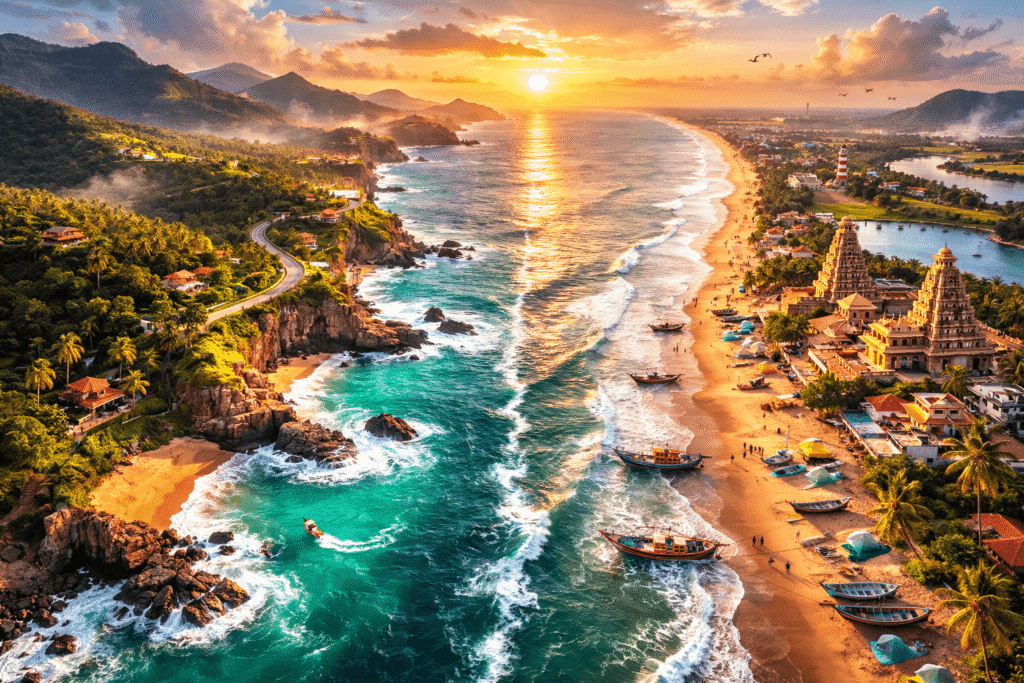
India’s 7,500-kilometre coastline is one of the most diverse in the world — stretching from the mangrove-lined shores of the Andamans to the palm-fringed beaches of Kerala.
For travellers who want more than a sunbed and a cold drink, this coastline delivers world-class surfing, scuba diving, kayaking, and more.
Whether you’re a first-timer or an experienced water sports enthusiast, here are the top destinations worth your time.
Goa
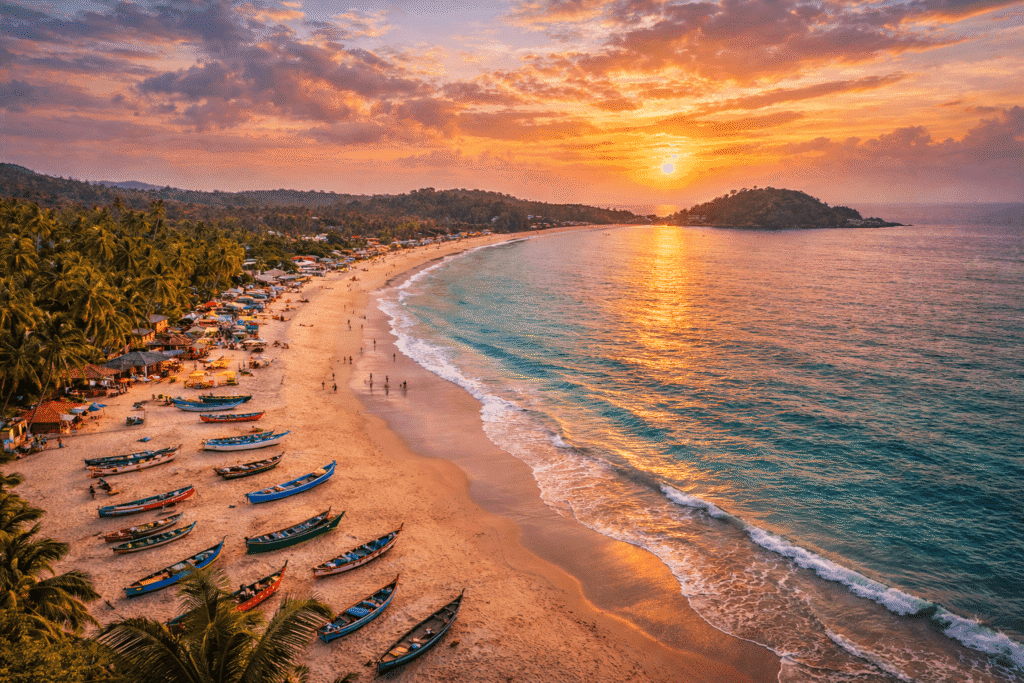
Goa needs little introduction as India’s beach capital, but its water sports scene goes far beyond the tourist-trail banana boat rides.
The northern beaches — Baga, Calangute, and Candolim — are packed with operators offering parasailing, jet skiing, and wakeboarding from October through May.
For something more substantial, Grand Island (a 45-minute boat ride from Dona Paula) offers some of the best scuba diving on the west coast, with visibility reaching up to 15 metres during peak season.
Best time to visit: November to February for calm seas and clear visibility.
Approximate cost: Scuba diving at Grand Island starts around ₹3,500–₹4,500 for a single dive with equipment. Jet skiing runs ₹500–₹800 for 15 minutes.
Tip: Avoid fly-by-night operators on the beach. Look for PADI-certified dive centres like Barracuda Diving or Goa Aquatics for safety and quality.
Tarkarli, Maharashtra
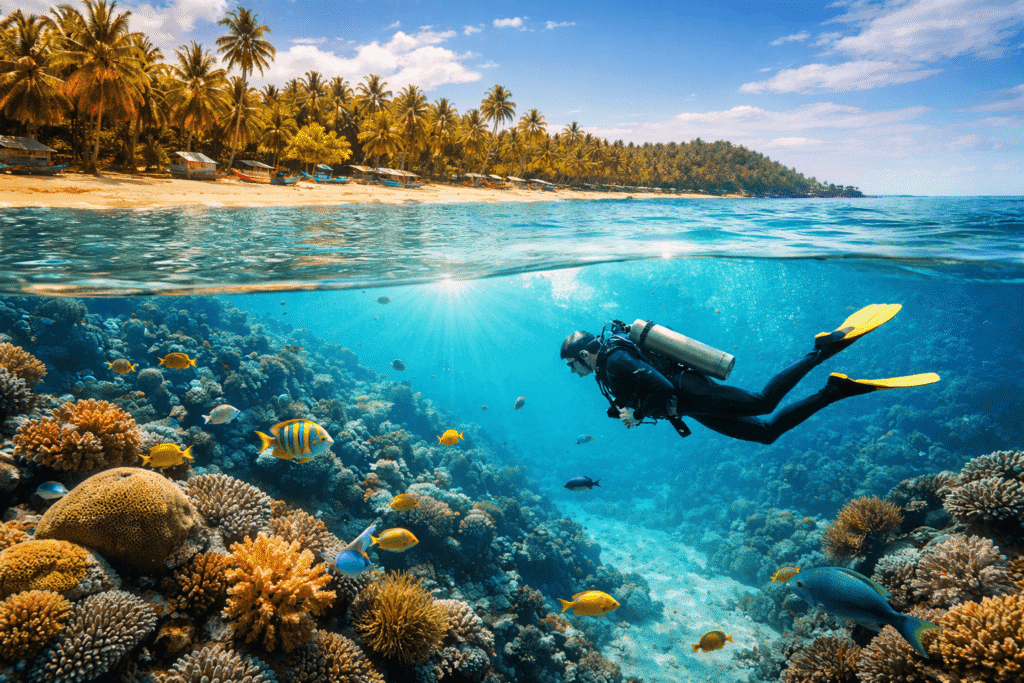
Tucked in the Sindhudurg district about 520 km south of Mumbai, Tarkarli consistently ranks among India’s best-kept secrets for underwater exploration.
The Karli River meets the Arabian Sea here, creating an unusual mix of backwater kayaking and open-sea snorkelling.
The water is strikingly clear — visibility can reach 20 metres on a good day — and the coral patches near the shore are accessible even without scuba certification.
Best time to visit: October to March. Avoid the monsoon months entirely, as the Maharashtra coast gets some of the heaviest rainfall in India.
Approximate cost: MTDC (Maharashtra Tourism) operates affordable dive packages starting around ₹1,500–₹2,500 per person. Private operators charge slightly more but offer smaller groups.
Tip: Book accommodation early — Tarkarli is a weekend favourite for Mumbaikars and Punekars, and decent guesthouses fill up fast from December onwards.
Gokarna, Karnataka
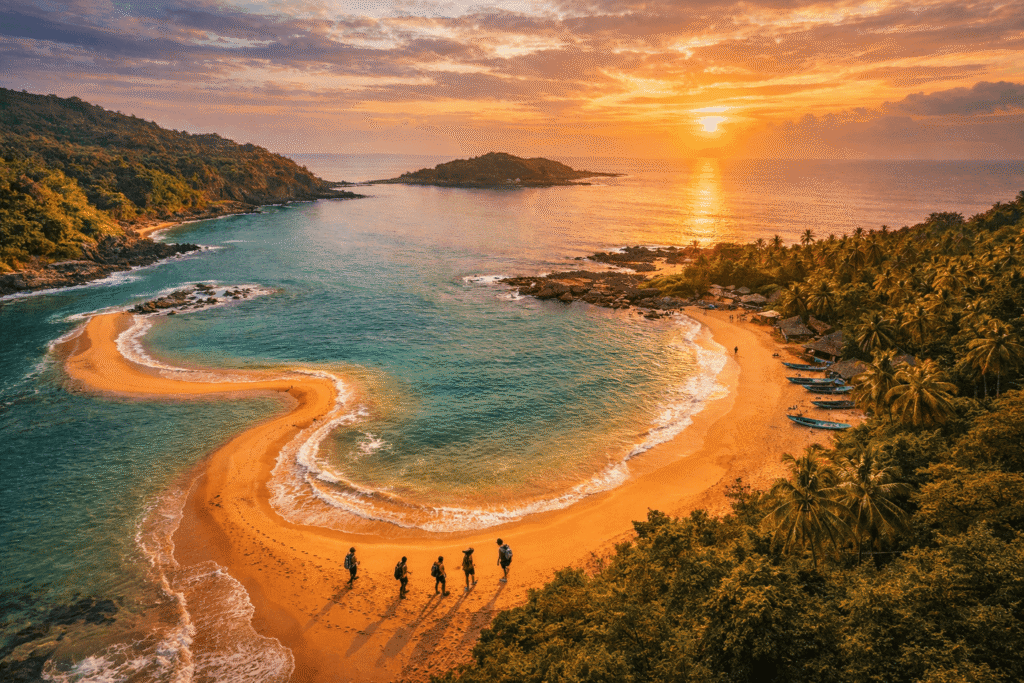
Gokarna sits at an interesting crossroads: it’s a Hindu pilgrimage town that has quietly evolved into one of Karnataka’s most popular surf destinations.
Om Beach — named for its natural OM shape — has become the centre of a small but growing surf culture, with instructors available for beginners from November through March.
The rugged coastline also lends itself to kayaking between the hidden coves that are inaccessible by road, offering a sense of discovery that’s hard to find in more developed beach towns.
Best time to visit: November to March for consistent swells. April and May are hot but manageable.
Approximate cost: Surfing lessons at Om Beach run around ₹1,500–₹2,000 for a two-hour session including board hire.
Tip: Half Moon Beach and Paradise Beach are better options for a quieter paddleboarding experience — hire kayaks in Gokarna town and paddle along the coast.
Kovalam, Kerala
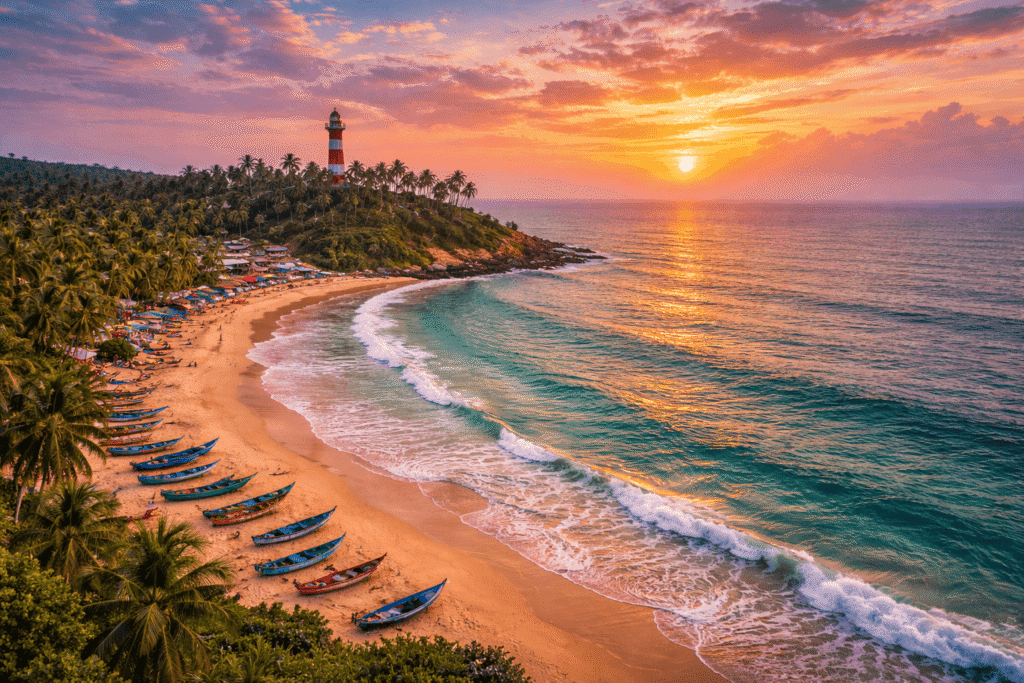
Kovalam’s crescent-shaped Lighthouse Beach has been welcoming travellers for decades, but the surfing scene here is often overlooked.
The bay creates a reliable left-hand break that works well for beginner and intermediate surfers from September through March.
Local surf schools have grown significantly in recent years, and the Kerala government has actively promoted water sports as part of its tourism development.
Best time to visit: September to March. The monsoon (June–August) brings rough seas and most operators close.
Approximate cost: Surfing lessons start at around ₹1,200–₹1,800 per session. Catamaran rides along the bay cost approximately ₹500–₹800 per person.
Tip: Samudra Beach, just north of the main tourist strip, is less crowded and offers a better environment for learning to surf without dodging swimmers.
Varkala, Kerala
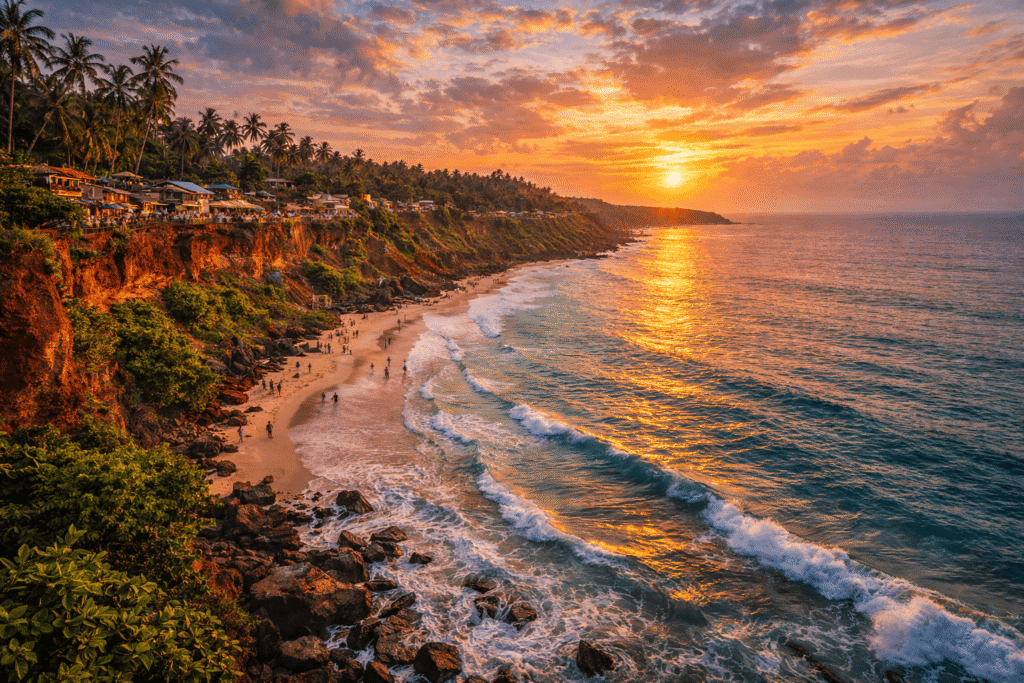
Often overshadowed by Kovalam, Varkala deserves its own spotlight. The dramatic cliff-top setting overlooking the Arabian Sea is unlike anything else on the Kerala coast, and the beach below has developed a genuine surf culture.
The waves here are slightly more powerful than at Kovalam, making it a better fit for intermediate surfers looking for a challenge. Parasailing and kayaking are also available from the main beach.
Best time to visit: October to March.
Tip: The northern end of the beach near the Black Beach area sees fewer tourists and better wave consistency.
Pondicherry
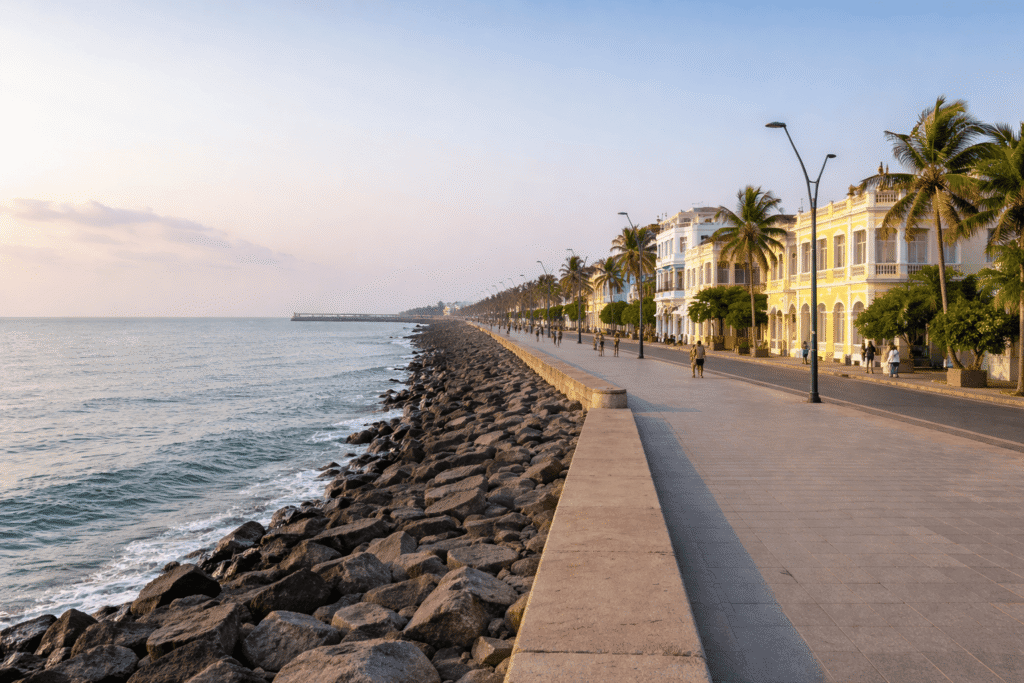
Pondicherry’s calm, clear waters along the Coromandel Coast make it one of the best places in India to try scuba diving for the first time.
The dive sites around Aravind’s Rock and the Temple Reef are home to moray eels, lionfish, and occasional reef sharks, with the best visibility between February and April.
Several PADI-certified dive centres operate here, including Temple Adventures, which has been running courses for over a decade.
Best time to visit: January to April for diving. The Bay of Bengal coast avoids the worst of the monsoon until October.
Approximate cost: PADI Open Water courses start around ₹18,000–₹22,000. Single discovery dives run approximately ₹3,000–₹4,000.
Andaman and Nicobar Islands
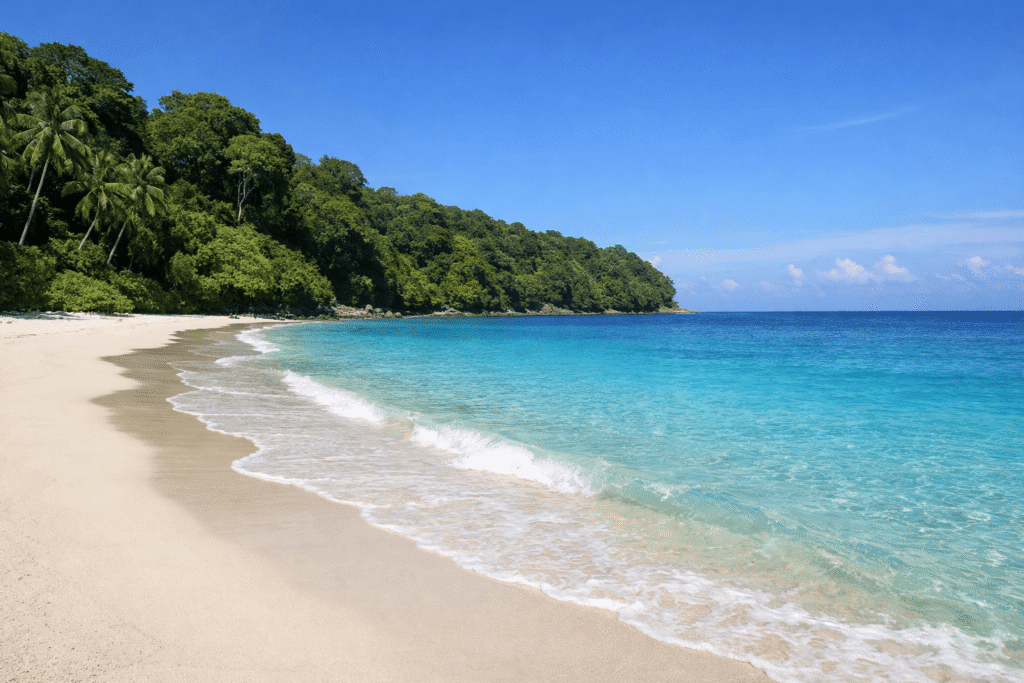
The Andamans stand in a category of their own. The coral reefs here are among the healthiest in Asia — largely because the islands’ distance from the mainland has limited the coastal development and runoff that has damaged reefs elsewhere in India.
Havelock Island (officially renamed Swaraj Dweep) is the hub, with dive sites like Lighthouse, Aquarium, and The Wall offering encounters with manta rays, turtles, and barracuda.
Neil Island is quieter and better suited to snorkelling and kayaking through mangrove channels.
Best time to visit: November to April. The islands shut down almost completely during the monsoon (May–September).
Approximate cost: Scuba diving starts at around ₹3,500–₹5,000 per dive. PADI Open Water certification courses range from ₹20,000 to ₹28,000 depending on the operator.
Tip: Barefoot Scuba and Dive India on Havelock are the most established operators, with strong safety records and experienced instructors.
Lakshadweep
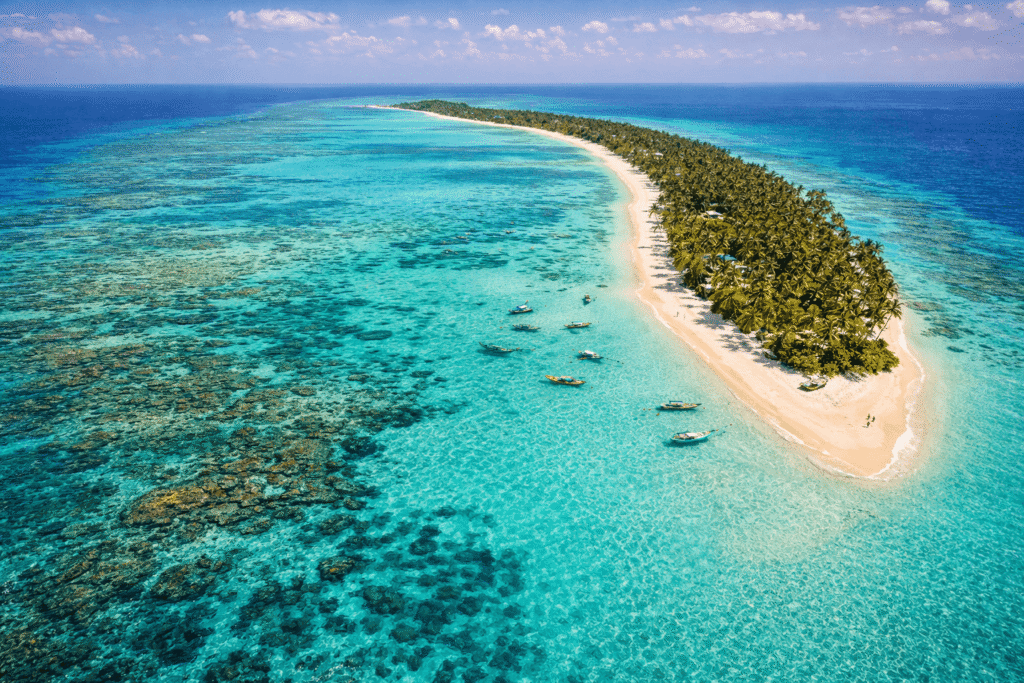
Lakshadweep is the most remote entry on this list — and because of that, one of the most pristine. Access is tightly controlled by the Indian government, which has kept tourist numbers low and the coral reefs in exceptional condition.
Agatti Island is the main entry point, and the lagoon here is exceptional for snorkelling, kayaking, and glass-bottom boat tours. Scuba diving is available but requires advance booking through approved operators, often as part of a package tour.
Best time to visit: October to May.
Important note: Independent travel to Lakshadweep requires a special permit for non-Indian nationals. Indian citizens need an entry permit arranged through the Lakshadweep Administration or approved tour operators.
Staying Safe in the Water
Generic advice like “check the weather” only goes so far. Here are more specific things to keep in mind:
- Verify operator credentials. Ask to see the operator’s licence from the local District Tourism Office or look for PADI/SSI certification for dive centres. Don’t book purely based on price.
- Understand rip currents. India’s beaches are not uniformly flagged or patrolled. Learn to identify rip currents before you swim — they appear as darker, choppy channels moving away from shore. If caught in one, swim parallel to the beach rather than fighting against it.
- Monsoon timings vary by coast. The southwest monsoon hits Kerala and Goa around June and moves up the west coast. The northeast monsoon affects the Coromandel Coast (including Pondicherry) between October and December — the opposite of when the west coast is calm.
- Ear and sinus health. Equalise regularly when diving and avoid diving with a cold or sinus congestion to prevent barotrauma.
- Sun and dehydration. Tropical sun is intense on open water. Use reef-safe sunscreen (standard chemical sunscreens damage coral), wear a rash vest, and drink water before and after any activity.
Choosing the Right Destination for You
| Your priority | Best destination |
|---|---|
| First-time scuba diving | Pondicherry, Tarkarli |
| World-class coral reefs | Andaman Islands, Lakshadweep |
| Surfing | Gokarna, Kovalam, Varkala |
| Budget travel | Tarkarli, Gokarna |
| Maximum variety of activities | Goa |
| Pristine, uncrowded beaches | Lakshadweep, Andamans |
India’s coastline rewards those willing to look beyond the obvious. While Goa will always deliver convenience and variety, the quieter destinations — Tarkarli, Varkala, Lakshadweep — offer something rarer: the feeling of having discovered a place before the crowds arrived.
FAQ
Goa is the top destination for water sports in India. It offers parasailing, jet skiing, windsurfing, and scuba diving all in one place.
Baga Beach and Calangute Beach in Goa are the most popular for water sports. Radhanagar Beach in Andaman is great for a more scenic and less crowded experience.
Lakshadweep is the closest you can get to a Maldives-like experience in India. Havelock Island in Andaman is another beautiful option with turquoise water and white sand.
Goa is India’s most famous state for water sports. Uttarakhand is tops for river rafting, while Andaman and Nicobar Islands lead for diving and snorkelling.