
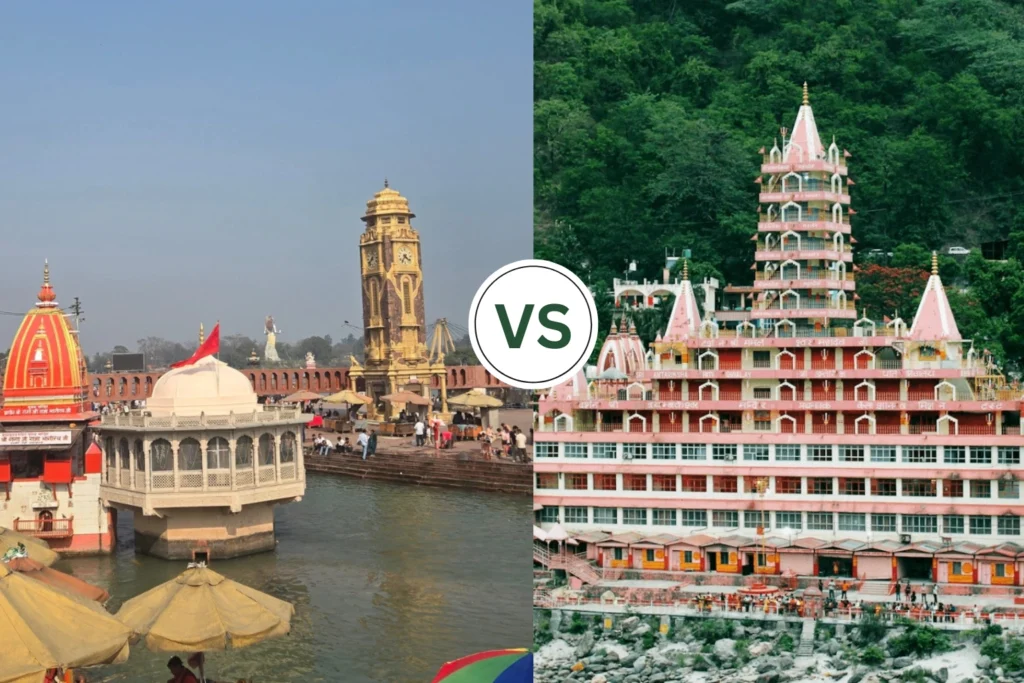
Haridwar vs Rishikesh is one of the most common travel comparisons for visitors planning a trip to Uttarakhand.
Separated by just 24 kilometres and connected by the sacred Ganga, these two towns sit in the Uttarakhand foothills where the river descends from the Himalayas onto the plains. Both draw millions of visitors every year — but for very different reasons.
I’ve visited both multiple times, and I’ll say this upfront: comparing them is almost unfair. They are not rivals. They are two completely different experiences that happen to be 24 kilometres apart.
Planning your trip? Start with our complete Rishikesh itinerary guide.
Quick Comparison: Haridwar vs Rishikesh at a Glance
| Category | Haridwar | Rishikesh |
|---|---|---|
| Best For | Pilgrimage & Rituals | Yoga & Adventure |
| Ganga Aarti | Grand & Powerful | Smaller & Peaceful |
| Adventure | Very Limited | Rafting, Bungee, Trekking |
| Yoga & Wellness | Limited | World-Class Ashrams |
| Food Scene | Traditional North Indian | Diverse International Cafes |
| Connectivity | Better by Train | Better for Mountain Access |
| Atmosphere | Traditional & Intense | Relaxed & International |
| Crowd Level | Very High | Moderate to High |
The Spiritual Atmosphere
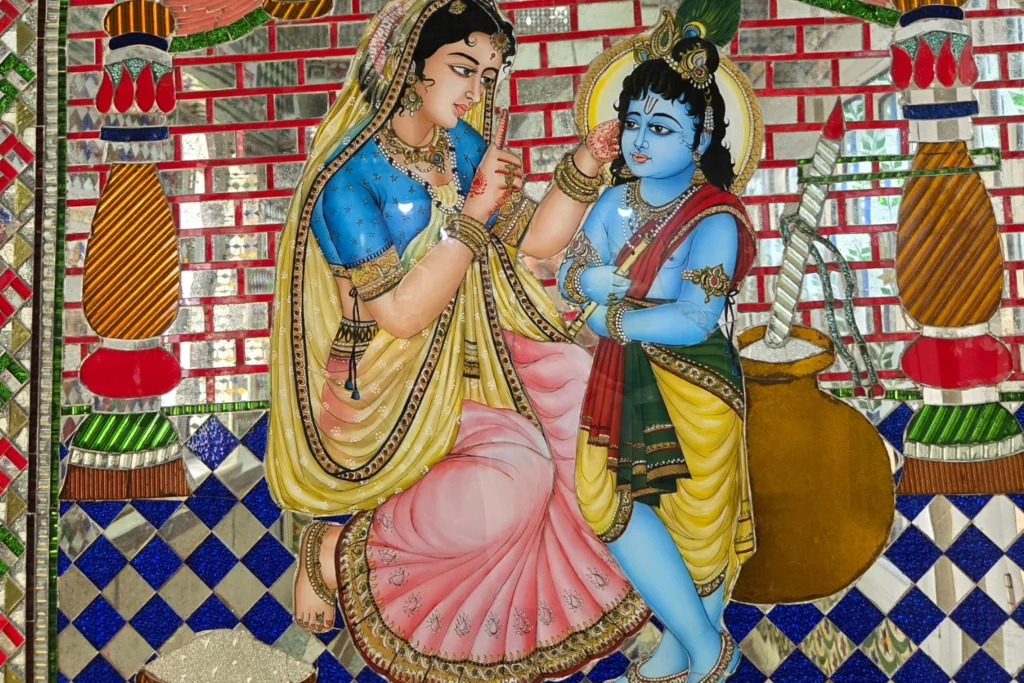
Haridwar carries a spiritual weight that is difficult to describe until you’ve stood at Har Ki Pauri yourself.
The belief here runs deep — it is said that bathing at Har Ki Pauri washes away the sins of 100 lifetimes. Whether you are a devotee or simply a curious traveller, standing at that ghat as thousands of people around you act on that faith with complete sincerity — it moves you in ways you don’t expect.
Many families come here specifically for asthi visarjan — immersing the ashes of loved ones in the Ganga for moksha. This is not a tourist attraction. It is a living ritual that has continued for thousands of years, and witnessing it gives you a perspective on life and death that no other destination in India quite replicates.
Beyond Har Ki Pauri, Haridwar has an extraordinary concentration of temples. The most visited are Mansa Devi and Chandi Devi — both reached by ropeway and both offering sweeping views of the city below.
But if you take Saptrishi Road through Bhoopatwala, you will find an almost unbroken line of sacred sites including Bharat Mata Temple, Vaishno Devi Temple, Tulsi Manas Mandir, Saptrishi Ashram, Geeta Kutir, Vyas Ashram, Shantikunj, Doodhadhari Barfani Temple, and Pawan Dham — all within reach of each other.
Haridwar also has lesser-known temples that most tourists miss entirely — Maya Devi Temple, Daksh Mahadev, Bilvkeshwar Mahadev, Harihar Ashram with its Parad Shivling, and the beautiful Narayani Shila Temple among them.
Rishikesh has a fundamentally different spiritual identity. It is called the Yoga Capital of the World, and that title is well earned. The spirituality here is less about ritual and more about inner practice — hundreds of ashrams, yoga schools, and meditation centres draw seekers from across the globe.
🏛️ Local Tip — Temple Route:
Take Saptrishi Road through Bhoopatwala — you’ll find Bharat Mata Temple, Vaishno Devi Temple, Tulsi Manas Mandir, Shantikunj, Doodhadhari Barfani Temple, and Pawan Dham all in one straight stretch. One road, multiple temples.
The Ganga Aarti — Two Completely Different Experiences
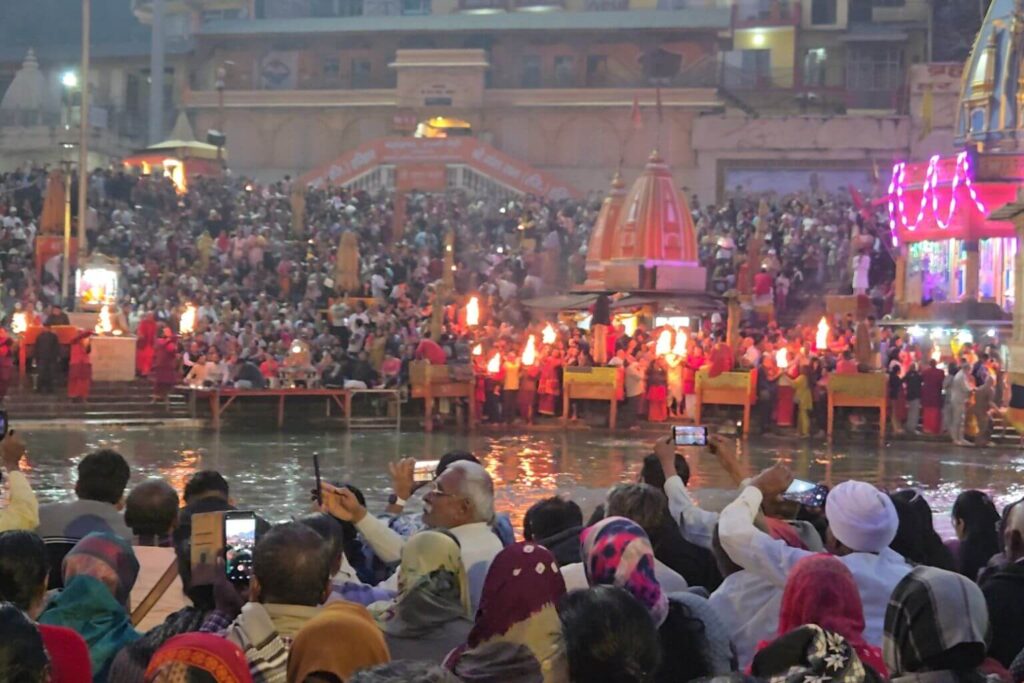
Both towns perform the Ganga Aarti, and both are worth witnessing. But they are so different that comparing them feels almost wrong.
At Har Ki Pauri, the aarti is a spectacle of collective faith on a massive scale. The ghats on both sides fill up completely — there is genuinely no space to put your feet during peak crowd.
Priests swing enormous flaming lamps, conch shells echo off the hills, and the energy is electric. It is loud, intense, overwhelming — and completely unforgettable.
At Triveni Ghat in Rishikesh, the experience is the opposite. The aarti happens on one side, and across the Ganga — on the far bank — there is no crowd at all.
Just the river flowing quietly, the mountains in the distance, and the ceremony reflected on the water. I’ll be honest — that view gives a stillness that is very hard to find anywhere else. Both experiences moved me, but in entirely different ways.
For raw spectacle and spiritual power — Haridwar. For peace and inner quiet — Rishikesh. If possible, attend both.
Adventure and Outdoor Activities

This is entirely Rishikesh’s domain. The Ganga rapids between Shivpuri and Rishikesh offer some of the best white-water rafting in Asia — Grade II to Grade IV, well organized, affordable, and suitable for beginners and experienced rafters alike.
What’s interesting is who you’ll find on those ghats. Because Rishikesh is close to Saharanpur, Muzaffarnagar, and within easy reach of Delhi, it fills up with families and young people — especially in April, May, and June — escaping the summer heat. Kids and adults are in the water together, rafting, cliff jumping, simply swimming.
And right there on the ghat banks — maggi and chai stalls. A plate of maggi for ₹80, a cup of chai, and your feet in the cold Ganga water after a rafting run. Simple, but somehow perfect.
Beyond rafting, Rishikesh offers bungee jumping, camping, kayaking, mountain biking, and trekking routes into the Garhwal Himalaya — including trailheads for Kedarnath, Badrinath, and Hemkund Sahib.
Haridwar has virtually no adventure activities. It is a city of prayer — outdoor thrills are simply not on its agenda.
🏄 Local Tip — Rishikesh Rafting Season:
April to June is when families from Delhi, Saharanpur, and Muzaffarnagar arrive to escape the summer heat. Right on the ghat banks you’ll find maggi for ₹80 and chai — the perfect post-rafting combination.
Yoga and Wellness
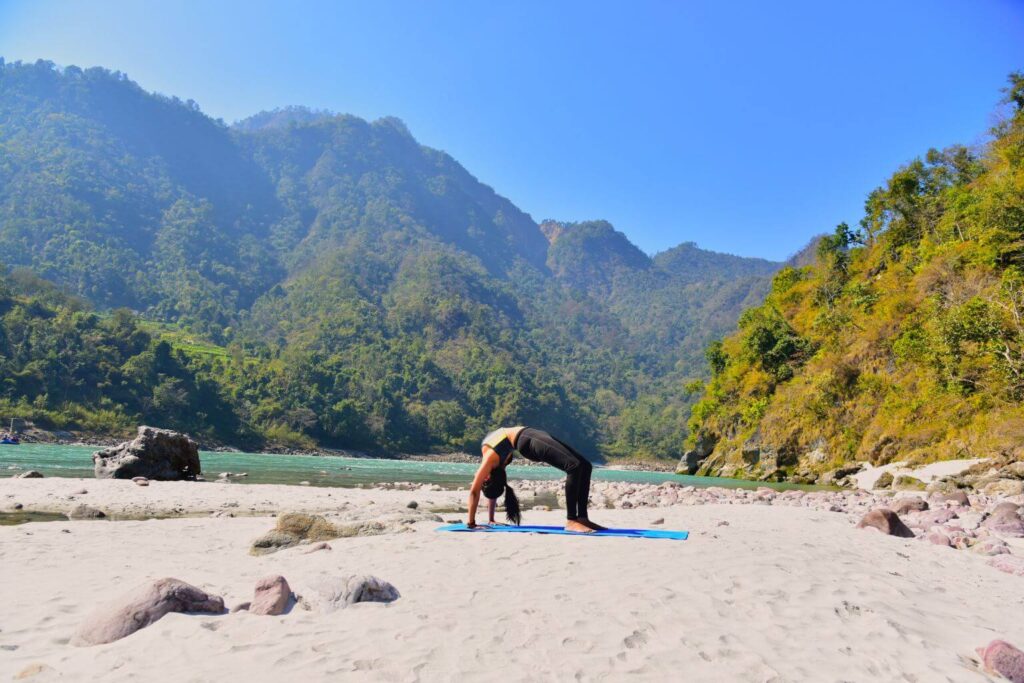
Rishikesh has no competition here. Hundreds of yoga schools and ashrams — from rigorous residential programs at Parmarth Niketan, Sivananda Ashram, and Yoga Niketan to casual drop-in morning classes — make it the undisputed yoga capital of India.
Haridwar has the Patanjali Yogpeeth just outside the city, but as a day-to-day yoga destination it cannot match Rishikesh.
Food and Eating Culture
Both towns are strictly vegetarian — no meat, no fish, no eggs, no alcohol. This is non-negotiable and applies everywhere.
Haridwar’s food is deeply traditional — puri sabzi, kachoris, jalebis, lassi, thalis. Eating here feels completely local and authentic.
Rishikesh has evolved under its international visitor base. Alongside traditional food, you’ll find cafes near Laxman Jhula serving wood-fired pizzas, Israeli food, banana pancakes, cold brew coffee, and organic salads. It caters to long-term yoga retreat guests and international backpackers in equal measure.
Rishikesh or Haridwar for First-Time Visitors?

Honestly, it depends on who you’re travelling with and why you’re going.
If you’re travelling with children, start with Rishikesh. Kids love the energy here — rafting, swimming in the Ganga, the general buzz of an adventure town. There’s always something active happening, and the atmosphere is more relaxed and easier to navigate with young ones.
If you’re going for spiritual reasons — pilgrimage, rituals, or simply to experience the deep religious heart of India — Haridwar is the answer. There’s nothing quite like it.
But my honest personal opinion? Don’t miss either one.
The Ganga Aarti in both towns has stayed with me long after every visit. They’re different experiences, but both are genuinely moving.
And Haridwar has one more thing that I always look forward to — the market just outside Har Ki Pauri after the aarti. The whole stretch glows at night, lined with shops selling brass deepaks, traditional utensils, wooden crafts, and handmade items you won’t easily find elsewhere.
And when you step out of Har Ki Pauri, don’t miss Agra Chaat Bhandar on Upper Road near Guru Gorakhnath Temple. They serve Aloo Tikki Chaat, Dahi Puri, Dahi Bhalla, and Kanji Vada — all in traditional leaf bowls.
I make it a point to stop here every single time I’m in Haridwar. There’s something about chaat in a leaf bowl that takes you straight back to another era.
🍃 Local Tip — Best Chaat in Haridwar:
Just outside Har Ki Pauri, on Upper Road near Guru Gorakhnath Temple — Agra Chaat Bhandar. Aloo Tikki, Dahi Puri, Dahi Bhalla all served in traditional leaf bowls. I stop here every single visit without fail. Keep an eye out for naagfal and starfruit sold in small leaf bowls at stalls around the Har Ki Pauri market. It’s not something you find easily outside Haridwar.
Connectivity and Getting There
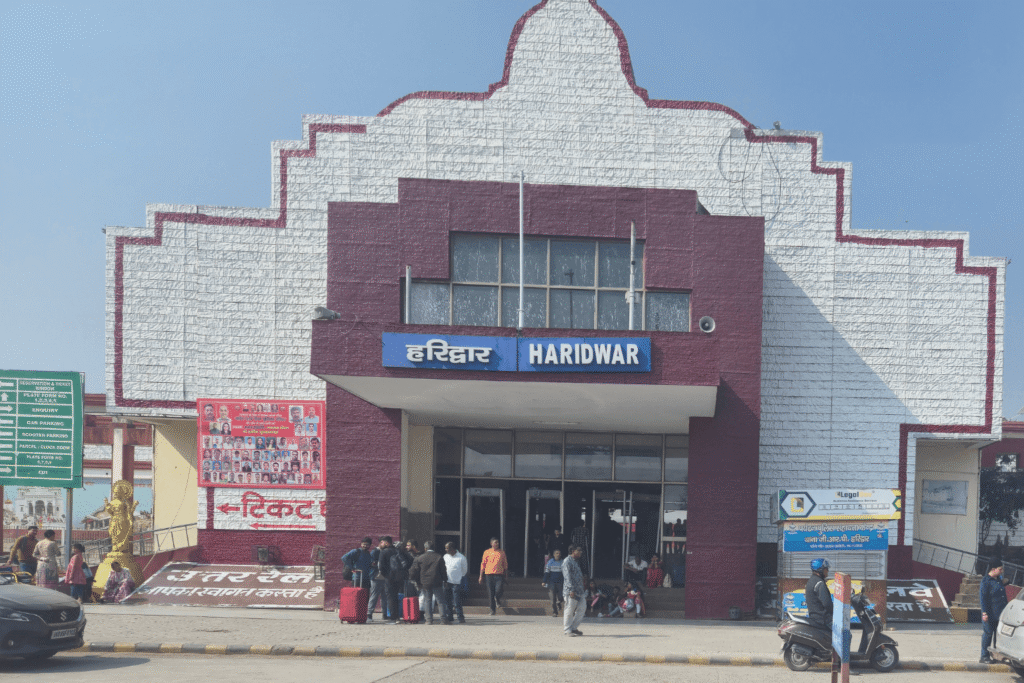
Haridwar has a major railway station on the Delhi-Dehradun trunk line — fast trains from Delhi, Lucknow, Varanasi, and most major cities. Easy to arrive, easy to leave.
Rishikesh has a small, poorly connected railway station. Most visitors arrive by bus or shared taxi from Haridwar — about 20 to 40 minutes. In practice, many travellers use Haridwar as their arrival point and head upstream from there.
Crowds, Noise, and Atmosphere
Haridwar is louder, busier, and more intense — particularly during Kanwar Yatra and Kumbh Mela. During Kumbh — held every twelve years in full — Haridwar sees tens of millions of visitors, making it arguably the largest human gathering on earth.
Rishikesh is busy near Laxman Jhula and Ram Jhula, but spreads out along the riverbanks with quieter areas further upstream offering genuine peace.
Frequently Asked Questions
Haridwar is better for traditional pilgrimage, spiritual rituals, and the grand Ganga Aarti experience. Rishikesh is better for yoga, adventure, and a more relaxed atmosphere. Neither is universally better — they serve different purposes.
Yes — they are only 24 km apart and easily combined in a 2-3 day trip. Most travellers do exactly this.
Haridwar’s aarti at Har Ki Pauri is larger and more intense. Rishikesh’s aarti at Triveni Ghat is smaller and more peaceful. Both are worth attending for entirely different reasons.
Haridwar is one of the holiest cities in Hinduism. It is believed that bathing at Har Ki Pauri washes away sins of 100 lifetimes. It is also a major site for asthi visarjan — immersing the ashes of the deceased for moksha.
Haridwar vs Rishikesh: The Final Verdict
There is no correct answer to which is better. They are different in character, energy, and purpose — and they serve those purposes exceptionally well.
Go to Haridwar for ancient ritual, the thundering Ganga Aarti, sacred ghats, and an unfiltered encounter with Hindu pilgrimage culture. Go to Rishikesh for yoga, adventure, riverside cafes, and the quiet beauty of the Ganga flowing through mountain foothills.
But if at all possible — go to both. They are barely half an hour apart, and together they form one of the most remarkable spiritual corridors in the world. Let Haridwar move you. Let Rishikesh restore you. 🙏