
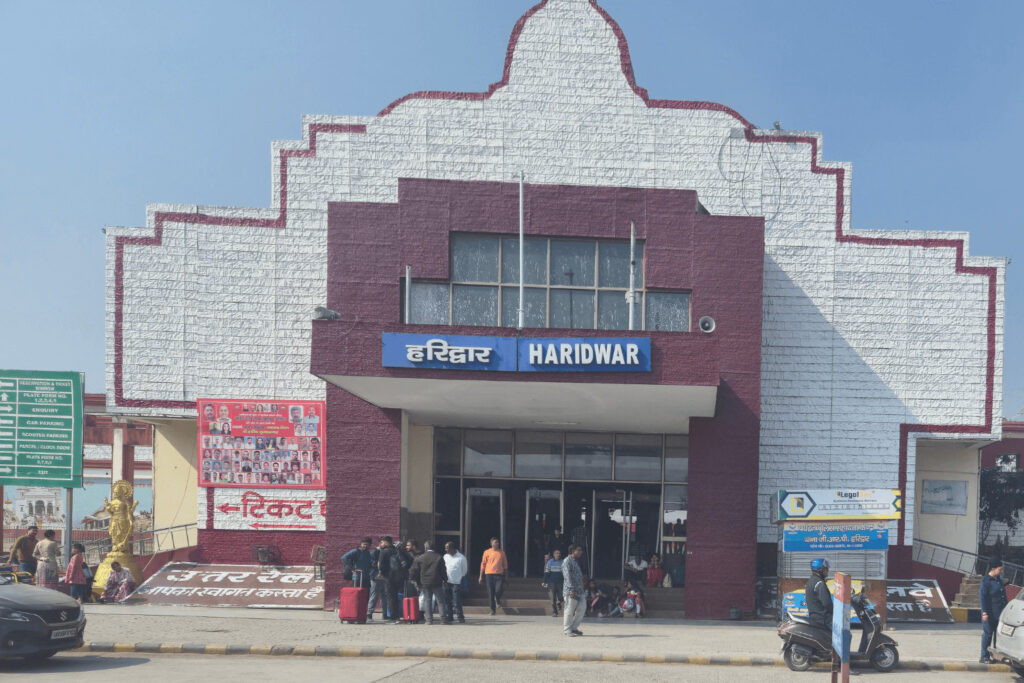
Planning a trip from Haridwar to Rishikesh? The distance between these two popular destinations is just around 25 km, making it one of the shortest and most scenic routes in Uttarakhand.
Whether you’re heading from the spiritual ghats of Haridwar to the adventure-filled vibes of Rishikesh, this quick journey can be completed in under an hour.
I’ve made this trip myself — travelling with a group of 11 family members by shared auto. With no major traffic, we covered the distance in about 35–40 minutes, watching the Ganga appear and disappear alongside the road the entire way. It’s one of those journeys that feels shorter than it actually is.
In this guide, you’ll find everything you need to know about the Haridwar to Rishikesh distance, travel time, best routes, and the most convenient travel options for a smooth trip.
Haridwar to Rishikesh Distance
The distance from Haridwar to Rishikesh is approximately 25 km depending on the route you take. The most common road route follows NH7 (National Highway 7), which connects the two cities in a near-straight line along the Ganges.
Quick answer: The distance from Haridwar to Rishikesh is around 25 km and takes 45 minutes to 1 hour by road under normal traffic conditions.
The route is mostly flat, well-maintained, and passes through a mix of urban outskirts and forested stretches — making it a pleasant drive at any time of day.
Haridwar to Rishikesh Travel Time
Travel time on this route varies by mode of transport and time of day:
- By car or taxi: 45–60 minutes
- By bus: 1–1.5 hours (including stops)
- By shared auto: approximately 1 hour
- By train: 30–40 minutes (journey time), but limited frequency makes it unreliable for most travelers
Traffic factors to watch for:
- Morning rush (8–10 AM) and evening hours (5–7 PM) can add 20–30 minutes
- During peak pilgrimage seasons — Kanwar Yatra, Kumbh Mela, or any major festival — the road can slow significantly
- The stretch near Rishikesh city center tends to bottleneck, especially on weekends
Best time to travel: Early morning (before 8 AM) or post-lunch (1–3 PM) for the smoothest, fastest ride.
How to Reach Rishikesh from Haridwar
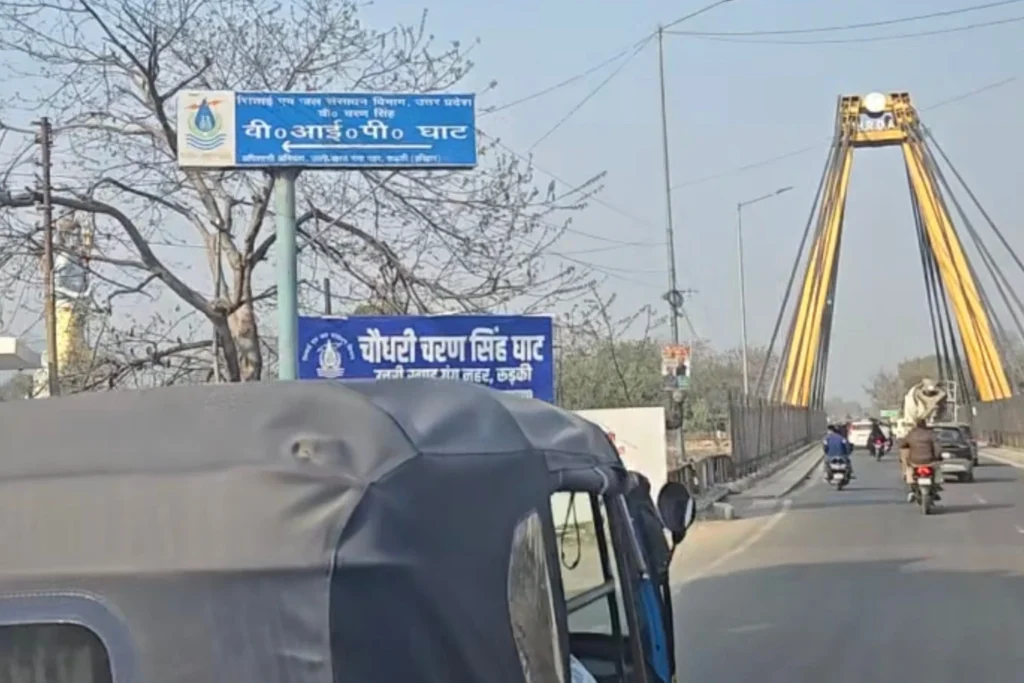
By Taxi / Cab
A private cab is the most comfortable option for this route. Pre-booked taxis from Haridwar Railway Station or your hotel typically cost between ₹800 and ₹1,500 for a one-way trip, depending on vehicle type and whether you negotiate in advance.
App-based cabs (Ola, Uber) are available but availability can be inconsistent — always have a backup option. Ideal for families, elderly travelers, or those carrying luggage.
By Shared Auto / Auto-Rickshaw
This is the budget traveler’s go-to. Shared autos ply regularly between Haridwar and Rishikesh and cost just ₹40-₹50 per person depending on your pickup point and how far into Rishikesh you need to go.
Shared autos run frequently and offer an authentic local travel experience. The trade-off is comfort — expect a snug fit and occasional stops to pick up more passengers.
I travelled this route with a family group of 11 — we split across a couple of autos, which worked out well. It’s a snug fit, but for a 35–40 minute journey with light traffic it’s perfectly manageable, and considerably cheaper than a private cab.
By Bus
Government buses (Uttarakhand Roadways) and private operators both run regular services on this route.
Buses depart from Haridwar Bus Stand throughout the day and are the cheapest option, with fares ranging from ₹30–₹100 depending on the service type. Journey time is 1–1.5 hours including stops.
Not the fastest, but perfectly fine if you’re on a budget and not in a hurry.
By Train
A few trains operate between Haridwar and Rishikesh, and the journey usually takes around 30–40 minutes. However, train services on this route are limited, so most travelers prefer taxis, buses, or shared autos, which are more frequent and convenient.
Travel Cost Comparison
| Mode | Travel Time | Approx. Cost | Best For |
|---|---|---|---|
| Private Cab | 45–60 min | ₹800–₹1,500 | Comfort, families |
| Shared Auto | ~1 hour | ₹40–₹50 | Budget travelers |
| Bus | 1–1.5 hours | ₹30–₹100 | Cheapest option |
| Train | 30–40 min | ₹30–₹100 | Limited availability |
Best Route: Road Guide
The standard route follows NH7, running northwest from Haridwar toward Rishikesh. The road is well-marked, divided for most of the stretch, and passes through some genuinely beautiful forested sections as you approach Rishikesh.
A few things to know about the route:
- As you exit Haridwar, the urban density thins quickly and the landscape opens up
- The road hugs the general direction of the Ganges, and you’ll catch glimpses of the river on your left
- Around the 15 km mark, the foothills begin to close in and the air noticeably changes — cooler, crisper
- As you enter Rishikesh, traffic funnels toward the main bazaar area and Ram Jhula / Laxman Jhula bridges
Google Maps tip: Search “Haridwar to Rishikesh via NH7” and enable traffic view before you depart. If the route near Rishikesh city shows heavy congestion, consider taking the slightly longer bypass through Doiwala for a smoother arrival.
Places to Visit Between Haridwar and Rishikesh
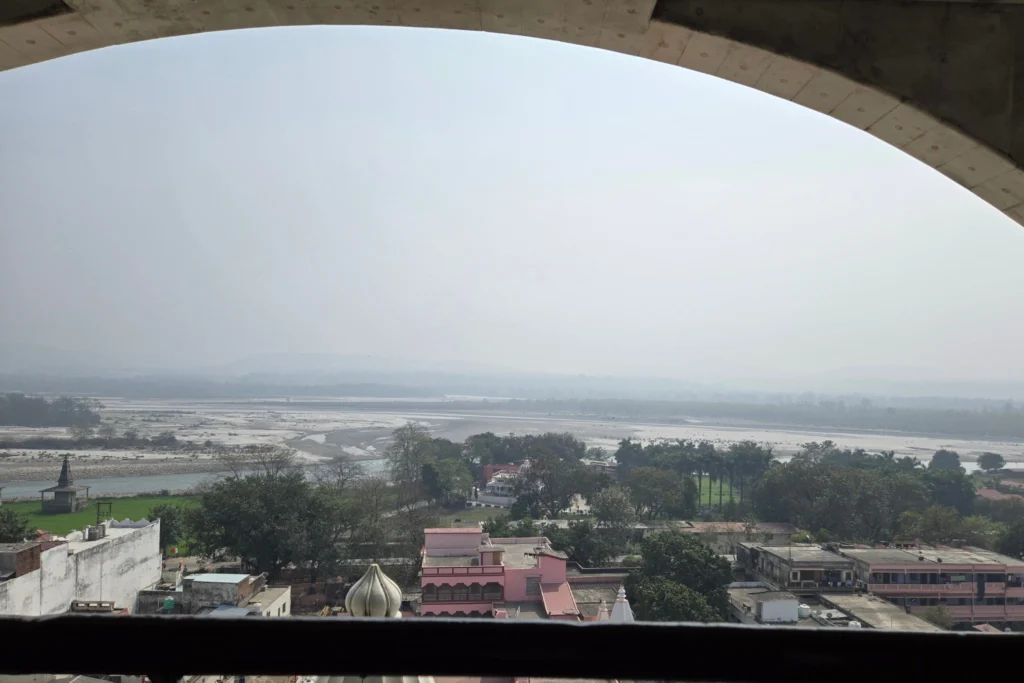
The short distance between the two cities doesn’t mean there’s nothing in between. A few worthwhile stops and detours:
Rajaji National Park sits almost directly along the NH7 corridor. The park is home to elephants, leopards, tigers, and over 300 bird species.
If you’re lucky, you may spot elephants, deer, or birds near the forest stretches, but sightings are never guaranteed.
Neelkanth Mahadev Temple, while technically a 25 km detour from Rishikesh rather than a midpoint stop, is often combined with this journey.
Perched in the hills above Rishikesh at around 1,330 meters, it’s one of the most important Shiva temples in Uttarakhand and worth the extra travel if you have the time.
Ganga viewpoints along NH7 offer some quiet pull-over spots where the river is visible from the road. There are no formal viewpoints, but locals know the spots — ask your driver to slow down around the midpoint of the journey.
Planning to spend more time in Haridwar? Before heading to Rishikesh, don’t miss some of the city’s top attractions, including Har Ki Pauri, Mansa Devi Temple, Chandi Devi Temple, Bharat Mata Mandir, Shantikunj, and the evening Ganga Aarti. For a complete list of attractions, travel tips, and suggested itineraries, explore our detailed guide on Things to Do in Haridwar.
What We Actually Did — Ram Jhula to Maggi

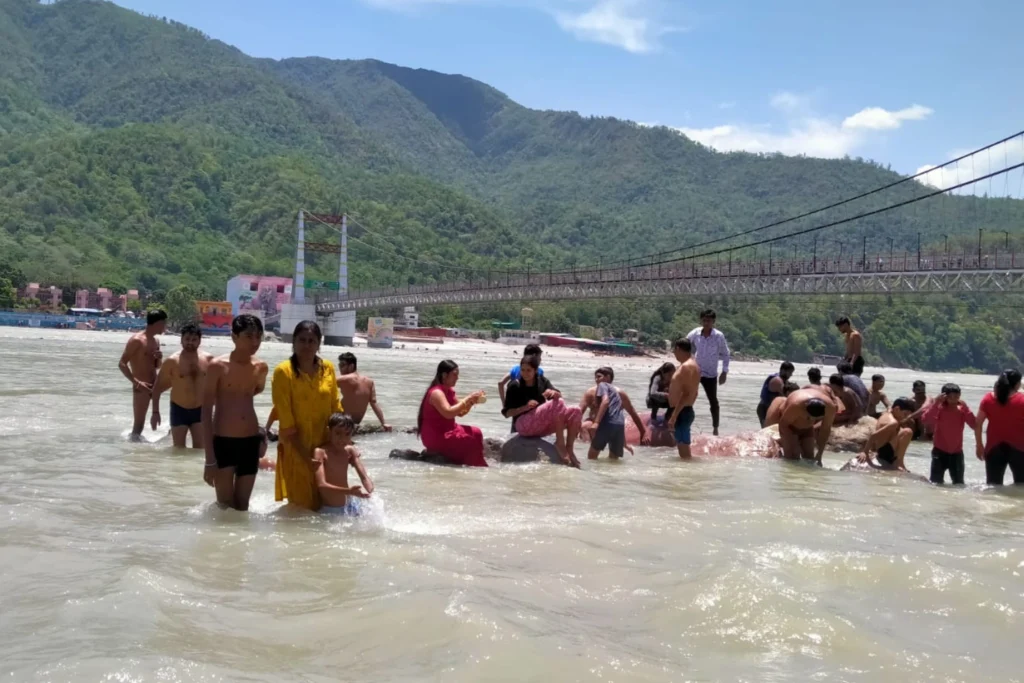
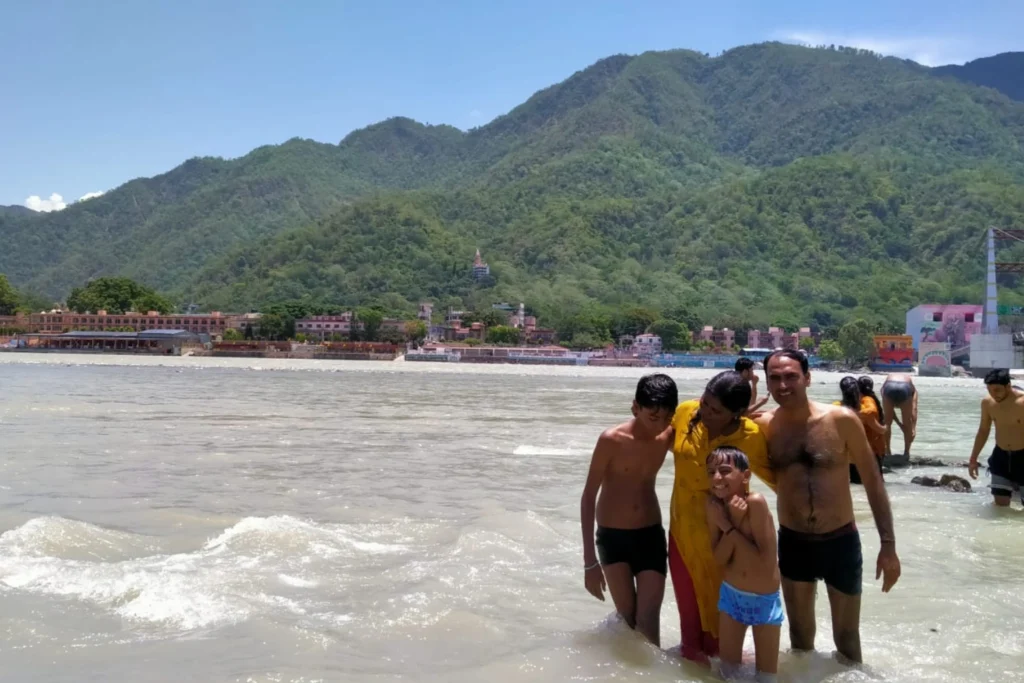
On our trip, we got off at Ram Jhula. The water level at the ghats here is shallower near the banks, which made it comfortable for the whole family to bathe — including the children.
While we were on the ghat, rafting groups kept passing through the middle of the river, which the kids found fascinating to watch. We had no interest in rafting ourselves — the ghat was more than enough.
After bathing, we grabbed plates of Maggi, bhel puri, and a cup of chai from the stalls near Ram Jhula. Sitting by the Ganga with the whole family turned out to be one of the most memorable parts of the trip.
This is the kind of thing that doesn’t appear in any itinerary — you just end up sitting on a Himalayan riverbank eating maggi after a dip in the Ganga, and somehow it becomes the part of the trip everyone remembers.
Prices are approximate and may vary depending on the season and vendor.
Haridwar vs Rishikesh — Which Is Better?
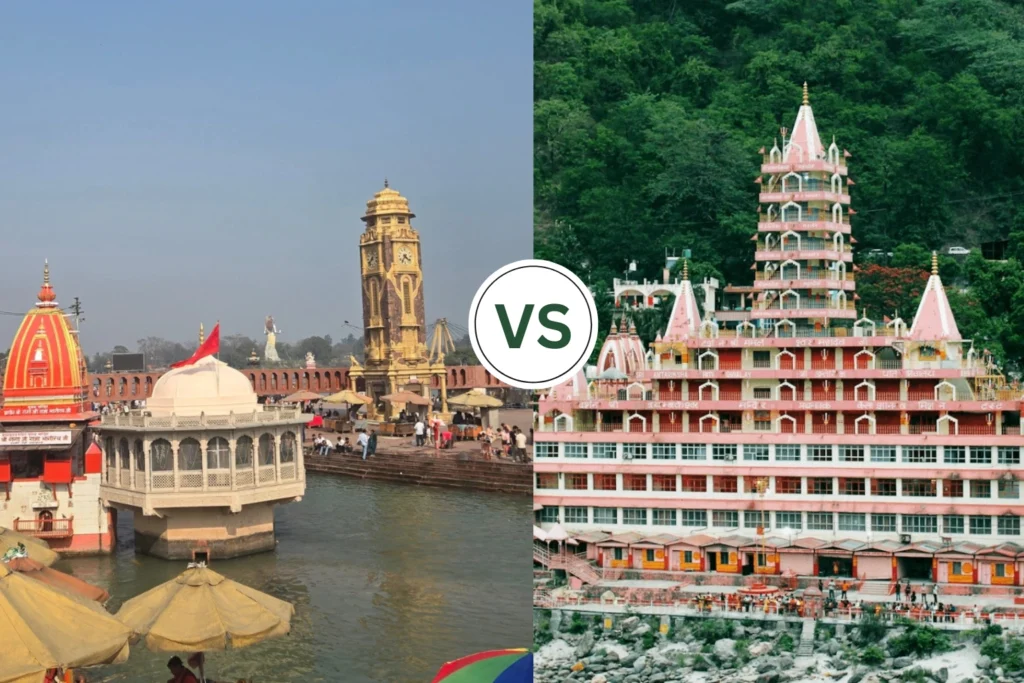
Short answer: they’re different cities serving different needs, and ideally you visit both.
Haridwar is the more classically religious of the two. It’s louder, more crowded, and entirely centered on the Ganges and its ghats.
The energy here is devotional — pilgrims, priests, rituals, and the Ganga Aarti at Har Ki Pauri. If you’re seeking a traditional Hindu pilgrimage experience, Haridwar delivers it fully.
Rishikesh has a more layered identity. Yes, it’s also sacred — temples line the riverbanks and the ghats buzz with activity each morning — but it’s also the yoga capital of the world and the adventure sports hub of North India.
White-water rafting, bungee jumping, trekking, international ashrams, and a thriving backpacker cafe culture all coexist here. The crowd skews younger and more international.
Who should go where
- Seeking spiritual immersion and traditional pilgrimage → prioritize Haridwar
- Interested in yoga, meditation, or adventure → Rishikesh is your base
- Have 2–3 days → do both, stay one night in each
For a detailed comparison of both cities — Ganga Aarti, food, adventure, spiritual atmosphere — see our complete Haridwar vs Rishikesh guide.
Planning to explore Rishikesh after your journey? Don’t miss its top attractions, including Triveni Ghat, Ram Jhula, Bajrang Setu, Parmarth Niketan, Beatles Ashram, Neer Garh Waterfall, and Kunjapuri Temple. For a complete list of must-visit places, travel tips, and insider recommendations, check out our detailed guide on Top Places to Visit in Rishikesh.
Travel Tips
- Carry cash. ATMs exist in both cities but can run dry during peak season. Keep small denominations handy for autos, buses, and roadside stops.
- Avoid peak traffic windows. The 8–10 AM and 5–7 PM slots on NH7 can be frustrating. If flexibility allows, plan your departure outside these windows.
- Book your cab in advance during festivals. During Kanwar Yatra especially, road restrictions are put in place and cab availability drops sharply. Book at least a day ahead.
- Dress appropriately for both cities. Both Haridwar and Rishikesh are religious towns with expectations of modest dress. What you wear in one will serve you fine in the other.
- Keep your valuables close. Bus stands and shared autos are generally safe but crowded — be aware of your surroundings, especially at Haridwar Bus Stand.
Best Time to Travel Between Haridwar and Rishikesh
By time of day: Morning departures between 6–8 AM offer the best combination of light traffic, cool temperatures, and the chance to arrive in Rishikesh in time for a ghat walk or yoga session.
Post-lunch departures (1–3 PM) are the second-best window. Avoid evening travel during festival periods when the road can become extremely congested.
By season:
- October to March is the sweet spot — cool weather, clear skies, manageable crowds
- April to June is warm to hot but still doable; crowds increase as summer holidays begin
- July to September (Monsoon) brings heavy rainfall, occasional landslides near Rishikesh, and road delays — travel is possible but requires flexibility
- Festival periods (Kumbh, Kanwar Yatra, Diwali) bring the entire region alive with energy but also with massive crowds and traffic — plan accordingly
FAQ
You can travel the ~25 km between Haridwar and Rishikesh easily by:
–Taxi/Cab: Fastest and most comfortable (45–60 minutes)
–Shared Auto: Cheapest and frequent option
–Bus: Budget-friendly, slightly slower
–Train: Limited and not very convenient
👉 Most travelers prefer cab or shared auto.
–Private cab: ₹800–₹1500 (one way)
–Shared taxi/auto: ₹40–₹50 per person
👉 Prices vary based on vehicle type, time, and season.
Yes, you can easily visit both in one day since they are very close.
Suggested plan:
-Morning: Haridwar (Ganga Aarti, temples)
-Afternoon: Travel to Rishikesh
-Evening: Explore cafes or attend Aarti
👉 Ideal for short trips or weekend travelers.
–Haridwar: More spiritual, traditional, and crowded
–Rishikesh: More scenic, peaceful, and surrounded by hills
👉 Rishikesh is generally considered more beautiful
👉 Best option: Visit both for a complete experience
Conclusion
The Haridwar to Rishikesh route is one of those rare journeys where the destination at both ends is worth the trip. Twenty-five kilometers rarely packs in this much variety — ancient ghats on one side, Himalayan foothills and river rapids on the other.
Take a cab if you want comfort, a bus if you want budget, or a shared auto if you want the full local experience. Whichever you choose, don’t make the mistake of skipping one city for the other. Visit both. They’re better together.
Heading to Uttarakhand? Save this guide and share it with your travel group — knowing your options in advance makes the whole trip smoother.