
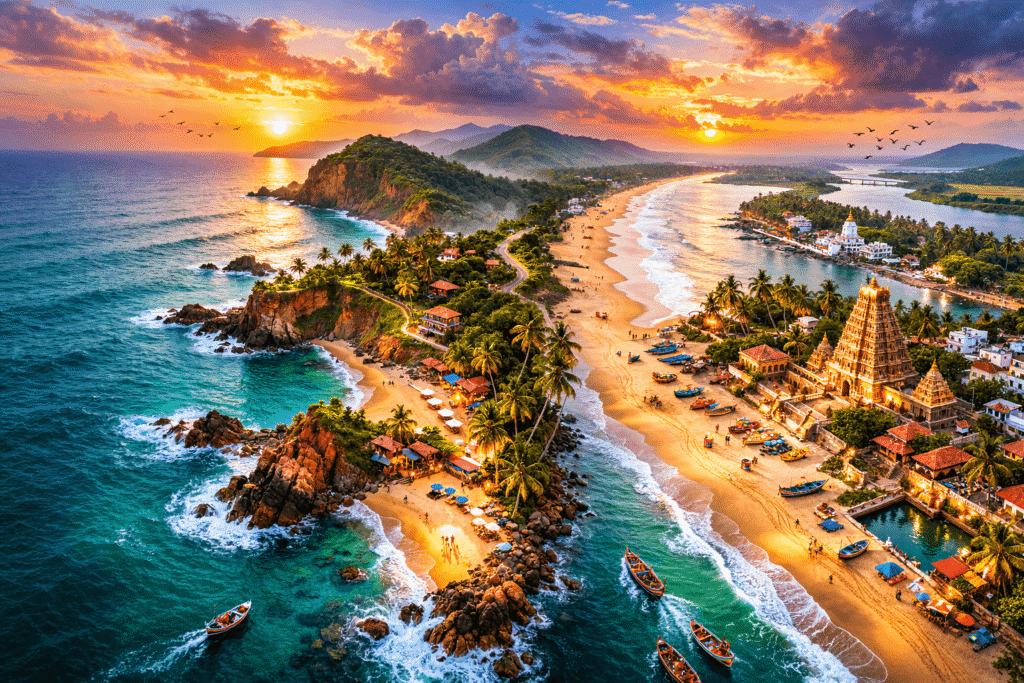
Choosing between India’s east and west coast isn’t really about finding the “better” beaches — it’s about choosing the kind of trip you want.
Planning a beach trip in India but stuck choosing between the two? Both coasts have beaches, but that’s almost where the similarity ends.
The west coast (Goa, Kerala, Konkan) is where most first-timers go: warm Arabian Sea water, dramatic cliffs, and a tourism setup refined over decades. The east coast (Tamil Nadu, Puducherry, Odisha, Andamans) faces the rougher Bay of Bengal and swaps beach-holiday polish for temples, wildlife, and a sense that you’re seeing something not yet packaged for visitors.
This guide breaks down both coasts honestly — including which one fits your specific kind of trip, not just a generic “both are nice” answer.
Quick Decision: Which Coast Fits Your Trip?
Before the details, here’s the shortcut:
- First-time visitor wanting a classic beach holiday → West Coast
- Been to India before, want temples and history → East Coast
- Family with young kids → West Coast (easier logistics, more resorts built for it)
- Couple on a honeymoon → West Coast for resorts (Kerala backwaters), East Coast for something different (Puducherry’s French Quarter)
- Solo traveller on a budget → East Coast, or Gokarna on the west if you want a hybrid
- Diving, snorkelling, or surfing → East Coast, specifically the Andamans; Kovalam and Varkala for beginner surf lessons
- Digital nomad wanting fast Wi-Fi and cafes → West Coast (Goa’s Anjuna/Assagao belt has the most co-working cafes)
- Photography and dramatic scenery → West Coast for cliffs and sunsets, East Coast for temple architecture and mist over Chilika at dawn
- Food-focused trip → West Coast for Goan-Portuguese seafood, East Coast for Chettinad and Bengali-influenced coastal cooking
- Road trip lover → West Coast (NH66 through the Konkan is one of India’s best drives)
Now let’s get into why.
Why Most First-Time Visitors Prefer India’s West Coast
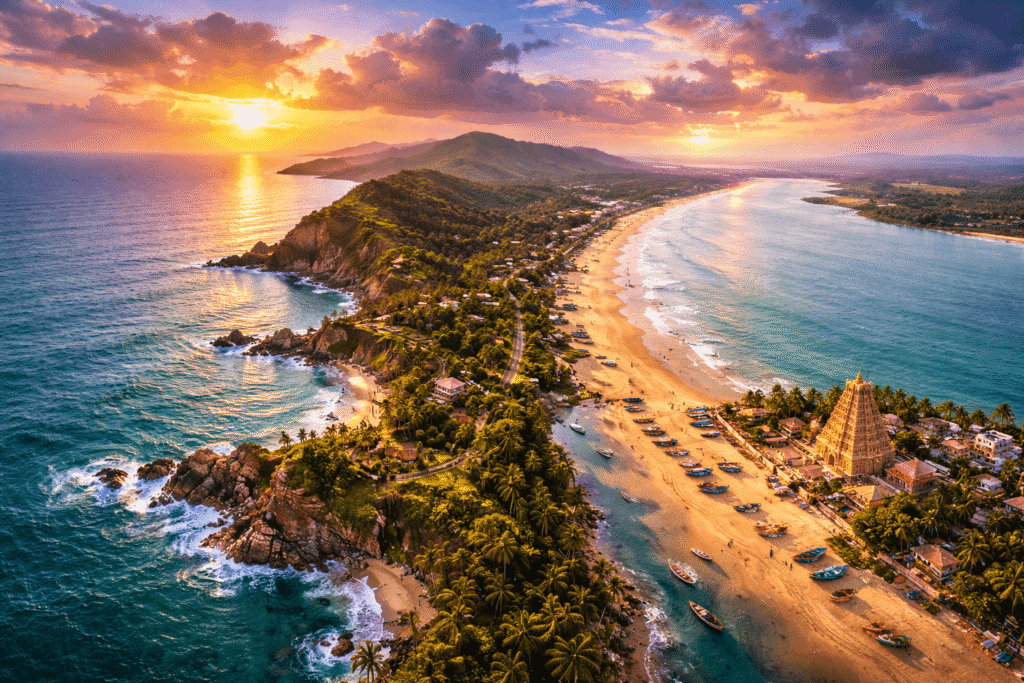
The west coast runs from Mumbai’s chaos down through the lush Konkan belt, into Goa’s beach-party world, and finally settles into Kerala’s backwaters and red-clay shores.
The Western Ghats rise sharply behind the shore, forcing rivers through narrow gorges. The result is a coastline of cliffs, coves, and rocky outcrops — even a short coastal drive here feels like it belongs in a film.
1. Goa’s Beach Culture
Goa is several places wearing one name. There’s the former Portuguese colony with whitewashed churches and spice-scented lanes. There’s the party circuit with clubs that don’t close till dawn. And there’s the quieter Goa of fishing villages like Morjim and Agonda, where the main event is watching the sun drop into the sea.
If it’s your first visit, North Goa and South Goa can feel like two different destinations entirely. A lot of travellers book a North Goa stay expecting a relaxed beach break and end up in the middle of the nightlife scene instead — worth deciding which Goa you actually want before you book.
2. Kerala’s Backwaters
The coast around Alleppey (Alappuzha) doesn’t look like anywhere else in India — a dense network of lagoons, canals, and lakes running parallel to the sea, lined with coconut palms and small homesteads.
Waking up to coconut trees reflecting in still, glass-like water is what makes an overnight houseboat stay memorable — it’s a slower kind of morning than anything else on this list. If an overnight houseboat doesn’t fit the budget, even the local public ferry from Alleppey to Kottayam gives you a strong taste of the backwaters for almost nothing — a solid backpacker workaround.
If you’re relying on public transport for your whole trip, Kerala is noticeably easier to get around than the Konkan coast further north, where many beaches need a private taxi or rented scooter to reach at all. Further up the coast near the Karnataka border, Bekal’s fort-backed beach is a quieter alternative if Kovalam or Varkala feel too crowded.
3. The Konkan Coast
Sandwiched between Mumbai and Goa, Konkan is the west coast’s best-kept secret. The NH66 highway threads through cashew plantations and sleepy villages, occasionally dropping you at an empty beach backed by a crumbling Maratha fort.
Tarkarli is the standout — a clean sandy spit where the Karli River meets the sea — but Ganpatipule and Malvan are both worth the extra hour of driving if your schedule allows it. Budget more travel time here than the distances suggest; the coastal road winds constantly, and a 100 km stretch can easily eat up three hours.
The Konkan belt continues into coastal Karnataka, which rarely gets the credit it deserves. Murudeshwar’s giant Shiva statue overlooking the sea, the temple town of Udupi, and quieter stretches like Maravanthe and Karwar make for a good week-long drive if you’re not in a rush to reach Goa.
Best Places on the West Coast
| Place | Best For | Days Needed | Avg. Budget/Day | Nearest Airport |
|---|---|---|---|---|
| Gokarna, Karnataka | Budget travellers, quieter alternative to Goa | 2–3 | ₹1,500–2,500 | Goa (Dabolim) |
| Varkala, Kerala | Cliff views, yoga retreats, clifftop cafes | 2–3 | ₹2,000–3,500 | Thiruvananthapuram |
| Tarkarli, Maharashtra | Snorkelling, uncrowded beaches | 2 | ₹1,800–3,000 | Goa (Dabolim) |
| Kovalam, Kerala | Longer stays, good transport links | 3–4 | ₹2,500–4,000 | Thiruvananthapuram |
| Alleppey, Kerala | Backwaters, houseboat stays | 1–2 | ₹3,000–6,000 | Cochin |
Budgets are approximate and based on mid-range travel during the regular tourist season; expect them to shift with dates and demand.
Scooter rental in Goa runs about ₹300–400/day — the easiest way to reach beaches the buses skip.
Getting Around the West Coast
The Konkan Railway is one of India’s most scenic routes, running from Mumbai to Mangalore through tunnels, bridges, and riverside stretches — an affordable way to string coastal towns together. In Goa, a rented scooter gives you the most freedom to explore beaches off the main circuit.
Why the East Coast Rewards Slower Travel
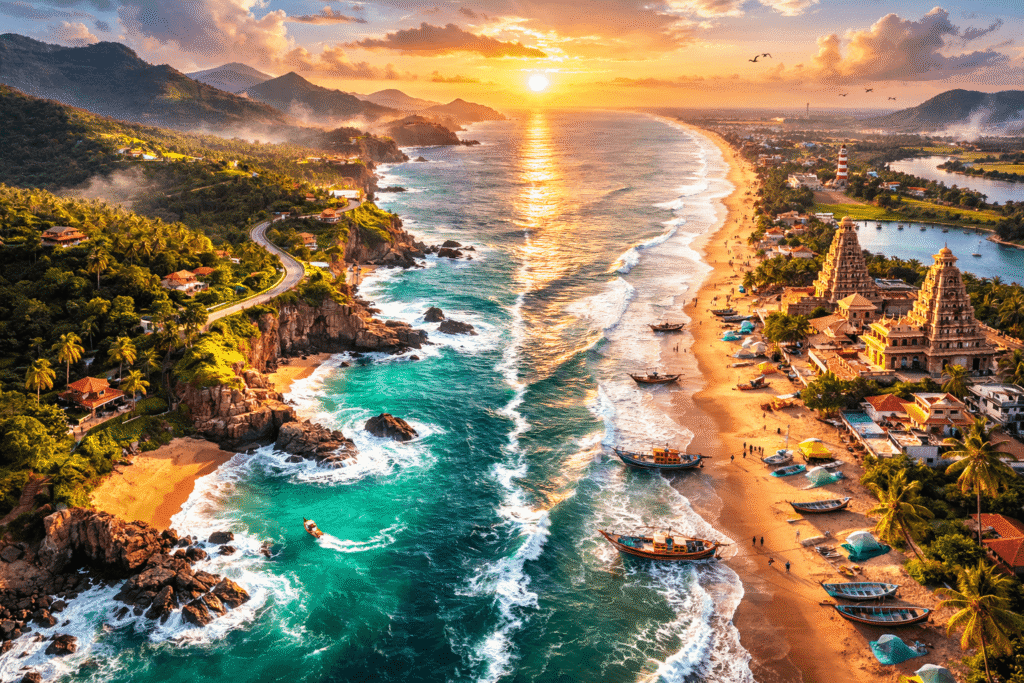
The east coast doesn’t have Goa’s reputation or Kerala’s postcard imagery. What it has instead is scale, depth, and the sense that you’re somewhere that hasn’t been smoothed over for tourists. The Bay of Bengal stretches wide and grey-green, and the beaches are long, flat, and often near-empty.
1. Mahabalipuram (Mamallapuram)
About 60 km south of Chennai, Mahabalipuram is the single best reason to explore this coast. The 7th-century rock-cut temples and sculptures are carved directly into granite boulders by Pallava craftsmen, sitting right on the beach.
Getting to the Shore Temple at sunrise, with the waves behind it and almost no one else around, is the kind of quiet, unplanned moment that ends up being the highlight of the whole trip.
2. Puducherry (Pondicherry)
The former French colonial enclave sits about 160 km south of Chennai. The French Quarter’s grid of yellow and white buildings, bougainvillea-draped walls, and genuinely good bakeries make it feel unlike anywhere else in India.
It’s compact enough to explore on foot or bicycle, and the Auroville township nearby makes for an interesting half-day trip. Check out our Puducherry itinerary if you’re planning a long weekend from Chennai.
3. The Odisha Coast — An Underrated Stretch
Odisha’s coastline deserves far more attention than it gets. Chilika Lake is Asia’s largest coastal lagoon, home to Irrawaddy dolphins and migratory flamingos. Bhitarkanika is a mangrove sanctuary with saltwater crocodiles. Gopalpur-on-Sea is a drowsy, old-fashioned beach town that feels frozen in the 1970s — in the best possible way. Puri anchors it all as one of Hinduism’s four sacred dhams, drawing millions of pilgrims to the Jagannath Temple every year.
If you’re travelling here between October and December, keep an eye on cyclone forecasts — this stretch of coast gets the brunt of the northeast monsoon, and trips have been cut short by sudden weather warnings before.
4. The Andaman Islands
Reached by flight or ferry from Chennai or Kolkata, the Andamans are the Bay of Bengal at its most spectacular. Radhanagar Beach on Havelock Island is regularly named among the top beaches in Asia, and the diving here — clear water, healthy coral, sea turtles — is on a different level from anything on the mainland.
Budget at least five to seven days; the ferry journey alone takes a full day each way, so this isn’t a trip you can add on as an afterthought.
Best Places on the East Coast
| Place | Best For | Days Needed | Avg. Budget/Day | Nearest Airport |
|---|---|---|---|---|
| Mahabalipuram, Tamil Nadu | Ancient temples, easy Chennai day trip | 1–2 | ₹1,500–2,500 | Chennai |
| Puducherry | French architecture, relaxed pace | 2–3 | ₹1,800–3,000 | Chennai / Puducherry |
| Puri, Odisha | Pilgrimage, combine with Chilika Lake | 2–3 | ₹1,200–2,200 | Bhubaneswar |
| Visakhapatnam, Andhra Pradesh | Beaches + Araku Valley hills | 3–4 | ₹1,800–3,000 | Visakhapatnam |
| Havelock Island, Andamans | Best beaches and diving in India | 5–7 | ₹3,500–6,000 | Port Blair |
Budgets are approximate and based on mid-range travel during the regular tourist season; expect them to shift with dates and demand.
A sleeper berth between major east coast cities costs roughly ₹500–800.
Getting Around the East Coast
The East Coast Road (ECR) between Chennai and Puducherry is one of India’s most enjoyable coastal drives — smooth, scenic, and lined with seafood shacks. Further north, the Chennai–Kolkata rail line passes through Visakhapatnam and Bhubaneswar, making it easy to string together multiple stops.
Key Differences: East Coast vs West Coast
| Feature | West Coast | East Coast |
|---|---|---|
| Best For | Beach holidays | Culture & heritage |
| Landscape | Hills, cliffs, tropical forest | Flat coastline, wide beaches, lagoons |
| Sea | Arabian Sea — warm, calm in peak season | Bay of Bengal — rougher surf, cyclone-prone Oct–Nov |
| Weather | Humid but stable Oct–Mar | More variable; monsoon overlaps travel season |
| Famous Destinations | Goa, Kerala, Gokarna | Mahabalipuram, Puducherry, Puri, Andamans |
| Crowd Levels | Busy, especially Dec–Jan | Much quieter, fewer foreign tourists |
| Travel Style | Beach holidays, relaxation | Culture, temples, wildlife, off-beat travel |
| Nightlife | Strong (Goa especially) | Minimal outside Puducherry cafes |
| Food | Goan-Portuguese seafood, Kerala curries | Chettinad, Bengali and Odia coastal cuisine |
| Water Sports | Well-developed (Goa, Kerala) | Limited on mainland, excellent in Andamans |
| Family Friendliness | High — easy logistics | Moderate — better for older kids/teens |
| Honeymoon Appeal | Kerala backwaters, Goa resorts | Puducherry, Andamans |
| Solo/Backpacker Friendly | Yes (Gokarna, Goa hostels) | Yes, and generally cheaper |
| Accessibility | Extensive flights, trains, buses | Fewer direct flights outside Chennai/Kolkata |
| Road Trip Quality | Excellent (NH66 Konkan coast) | Good (ECR Chennai–Puducherry) |
| Safety for Swimming | Generally calmer, safer | Rougher surf, more caution needed |
| Budget (mid-range) | ₹2,500–5,000/day | ₹1,500–3,500/day |
Best Time to Visit
West Coast: October to March is the sweet spot. The monsoon exits by late September in most of Goa and Kerala, leaving the air clean and the sea calm. December–January is peak season — prices rise and beaches fill up, but weather is reliably good. Avoid June to September unless you specifically want to see the monsoon.
East Coast: November to February brings the most comfortable temperatures. The northeast monsoon (October–December) hits the east coast while the west stays dry, so plan around that.
Andaman Islands: A longer good season, November to April, with the best underwater visibility from December to March. Cyclone season (October–November) can occasionally disrupt travel along the Andhra Pradesh and Odisha coasts.
Common Mistakes Travellers Make
If you’re planning your first coastal trip in India, these are the mistakes travellers most often regret:
- Booking North Goa expecting peace and quiet. That’s South Goa’s job — North Goa is where the nightlife lives.
- Visiting the Odisha or Andhra coast during cyclone season (Oct–Nov) without checking forecasts first.
- Treating the Andamans as a weekend trip. The ferry alone takes a full day each way; anything under five days barely covers the travel.
- Ignoring ferry and houseboat timings in Kerala. Schedules are limited outside peak season, and missing one can cost you a full day.
- Underestimating Konkan drive times. The coastal road is scenic but slow — 100 km can take three hours, not one.
- Assuming all of Goa is beach-holiday quiet. Read up on which specific beach town you’re booking before you commit.
Which Coast Should You Choose?
Choose the West Coast if you’re visiting India for the first time and want a proper beach holiday — warm water, scenic landscape, and infrastructure that just works. Goa and Kerala have been hosting travellers for decades; transport is easy, accommodation is plentiful, and finding a good meal is never a struggle.
Choose the East Coast if you’ve been to India before, or you travel to seek out history, wildlife, and places that haven’t been reshaped around visitor expectations. The temples at Mahabalipuram, the dolphins at Chilika, a beach at dawn in Odisha — these reward patience in a way a sun-lounger in Goa doesn’t.
Do both if you can. Don’t think of the two coasts as competitors — they offer completely different trips. The west coast is where many travellers fall in love with India’s beaches. The east coast is where many discover a quieter, less commercial side of the country.
FAQ
Depends on what you want. Goa is stronger for beach nightlife, water sports, and resort infrastructure. Puducherry is better for a quieter, walkable, culturally distinct trip. They’re not really competing for the same traveller.
The west coast generally has calmer water, especially in Goa and Kerala during peak season (Oct–Mar). The Bay of Bengal on the east coast has rougher surf and stronger undercurrents, so exercise more caution, particularly around Puri and Chennai.
The east coast is typically 30–40% cheaper for accommodation and food, since it sees far less tourist traffic. Budget travellers can comfortably cover Odisha or Tamil Nadu’s coast on ₹1,500–2,000/day.
Yes — the Chennai to Puducherry stretch is one of India’s better coastal drives, with easy stops for seafood and a manageable 3-hour drive time. It’s a good option even for a long weekend from Chennai.
The west coast. Goa and Kerala have mature tourism infrastructure that makes a first trip smoother — easier transport, wider accommodation choice, and more English-speaking staff.
For classic postcard beaches, the west coast (Goa, Gokarna, Kerala) generally has an edge on clarity and scenery. But the single best beach in the country by most rankings — Radhanagar on Havelock Island — technically sits on the Bay of Bengal side, in the Andamans.
Neither is ideal, but for different reasons. The west coast gets the full force of the southwest monsoon (June–September) — dramatic, but heavy rain disrupts travel. The east coast sees the northeast monsoon (October–December), which is more localized and can still allow travel to Puducherry or Mahabalipuram with some rain-day planning. If you want monsoon scenery without total disruption, Goa in early June or Mahabalipuram in early October are reasonable compromises.
Conclusion
Choosing between India’s east and west coasts ultimately depends on the kind of travel experience you’re looking for. The East Coast vs West Coast India travel guide shows that both regions offer stunning coastlines, unique cultures, and unforgettable destinations.
India’s west coast is known for its lively beach towns, dramatic cliffs, Portuguese heritage, and vibrant tourism hubs like Goa, Gokarna, and Kerala.
In contrast, the east coast offers quieter beaches, rich temple culture, historic coastal towns, and wildlife-rich landscapes across states like Odisha, Tamil Nadu, and Andhra Pradesh.
Travelers who enjoy nightlife, luxury resorts, and lively beach scenes may prefer the west coast, while those seeking history, solitude, and cultural depth may find the east coast more rewarding. Both coasts reveal a different side of India’s maritime beauty.
Ultimately, the best choice depends on your travel style—but exploring both sides of India’s coastline is the perfect way to experience the country’s incredible coastal diversity.

Related Travel Guides
- Best Beaches in Goa (2026) – North vs South + Hidden Gems
- 4 Days Goa Travel Itinerary (Perfect Trip Plan)
- Best Beaches in India (Top Coastal Destinations)
- North Goa vs South Goa (2026): Which Is Better for Your Trip?