
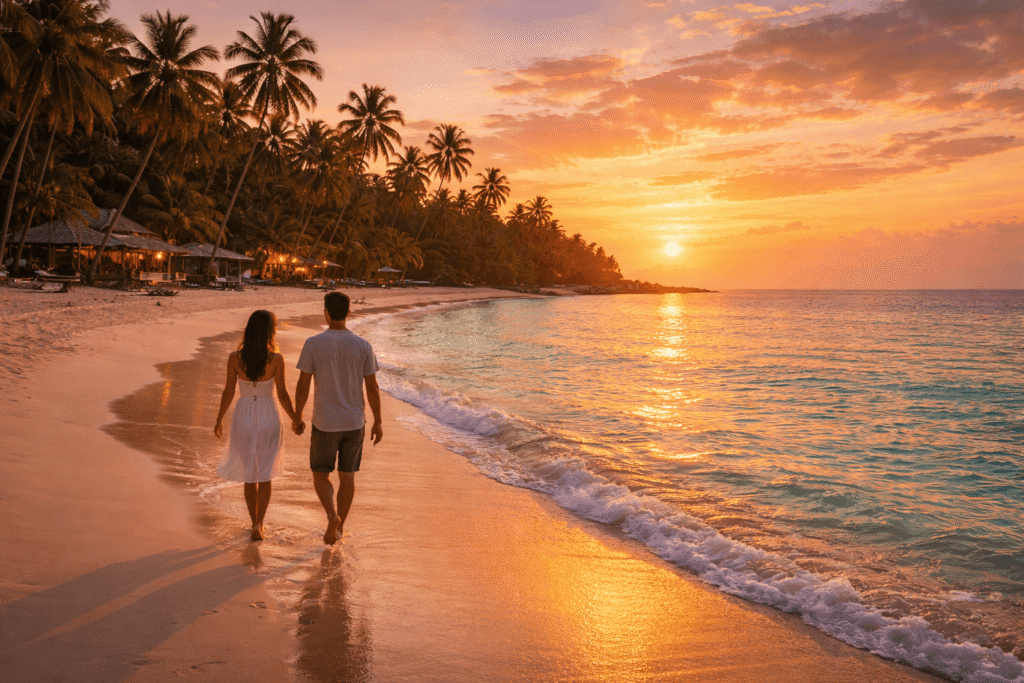
Top Coastal Places in India for Couples offer the perfect setting for romance, relaxation, and unforgettable travel experiences by the sea.
India’s vast coastline stretches over 7,500 kilometres and is home to a variety of breathtaking destinations where couples can unwind away from busy city life.
From palm-fringed beaches and turquoise waters to charming coastal towns and quiet fishing villages, these places create an atmosphere that naturally feels romantic.
Whether you’re planning a honeymoon, an anniversary trip, or a peaceful getaway together, India’s coast has something special to offer.
Couples can enjoy sunset walks on golden beaches. They can take boat rides on calm backwaters. Candlelight dinners by the ocean and scenic viewpoints add to the experience.
Some destinations are known for luxury resorts and vibrant beach culture, while others provide secluded shores where tranquility is the highlight.
In this guide, you’ll discover some of the top coastal places in India for couples that combine natural beauty, privacy, and unforgettable seaside charm.
1. Gokarna, Karnataka — For Couples Who Want to Disappear
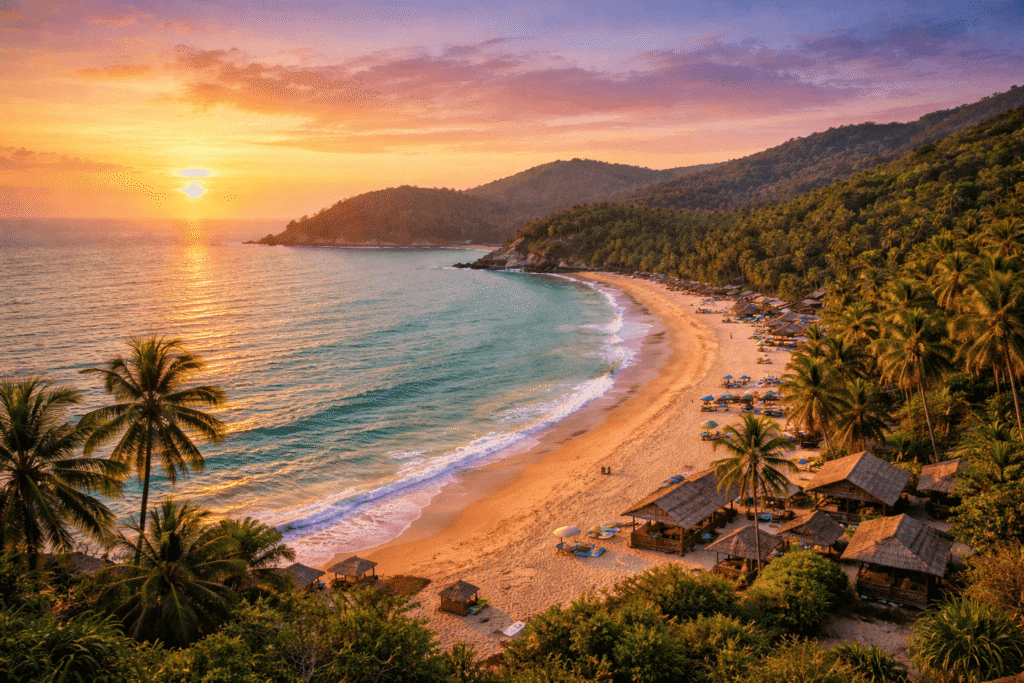
Gokarna works as a romantic destination precisely because it hasn’t been optimised for romance. There are no infinity pools with couples’ packages, no rose-petal turndown service.
What there is: A 45-minute coastal trek connects Om Beach, Half Moon Beach, and Paradise Beach. At golden hour, the light turns the laterite cliffs amber. You may even find long stretches of sand completely to yourselves.
The town itself is a functioning Shaivite pilgrimage centre, which gives it a grounded quality that purely tourist-focused beach towns lack.
Evenings in Gokarna feel genuinely local — temple bells, chai stalls, fishermen pulling in nets — rather than performed for visitors.
The one experience not to miss: Wake before sunrise and walk the trail to Paradise Beach while it’s still empty. Bring breakfast from a shack and eat it watching the light come up over the sea. It costs almost nothing and is more memorable than any candlelit dinner.
Where to stay: Swaswara resort sits in a coconut grove above Om Beach and is one of the finest small retreats in South India — yoga, Ayurveda, and genuine quiet.
For something simpler, Namaste Cafe on Om Beach has basic beachfront rooms that let you fall asleep to the sound of waves.
Where to eat: Prema Restaurant in town serves thalis that will make you question every restaurant meal you’ve had recently. On the beach, Mantra Cafe does wood-fired pizzas that are better than they have any right to be.
Getting there: Gokarna Road station (Konkan Railway) is 9 km from town. Trains from Goa take about 2 hours; from Mangalore, around 3. Buses also run from both cities.
Honest note: December and January bring crowds. If you’re going in peak season, book well ahead and accept that Om Beach will be busy — Half Moon and Paradise remain quieter.
2. Varkala, Kerala — For the Cliff, Not Just the Beach
Most Kerala beach destinations sit on flat coastline. Varkala doesn’t.
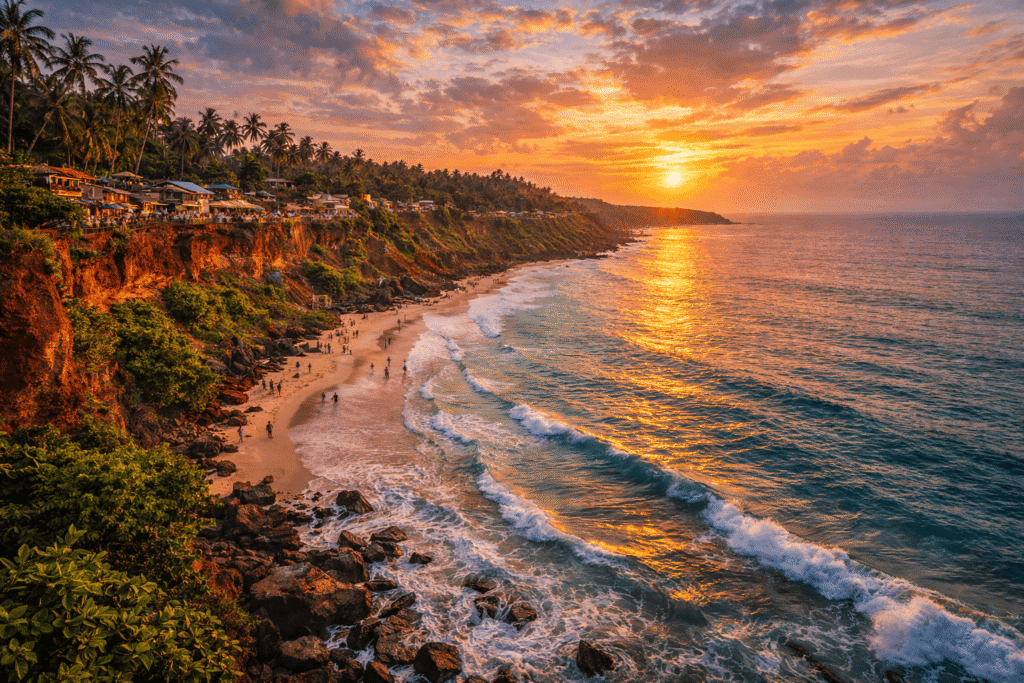
A 15-metre laterite cliff runs along the seafront. A clifftop path lined with cafés, Ayurvedic centres, and small shops offers wide views of the Arabian Sea. The scenery is striking enough to make people pause mid-conversation.
The beach below is reached by staircases cut into the cliff face, and it’s shared with Hindu pilgrims visiting the sacred Papanasam stretch.
That combination of the spiritual and the leisurely gives Varkala an atmosphere that feels earned rather than manufactured.
Sunset from the cliff, with a glass of fresh lime soda and the sea turning gold below, is one of those travel moments that doesn’t require any editing to remember well.
A couple’s Ayurvedic massage here — a proper Kerala treatment, not a tourist-resort approximation — is worth building an afternoon around.
Ask your guesthouse to recommend a practitioner they trust rather than walking into the first sign you see on the cliff.
What to Do, Eat & Where to Stay
The one experience not to miss: Walk to the southern end of the beach, past the main tourist stretch, to the fishing village. Early morning, the boats come in and the catch is sold directly on the sand.
Simple grilled fish with coconut chutney eaten here costs a fraction of cliff restaurant prices and tastes considerably better.
Where to stay: Villa Jacaranda is a well-run mid-range guesthouse with a good garden and attentive service. For a splurge, Raheem Residency in nearby Alleppey (an hour away) is one of Kerala’s finest heritage hotels and worth a night of the trip.
Where to eat: Café Del Mar on the north cliff has the best combination of views and food — the Kerala fish curry is reliable and the pasta is surprisingly good. The fishing village at the south end for fresh catch, simply prepared.
Getting there: Varkala has its own railway station on the Thiruvananthapuram–Kollam line. The journey from Thiruvananthapuram takes about 50 minutes.
Honest note: The north cliff has become noticeably more commercialised over the years. Stick to the southern end and the fishing village for the Varkala that’s actually worth visiting.
3. Tarkarli, Maharashtra — For Water That Looks Wrong for India
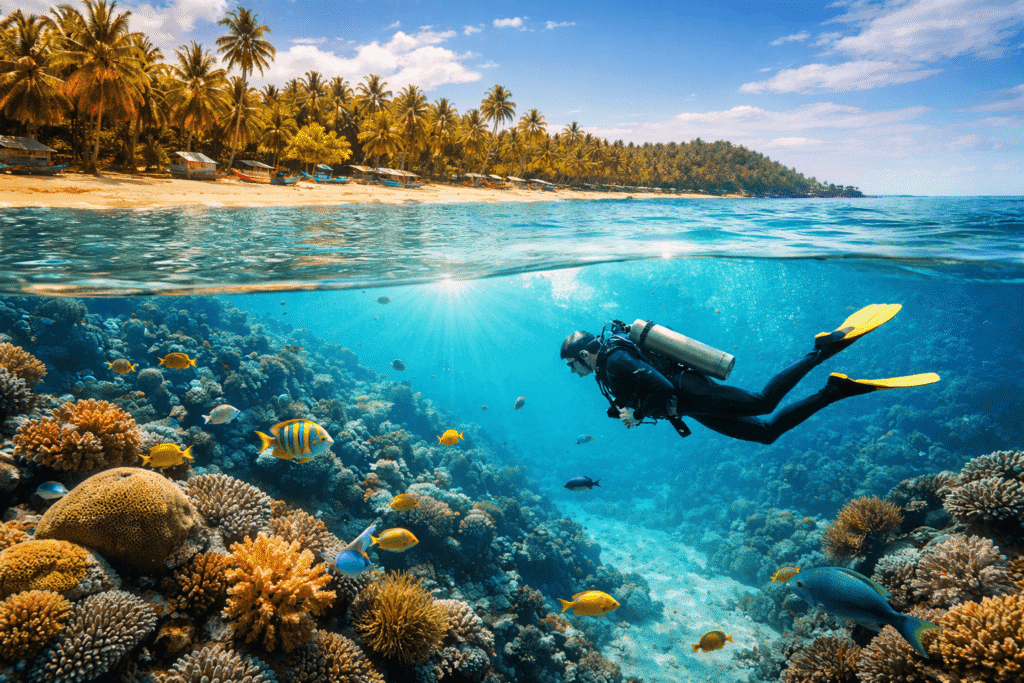
The first thing most visitors say about Tarkarli is that the water doesn’t look like it belongs in Maharashtra.
The Karli River meets the Arabian Sea here, keeping the water calm and clear. On good days, it turns a genuine turquoise with excellent visibility. Snorkelling often reveals coral and fish that feel closer to the Andaman than the Konkan coast.
A sunset boat ride on the Karli River backwaters, with mangroves on both sides and egrets overhead, is one of the more quietly romantic experiences available on India’s west coast — unhurried, uncrowded, and cheap.
The Sindhudurg Fort, built by Chhatrapati Shivaji Maharaj on an offshore island in the 1660s, makes for a half-day of genuine history before you return to the beach.
Another reason to visit is Malvani cuisine. Try kombdi vade, sol kadhi, and fresh bombil fry prepared within hours of the catch. This regional food is rarely part of tourist itineraries, which makes Tarkarli even more worth the effort.
Tarkarli Travel Tips: Stay, Food & Local Experience
The one experience not to miss: A homestay dinner in Malvan town (5 km from the beach) where the family cooks the full Malvani spread. This is not something you book on an app — ask at your accommodation, or simply ask around the market.
Where to stay: Local homestays in Malvan town are the best option — families typically include home-cooked meals in the rate, which is the whole point. The MTDC resort on the beach is reliable if you prefer more conventional accommodation.
Where to eat: Chaitanya Restaurant in Malvan town. Locals eat here and that’s the only recommendation needed.
Getting there: Kudal station (Konkan Railway, 38 km), then shared jeep or auto to Tarkarli. The drive through cashew orchards and red laterite villages is genuinely scenic.
Honest note: Infrastructure is basic. ATMs run dry, roads are rough, and connectivity is patchy. This is a feature for some couples and a dealbreaker for others — be honest with yourselves before booking.
4. Mararikulam, Kerala — For Couples Who Actually Want Quiet
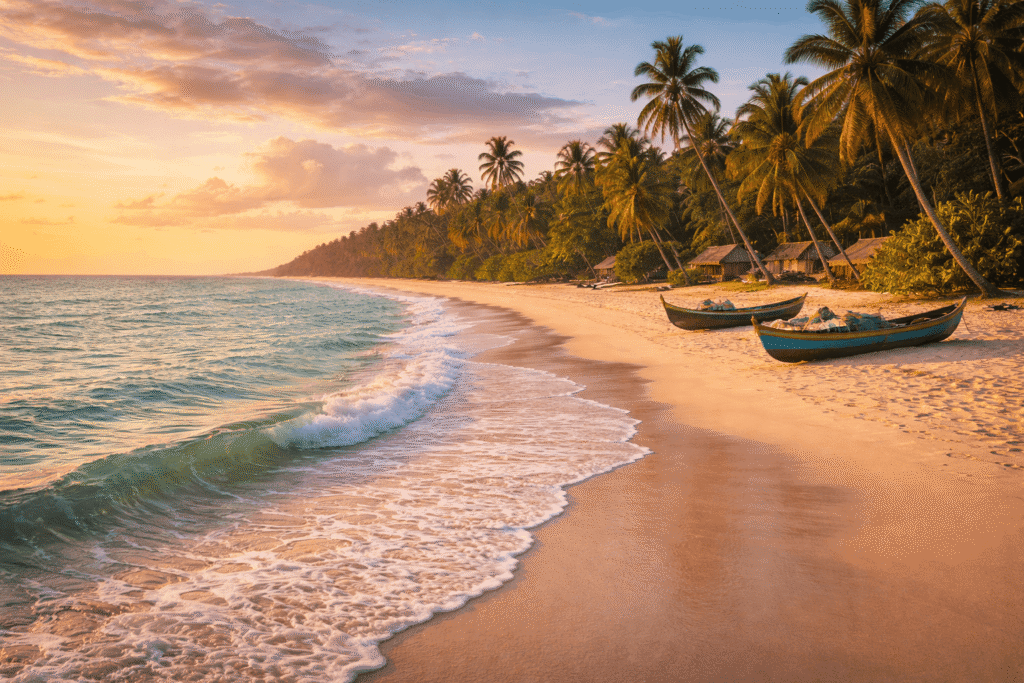
Mararikulam is 11 km north of Alleppey, and it is the answer to the question: what if a beautiful Kerala beach had almost no tourist development on it?
The village has deliberately limited commercial growth. As a result, the beach remains wide and lined with coconut trees. There are no shacks, no sunbeds, and no loud music playing in the afternoon.
Mornings here are working hours for the fishing families — boats launching at dawn, nets being sorted, the catch going out to market. By mid-morning the beach is quiet in a way that feels earned rather than manufactured.
A bicycle ride through the backroads between Mararikulam and Alleppey, past paddy fields and toddy shops and small temples, is the kind of afternoon that doesn’t need a highlight reel.
Karimeen pollichathu — pearl spot fish marinated in spices, wrapped in banana leaf, and grilled — is Kerala’s finest dish. Village eateries here serve it for a fraction of resort prices, and it tastes better for the setting.
How to Experience Mararikulam Like a Local
The one experience not to miss: Hire a canoe or small country boat for an hour on the backwaters at dusk. This is available through most guesthouses and costs almost nothing. The light on the water at that hour is worth the entire trip.
Where to stay: Marari Beach Resort by CGH Earth is the standout property in the area. It features thatched cottages set among vegetable gardens within the village.
The resort sources most of its food from local fishermen and its own garden. Homestays in the village itself for budget travelers.
Where to eat: The resort restaurant for quality and sourcing; village eateries for karimeen pollichathu and the experience of eating where the fishermen eat.
Getting there: Alleppey (Alappuzha) is the nearest hub, well connected to Kochi (85 km) by train and bus. From Alleppey, Mararikulam is a short auto or bicycle ride up the coast road.
Honest note: There is very little to do here beyond the beach and backwaters. This is the point. If either of you needs a busy town to wander in the evenings, Alleppey is 30 minutes away — but factor that into your expectations before you arrive.
5. Tranquebar (Tharangambadi), Tamil Nadu — For Something Completely Different
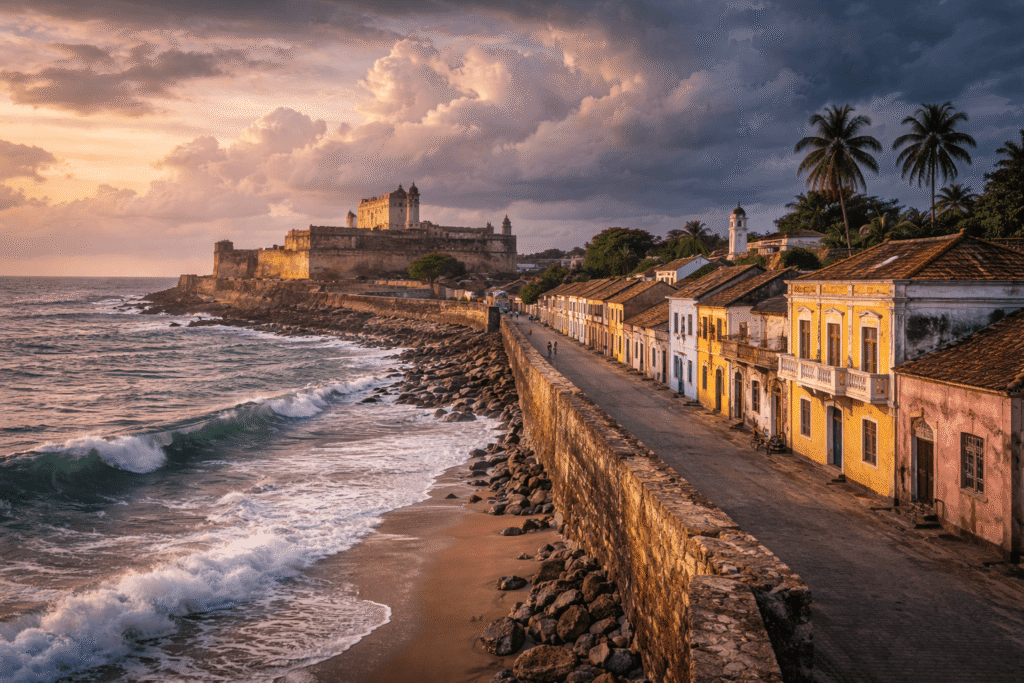
Tranquebar doesn’t appear on most couples’ travel lists, which is exactly why it should be on yours.
Tranquebar was Denmark’s first and most significant Asian settlement, established in 1620 on the Tamil Nadu coast.
It has a fort sitting directly on the seafront, an intact colonial street grid, and a Danish church still holding services.
Despite being just three hours from Chennai, its beach sees almost no tourist traffic.
The Fort Dansborg at the water’s edge gives the town its most striking image: a European colonial fortification with the Bay of Bengal behind it and Tamil fishing boats pulled up in front.
The Masilamani Nathar Temple next door predates the Danish arrival by centuries.
Walking between them in an hour covers 1,400 years of layered history in a town of 25,000 people who are largely getting on with their lives around you.
This is a one-night destination, not a beach week — but paired with Nagapattinam or Kumbakonam inland, it anchors a Tamil Nadu itinerary that most travelers never find.
Practical Guide to Visiting Tranquebar
The one experience not to miss: Sunrise at the seafront fort, before the town wakes up. The combination of the colonial architecture, the fishing boats, and the early Bay of Bengal light is one of those scenes that justifies the journey.
Where to stay: The Bungalow on the Beach by Neemrana Hotels is a restored colonial property right on the seafront. It is one of the most characterful heritage stays in South India. Book well ahead; it’s small and fills up.
Where to eat: Options are limited — this is a small town. The Bungalow’s restaurant is your best bet for dinner. For lunch, small local restaurants near the market serve Tamil meals that are simple and good.
Getting there: Sirkazhi station is 20 km away. Buses connect from Chidambaram (60 km) and Nagapattinam (40 km).
Honest note: The beach at Tranquebar is not the reason to come — it’s functional rather than beautiful. Come for the history and the atmosphere, and you’ll leave having seen something genuinely rare.
Best Time to Visit
October to March is the reliable window for all five destinations, but the detail matters:
Gokarna peaks November through February. October is lush and less crowded post-monsoon — shacks may not all be open yet, but the beaches are magnificent. Avoid Christmas and New Year if you’re seeking quiet.
Varkala benefits from Kerala’s two monsoon seasons. The southwest monsoon (June–August) brings dramatic seas and intense green — some resorts offer reduced rates worth considering if you don’t mind occasional heavy rain.
The northeast monsoon (October–November) brings shorter showers but generally remains manageable.
Tarkarli is best November through February. The post-monsoon water clarity peaks in these months, making snorkelling most rewarding.
Mararikulam follows a similar pattern to Varkala. October to March offers the best beach weather. Monsoon months like July and August bring cheaper stays if you don’t mind the rain.
Tranquebar is accessible year-round but most pleasant November to February. Tamil Nadu’s northeast monsoon brings rain in October–December, though the compact nature of Tranquebar’s sightseeing means a wet afternoon doesn’t ruin a visit.
Practical Notes
Book the good places early. The best homestays and small guesthouses across all these destinations fill up weeks in advance in December and January.
The Bungalow on the Beach in Tranquebar and Marari Beach Resort especially — don’t assume you can turn up.
Carry cash everywhere. ATMs exist at all these destinations but run dry during long weekends and festival periods. Tarkarli especially — don’t arrive on a Friday evening with only a card.
Get a scooter or bicycle. Each destination becomes easier to explore with your own transport. Renting a bicycle or scooter takes a little effort but adds a lot of freedom.
Riding through Mararikulam, Alleppey, or Gokarna’s back roads makes the experience far more rewarding.
Eat near the harbour, not the promenade. The best seafood is at small joints near the fishing harbour — open early, closed when fish runs out. Ask your guesthouse owner where their family eats, not where they send guests.
FAQ
The best beach for couples in India is generally considered Radhanagar Beach.
It is famous for its crystal-clear water, white sand, and peaceful atmosphere—perfect for a romantic getaway. Other great options include Palolem Beach and Varkala Beach.
The best place for couples in India depends on preferences, but top romantic destinations include:
Udaipur – Known as the “City of Lakes,” ideal for luxury and romance
Manali – Perfect for snow and mountain lovers
Goa – Beaches, nightlife, and relaxation
Andaman and Nicobar Islands – Exotic and peaceful honeymoon spot
The Blue Flag certification is an international recognition given to beaches that meet high standards of cleanliness, safety, environmental management, and facilities.
In India, some Blue Flag beaches include:
Shivrajpur Beach
Kappad Beach
Ghoghla Beach
Radhanagar Beach is often ranked among the most beautiful beaches in Asia and has been listed as the 7th most beautiful beach in Asia in several global travel rankings. It is known for its pristine environment, turquoise waters, and stunning sunsets.
Final Thought
The most romantic part of these destinations isn’t just the sunset or the view. It’s the feeling of choosing a place that truly rewards your attention.
India’s quieter coastline gives back what you bring to it. Go slowly, eat what the fishermen eat, and let the place show you what it actually is.
That, more than any couples’ package or rose-petal turndown, is what makes a trip worth remembering.