
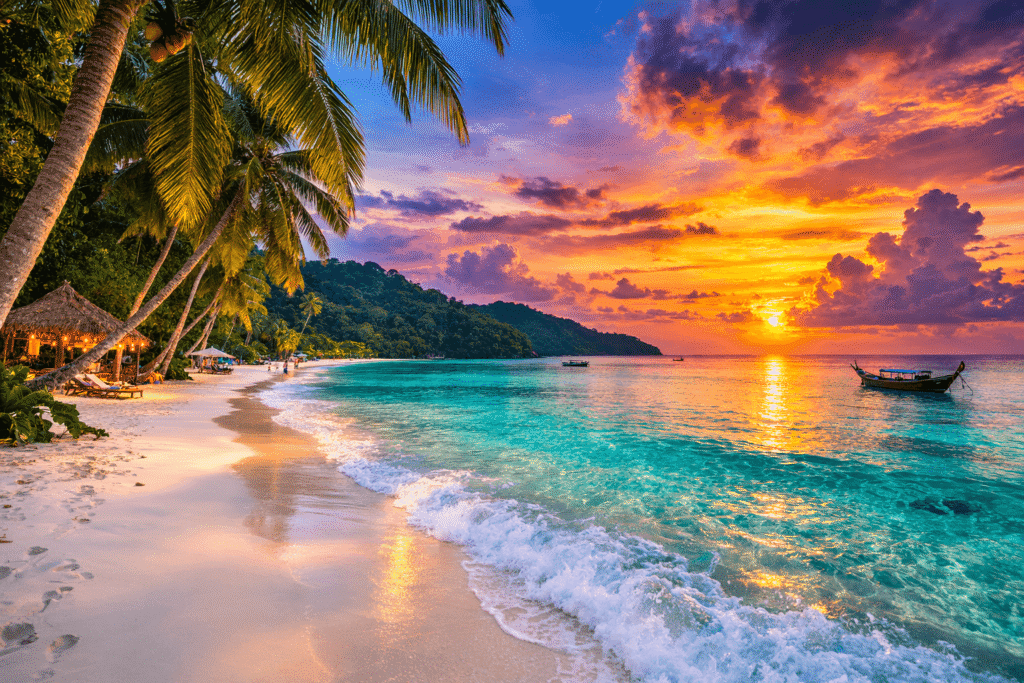
The most beautiful coastal villages in India are more than just pretty backdrops — they’re places with real character, history, and a pace of life that feels worlds away from the crowded resort towns.
From the cliff-top drama of Varkala to the pristine lagoons of Lakshadweep, each of these beautiful coastal villages offers something distinct that stays with you long after you’ve left.
What makes these most beautiful coastal villages worth seeking out is precisely their resistance to over-tourism. Many remain accessible only by ferry or winding coastal roads, which has kept their character intact.
Here are six coastal villages worth seeking out, along with practical details to help you plan a visit.
1. Gokarna, Karnataka
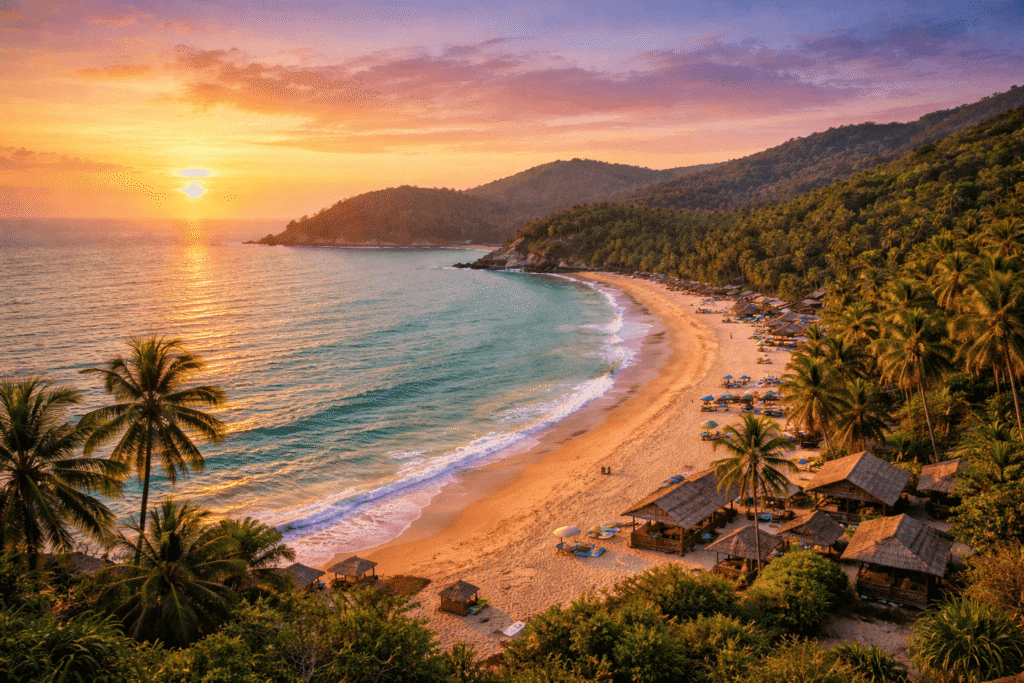
Gokarna occupies a rare middle ground. It is a Hindu pilgrimage town home to the ancient Mahabaleshwar Temple. This temple predates Goa’s famous churches by centuries.
At the same time, it is a haven for travellers who come for its horseshoe-shaped coves.
Unlike Goa, the absence of large resorts keeps the character of the village intact. The main street still belongs to sadhus and local families, while the beaches begin just a short hike away.
Why it stands out
- Om Beach and Kudle Beach offer solitude that Goa’s coastline largely cannot
- The Mahabaleshwar Temple draws pilgrims year-round, giving the town a living cultural pulse
- Clifftop cafés overlooking the Arabian Sea serve as natural viewing platforms at sunset
Practical details
- Best time to visit: October to March (monsoon closes beaches June–September)
- Getting there: Gokarna Road railway station connects to Mangalore and Goa; the nearest major airport is Dabolim (Goa), roughly 140 km north
2. Mararikulam, Kerala
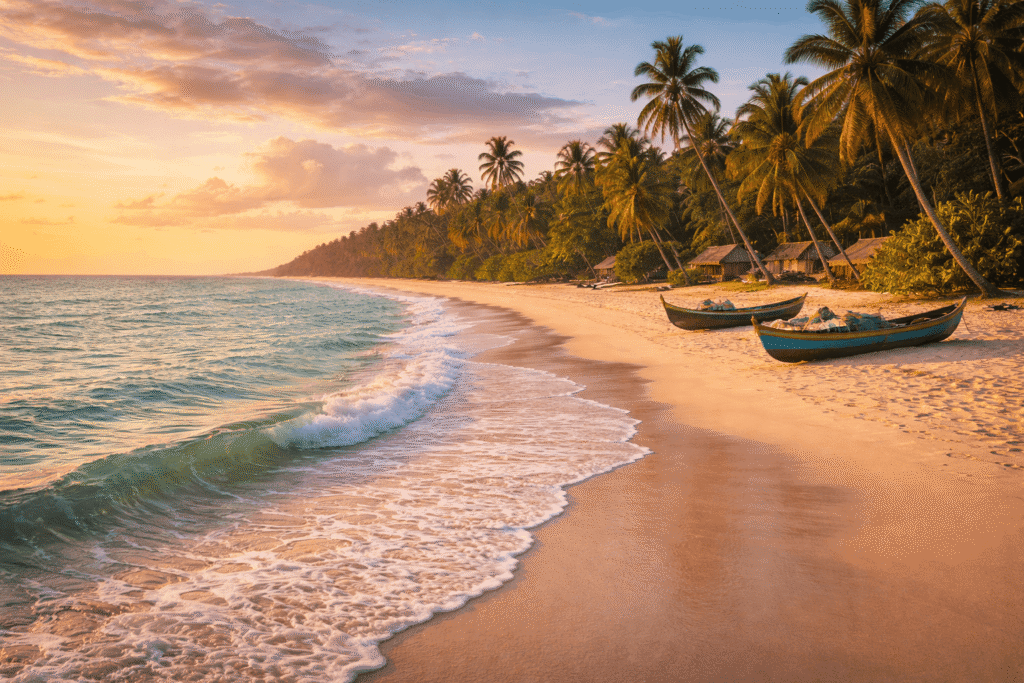
Lying roughly 11 km north of Alleppey, Mararikulam is a fishing village that tourism has touched lightly. The beach — wide, golden, and lined with leaning palms — has none of the jet-ski operators or beach-shack clutter that crowd more famous Kerala shores.
Early mornings here belong to the fishermen hauling in their nets; by mid-morning, the beach is yours. Small eco-resorts and family-run homestays have grown up along the village edges, keeping development low-rise and personal.
Why it stands out
- One of Kerala’s least-commercialised beaches — no jet skis, no beer shacks
- Authentic fishing community life plays out in the open each morning
- Excellent base for day trips to Alleppey’s backwaters and Kuttanad paddy fields
Practical details
- Best time to visit: November to February
- Getting there: Alleppey (Alappuzha) is the nearest railway town; from there, Mararikulam is a 30-minute taxi or auto-rickshaw ride. Kochi International Airport is approximately 85 km away
3. Tarkarli, Maharashtra
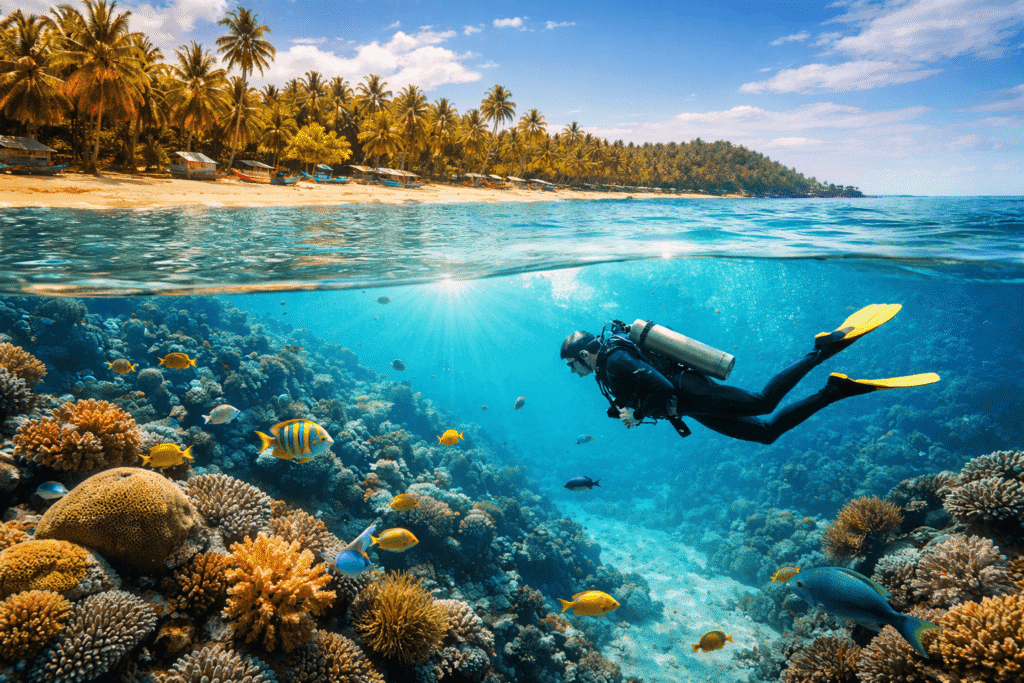
Tarkarli sits where the Karli river meets the sea on Maharashtra’s Konkan coast. The waters here are startlingly clear.
This has made it the state’s best destination for snorkelling and scuba diving. Coral reefs are visible just below the surface.
The village itself is unhurried, built around a rhythm of boat trips, afternoon naps, and dinners of Malvani fish curry made with freshly-caught pomfret and kokum.
Accommodation is primarily homestays run by local families, which means meals are home-cooked and conversation comes freely.
Why it stands out
- Among the best snorkelling in peninsular India, with shallow coral reefs accessible to beginners
- Sindhudurg Fort — a 17th-century Maratha sea fort — lies just offshore and is reachable by boat
- Malvani cuisine here is among the most authentic on the Konkan coast
Practical details
- Best time to visit: October to May (the monsoon transforms the coast dramatically, but most water activities close)
- Getting there: Kudal is the nearest railway station (about 30 km away). Goa International Airport is approximately 100 km south
4. Kanyakumari, Tamil Nadu
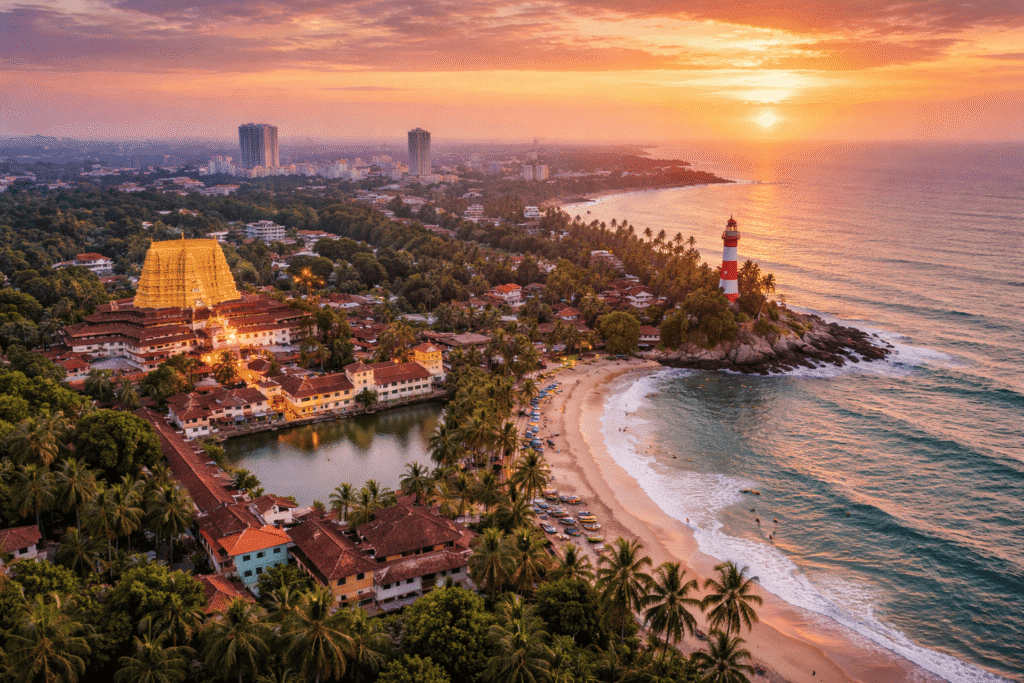
Kanyakumari is not, strictly speaking, a village — it is a small town of around 30,000 people at the very tip of the Indian subcontinent, where the Arabian Sea, the Bay of Bengal, and the Indian Ocean converge.
That distinction earns it a place on this list regardless of its size: few coastal spots in the world carry the same weight of geography and meaning.
Sunrises here are exceptional — on full moon nights, the sun sets and the moon rises over the water simultaneously, a phenomenon that draws pilgrims and photographers alike.
Why it stands out
- The only place in India where you can watch the sun rise and set over the sea
- The Vivekananda Rock Memorial sits offshore on a small island, accessible by ferry
- A vibrant fishing industry still operates here, and the morning fish market is worth an early alarm
Practical details
- Best time to visit: October to March; the sunrise on Pongal (mid-January) draws large crowds
- Getting there: Kanyakumari has its own railway station with connections to Chennai, Thiruvananthapuram, and Mumbai. Thiruvananthapuram International Airport is about 90 km away
5. Velas, Maharashtra
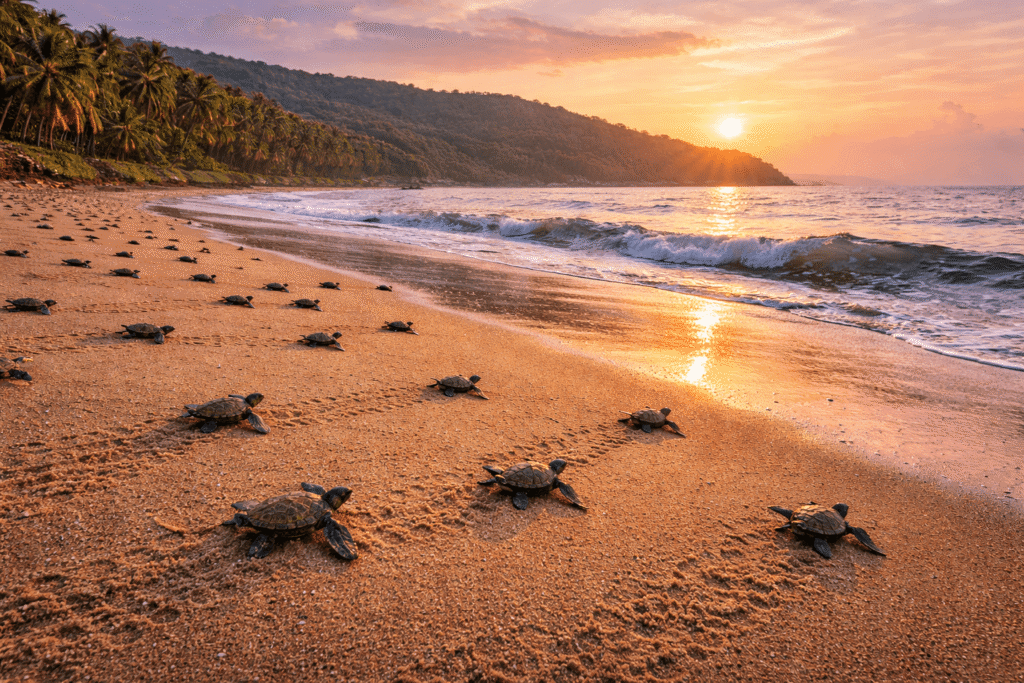
Velas is perhaps the most off-grid entry on this list. It is a small Konkan village with no large hotels and no commercial beach operations.
For a few weeks each February and March, it hosts one of the most quietly extraordinary natural spectacles in India.
Olive Ridley turtles come ashore to nest on the village beach during this period. A local conservation group called Sahyadri Nisarga Mitra has been running a turtle festival since 2002.
It manages visitors carefully and ensures hatchlings reach the sea safely.
Staying here means sleeping in traditional Konkan-style wadas (houses) and eating what the household cooks.
Why it stands out
- One of the few places in India where community-led marine conservation is genuinely thriving
- The turtle nesting season (February–March) offers a rare close encounter with Olive Ridley hatchlings
- Traditional Konkan architecture and home hospitality survive largely unaltered here
Practical details
- Best time to visit: February to March for turtle season; October to May for general coastal visits
- Getting there: Shrivardhan is the nearest town; Velas is roughly a 20-minute drive. The nearest railway station is Mangaon (about 50 km). Book homestays in advance during turtle season, as capacity is limited
Why Choose a Coastal Village Over a Resort?
The case for staying in a coastal village rather than a beach resort comes down to what you want travel to do. A resort delivers comfort and predictability.
A village delivers something harder to manufacture: the sense that a place exists for reasons beyond tourism, that the people you meet have lives and stories that preceded your arrival.
In practical terms, coastal villages in India typically offer:
- Fresher seafood — caught locally and often cooked by the same household that caught it
- Quieter beaches, particularly outside festival periods and school holidays
- Lower costs, since homestays and local restaurants operate on a fraction of resort overheads
- A slower pace that makes it easier to actually rest, rather than managing a packed itinerary
FAQ
Ziro Valley in Arunachal Pradesh is widely considered one of the most beautiful villages in India. Mawlynnong in Meghalaya, known as Asia’s cleanest village, is another top pick.
Lakshadweep islands come closest to the Maldives experience in India — crystal clear lagoons, white sand, and coral reefs. Radhanagar Beach in Havelock Island, Andaman, is another stunning alternative.
Mumbai is India’s most famous coastal city. For beaches and culture, Kochi, Vishakhapatnam, and Pondicherry are equally well known.
Pondicherry, Gokarna, Varkala, and Alibag are all excellent alternatives to Goa. They offer beaches and good food with far fewer crowds.
Final Thoughts
India’s most beautiful coastal villages have a way of staying with you long after you’ve left.
From the cliff-top drama of Varkala to the pristine lagoons of Lakshadweep, each of these most beautiful coastal villages in India offers something distinct — a pace of life, a landscape, or a culture that the big resort towns simply can’t replicate.
What makes these beautiful coastal villages worth seeking out is precisely their resistance to over-tourism. Many remain accessible only by ferry or winding coastal roads, which has kept their character intact.
If you’re planning a trip, don’t just pass through — slow down, eat at the local spots, and let the village reveal itself.
India’s coastline is long enough that even seasoned travellers keep discovering new favourites. The most beautiful coastal villages in India are not a fixed list — they’re an invitation to keep exploring.