
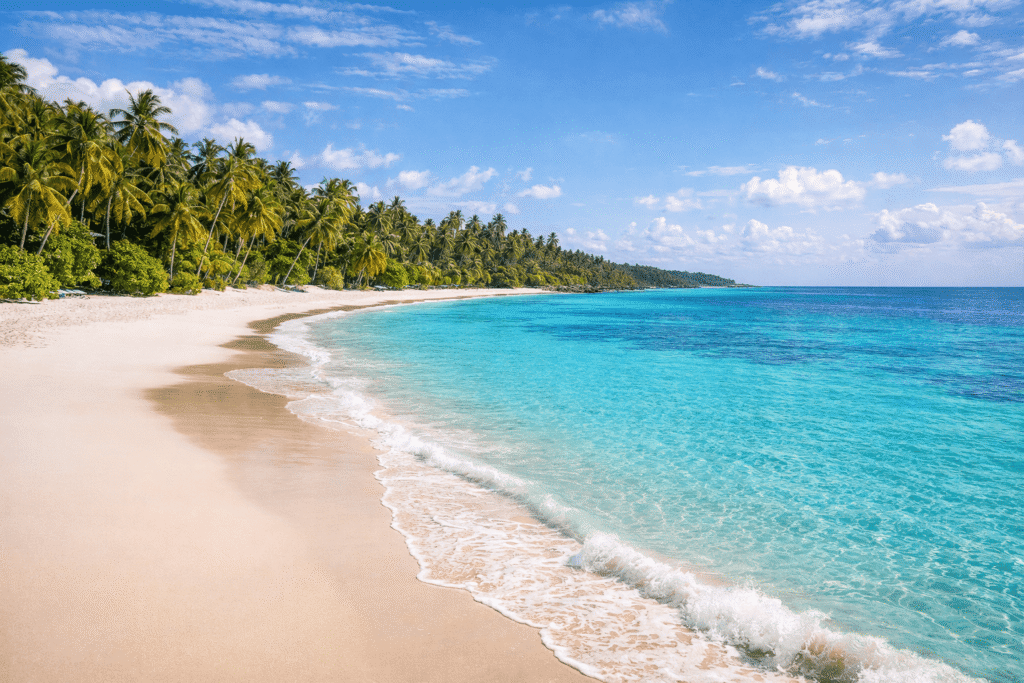
India’s coastline stretches over 7,500 kilometres and is home to some truly stunning seaside destinations.
While many beaches attract large crowds, a few stand out for their exceptional cleanliness, clear water, and well-maintained surroundings.
The best beaches in India offer pristine sand, peaceful landscapes, and responsible tourism efforts that help protect the natural environment.
The cleanest beaches in India include Blue Flag certified beaches like Shivrajpur, Ghoghla, and Radhanagar.
These beaches are known for clear water, strict cleanliness standards, and eco-friendly facilities, making them ideal for a safe and relaxing beach vacation.
The Cleanest Beach in India offer pristine sand, peaceful landscapes, and responsible tourism efforts that help protect the natural environment.
1. Radhanagar Beach, Andaman Islands
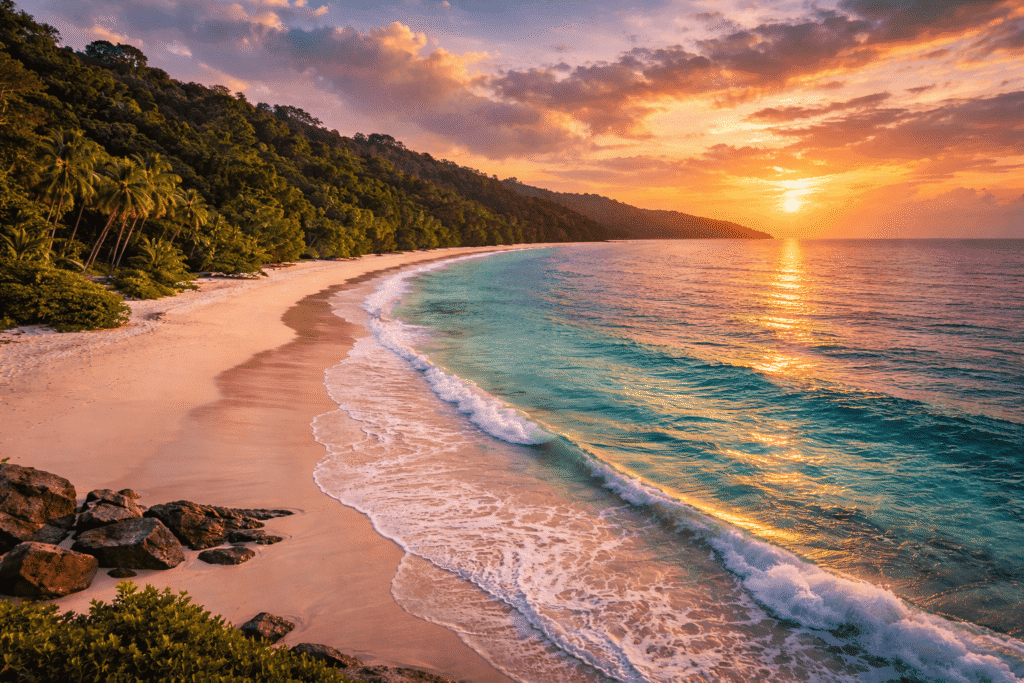
Radhanagar Beach on Havelock Island has held the title of Asia’s Best Beach (Time Magazine, 2004) and continues to earn its reputation.
The Andaman and Nicobar Administration enforces strict no-plastic and no-littering rules. Entry to the beach is also regulated after sunset. This is done to protect nesting sea turtles.
The water shifts from jade green in the shallows to deep cobalt further out. The sand is powdery white and cool underfoot even in the afternoon heat.
There are no beachside vendors hawking trinkets — just 2 kilometres of undisturbed shoreline backed by dense tropical forest that hums quietly with birds.
Best time to visit: October to May
Don’t miss: The sunset from the northern end — the sky turns a deep amber that reflects off the water long after the sun has gone.
2. Shivrajpur Beach, Dwarka, Gujarat
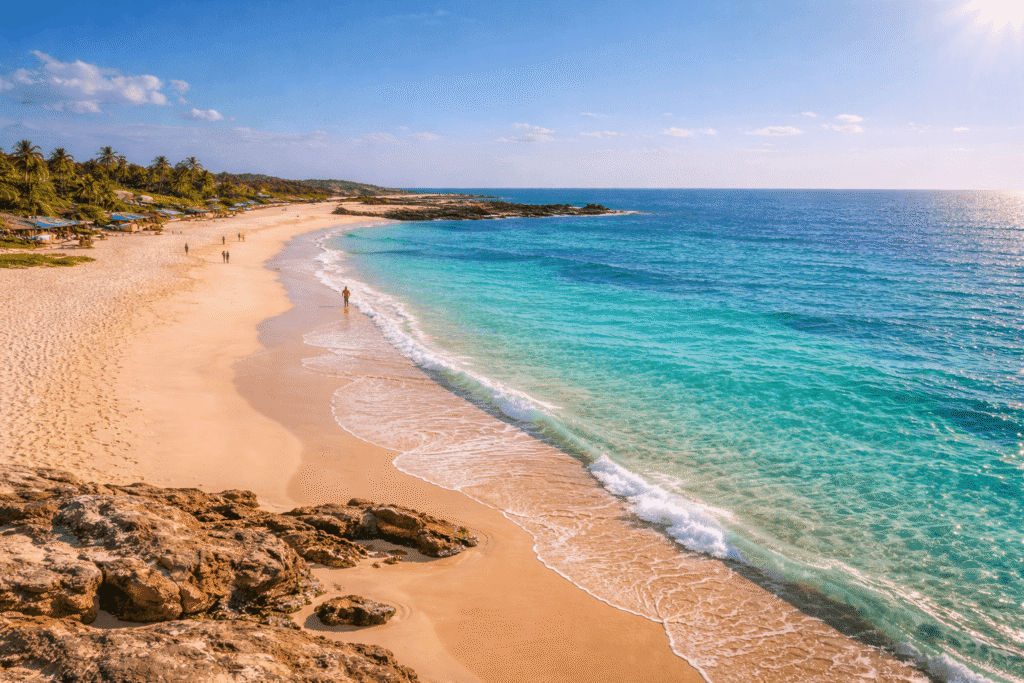
Shivrajpur is one of India’s Blue Flag certified beaches — an internationally recognised eco-label awarded by the Foundation for Environmental Education.
To earn this certification, beaches must meet 33 criteria across water quality, environmental management, safety, and services.
Shivrajpur sits near Dwarka — one of Hinduism’s seven sacred cities. This makes it genuinely unusual. It is one of the few places in India where a heritage pilgrimage and a clean coastal escape can occupy the same afternoon.
The water is calm and shallow near the shore, and the beach is well-equipped with changing rooms, clearly marked dustbins, and trained lifeguards.
Best time to visit: October to March
Local tip: The stretch near the lighthouse sees a fraction of the footfall — and stays noticeably cleaner for it.
3. Ghoghla Beach, Diu
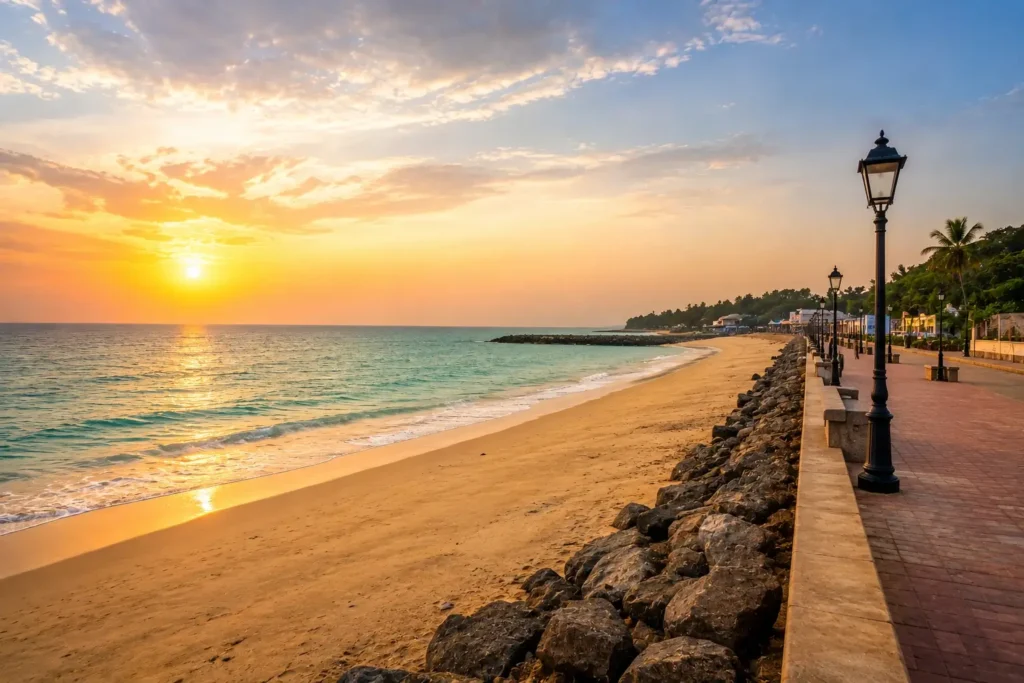
Ghoghla is one of India’s Blue Flag certified beaches and arguably the most family-friendly stretch of coastline on the west coast.
Located on the northern edge of Diu, it sits quietly apart from the territory’s better-known sights — which is precisely why it stays as clean as it does.
The beach is wide and gently sloping, with shallow waters that are safe for children and non-swimmers.
Facilities meet international standards: clean restrooms, trained lifeguards, waste management infrastructure, and clear demarcation of swimming zones.
What makes Ghoghla stand out is how little it asks of you. No hustlers, no sprawling shack culture — just a long, well-maintained shore with the kind of unhurried pace that’s increasingly rare on India’s western coastline.
Best time to visit: October to March
Don’t miss: The drive along the Diu coastline at dusk — the Portuguese-era architecture and sea light combine in a way that feels entirely unlike the rest of India.
4. Palolem Beach, Goa
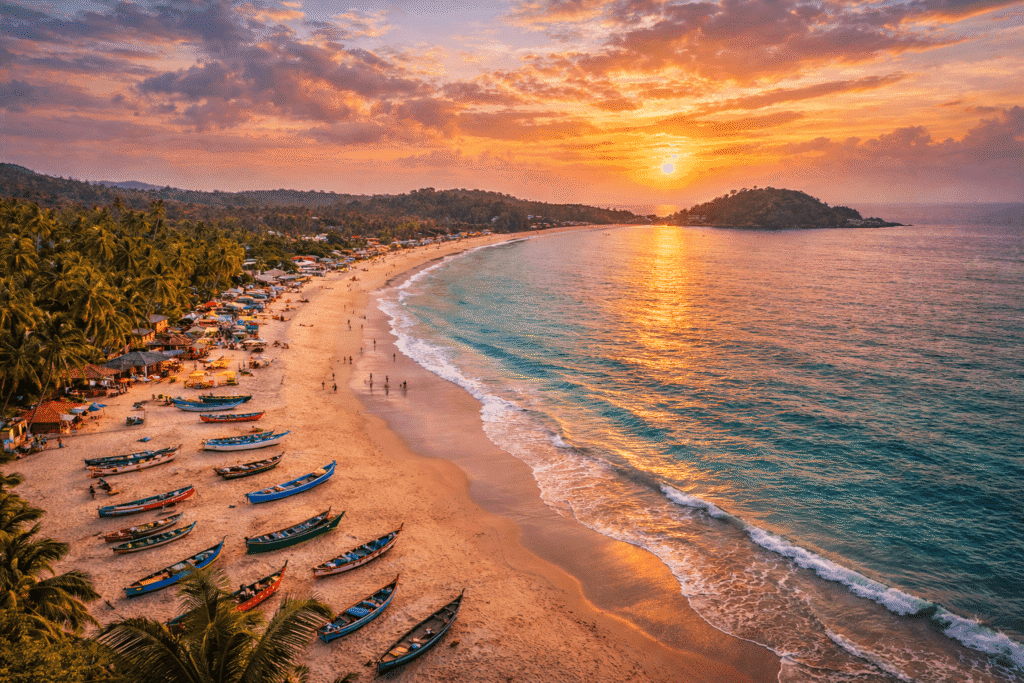
While Goa’s northern beaches carry a reputation for crowds and commercialisation, Palolem in the south tells a different story.
The bay is crescent-shaped and lined with coconut palms. The water stays calm enough for swimming year-round.
Local shack owners have also taken measurable steps to eliminate single-use plastic from their operations.
Palolem hosts regular beach clean-up drives. These are organised by resident communities and environmental NGOs.
It is not tourism theatre — it is a practical necessity. The livelihoods of locals depend directly on the beach staying clean and beautiful.
Kayaking, dolphin-spotting tours, and houseboat rentals are all run by locals with a direct stake in conservation.
If you’re planning a Goa trip, check our best beaches in Goa (North vs South) guide for detailed picks.
Best time to visit: November to February
Don’t miss: The silent disco nights — a Palolem original where partygoers wear wireless headphones, leaving the beach itself in undisturbed quiet under the stars.
5. Golden Beach, Puri, Odisha
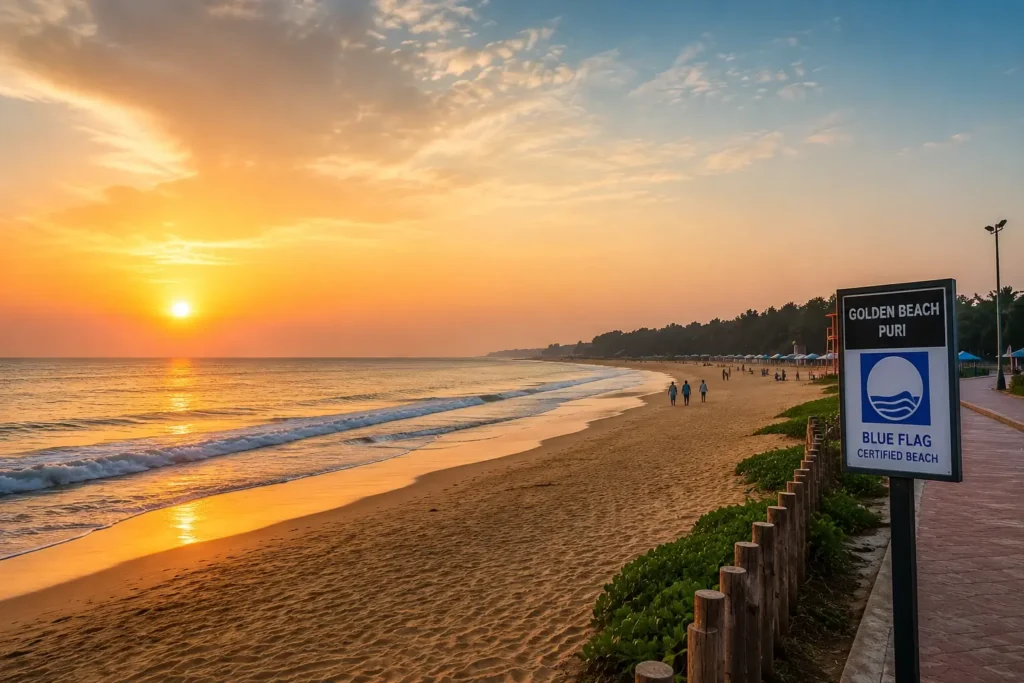
Golden Beach in Puri is one of the longest and most dramatically scaled beaches on India’s eastern coast — stretching for kilometres with the Bay of Bengal rolling in wide, powerful waves.
The name is earned at sunrise, when the sand catches the early light and turns a warm, deep gold.
The Odisha government has made sustained efforts to maintain cleanliness here, and it shows in the organised beach stretches, designated bathing zones, and visible waste management systems.
The beach also sits within reach of the Jagannath Temple — one of Hinduism’s holiest shrines — lending Puri the same rare dual character as Shivrajpur: sacred town and clean coastal destination in one.
The annual Rath Yatra brings enormous crowds, but outside festival season, Golden Beach offers a surprisingly calm and expansive experience.
Best time to visit: November to February
Don’t miss: Sunrise over the Bay of Bengal — the combination of golden sand, fishing boats, and the early light makes for one of the most photographed mornings on India’s east coast.
6. Bangaram Island Beach, Lakshadweep
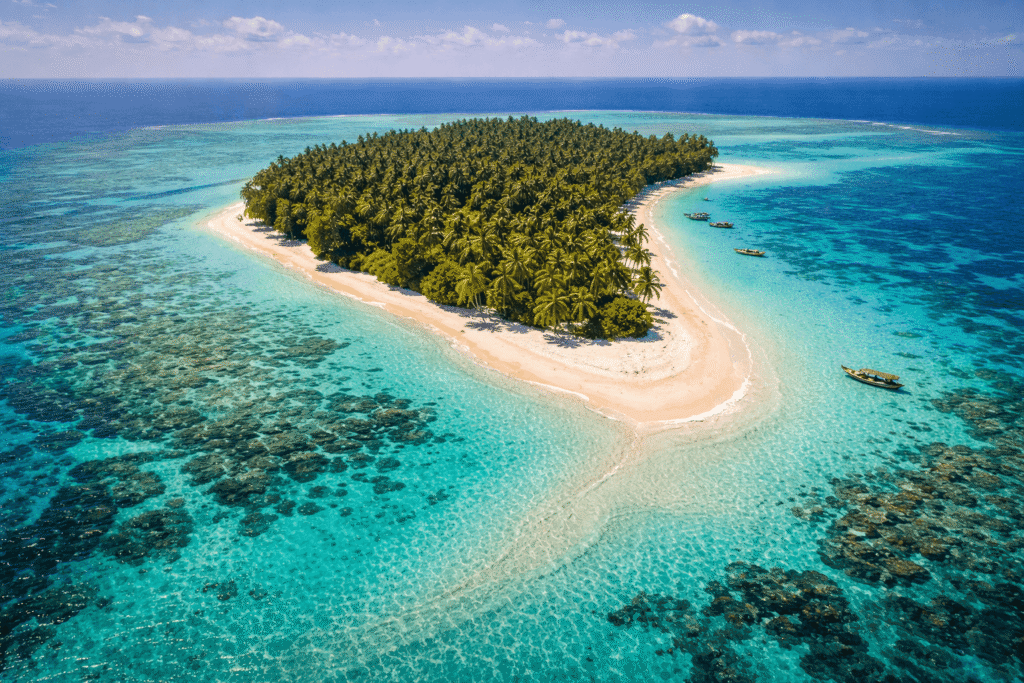
Getting to Bangaram requires commitment — a flight to Agatti, then a boat transfer across open water — but what awaits is one of India’s most pristine and least-visited beaches.
The island sits within the Lakshadweep Marine Protected Area. The coral reef encircling it is among the healthiest in the Indian Ocean. Marine surveys confirm live coral coverage well above the regional average.
The water is a vivid, almost implausible shade of turquoise. Snorkeling here means drifting alongside manta rays, reef sharks, and sea turtles in visibility exceeding 20 metres.
Because access is tightly controlled by the Indian government, the beach receives only a fraction of the footfall of mainland destinations — and it shows.
Best time to visit: October to May
Note: Foreign nationals require a special entry permit for Lakshadweep.
7. Marari Beach, Kerala
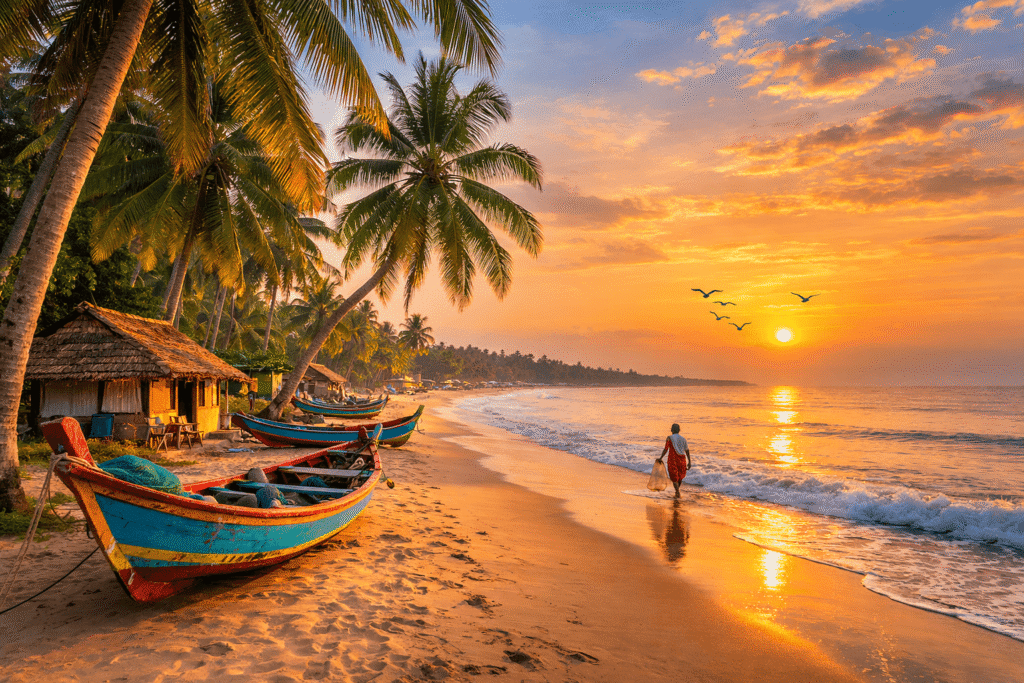
Marari sits about 11 kilometres from Alleppey and remains quietly off the mainstream tourist trail.
The beach fronts a working fishing village — in the early mornings, wooden vallam boats are dragged out to sea and nets spread wide across the sand to dry in overlapping geometric patterns.
Unlike Kerala’s more visited shores, Marari has no jet ski operators or hawkers. Several resorts here operate on verifiable responsible tourism principles. The CGH Earth property is a strong example.
They compost waste, use solar energy, and build their model around the local fishing community. It’s the rare place where sustainability isn’t a marketing word.
Best time to visit: September to March
Best for: Travellers looking for calm, uncrowded beaches with authentic local character.
8. Tarkarli Beach, Maharashtra
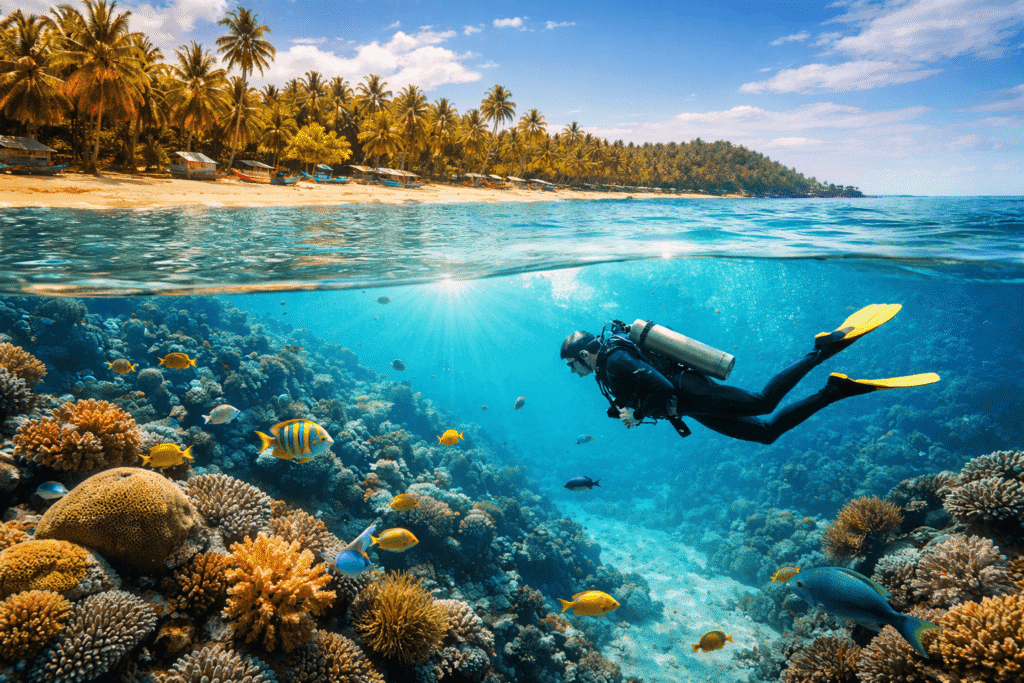
Tarkarli, at the southern tip of the Konkan coast, sits at the confluence of the Karli River and the Arabian Sea.
The river’s freshwater inflow keeps the bay unusually clear — underwater visibility regularly reaches 15 to 20 feet, making Tarkarli Maharashtra’s most serious destination for snorkeling and scuba diving.
The Maharashtra Tourism Development Corporation manages facilities here, which brings a consistency of standards that more informally run beaches struggle to match.
The beach is wide, unhurried, and far removed from the commercialisation of beaches closer to Mumbai — a combination that’s harder to find on the Konkan coast than it used to be.
Looking for activities? Explore coastal destinations in India for water sports.
Best time to visit: October to March
Don’t miss: A backwater boat ride on the Karli River at dusk, when egrets roost in the mangroves and the light goes copper.
9. Kasarkod Beach, Karnataka
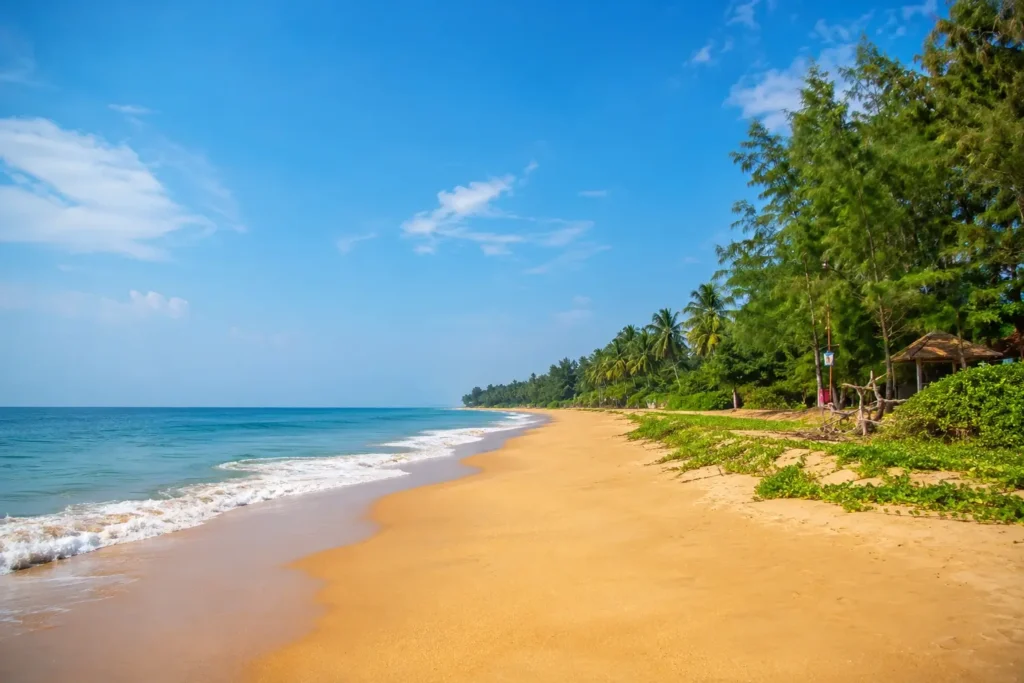
Kasarkod sits within the Kasarkod Forest Reserve near Karwar, and that protected status is the reason it looks the way it does — untouched, canopied by casuarina trees, and almost entirely free of commercial development.
The beach is part of a stretch that includes the nearby Nirvana and Binaga beaches, but Kasarkod draws the fewest visitors of the three, which means the sand stays cleaner and the atmosphere stays quieter.
The forest backdrop is unusually dense for a beach setting, and the combination of dark green canopy, black rock formations, and grey-blue Arabian Sea gives it a moodier, more dramatic character than Karnataka’s better-known shores.
It is not a beach with facilities. There are no lifeguards, no shacks, no organized parking. That is partly the point. Visitors who make the effort tend to leave it as they found it.
Best time to visit: October to March
Best for: Travellers who want a completely undeveloped beach experience within a protected forest setting.
10. Neil Island, Andaman Islands
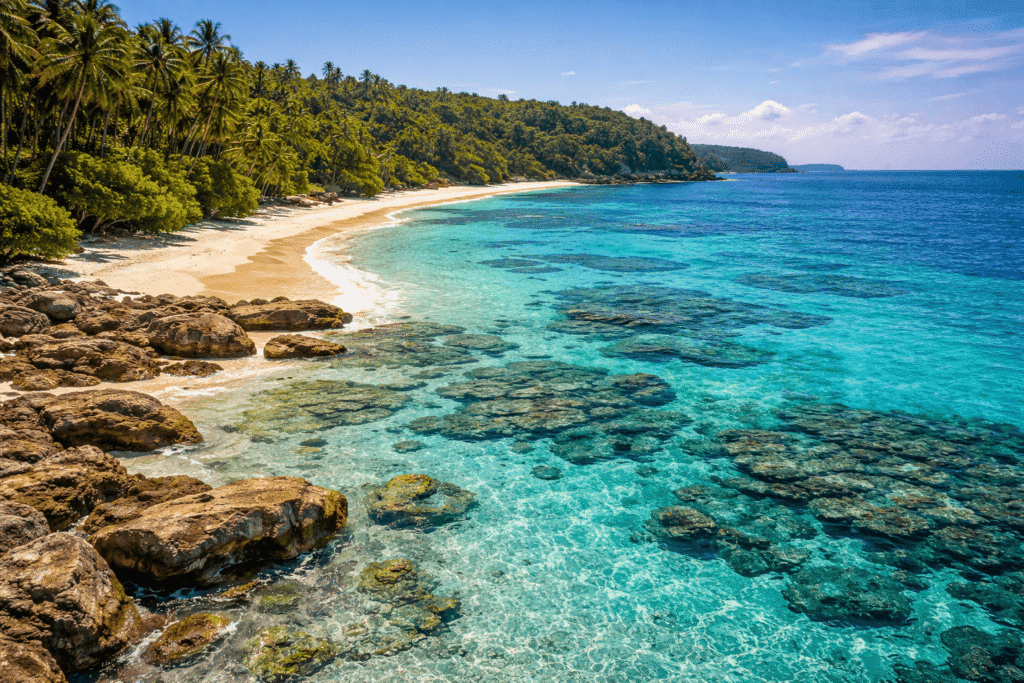
Less visited than Havelock, Neil Island offers a slower, more intimate Andaman experience. The beaches here — particularly Laxmanpur and Bharatpur — are framed by natural limestone rock formations and coral reefs accessible directly from the shore, no boat required.
Neil is a small island with a tight-knit community that treats environmental stewardship as a practical matter rather than an ideology.
Plastic bags are banned, waste management is visibly active, and the pace of life doesn’t accelerate for tourist season.
The snorkeling at Bharatpur, just a short wade from the sand, is among the best shore-accessible snorkeling in India.
Best time to visit: November to April
Best for: Travellers who found Havelock too busy and want the full Andaman experience at half the crowd.
11. Kovalam Beach, Kerala
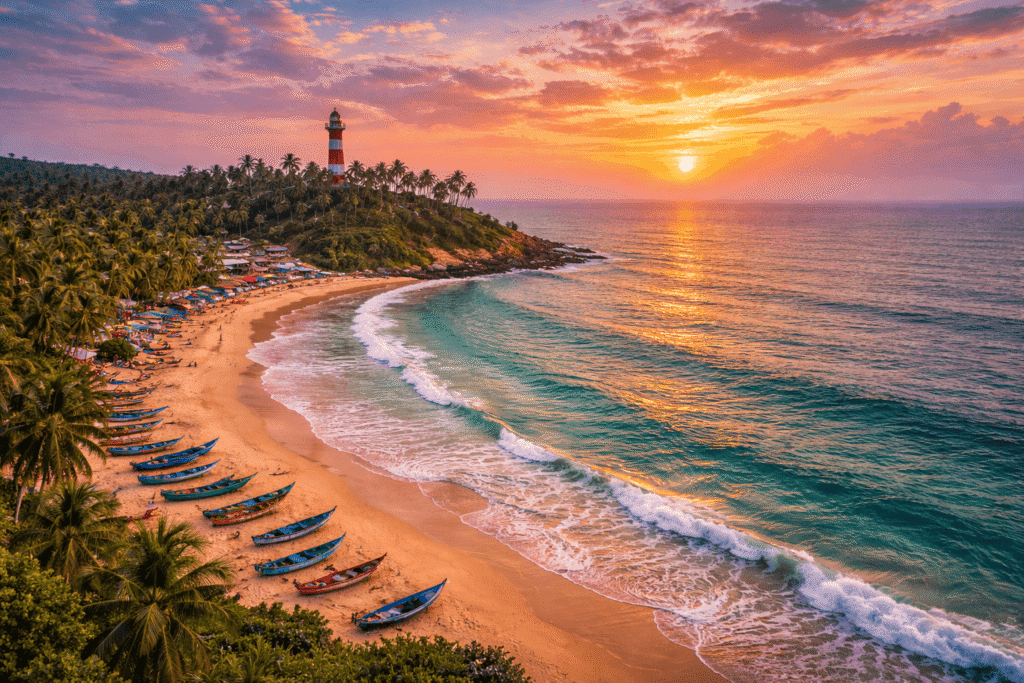
Kovalam’s three adjoining beaches each have a distinct character, but it’s Lighthouse Beach that sets the standard.
Named for the working lighthouse at its southern headland — which is open to visitors and offers a sweeping view north toward Thiruvananthapuram — it’s kept to a noticeably higher standard than most of Kerala’s busier shores.
The beach is well-lit after dark, regularly cleaned, and staffed with lifeguards and medical assistance.
It handles its visitor numbers better than almost any comparable destination in South India, with organised parking, clear signage, and a seafront that hasn’t been surrendered entirely to souvenir stalls.
Walk south past the lighthouse and the crowds thin quickly, giving way to a quieter stretch of rock and sand that most visitors never reach.
Best time to visit: September to March
Local tip: The southern stretch past the lighthouse headland rewards the short walk with near-solitude, even in peak season.
Tips for Responsible Beach Visits
India’s cleanest beaches stay that way because of both regulation and community effort. As a visitor, the gap between a protected beach and a degraded one is often nothing more than accumulated small decisions.
- Carry a reusable bag and water bottle — many beach towns now have refill stations
- Dispose of waste only in designated bins; if none are available, carry it out
- Avoid touching or standing on coral when snorkeling or swimming
- Choose tour operators and stays with visible, specific environmental policies — not just a tagline
- Respect signage around nesting areas, especially in the Andamans, where sea turtle populations depend on undisturbed shoreline
FAQ
Many beaches in Goa are clean, especially in South Goa like Palolem and Colva. However, popular North Goa beaches can get crowded and less clean during peak seasons.
Radhanagar Beach in the Andaman & Nicobar Islands is often considered the most beautiful, known for its white sand, turquoise water, and stunning sunsets.
Great alternatives to Goa include Gokarna (Karnataka) for a quieter vibe, Varkala (Kerala) for cliff beaches, and Pondicherry for a mix of beach and culture.
Final Thoughts
India’s cleanest beaches are proof that conservation, community, and tourism are not natural enemies.
From the internationally certified shores of Shivrajpur to the protected lagoons of Bangaram and the carefully managed forests of Radhanagar, these destinations share one thing: people who decided the beach was worth protecting.
Plan ahead, travel lightly, and treat every visit as borrowed time in someone else’s home.