
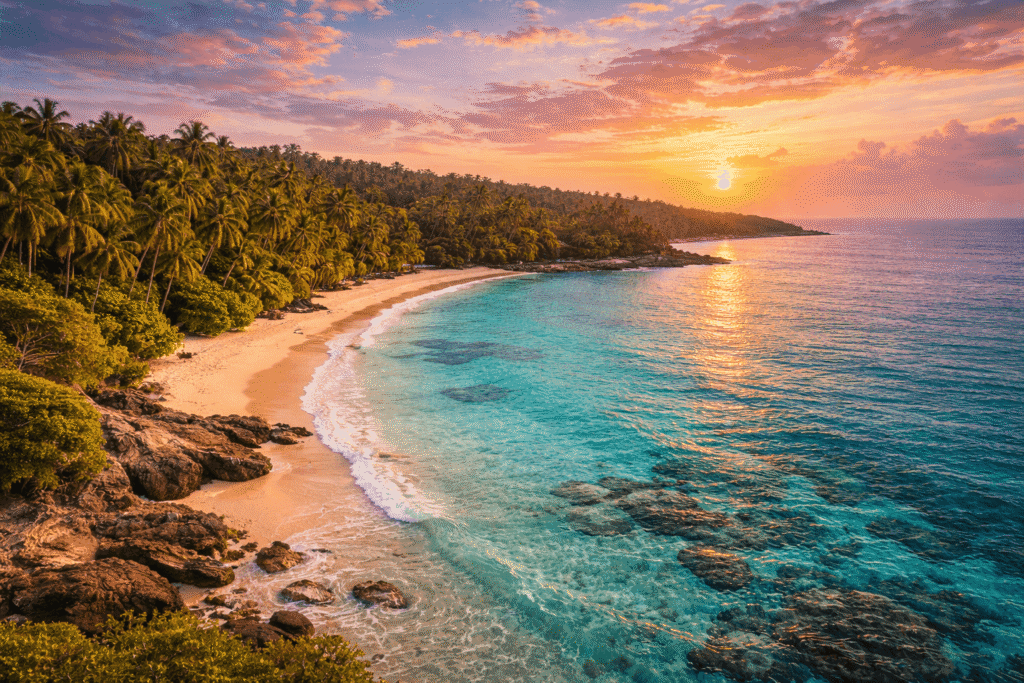
The best beaches in India stretch across a 7,500-kilometre coastline — from the Gulf of Kutch in the northwest to the Bay of Bengal in the east.
Whether you’re looking for powder-white sands in the Andaman Islands, dramatic cliff-top beaches in Kerala, or unspoiled shores along the Karnataka coast, India’s beaches offer something genuinely distinct at every turn.
Tropical island chains, sea cliffs, and serene backwater lagoons make this one of the most varied beach destinations in the world. No two beaches feel the same.
1. Radhanagar Beach — Andaman & Nicobar Islands
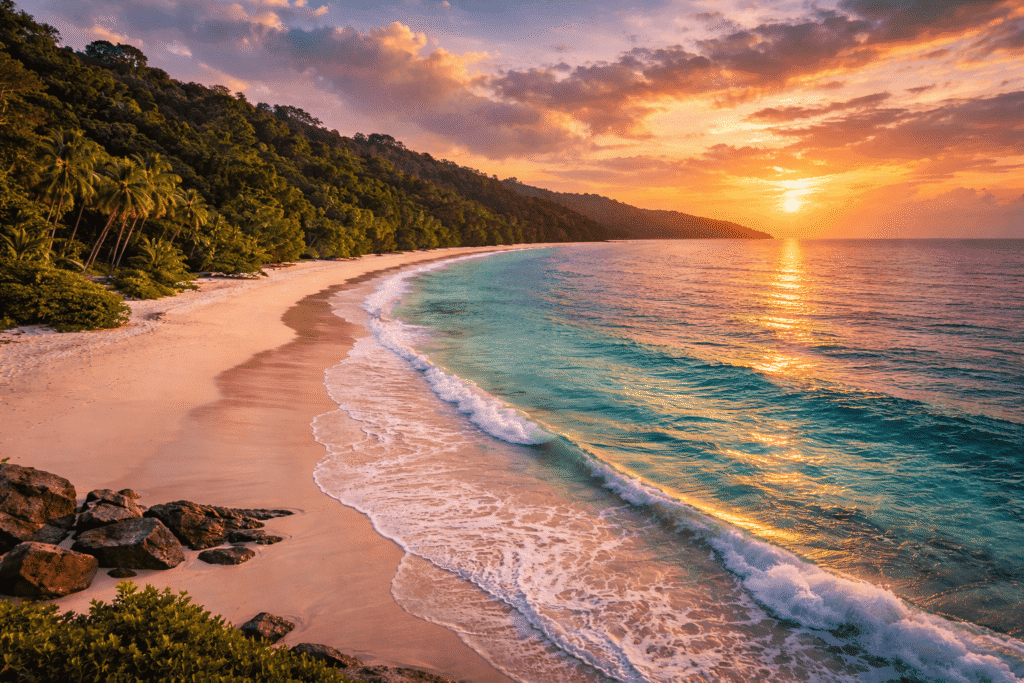
A three-kilometre arc of powder-white sand flanked by dense tropical forest, with waters that shift from pale turquoise at the shore to deep cobalt further out.
Consistently ranked among the Cleanest Beaches in India for a Perfect Beach Vacation, Radhanagar is one of Asia’s most celebrated shorelines.
At sunset, the sky turns amber and violet over the Bay of Bengal — a spectacle that draws visitors to the shoreline every evening without fail.
The beach is free from motorized water sports, preserving its calm character. Swimming is safe in the mornings; strong currents can develop in the afternoon. Nearby Elephant Beach offers excellent coral snorkeling, accessible by a 15-minute boat ride or jungle trek.
- Best time: November – April
- Getting there: Fly to Port Blair, then ferry to Havelock Island (90 min)
- Stay: Symphony Palms Beach Resort; eco-huts near Vijaynanagar village from ₹1,200/night
- Budget/day: ₹2,000 – ₹8,000+
- Tip: Arrive by 5:30 PM for sunset — the northern end near the forest line stays quieter than the main stretch.
2. Palolem Beach — South Goa
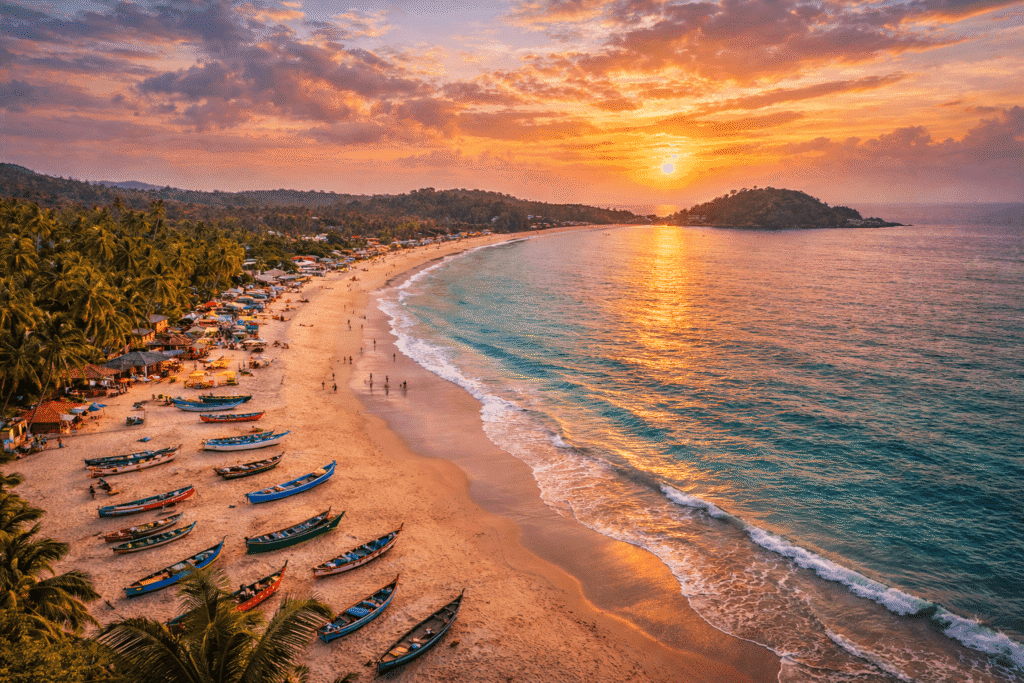
Palolem’s crescent-shaped bay is enclosed by two forested headlands, making the water exceptionally calm — ideal for kayaking, paddleboarding, and safe swimming.
Unlike high-energy North Goa beaches, Palolem operates at a slower rhythm: fishermen launch boats at dawn, shacks open mid-morning, and evenings center around fresh seafood and acoustic music.
The famous “silent disco” events (headphones required after 10 PM due to noise restrictions) have become a Palolem tradition. Adjacent Patnem Beach, a 15-minute walk south, is even quieter and popular with families.
- Best time: November – February
- Getting there: Train to Canacona station, 10-minute auto-rickshaw to the beach
- Stay: Sevas Resort; beachfront bamboo huts from ₹800/night
- Budget/day: ₹1,500 – ₹5,000
- Tip: Book dolphin-watching boats directly with local fishermen (₹300–400 per person) rather than through hotels — same boats, half the price.
3. Varkala Beach — Kerala
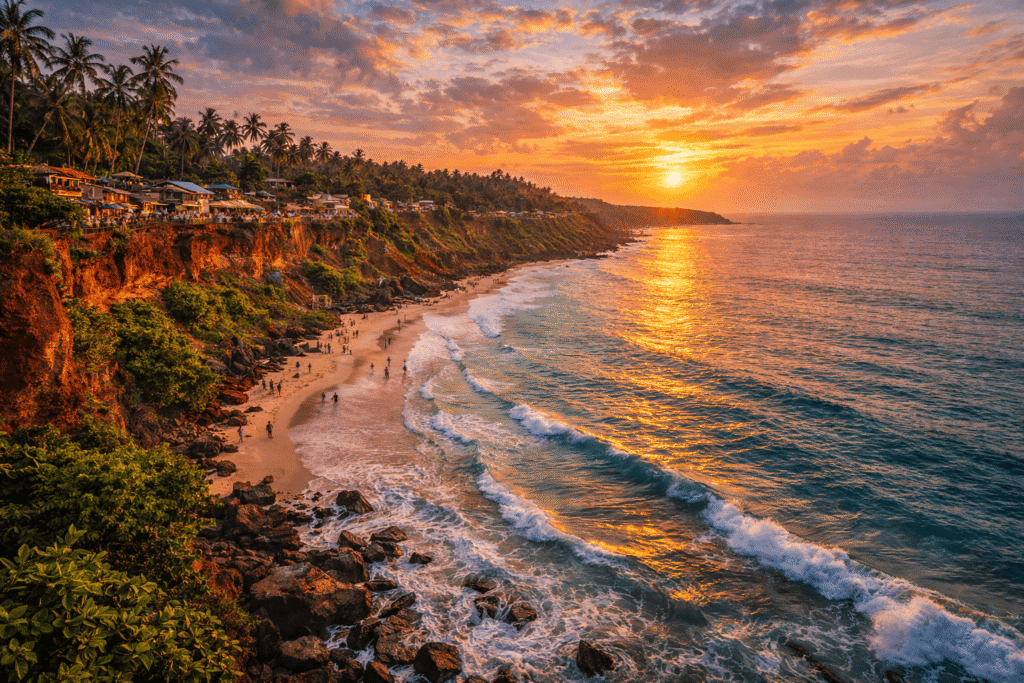
What distinguishes Varkala from every other beach in India is its 15-metre laterite cliff running parallel to the shore, lined with cafés, Ayurvedic spas, and yoga studios perched over the Arabian Sea.
Below, Papanasam Beach has mineral-rich spring water that seeps directly into the shoreline — drawing Hindu pilgrims alongside international visitors.
The North Cliff promenade is the social hub; the quieter southern end near Odayam suits long-stay travelers looking for fewer vendors and a slower pace.
- Best time: October – March
- Getting there: Train to Varkala station; 10-minute auto to the cliff
- Stay: Clafouti Resort; cliff-top guesthouses from ₹600/night
- Budget/day: ₹1,200 – ₹4,500
- Tip: A 3-day Ayurvedic package at a registered clinic costs ₹3,000–6,000 and offers far better value than drop-in massages on the cliff path.
4. Agonda Beach — South Goa
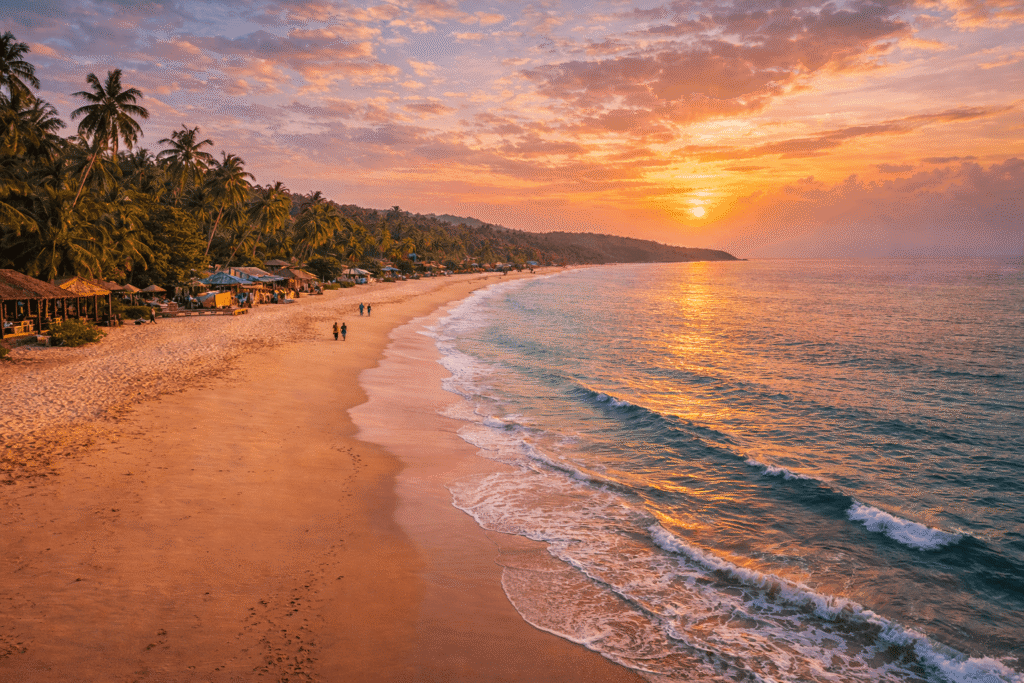
Agonda is South Goa’s most unspoiled stretch — a long bay where Olive Ridley turtles still come to nest between November and February.
Commercial activity is deliberately limited, which means fewer sunbeds and watersports operators, but also fewer crowds. The atmosphere draws a community of yoga and wellness practitioners who stay for weeks at a time.
Strong waves during certain months make it better for long walks and sunset-watching than for swimming.
- Best time: December – March
- Getting there: Taxi from Margao (45 min) or Palolem (15 min)
- Stay: Dunhill Beach Resort; wooden cottages from ₹1,500/night
- Budget/day: ₹1,500 – ₹4,000
- Tip: During nesting season, join a Forest Department night walk to observe turtles — never use torches or phones near the nests.
5. Om Beach, Gokarna — Karnataka
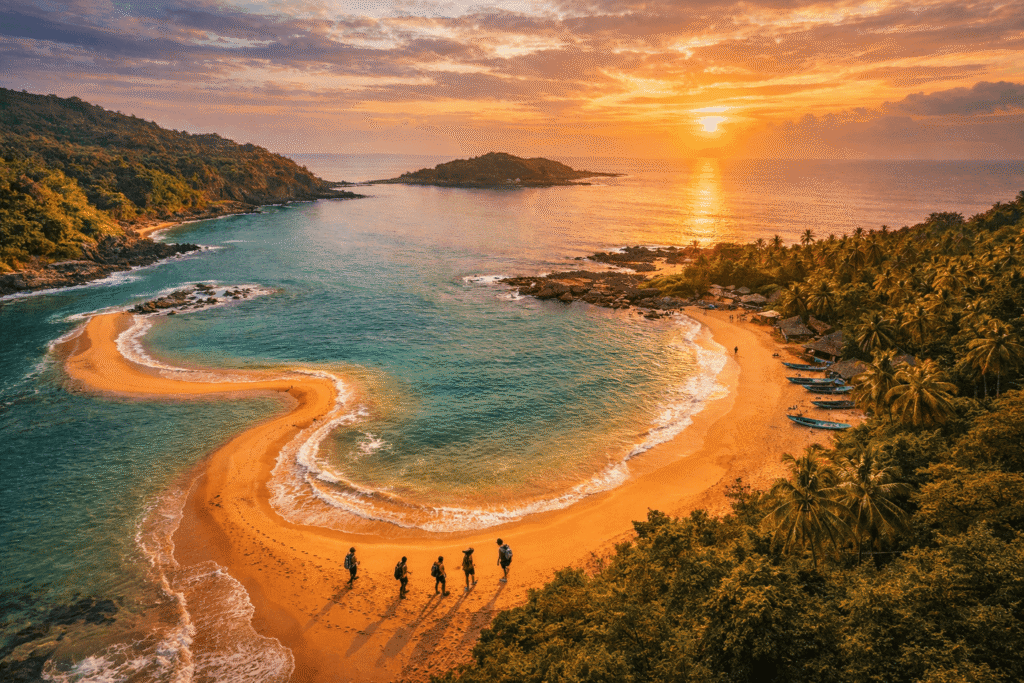
Gokarna offers something increasingly rare on the Indian coast: a genuine pilgrimage town with excellent beaches. Om Beach — named for its natural Om-shaped outline visible from the surrounding hills — sits a short trek from the ancient Mahabaleshwar Temple and remains far less commercialized than Goa, while offering a similar blend of warm water, coastal cafés, and a relaxed traveler atmosphere.
Kudle Beach, just north, is even more peaceful and popular with long-term budget travelers. The coastal trek connecting all five beaches here is one of the finest short walks in India.
- Best time: October – March
- Getting there: Train to Gokarna Road station; bus or auto to town
- Stay: Nirvana Café guesthouses; budget rooms from ₹400/night
- Budget/day: ₹700 – ₹2,500
- Tip: The full coastal trek from Main Beach through Kudle, Om, Half Moon, and Paradise Beach takes about 3 hours — one of the best half-day walks on India’s coast.
6. Tarkarli Beach — Maharashtra
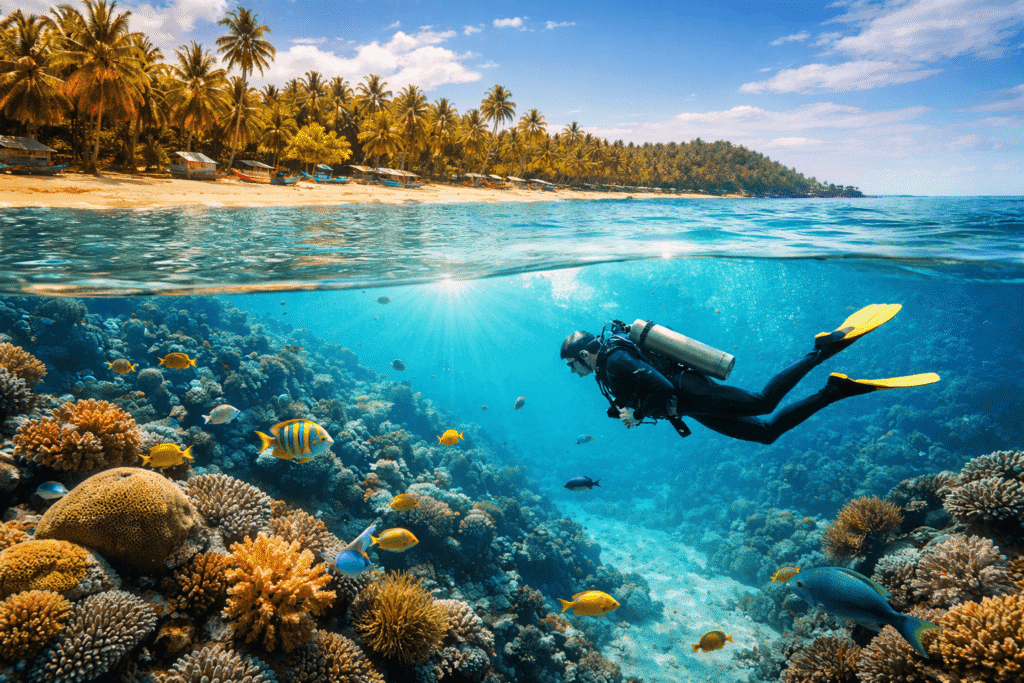
On Maharashtra’s Konkan coast, the Karli River meets the Arabian Sea in exceptionally clear, shallow waters that rank among the best on the mainland for scuba diving and snorkeling.
Coral reefs host colorful marine life at depths of just 5–8 metres, accessible even for first-time divers.
The nearby Sindhudurg Fort — a 17th-century sea fort built by Chhatrapati Shivaji Maharaj on a small island — is reachable by a short boat ride and provides genuine historical depth.
Local Malvani fish curries served at beachside homestays are a destination in themselves. The village surrounding the fort is also featured among the Most Beautiful Coastal Villages in India.
- Best time: November – March
- Getting there: Bus from Mumbai (10 hrs) or fly to Kolhapur and take a taxi
- Stay: MTDC resort; local homestays from ₹800/night, usually with meals included
- Budget/day: ₹1,000 – ₹3,500
- Tip: Book scuba diving through PADI-certified operators in Malvan town — prices are regulated at ₹1,200–1,800 for a beginner dive.
7. Laxmanpur Beach, Neil Island — Andaman & Nicobar Islands
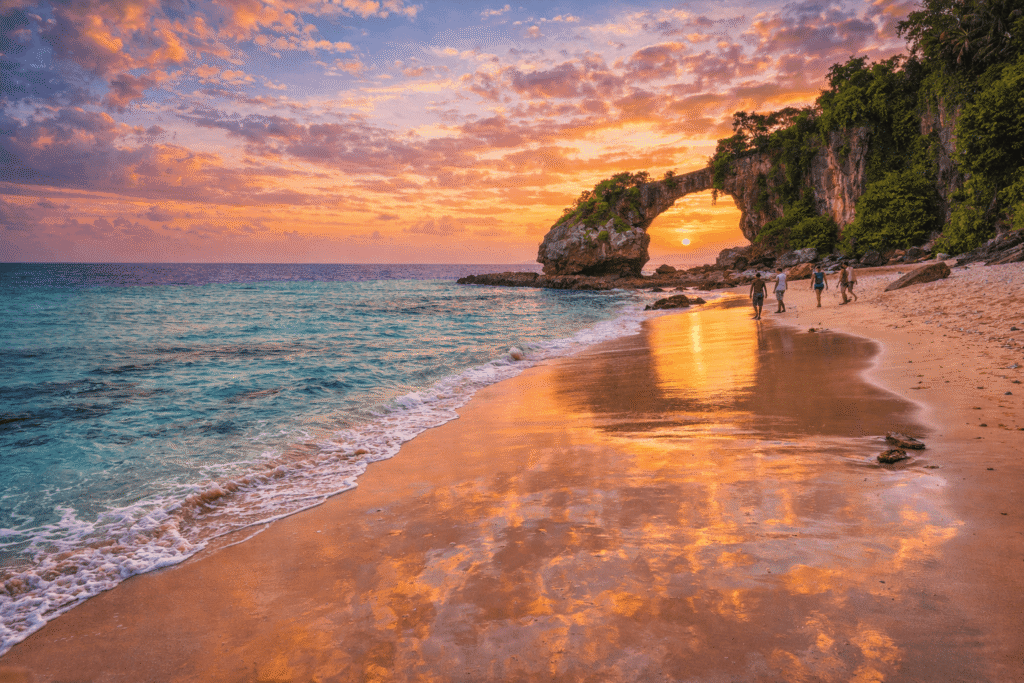
While Havelock gets most of the attention, Neil Island rewards those who venture further with something more intimate.
Laxmanpur Beach is known for a natural coral rock formation — a bridge-like arch that emerges from the sea at low tide — and for some of the most intense sunset colors in the Andamans. The island is small enough to circumnavigate by bicycle in a day.
Bharatpur Beach on the island’s north shore has calm, shallow water perfect for snorkeling directly from the shore with no boat rental needed.
- Best time: November – April
- Getting there: Ferry from Port Blair (2 hrs) or Havelock (1 hr)
- Stay: Pearl Park Beach Resort; guesthouses from ₹900/night
- Budget/day: ₹1,500 – ₹5,000
- Tip: Check tide tables before visiting the natural bridge — it disappears at high tide. Low tide about two hours before sunset is the ideal window.
8. Agatti Island Beach — Lakshadweep
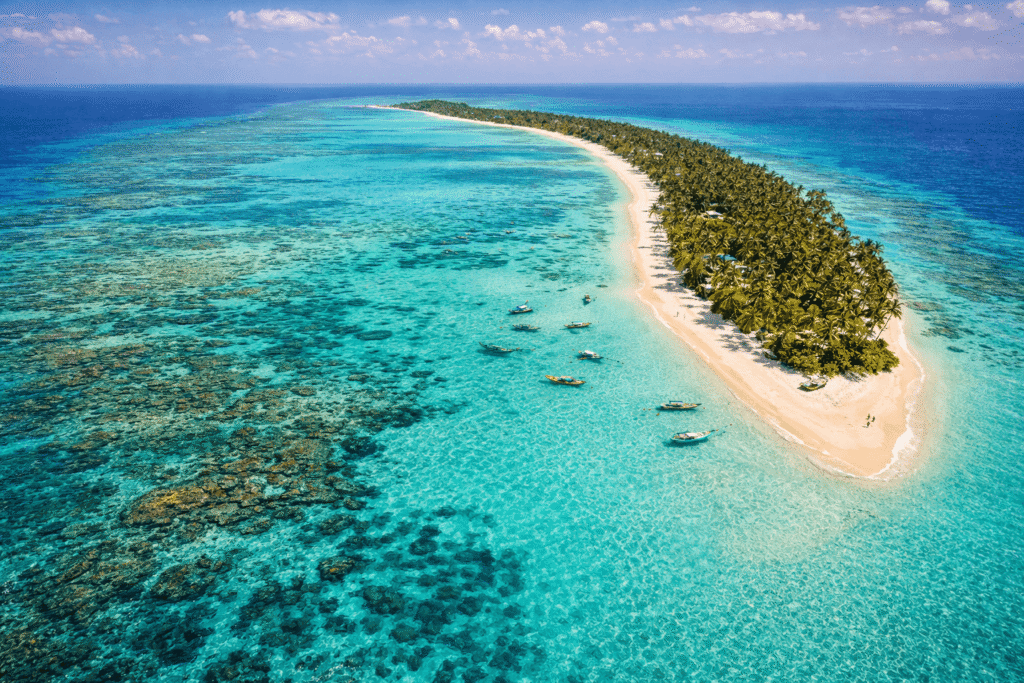
Lakshadweep remains India’s most exclusive beach destination because access is restricted by permit. Agatti’s lagoon is so clear and shallow that the sandy bottom is visible at 10 metres depth.
The coral reefs are in excellent health, hosting sea turtles, reef sharks, and manta rays. Tourism is deliberately low-volume, guaranteeing tranquility that no Goa or Kerala beach can match.
In 2025, the government expanded permitted accommodation with additional eco-resort berths — making 2026 a window of increased, though still limited, access.
- Best time: October – May
- Getting there: Fly Kochi → Agatti (1.5 hrs); entry permit required well in advance
- Stay: SPORTS resort; eco-lodges ₹5,000–12,000/night
- Budget/day: ₹6,000 – ₹15,000 (all-inclusive packages recommended)
- Tip: Apply for the entry permit at least 6–8 weeks in advance through the UT Administration portal — last-minute applications are routinely denied.
9. Nagoa Beach — Diu
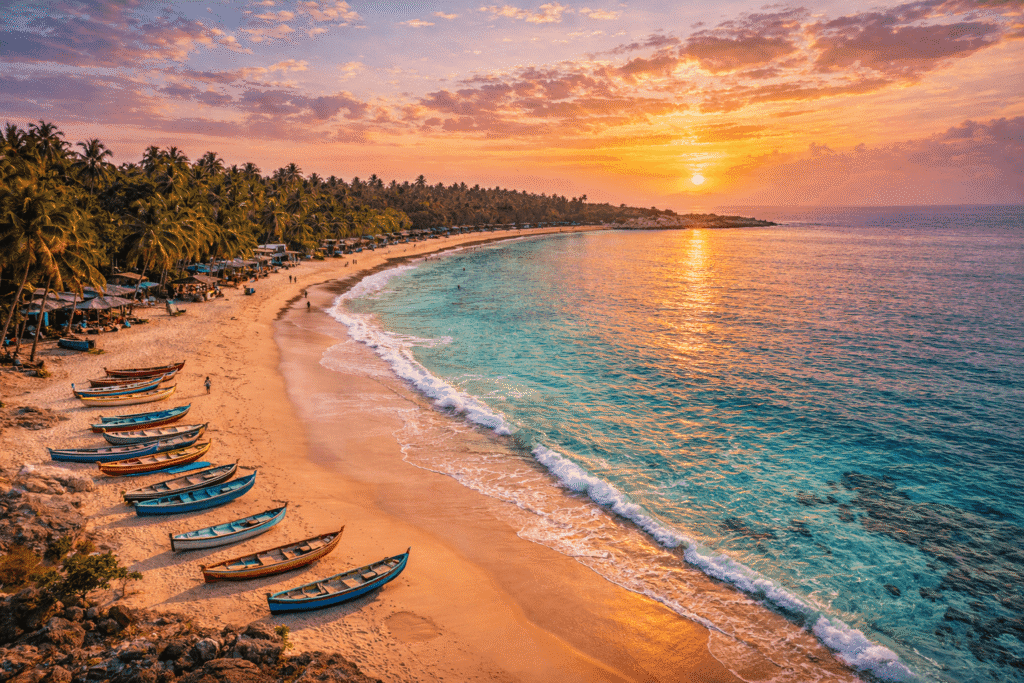
Diu is one of India’s most underrated coastal escapes — a tiny former Portuguese territory where the beaches are uncrowded and the Indo-Portuguese architecture in the old town adds real cultural texture.
Nagoa Beach curves in a horseshoe shape sheltered by hoka palms, a rare species unique to Diu, and is among the safest beaches on India’s west coast for swimming, with lifeguards posted during peak season.
Watersports are available at prices significantly lower than Goa, and the old town’s fort, churches, and seafood restaurants make for a well-rounded trip beyond the beach itself.
- Best time: October – February
- Getting there: Fly to Diu airport from Mumbai (1 hr) or bus from Ahmedabad (7 hrs)
- Stay: Radhika Beach Resort; heritage guesthouses in old town from ₹700/night
- Budget/day: ₹800 – ₹3,000
- Tip: Diu is a Union Territory where alcohol is legal and cheaper than in neighboring Gujarat — book ahead during October–December when domestic visitors arrive in large numbers.
FAQ
Radhanagar Beach in the Andaman Islands is widely considered the prettiest beach in India for its white sand, turquoise water, and natural surroundings.
Radhanagar Beach is often regarded as the cleanest, along with Blue Flag beaches like Shivrajpur Beach in Gujarat.
Some of the best beaches in India include Radhanagar, Varkala, Palolem, Agonda, Marari, Tarkarli, Om Beach (Gokarna), Elephant Beach, Kovalam, and Dhanushkodi.
Radhanagar Beach in the Andaman Islands has been ranked among Asia’s top beaches, often listed around 7th place.
Final Word
India’s coastline is vast enough that no single trip can cover it all — and that’s the point.
Whether you’re drawn to the remote coral atolls of Lakshadweep, the cultural depth of Diu and Gokarna, or the sheer natural spectacle of the Andamans, every stretch of this shoreline offers something genuinely distinct.
Travel slowly, pick one region, and let the sea do the rest.