
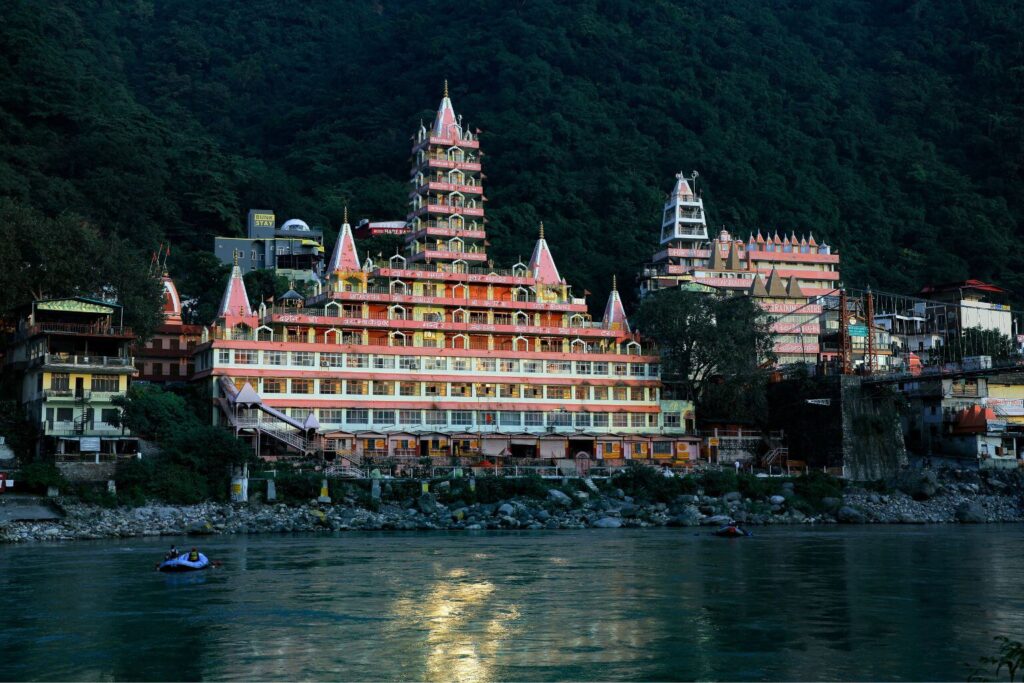
Rishikesh is one of the few places in India where you can combine adventure and spirituality in the same trip. During our visits, we realised that you don’t have to choose between yoga, cafés, rafting, or temples — you can comfortably experience all of them in just three days with a little planning.
It’s not unusual to spend your morning at a peaceful ghat or yoga session and your afternoon rafting on the Ganga. That contrast is what makes Rishikesh different from most destinations in North India.
This itinerary is built around that mix — three days that cover the spiritual side of Rishikesh and the adventure side without shortchanging either. Day 1 eases you in with sightseeing, Day 2 is for rafting and adventure sports, and Day 3 winds down with yoga, a waterfall, and a slow goodbye. Follow it as written, or treat it as a base and adjust the pace to suit you.
The Quick Version, For Anyone in a Hurry
| Best for | First-time visitors |
| Vibe | Adventure + spirituality + nature, all mixed together |
| Best months | October to March |
| Daily budget | ₹2,000–₹6,000, depending on how you like to travel |
| Where to base yourself | Tapovan or Laxman Jhula |
| Getting there | Train to Haridwar (about 5 hours from Delhi) plus a cab, or a direct bus/cab from Delhi (6–7 hours) |
| Book ahead | River rafting and bungee jumping — don’t leave these for the day of |
Day 1: Settling In, Laxman Jhula, and the Ganga Aarti
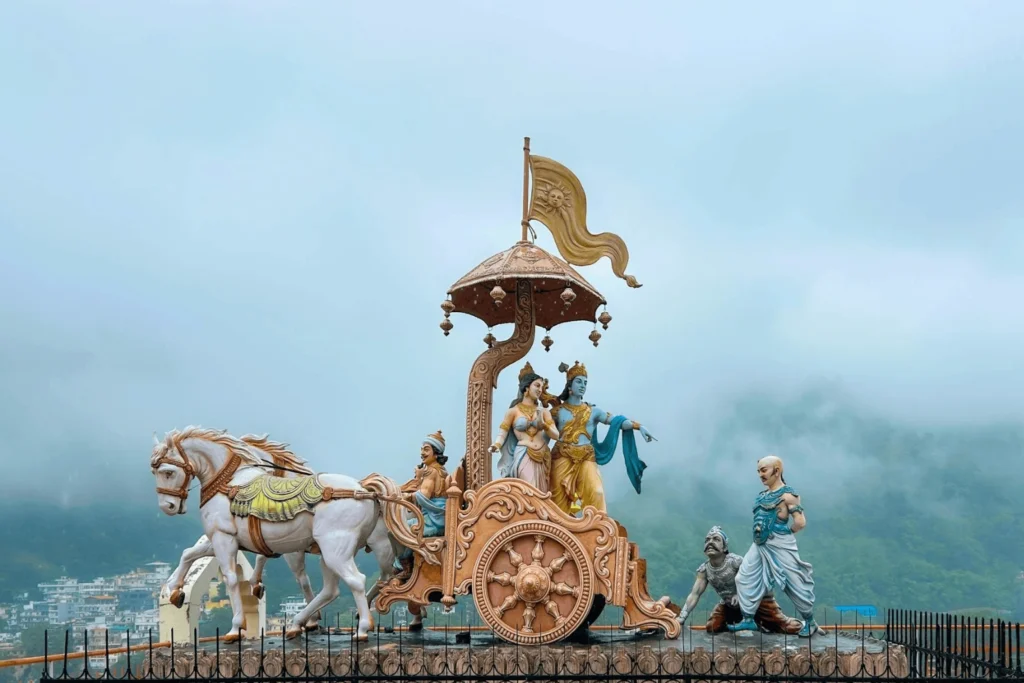
The first day isn’t really about ticking off sights. It’s about arriving — and not just in the physical sense. Don’t try to cover everything on your first day. Spend a few hours exploring the area around Tapovan and Laxman Jhula before moving on to the bigger activities.
Morning: Check In and Get Oriented
Head straight for Tapovan or the Laxman Jhula area once you land — this is where most travelers end up staying, and for good reason. It’s close to both bridges, an easy walk to the best cafés, and well positioned for rafting pickups the next morning.
A rough idea of where to stay depending on your budget:
- Budget: the hostels clustered around Laxman Jhula are social, clean, and about as central as it gets — expect to pay ₹500–₹1,000 a night.
- Mid-range: boutique guesthouses in Tapovan, several with genuine mountain views, running ₹1,500–₹3,000 a night.
- If you want to splurge: riverside resorts a bit further upstream toward Shivpuri, many with private balconies that open straight onto the Ganges.
Once you’ve dropped your bags, don’t sit still — just start walking. The area is compact enough that you can explore most of it on foot.
Afternoon: Bajrang Setu, Laxman Jhula Area & Ram Jhula
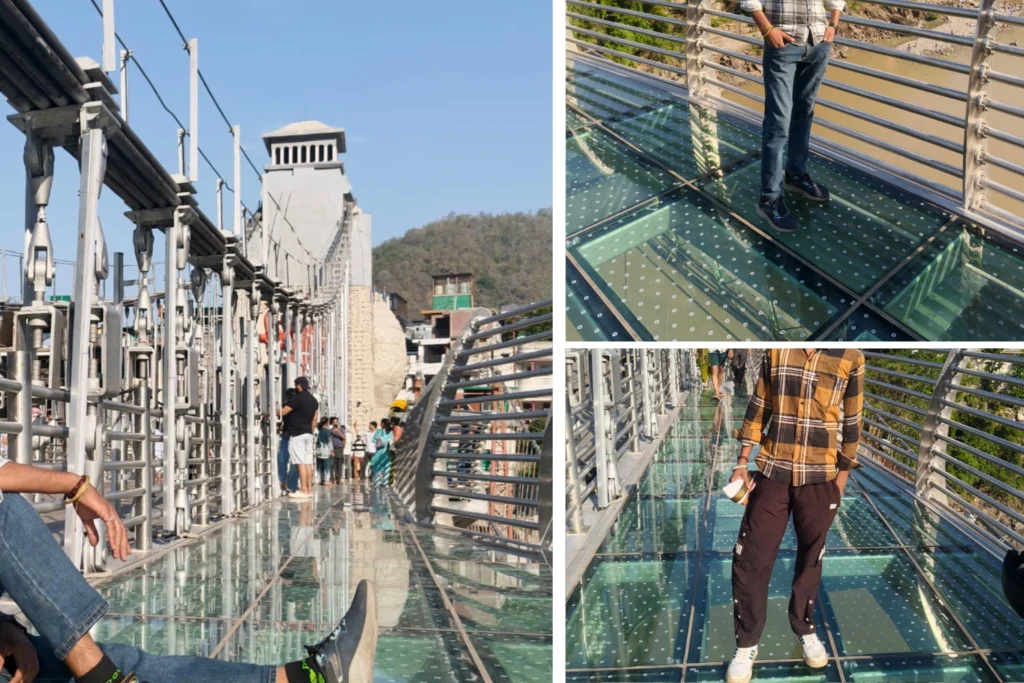
The Laxman Jhula area remains one of the busiest and most scenic parts of Rishikesh. The original Laxman Jhula has been permanently closed, and in 2026 it was replaced by Bajrang Setu, India’s first glass-floor suspension bridge.
When we visited, we were looking forward to walking across the new bridge. However, the glass walkway had already been temporarily closed for repairs. Soon after opening, some visitors reportedly dragged luggage across the glass panels, threw stones, and repeatedly struck the surface with hard footwear, damaging several panels. As a result, authorities temporarily restricted access while repairs and safety inspections were carried out.
Even if you can’t walk across the bridge, the area is still well worth exploring. The cafés, temples, small markets, and views of the Ganga make it one of the liveliest parts of Rishikesh.
From here, follow the riverside path toward Ram Jhula, a wider suspension bridge lined with temples, shops, and ashrams. The walk between the two areas is one of the most enjoyable parts of exploring Rishikesh, with constant river views and plenty of places to stop along the way.
Spend the rest of the afternoon wandering through the lanes. Rishikesh has a genuinely good café scene, and some popular options include:
- Little Buddha Café – Rooftop seating with views of the river and bridge.
- Freedom Café – A relaxed spot popular with long-term travelers.
- Chotiwala – A well-known restaurant serving traditional North Indian and Garhwali meals.
Between café stops, browse the local shops selling yoga accessories, Ayurvedic products, Himalayan honey, and rudraksha malas. We found that shops a little away from the main tourist street generally offered better prices than those right beside the bridge.
Evening: Ganga Aarti at Triveni Ghat
Don’t skip this. At sunset, make your way to Triveni Ghat for the evening Ganga Aarti — a fire ceremony held on the riverbank every single evening, no exceptions.
Priests in orange robes move through synchronized gestures with large oil lamps as bells ring and mantras rise over the crowd. The flames reflect off the Ganges. Pilgrims, sadhus, and travelers all sit or stand together, and whatever your own relationship with spirituality is, there’s a genuine weight to the atmosphere that’s hard to describe secondhand.
On our visits, the steps closest to the fire fill up fast, and by the time the priests begin, people are often standing two or three rows deep along the ghat. If you’d rather sit than stand for the full ceremony, it’s worth arriving a bit earlier than you think you need to and picking a spot on the steps rather than the open ground behind them.
A few practical notes:
- The aarti usually starts around 6 PM in winter, closer to 6:30–7 PM in summer. Get there 20 minutes early if you want a good spot.
- Triveni Ghat is roughly 10–15 minutes from Laxman Jhula by auto rickshaw.
- Photos are fine, but try putting the camera down for at least part of it.
Night: Dinner by the River
Head back toward Laxman Jhula for dinner. Bistro Nirvana, The Sitting Elephant, and 60s Café are all within walking distance and all have river views. Keep in mind Rishikesh is officially a vegetarian, alcohol-free town. The vegetarian food here is good enough that many visitors don’t miss having meat during their stay. Try a Garhwali thali at least once—it’s a local specialty worth trying.
Day 2: Rafting and Adventure Sports
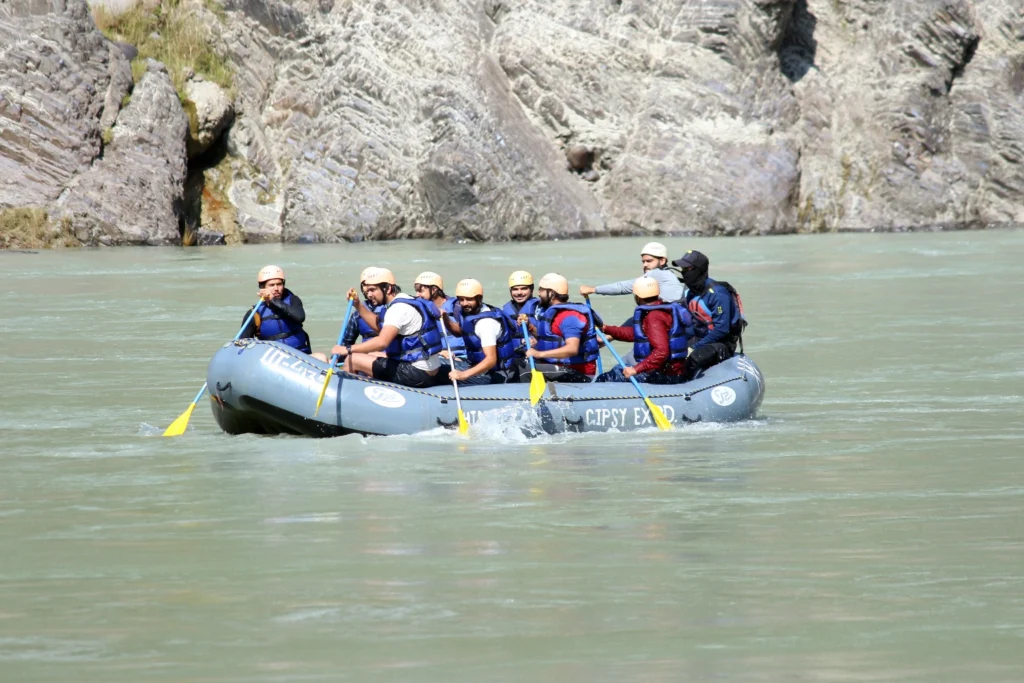
Day 2 shows you the other side of Rishikesh. That calm river you watched during last night’s aarti has been hiding 35 kilometers of rapids just upstream.
Morning: White-Water Rafting on the Ganges
Morning rafting trips are usually the most popular, since the river tends to be calmer and the weather cooler before the day heats up. Most operators run their first departures somewhere around 8–9 AM, but exact reporting times vary, so confirm the schedule when you book rather than assuming.
During our trips, we found the Shivpuri stretch to be the best balance between adventure and duration, which is why it’s also the most popular choice for first-time visitors.
A quick breakdown of the rafting stretches:
- Shivpuri to Rishikesh (16 km) — the most popular choice for first-time visitors. It takes about 2.5–3 hours and offers a good mix of calm river sections and exciting rapids, including well-known stretches like Roller Coaster, Golf Course, and Club House. The exact difficulty on the day depends on the season and river conditions, so ask your operator what to expect.
- Marine Drive to Rishikesh (26 km) — longer and generally more demanding, with additional rapids further along the route. Better suited to people who’ve rafted before.
- Brahmpuri to Rishikesh (9 km) — short and gentle, a good option for complete beginners or families traveling with kids.
On cost: expect ₹600–₹1,200 per person for the Shivpuri stretch, depending on the operator and season. If you want to combine rafting with an overnight camp on the riverbank, that runs closer to ₹2,000–₹3,500.
Book ahead if you can. During peak season (November to February), slots often fill up by early morning — try to lock yours in the night before through your guesthouse or a registered operator directly.
Late Morning: Cliff Jumping and Body Surfing
Once the rafting trip wraps up, most operators will stop at cliff jumping points and body surfing spots on the way back. These are usually included in the package, and they’re worth doing — If your operator includes these activities, they’re worth trying if you’re comfortable in the water.
Cliff jumping means leaping off rock ledges anywhere from 10 to 25 feet into the Ganges. During body surfing, you’ll float through a calmer section of the river wearing a life jacket while the current carries you downstream under your guide’s supervision.
On one trip, our guide held back at a calmer stretch specifically to let the group try body surfing before pulling everyone back into the raft — it’s worth asking your operator whether this is built into the route, since not every group gets offered the stop unless someone asks.
Afternoon: Bungee Jumping, the Giant Swing, or a Zipline (Optional)
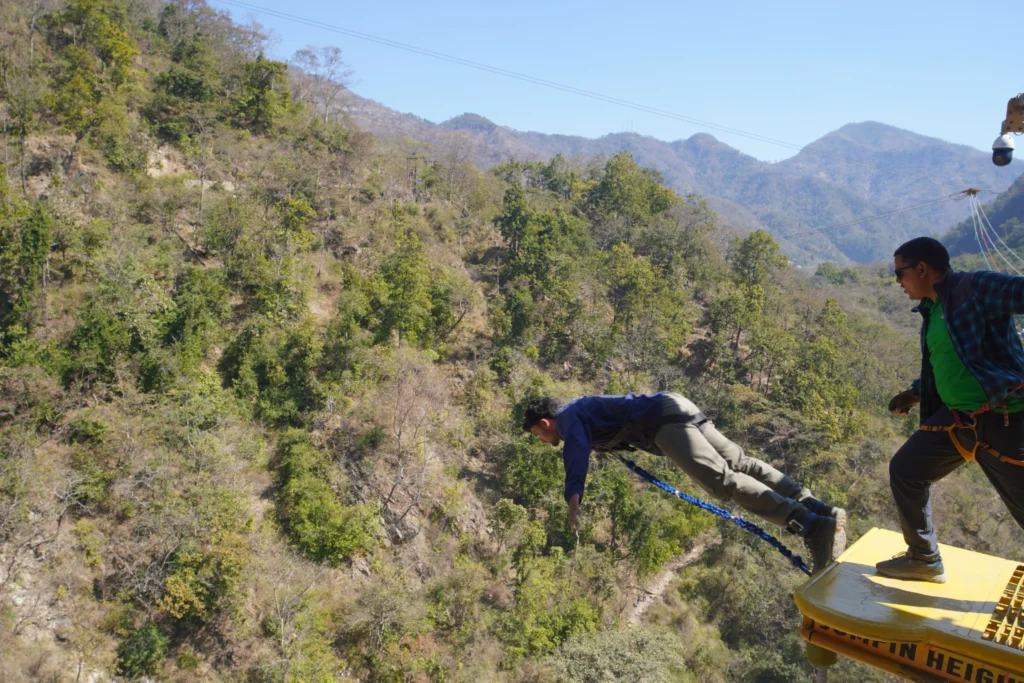
After rafting, we still had enough time to head to Mohan Chatti for bungee jumping. The drive takes around 30–40 minutes from Rishikesh, and by the time we arrived there was already a crowd gathered around the jump platform, cheering every jumper. Even if you’re unsure about taking the leap yourself, it’s a fun place to spend an hour or two.
What’s on offer there:
- Bungee jump — ₹4,500 per person. There’s a weight range: minimum 40 kg, maximum 110 kg.
- Giant Swing — also ₹4,500. Instead of a straight drop, you swing through an arc — plenty of people find this scarier than the bungee.
- Flying Fox (zipline) — ₹2,500, running a full kilometer across a river valley. The gentlest of the three, though still plenty of fun.
Book online ahead of time if you can — walk-ins are possible but slots run thin in peak season. The drive out takes about 30–40 minutes from Rishikesh.
Late Afternoon: The Beatles Ashram (Chaurasi Kutia)
Make your way back into town and over to Chaurasi Kutia, better known as the Beatles Ashram, where the Beatles stayed in 1968 while studying Transcendental Meditation under Maharishi Mahesh Yogi. During their stay, they wrote several songs that later appeared on the White Album.
The ashram was abandoned in the 1990s and has since been turned into an informal art space and heritage site. Today, the old buildings are covered with murals and surrounded by trees, giving the ashram a unique atmosphere that’s very different from most tourist attractions. The domed stone meditation pods where the band once sat for hours are still standing.
Entry costs ₹150 for Indian nationals and ₹600 for foreign visitors. It’s open from 8 AM to 5 PM.
Evening: Cafés and Recovery
You’ll have earned a slow evening by this point. Drift back to the café strip near Laxman Jhula — Café Karma or Devraj Coffee Corner are both good spots to sit on a terrace, watch the bridge, and let the day settle over some chai and something simple to eat.
Day 3: Yoga, a Waterfall, and Heading Out
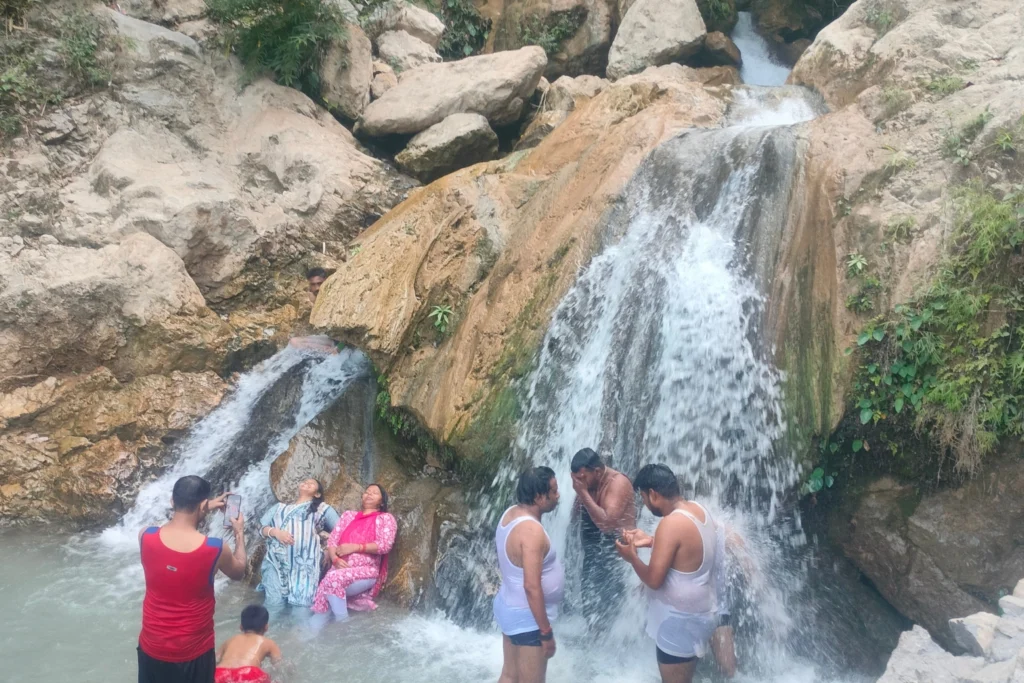
Your last morning is the gentlest of the three — sunrise yoga, a waterfall hike, and an easy checkout.
Sunrise: A Yoga Session
Rishikesh has more yoga on offer than probably any other city in India, so use your last morning to actually sit through a proper session rather than just window-shopping the idea of it. Options range from casual drop-in classes to full ashram immersions.
A few solid choices for a single session:
- Parmarth Niketan Ashram — one of the largest ashrams in India, with morning yoga and meditation classes open to visitors. It’s donation-based or charges a nominal fee, and the setting — right on the Ganges with mountains rising behind it — is hard to beat.
- Yoga Niketan — traditional Hatha yoga taught seriously, in small groups.
- Anand Prakash Ashram — popular with international visitors and welcoming to beginners.
- Rishikesh Yog Peeth — well-organized classes taught in English.
Most sessions start at 6 or 7 AM, so this isn’t the morning to hit snooze.
Morning: Neer Garh Waterfall
After yoga, breakfast, and checkout (or just leaving your bags at the hotel), head out to Neer Garh Waterfall — a 2.5 km trek from the Laxman Jhula area into a forested gorge.
The trail itself is easy, the waterfall drops in stages over smooth rock, and the pool at the bottom is cold enough to fully wake you up. It gets busier as the day goes on, so arrive before 9 AM if you want the place mostly to yourself.
We reached early one morning and found it much quieter than expected — just a handful of other visitors and a lot of birdsong. Along the trail there are a few small stalls selling Maggi and tea, and you’ll pass a couple of smaller cascades before you reach the main waterfall, which are easy to miss if you’re walking fast.
Entry is ₹50 per person, and the walk in takes about 30–40 minutes each way.
If you have a bit more time, Garud Chatti Waterfall sits about 1 km further along the same trail — smaller and quieter, and worth the extra 20 minutes.
Late Morning: Markets and Last-Minute Shopping
On the way back from the waterfall, stop by the Laxman Jhula market for any last purchases. A few things genuinely worth buying here:
- Rudraksha malas — stick to registered shops rather than street stalls.
- Himalayan honey, sold in properly sealed jars — some of the best you’ll find in India.
- Ayurvedic products — beyond the obvious Patanjali options, independent Ayurvedic pharmacies tend to have better quality.
- Yoga clothing and mats, which are priced noticeably better here than almost anywhere else.
If you’re buying rudraksha malas or Ayurvedic products, it’s generally better to shop from established stores rather than temporary roadside stalls — quality and pricing both tend to be more reliable.
Brunch and Departure
Sit down for one last meal before you go. Café Deli near Ram Jhula does excellent wraps and smoothie bowls that hold up well if you’re heading straight to a station. If you’ve got a bit more time, The Sitting Elephant is a nice spot for a slower farewell.
From here, it’s a 6–7 hour drive back to Delhi, or you can cab it to Haridwar (about 45 minutes) and catch a train from there.
Where to Stay
Budget (₹500–₹1,000/night): Hostels and simple guesthouses around Laxman Jhula. Zostel Rishikesh is well-run, social, and about as centrally located as you can get. Bunk Stay and Moustache Hostel are both good alternatives — just book ahead for December and January.
Mid-range (₹1,500–₹3,000/night): Boutique guesthouses in Tapovan, several with mountain views. Look for one with a balcony over the river — the price bump is usually small and the difference in experience is not. Hotel Surya, Ganga Beach Resort, and Divine Ganga Cottage all deliver solid value.
Luxury (₹5,000–₹15,000+/night): Riverside resorts upstream toward Shivpuri. Aloha on the Ganges, Camp Aquaterra, and Taj Rishikesh Resort & Spa stand out. The Taj, which opened in 2019, is genuinely impressive — an 11-acre property built into the hillside above the river.
Rough Budget for 3 Days
| Expense | Budget Trip | Mid-Range Trip |
|---|---|---|
| Accommodation (3 nights) | ₹1,500–₹3,000 | ₹4,500–₹9,000 |
| Food (3 days) | ₹900–₹1,500 | ₹2,000–₹3,500 |
| River rafting (Shivpuri) | ₹600–₹1,000 | ₹1,000–₹1,200 |
| Bungee/activities | Optional, ₹4,500 | ₹4,500-5500 |
| Beatles Ashram entry | ₹150–₹600 | ₹150–₹600 |
| Neer Garh Waterfall | ₹50 | ₹50 |
| Yoga session | ₹200–₹500 | ₹500–₹1,500 |
| Local transport | ₹500–₹800 | ₹800–₹1,500 |
| Shopping | ₹500–₹1,000 | ₹1,000–₹3,000 |
| Total (3 days) | ₹6,000–₹10,000 | ₹12,000–₹20,000 |
What to Pack
- Layers — mornings and evenings run cold from October through February, while afternoons warm up considerably. You’ll need both.
- Swimwear — for rafting, cliff jumping, and the waterfall.
- Quick-dry clothing — you’ll end up wet more than once.
- Comfortable walking shoes — the waterfall trek and the market lanes both reward proper footwear.
- Cash — Most hotels, cafés, and activity operators accept UPI or card payments, but it’s still a good idea to carry some cash for small shops, local transport, temple donations, and roadside stalls.
- Sunscreen — the Himalayan sun at this altitude is stronger than it feels.
- Modest clothing — this is a pilgrimage town, so cover shoulders and knees near temples and ghats.
Mistakes Worth Avoiding
Booking rafting from an unregistered roadside stall. Choose an operator registered with the Uttarakhand Tourism Department. The price difference is usually small, but registered operators follow approved safety standards and use certified equipment.
Underestimating the cold. Even in October, mornings can dip to 10–12°C. Between November and February, nights regularly drop below 5°C. Pack accordingly.
Trying to cram everything into one day. It’s tempting to squeeze rafting, bungee jumping, the Beatles Ashram, yoga, and the waterfall into a single 24-hour stretch. Resist it — you’ll enjoy each of them less. This itinerary spreads things out across three days for a reason.
Showing up on a peak weekend without booking ahead. The Delhi-to-Rishikesh weekend crowd between November and February is enormous. If you’re arriving on a Friday or Saturday, lock in your accommodation, rafting, and bungee slot at least a week in advance.
Ignoring the spiritual side of the town. Rishikesh is a holy city — alcohol is officially banned, meat is hard to find, and loud music near temples or ghats is genuinely disrespectful. Visitors who come purely for the adventure and skip the context end up missing half of what makes the place worth visiting.
Best Time to Visit
Rishikesh is a year-round destination, but your experience can vary significantly depending on the season. Here’s what you can expect throughout the year to help you choose the best time for your trip.
| Months | Conditions | Good to know |
|---|---|---|
| October–February | Clear skies, comfortable days (15–28°C) | The most reliable window for a first visit — all activities run normally, and October/November tend to have fewer crowds than December/January |
| December–January | Cold nights, often below 5°C, but pleasant days | Peak season — book accommodation and rafting well ahead, especially for weekends |
| March–April | Still pleasant, temperatures rising | Pleasant weather with fewer crowds than winter. A great time for rafting, sightseeing, and café hopping. |
| May–June | Hot and increasingly humid | Rafting continues, but daytime temperatures become much hotter. |
| July–September | Monsoon rains, high river levels | Rafting is officially suspended and landslides can affect roads — not recommended for a first visit or adventure-focused trip |
A Few More Travel Tips
- Book rafting ahead of time. In peak season, the good operators fill their morning slots by the evening before. During weekends and holidays, popular operators often fill their preferred morning slots in advance, so booking a day or two earlier is a good idea.
- Skip peak weekends if you can. The Friday-to-Sunday crowd from Delhi floods Rishikesh every weekend between October and February. Arriving Monday through Thursday gets you a calmer, cheaper trip.
- Keep cash on you. ATMs exist but tend to run dry on busy weekends, and most cafés, ashrams, and activity operators are cash-only or strongly prefer it.
- Respect the spiritual zones. Dress modestly near ghats and temples, keep noise down during the aarti, and take your shoes off before entering any temple. These aren’t just suggestions — they matter in a town where religion isn’t for show.
- Consider a scooter for Day 2, if you’re comfortable riding in the hills. Both the Beatles Ashram and the Jumpin Heights bungee site are outside central Rishikesh, and a scooter (₹300–₹500/day) can make the day easier to manage. If hill roads aren’t your thing, autos and taxis are readily available and just as workable.
- Eat vegetarian, and eat well. Rishikesh’s vegetarian food is some of the best in North India. The Garhwali thali, the breakfast spreads at most guesthouses, and the café food along Laxman Jhula are all genuinely good — you won’t spend the trip missing meat.
FAQ
If you’re planning adventure activities like river rafting, avoid visiting during the monsoon (July and August), as rafting is officially suspended because of high river levels. If you prefer cooler weather and fewer crowds, you may also want to avoid peak holiday weekends in December and January, when hotels and attractions are busiest.
Yes, two days are enough to explore Rishikesh’s main attractions, attend the Ganga Aarti, enjoy river rafting, and visit the cafés around Laxman Jhula and Ram Jhula. However, if you also want to attend a yoga session, visit Neer Garh Waterfall, or explore at a slower pace, staying for 3 days is a better option.
Most travelers prefer visiting Haridwar first, especially if they’re arriving by train, as it’s the nearest major railway station. After exploring Har Ki Pauri and attending the Ganga Aarti, you can continue to Rishikesh, which is about 25 km away. If your main interest is yoga, adventure sports, or a relaxed atmosphere, you can also start directly from Rishikesh.
It depends on the kind of trip you’re planning. Rishikesh is ideal for yoga, river rafting, spiritual experiences, cafés, and adventure activities, while Mussoorie is better known for its hill station atmosphere, scenic viewpoints, waterfalls, and pleasant weather. If you enjoy adventure and spirituality, choose Rishikesh. If you’re looking for a relaxing mountain getaway, Mussoorie may be a better fit.
Yes, Geeta Bhawan offers simple accommodation primarily for pilgrims. Rooms are generally available free of charge or for a voluntary donation, but availability depends on demand and the trust’s policies. During peak seasons and festivals, rooms fill up quickly, so it’s best to contact the management in advance if you plan to stay there.
So, Is Three Days Enough?
Three days are enough for most first-time visitors to cover the major attractions, enjoy rafting, attend the Ganga Aarti, and spend some time in the cafés and ashrams. If you prefer a slower pace or plan to join a yoga course, consider extending your stay to four or five days.
A few reasons you might want the extra time:
- A multi-day river camp, combining rafting with a night camping on the Ganges bank
- A day trip to Haridwar (45 minutes away) for the Har Ki Pauri aarti, the largest of its kind in India
- A visit to Neelkanth Mahadev Temple, 32 km into the jungle and one of the most important Shiva temples in the Himalayan region
- The trek up to Kunjapuri Temple for a sunrise view over the Himalayas (early start, about 2 hours each way)
- A full yoga course instead of a single drop-in class