

One of the biggest mistakes first-time Goa travellers make is booking the wrong side of the state.
North Goa and South Goa are technically the same destination on a map, but they offer completely different holidays — and picking the wrong one can leave you either bored out of a party town or exhausted in a place you came to relax.
This guide compares both sides on budget, beaches, nightlife, crowds, and who each one actually suits, so you can decide based on your travel style rather than guesswork.
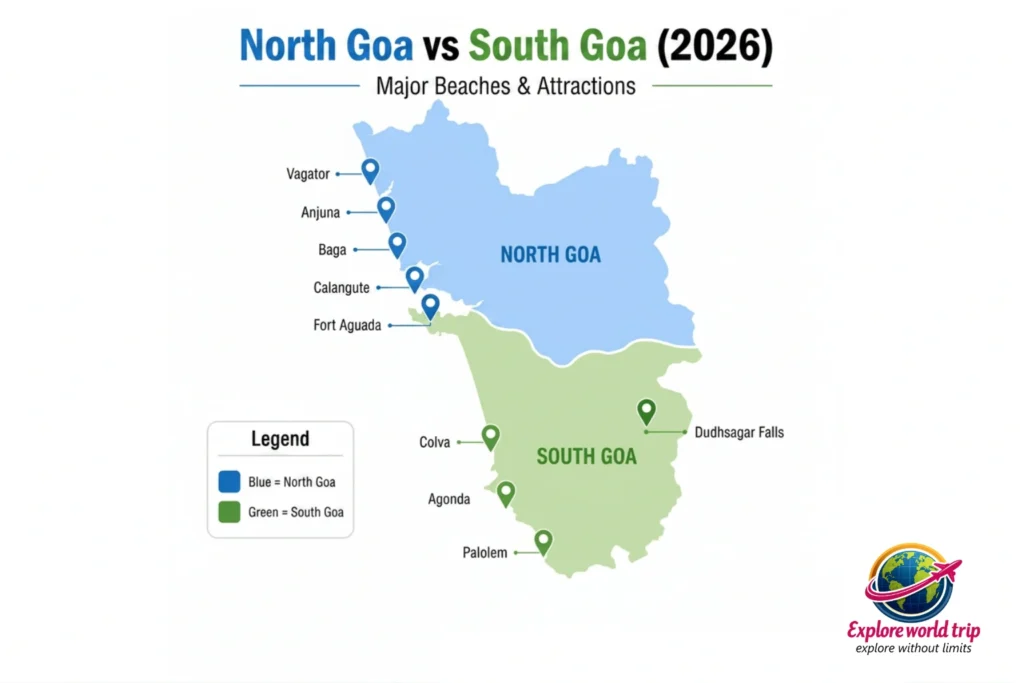
At a Glance: North vs South Goa
Short on time? Here’s the whole comparison in one table.
| Factor | North Goa | South Goa |
|---|---|---|
| Vibe | Party & energetic | Calm & luxurious |
| Budget (per day) | ₹1,500–₹3,000 | ₹3,000–₹8,000 |
| Best for | Friends, solo travellers, nightlife | Couples, families, wellness |
| Beaches | Busy & social | Pristine & uncrowded |
| Nightlife | Excellent | Minimal |
| Accommodation | Hostels, guesthouses | Resorts, boutique villas |
| First trip? | Highly recommended | Better for a second visit |
| Honeymoon? | Not ideal | Perfect |
If you want the reasoning behind the table, keep reading.
Why Visit North Goa?

For most first-time visitors, North Goa feels like the Goa they’ve already seen in movies and on Instagram — jet skis at Baga, vendors weaving between sunbathers at Calangute, and clubs on Tito’s Lane that don’t really get going until midnight.
There’s almost always something happening after sunset, which is part of why it works so well as an introduction to the state.
It also happens to be the most accessible and affordable part of Goa, which is why it’s usually the better fit for a first trip if you’re working with a tighter budget.
What You’ll Actually Do in North Goa
Most days here follow a similar rhythm: mornings at one of the main beaches, an afternoon spent exploring nearby forts or markets, and evenings that stretch into the night. If you want the full rundown of options, our Best Beaches in Goa guide covers each one in more detail.
- Baga & Calangute Beach — busy, but worth it for the energy and the sheer number of beach shacks to choose from
- Anjuna Flea Market — runs every Wednesday; a proper open-air market that pulls travellers in from across Goa
- Fort Aguada — a well-preserved 17th-century Portuguese fort with sea views, easy to reach by scooter
- Tito’s Lane & Club Cubana — India’s best-known nightlife strip
- Water sports at Baga — jet ski, parasailing, banana boats, scuba, kayaking, all within a short walk of each other. Prices usually drop if you book two or more activities as a package, rather than one at a time
- Vagator & Chapora Fort — quieter, with cliff views that are especially good at sunset
- Arambol Beach — a more laid-back, bohemian stretch popular with long-stay travellers
Who it suits:
- First-timers who want to see everything
- Groups of friends on a ₹1,500–₹3,000/day budget
- Solo travellers who want to meet people without trying too hard
- Anyone who wants nightlife, water sports, or street food
💡 Local tip: Avoid the Baga–Calangute beach road on weekends in peak season (December–January); traffic can add 45 minutes to a short trip. Go early morning or after 9 PM instead. Parking near Calangute also fills up fast after 11 AM on weekends, so factor that in if you’re on a scooter.
Why Visit South Goa?
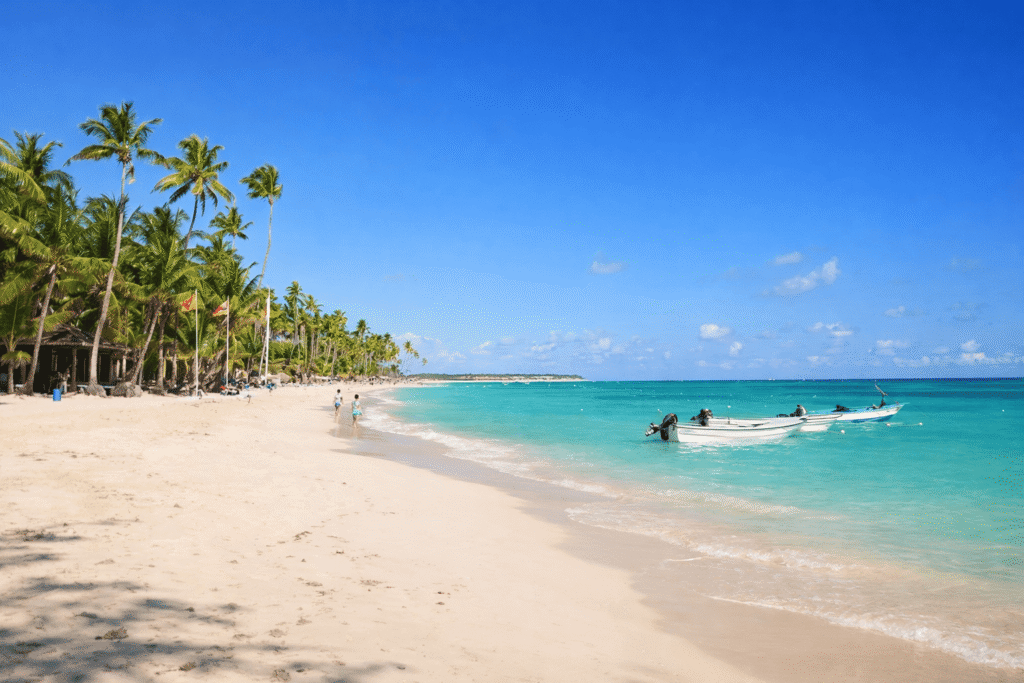
The drive south feels different almost immediately — fewer vehicles, thicker palm cover, and then Palolem Beach shows up, curved like a crescent. People plan two nights here and regularly end up staying two weeks.
South Goa isn’t just “North Goa but quieter.” It has its own identity: some of Asia’s cleanest beaches, genuinely good resorts, and jungle waterfalls that are worth the drive on their own.
If you’re coming from a busier trip up north — or planning to skip North Goa altogether — this is the side that actually gives you something to disconnect into.
What you’ll actually do here:
- Palolem Beach — calm water, good for kayaking and early morning walks
- Agonda Beach — wide, clean, largely undeveloped, and regularly rated among Asia’s best
- Dudhsagar Falls — a 310-metre, four-tiered waterfall in the Western Ghats. If you’re going, leave as early as you can (6–7 AM); it gets crowded and hot later in the day
- Dolphin-spotting cruises — morning boat trips out of Palolem that reliably deliver; spinner dolphins are common
- The Leela & Park Hyatt Goa — two of India’s better beach resorts, both on the Cavelossim stretch
- Yoga retreats & Ayurvedic spas — everything from a single massage to a week-long detox
- Basilica of Bom Jesus, Old Goa — a UNESCO World Heritage church holding the remains of St. Francis Xavier
Who it suits:
- Honeymooners and couples wanting privacy
- Families who want clean, safe, uncrowded beaches
- Repeat visitors who’ve already done North Goa and want something different
- Anyone willing to spend more for actual quiet
💡 Local tip: Agonda has no ATMs and patchy mobile coverage in places — carry cash and download offline maps before you head out.
Which Goa Is Best for Different Travellers?
The honest answer to “North or South?” usually depends less on the destination and more on who you’re travelling with. A honeymoon couple and a group of college friends could ask the exact same question and get opposite answers — and both would be right.
If you’re planning a honeymoon, South Goa’s privacy and resort culture will suit you far more than North Goa’s crowds. If you’re travelling with parents or young kids, the calmer beaches and lower noise levels in the south also tend to work better than North Goa’s packed shacks.
On the other hand, if you’re on a bike trip with friends or travelling solo and want to meet people along the way, North Goa’s density of hostels, markets, and nightlife does a lot of that work for you automatically.
| Traveller type | Best choice |
|---|---|
| First-time visitors | North Goa |
| Couples | South Goa |
| Honeymoon | South Goa |
| Solo travellers | North Goa |
| Friends / bike trips | North Goa |
| Families | South Goa |
| Budget travellers | North Goa |
| Luxury travellers | South Goa |
North Goa vs South Goa: 7 Differences That Actually Matter
Beyond “party vs peaceful,” there are a few concrete differences worth knowing before you book — the kind that don’t show up until you’re already there and it’s too late to change plans.
1. Atmosphere North Goa runs loud from morning to late night — music from the shacks, bike taxis cutting through market lanes, strangers turning into friends over dinner. South Goa is the opposite: same sea, but you’ll notice the waves because there’s nothing else competing for your attention.
2. Beaches North Goa’s beaches double as social spaces — Baga has vendors, watersport operators, and shacks packed close enough that you don’t need to move all day. South Goa’s Palolem and Agonda are a different kind of beach: long, clean, and mostly empty. Palolem has enough facilities to be comfortable; Agonda deliberately has almost none.
3. Budget North Goa is genuinely cheap to travel in — a clean dorm bed from ₹500, a decent guesthouse around ₹1,200, and a full day’s food for ₹300–₹500. South Goa starts higher: most decent stays begin around ₹2,500, and the resorts the area is known for start at ₹5,000 a night.
4. Nightlife Tito’s, Mambo’s, Club Cubana, LPK Waterfront — North Goa’s nightlife circuit is one of the best in the country, active every night of the week. In South Goa, “nightlife” is usually a quiet dinner by the shore with the lights out by 10 PM.
5. Crowds In North Goa, other travellers are part of the experience — you’ll meet people at the hostel, on the beach, at the Wednesday flea market. South Goa attracts people who want the opposite: space and anonymity.
6. Activities North Goa is built around entertainment — jet skiing, parasailing, quad biking, scuba diving, club hopping. South Goa is built around slowing down — dawn kayaking, dolphin spotting, yoga, a waterfall trek, an Ayurvedic massage.
7. Accommodation North Goa runs from ₹500 dorms to ₹3,000 guesthouses. South Goa runs from ₹2,500 beach huts to ₹20,000 resort suites. If you want to wake up in a private villa a short walk from an empty beach, South Goa delivers it — at a price.
Which One Should You Choose?
Go to North Goa if:
- It’s your first trip and you want the full experience
- You’re travelling with friends
- You’re working with ₹1,500–₹3,000 a day
- You want water sports, nightlife, and market culture
- You like the easy social pace of hostel travel
Go to South Goa if:
- It’s a honeymoon, anniversary, or romantic trip
- Clean, uncrowded beaches are non-negotiable
- You want a resort with a private pool
- You’ve already done North Goa and want something different
- Rest is the actual point of the trip
Or do both. Three nights in North Goa, then two to three in South Goa is how most experienced Goa travellers plan it — energy first, then a proper wind-down, so you leave rested instead of wiped out.
2026 Budget Breakdown
Prices below are estimates for 2026 peak season (November–February), based on average hotel rates and local taxi fares observed during the season. Shoulder season (October, March) typically runs 30–50% cheaper.
| Expense | North Goa | South Goa |
|---|---|---|
| Budget stay (per night) | ₹500–₹1,200 | ₹1,500–₹3,000 |
| Mid-range stay | ₹1,200–₹3,000 | ₹3,000–₹8,000 |
| Luxury stay | ₹3,000–₹6,000 | ₹8,000–₹20,000+ |
| Food (per day) | ₹300–₹700 | ₹600–₹1,500 |
| Activities | ₹300–₹1,500 | ₹500–₹2,000 |
| Transport | ₹200–₹500 | ₹300–₹800 |
| Total per day | ₹1,500–₹3,000 | ₹3,000–₹8,000 |
Many travellers rent a scooter for getting around, since public transport between beaches is limited. During Christmas and New Year, hotels on both sides book up fast, so it’s worth reserving well in advance.
When to Visit Goa in 2026
November–February (peak season) — the classic window. Low humidity, 28–32°C, everything open. Christmas and New Year have a real festive buzz, but hotels near Baga and Palolem tend to get fully booked weeks in advance for this stretch. If you’re travelling over that period, booking early usually gets you both a better rate and more choice of stay — leaving it late means picking from whatever’s left.
October & March (shoulder season) — the smarter window. Prices drop 30–50%, beaches are noticeably quieter, and the weather still holds up. October is especially green after the monsoon, though some shacks haven’t fully reopened until mid-month.
April–May (hot season) — past 35°C with heavy humidity. Doable if budget is the priority and you’re happy spending most of the day in the water or indoors.
June–September (monsoon) — most shacks and resorts shut. The sea gets rough and swimming isn’t safe. Waterfalls are at full flow and the forests turn lush, but this isn’t a beach holiday — go only if you’re after photography or genuine solitude.
A 5-Day Goa Itinerary (Both Regions)
This assumes you’re flying into Dabolim or Mopa and want to see both sides. If you’ve only got 3–4 days, drop the Arambol detour on Day 3 — or check our 4-day Goa itinerary for a version built specifically around a shorter trip.
Day 1–2 — North Goa Base yourself near Baga or Calangute — a guesthouse one street back from the beach usually gives better value. Day 1 evening, walk Baga at golden hour and have dinner at a shack (get the fish thali). Day 2, try at least the jet ski at Baga in the morning — book a package for better rates — then Fort Aguada in the afternoon, and Tito’s Lane in the evening (go before 11 PM if you want to skip the queues).
Day 3 — North Goa, the quieter side Anjuna Flea Market runs Wednesdays only — get there by 10 AM before it fills up, and don’t be shy about negotiating. In the afternoon, rent a scooter and head to Arambol; it’s a noticeably slower, more artistic scene. Catch sunset at Vagator or Chapora Fort, then dinner at one of Vagator’s rooftop places.
Day 4 — Moving south Hire a cab or self-drive to Palolem — around 1.5 hours, and a pretty drive worth relaxing into. Check into a beach hut or guesthouse right on the shore. In the afternoon, kayak the bay or book a dolphin cruise (reserve the 7 AM slot a day ahead). In the evening, sunset yoga and a seafood dinner on the sand.
Day 5 — Waterfall and heritage Leave as early as possible — 6–7 AM — for Dudhsagar Falls by jeep; budget at least 4 hours round trip since it gets busy later. In the early afternoon, Agonda Beach — no shacks, no vendors, just the beach. Mid-afternoon, the Basilica of Bom Jesus in Old Goa, a 16th-century site worth taking slowly. If you have time, a spice plantation tour near Ponda is a good add-on. Depart in the evening, or — like most people end up doing — add a third night in the south.
Safety: What You Actually Need to Know
North Goa is well-policed and tourist-friendly, but the high foot traffic means valuables are safer left at your accommodation than on the beach. Areas around Tito’s Lane are generally fine but can get rowdy in the early hours — keep an eye on your drinks. Solo female travellers are common here and it’s generally safe with normal precautions.
South Goa’s quieter setting means lower petty crime overall, and resorts typically run 24/7 security. The real thing to plan for is infrastructure — remote beaches like Agonda have no ATMs, patchy signal, and limited late-night transport.
FAQ
It depends on your travel style. South Goa suits peace, clean beaches, and a relaxed pace. North Goa suits nightlife, water sports, and a livelier atmosphere. Neither is objectively “better” — it’s about what you’re after.
It has more budget hotels, hostels, and cheap food options. South Goa costs more because of its resorts and fewer budget stays.
Palolem Beach — scenic and balanced, best overall pick
Colva Beach — popular and easy to access
Benaulim — peaceful and less crowded
Agonda Beach — quiet, best for pure relaxation
North Goa. It’s one of the most popular beaches there, known for nightlife, clubs, and water sports.
Final Verdict
If this is your first Goa trip, stay in North Goa for 2–3 days — you’ll get more attractions, nightlife, and budget-friendly options in a short time.
If you’d rather have peaceful beaches and a proper resort stay, go south instead. And if your schedule allows it, splitting the trip between both gives you the fullest picture of what Goa actually is.
Goa is small enough that you genuinely don’t have to choose one over the other.
Last updated: March 2026 — All prices and recommendations reflect current conditions