
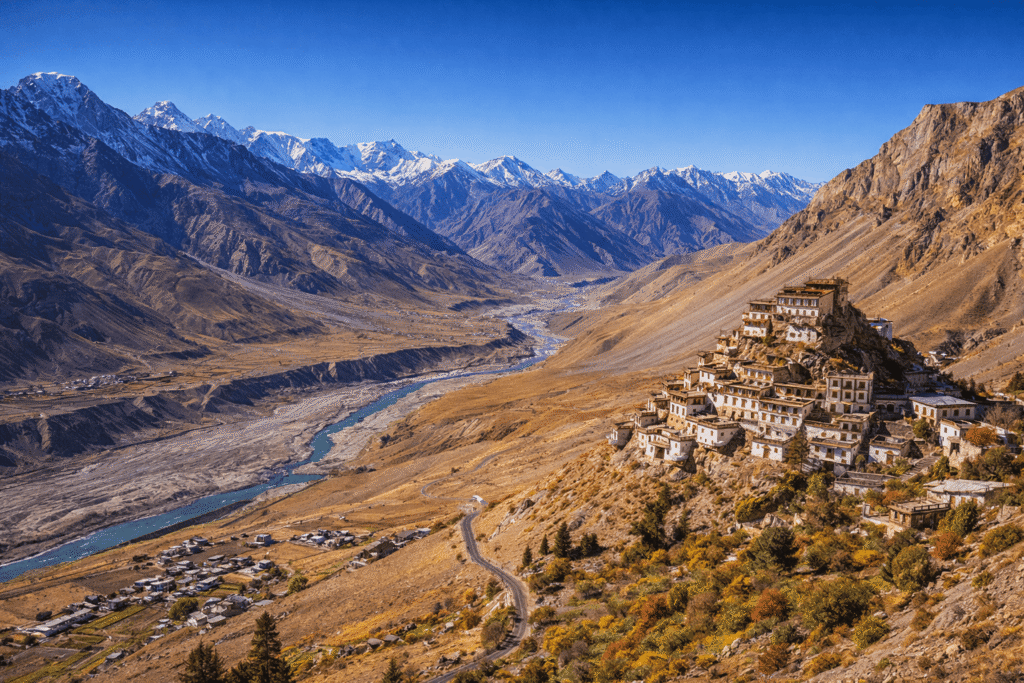
Heavenly places in India you must visit are scattered across a land so vast and varied that no single journey can do it justice.
From the snow-draped peaks of the Himalayas to the sun-kissed shores of the Andaman Sea, India holds within its borders some of the most awe-inspiring landscapes on the planet.
India’s diversity is extraordinary. Yet most travel articles barely scratch the surface. They name famous destinations and move on. They rarely explain what makes a place truly special.
Best times to visit go unmentioned. Getting there is left unexplained. What a traveler actually experiences on the ground is ignored.
This guide goes deeper, giving you real, practical insight into six of the most magical destinations India has to offer.
Kashmir Valley, Jammu & Kashmir
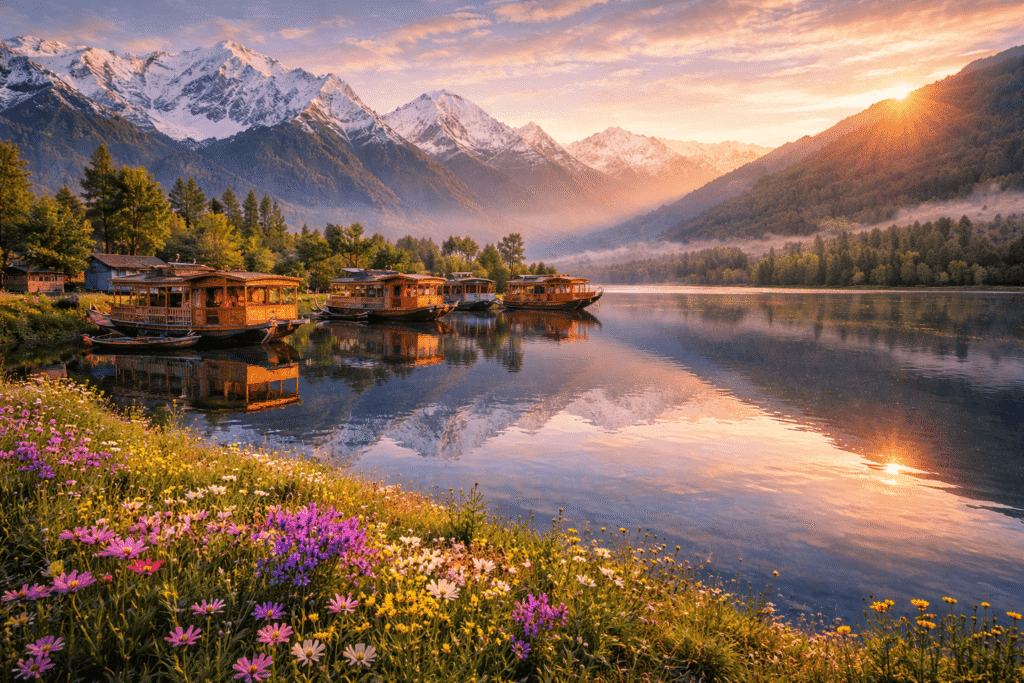
Often called “Paradise on Earth,” Kashmir Valley sits cradled between the towering ranges of the Himalayas and the Pir Panjal, and the description is not an exaggeration.
The valley stretches across roughly 135 kilometers, filled with pristine rivers, wildflower meadows, and centuries-old Mughal gardens that burst into color every spring.
Dal Lake sits at the heart of Kashmir’s charm. Take a shikara ride at dawn. The lake is wrapped in mist at that hour. Local vendors paddle quietly past.
They sell fresh lotus roots and saffron. It is a rare kind of travel moment. It stays with you for years.
Staying on a traditional houseboat overnight is a deeply immersive experience that no hotel can replicate.
Beyond the lake, the meadows of Gulmarg, Pahalgam, and Sonamarg each deserve at least a full day.
Gulmarg is home to one of the highest cable cars in the world, lifting visitors to Apharwat Peak at nearly 4,000 meters for panoramic views of the surrounding snowfields.
Pahalgam, meanwhile, is the gateway to the Amarnath pilgrimage trail and offers gentler walks through pine forests and alongside the Lidder River.
Best time to visit: April to October.
How to get there: Fly into Srinagar, well connected from Delhi and Mumbai.
Pangong Lake, Ladakh
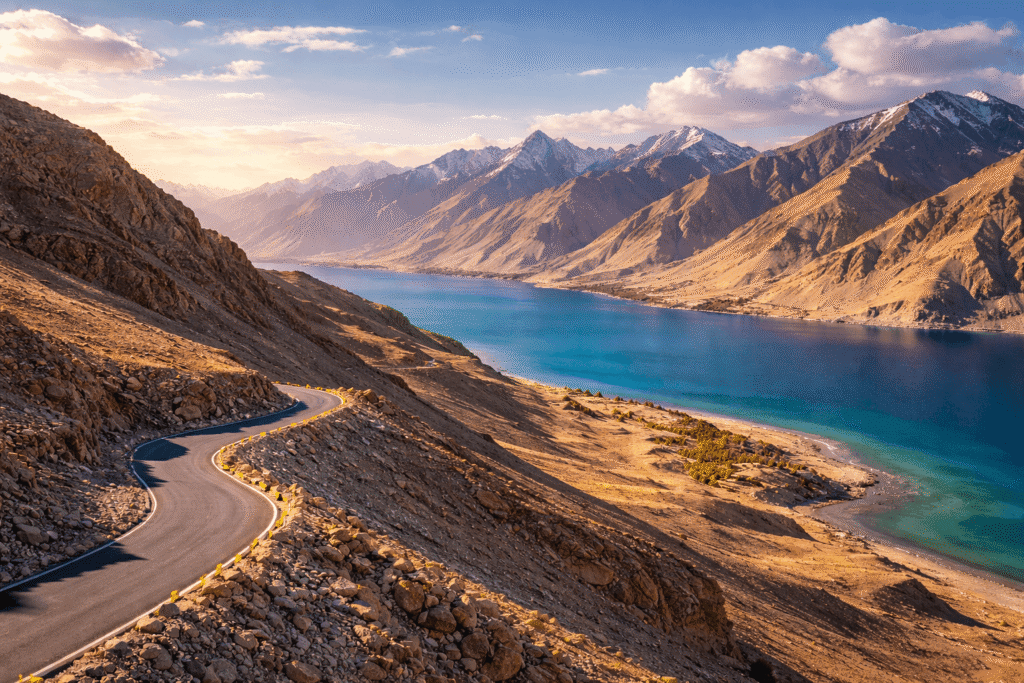
Few landscapes in the world match the surreal beauty of Pangong Lake. Sitting at an altitude of over 4,350 meters, this 134-kilometer-long lake straddles the border between India and China, with roughly 60% of it lying on the Chinese side.
The lake changes color throughout the day. In the morning it gleams turquoise. By noon the water turns deep sapphire.
At dusk it shifts to violet. Bare, rust-colored mountains surround it. Not a single tree or shrub is in sight. The contrast is visually extraordinary.
The silence at Pangong is almost physical. There are no trees, very few settlements, and the thin air keeps most casual tourists from staying long. That very remoteness, however, is what makes it so extraordinary.
Camping on the banks under a sky full of stars, with temperatures dropping sharply after sunset, is an experience that belongs to a different world entirely.
Many visitors also combine Pangong with a visit to the nearby Nubra Valley, where sand dunes sit improbably beside a glacial river, and double-humped Bactrian camels graze between the mountains.
The drive from Leh to Pangong via Chang La pass — the third-highest motorable road in the world — is itself an unforgettable journey.
Best time to visit: May to September.
How to get there: Fly into Leh from Delhi or Srinagar; hire a taxi for the 5-hour drive to Pangong.
Valley of Flowers, Uttarakhand
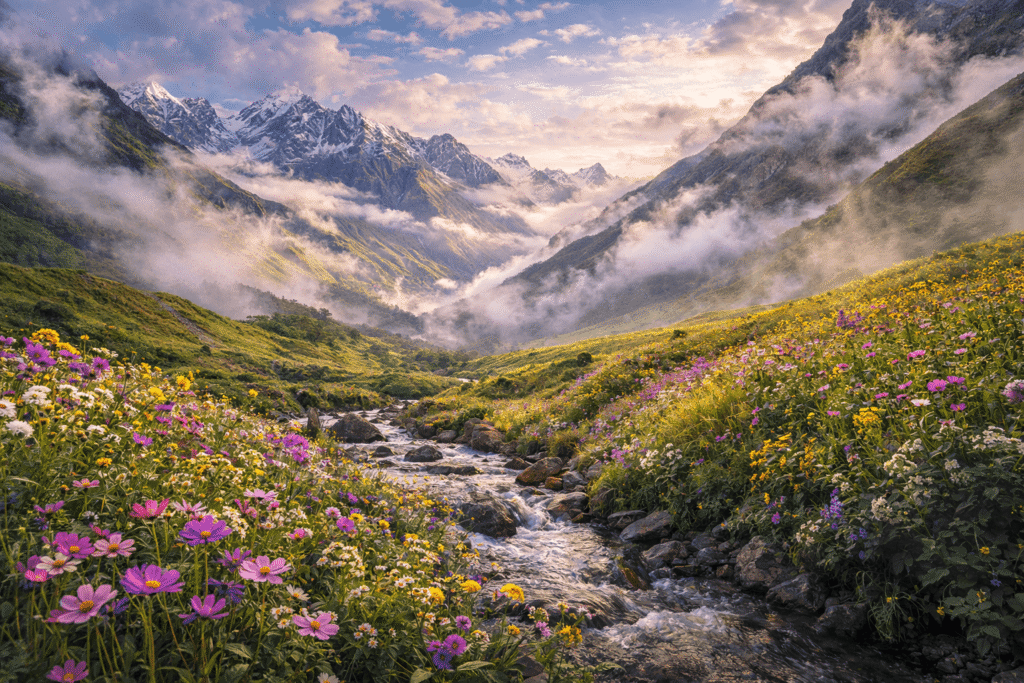
The Valley of Flowers National Park is one of the few places in the world where the phrase “carpet of wildflowers” is not a metaphor — it is a literal description of what you see.
Every monsoon season the valley transforms. This happens between July and September. Over 300 species of alpine flowers bloom here.
The valley covers 87 square kilometers. Red, yellow, purple, and white spread across the landscape. Furthermore, different species bloom and fade each week. The canvas shifts constantly throughout the season.
Designated a UNESCO World Heritage Site in 2005, the valley sits at an elevation of around 3,658 meters in the Chamoli district of Uttarakhand.
The trek to reach it passes through the ancient pilgrimage town of Govindghat and the village of Ghangaria, and takes two to three days depending on your pace.
Along the way, you cross glacial streams, pass through dense forests of birch and rhododendron, and gain altitude with every step.
The valley is a habitat for rare Himalayan fauna as well. Snow leopards, blue sheep, and Himalayan brown bears inhabit the surrounding higher ranges, and birdwatchers regularly spot species like the Himalayan monal and lammergeier.
Unlike crowded hill stations, moreover, the Valley of Flowers receives a relatively modest number of visitors due to the effort required to reach it — which keeps the experience intimate and unspoiled.
Best time to visit: July to September during bloom season.
How to get there: Train or bus to Rishikesh or Haridwar, then road to Govindghat, then trek.
Munnar, Kerala
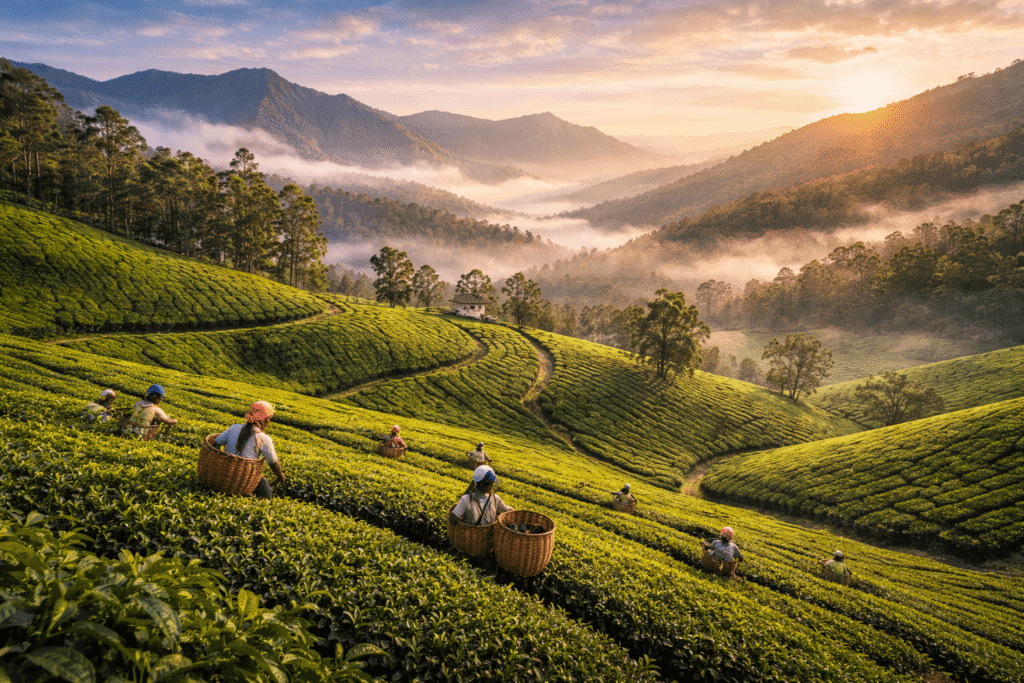
Munnar sits at 1,600 meters in Kerala’s Western Ghats. Green hills roll in every direction. Neat tea bushes cover almost every slope. A waterfall breaks the view here and there.
Mist clings to the peaks. Small plantation bungalows dot the hillsides. The landscape feels both wild and oddly ordered at once.
The tea plantations date back to the 1880s. They were established during British colonial rule. Many estates are still working today.
You can walk through the neat rows of plants. Watch pickers move with practiced, effortless speed. Small factories sit within the estates. Inside, leaves are processed, dried, and sorted. It turns a pretty landscape into a living story.
Beyond tea, Munnar also offers serious wildlife experiences.
Eravikulam National Park, just 15 kilometers from the town center, is the last significant habitat of the critically endangered Nilgiri tahr, a mountain goat unique to the Western Ghats.
The Mattupetty Dam and Echo Point offer quieter, more contemplative walks, while Attukad Waterfalls provides a dramatic natural spectacle after heavy monsoon rains.
In addition, the climate in Munnar is cool and refreshing year-round, rarely climbing above 20°C, making it a particularly popular escape from the heat of the Kerala plains during summer months.
Best time to visit: September to March.
How to get there: Nearest airport is Cochin International, about 110 km away.
Andaman Islands
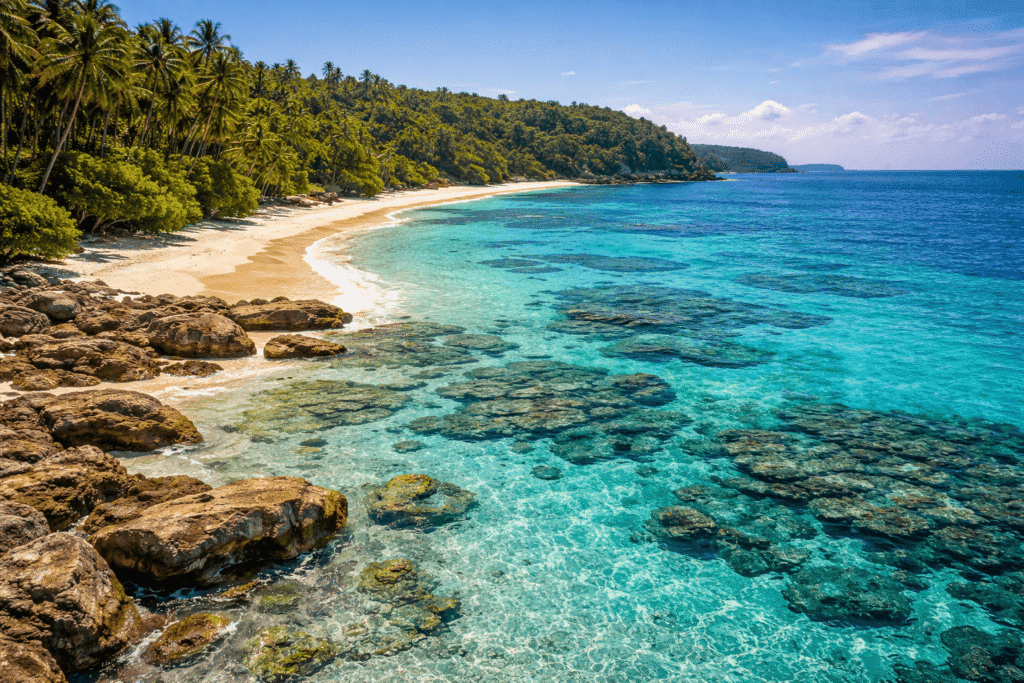
The Andaman Islands are a side of India most people never know exists. They sit in the Bay of Bengal. The mainland is over 1,200 kilometers away. The archipelago contains more than 500 islands.
The marine ecosystems here are among Asia’s most pristine. Coral reefs spread beneath the surface. Mangrove forests line the shores. The beaches, similarly, rival anything in Southeast Asia.
Radhanagar Beach on Havelock Island (now officially renamed Swaraj Dweep) has been repeatedly named among the most beautiful beaches in Asia, and the praise is deserved.
The water is a clear, pale turquoise. The sand is fine and white. The beach stretches for nearly two kilometers. Dense forest lines the shore behind it. Sunsets here are spectacular. The sky turns amber and deep red. The horizon is completely unobstructed.
For those willing to go beneath the surface, the snorkeling and scuba diving around Havelock and Neil Island offer encounters with sea turtles, reef sharks, manta rays, and countless species of tropical fish.
Underwater visibility regularly exceeds 20 meters. The Andamans carry deep historical weight too. Cellular Jail stands in Port Blair. The British once imprisoned Indian independence fighters here. It is a sobering place to visit. It is also an important one.
The relatively limited tourism infrastructure on many of the outer islands — combined with strict permit requirements for tribal areas — means large parts of the Andamans remain genuinely untouched.
Best time to visit: October to May.
How to get there: Fly into Port Blair from Chennai, Kolkata, or Delhi.
Tawang, Arunachal Pradesh
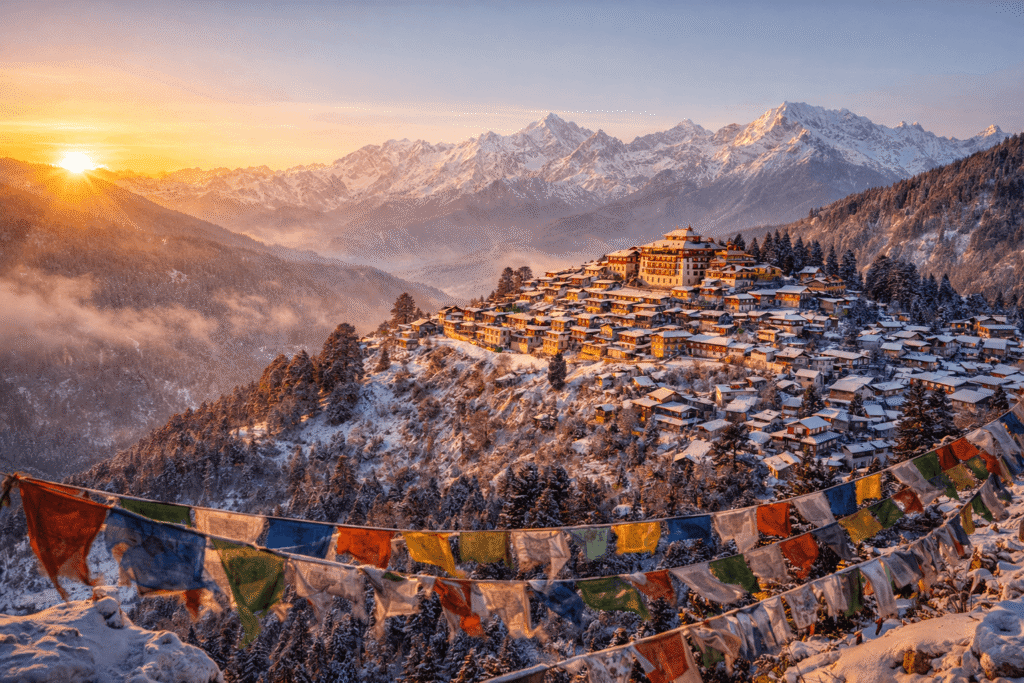
Tawang is perhaps the least visited destination on this list, and that is precisely what makes it so rewarding.
Tawang sits at over 3,000 meters above sea level. It lies in the far northwestern corner of Arunachal Pradesh. Bhutan and China border it on either side. Buddhist culture runs deep here.
The mountain scenery is dramatic at every turn. The sense of remoteness is almost overwhelming. Very few places in India feel quite like this.
The Tawang Monastery, founded in the 17th century, is the largest Buddhist monastery in India and the second largest in the world after Potala Palace in Lhasa.
The main prayer hall houses a towering gilded Buddha. At dawn, monks gather to chant. The sound stays with you long after you leave. Smaller gompas dot the surrounding hills. Each one, notably, offers its own quiet and stillness.
The journey to Tawang is itself an event. The road from Tezpur crosses the Sela Pass at 4,170 meters, where a high-altitude lake sits frozen for much of the year beside a small war memorial honoring soldiers from the 1962 Sino-Indian War.
The views across the valleys and ridgelines as you descend toward Tawang are furthermore, among the most dramatic in Northeast India.
Best time to visit: March to October; avoid the monsoon for road safety.
How to get there: Fly to Tezpur or Guwahati, then a long but scenic road journey.
FAQ
Kashmir Valley is most famously called “Paradise on Earth.” The phrase has been used for centuries, attributed to Mughal Emperor Jehangir. Its snow-capped mountains, Dal Lake, saffron fields, and Mughal gardens are the reason for this title. Gulmarg and Pahalgam are also sometimes referred to as heavenly spots within Kashmir.
Agra (home to the Taj Mahal) is consistently ranked India’s top tourist destination by international visitor numbers. The Taj Mahal alone draws 7–8 million visitors annually. Other top contenders include Delhi, Jaipur, Goa, and Varanasi depending on the ranking source.
Tawang, Arunachal Pradesh is considered one of the rarest and least visited places. Other strong contenders include:
Dzukou Valley, Nagaland — hidden valley of seasonal flowers
Gurudongmar Lake, Sikkim — one of the world’s highest lakes at 5,183 metres
Majuli Island, Assam — world’s largest river island, a disappearing landmass
Barren Island, Andaman — India’s only active volcano, accessible to very few
These are widely recognised as India’s seven most iconic landmarks:
1- Taj Mahal Agra, Uttar Pradesh
2- Nalanda University Ruins Bihar
3- Konark Sun Temple Odisha
4- Khajuraho Temples Madhya Pradesh
5- Red Fort Delhi
6- Hampi Ruins Karnataka
7- Kaziranga National Park Assam
Conclusion
Heavenly places in India you must visit are not just destinations — they are experiences that fundamentally shift the way you see the natural world.
India’s geography is extraordinarily diverse. You can stand beside a colour-changing lake on a high plateau. Walk through a valley full of wildflowers. Dive into crystal-clear tropical waters.
Sit inside a centuries-old Buddhist monastery above the clouds. All of this is within a single country.
What ties all of these places together is not just their beauty, but the depth of experience they offer to travelers willing to look beyond the surface.
Plan well, go with curiosity, and these destinations will give you far more than photographs — they will give you memories that last a lifetime.