
Backpacking Himachal Pradesh is one of the cheapest ways to explore the Himalayas. With HRTC buses, budget hostels, and local dhabas, most travellers can comfortably get by on ₹700–₹1,000 a day.
This guide covers real costs, the best backpacking routes, cheap places to stay, transport tips, safety notes, a packing checklist, and a practical 10-day itinerary you can actually follow.
Quick Answer: Daily Backpacking Budget
| Expense | Cost (₹/day) |
|---|---|
| Stay | 150–400 |
| Food | 150–300 |
| Transport | 50–200 |
| Miscellaneous | 50–150 |
| Total | ₹550–₹850 (₹700 is a comfortable average) |
Full breakdown of what this actually buys you is below.
Why Himachal Works for Budget Travelers
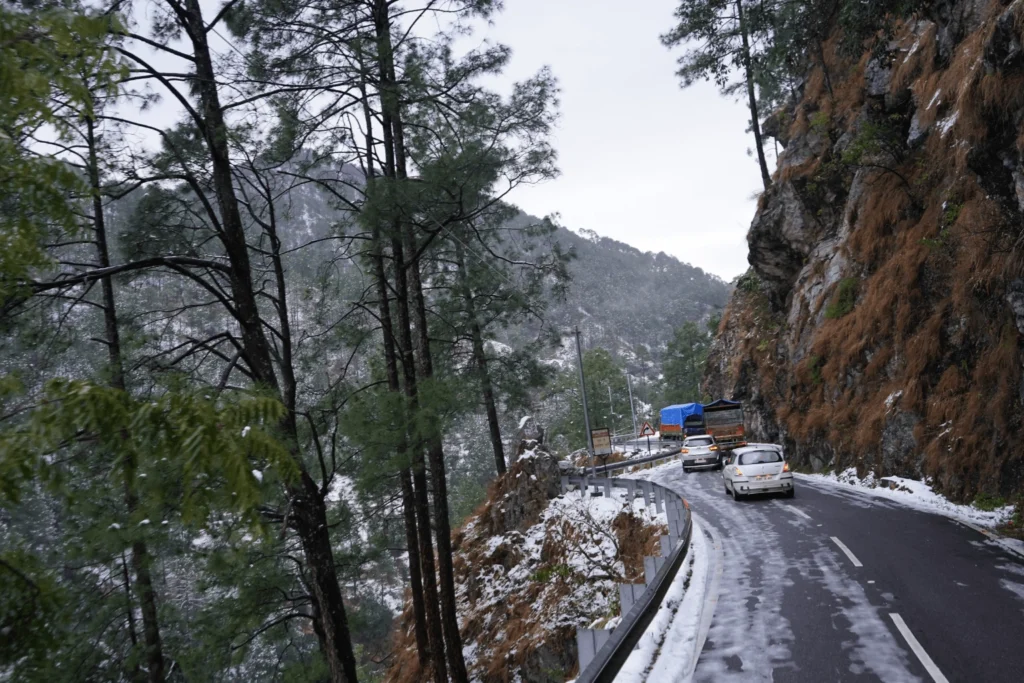
Most budget destinations in India reward speed — get in, see the thing, move on. Himachal rewards the opposite. The state’s thirty-plus districts each have their own microclimate, dialect, and character.
The Parvati Valley feels nothing like Spiti. Kinnaur feels nothing like either. Slow travel here isn’t a lifestyle choice; it’s the only logical response to a place this layered.
The infrastructure has caught up with that reality. Budget hostels now operate in Kasol, Manali, Dharamshala, and Kaza. The HRTC bus network, while slow, reaches places that would cost ten times more to access by taxi.
Food is filling, honest, and priced for locals — a ₹100 thali in a dhaba next to a bus stand will outperform a ₹400 café meal every time, in quantity, usually in quality, and always in the conversation it starts.
Breaking Down the Budget
Accommodation: ₹150–₹400 per night
Dormitory beds in established hostels — Kasol, Old Manali, McLeod Ganj, Kaza — run ₹250–₹400 and usually include Wi-Fi, lockers, and a common kitchen.
Village guesthouses in Tosh, Kheerganga, Chitkul, and the Spiti villages charge ₹150–₹250, often with a home-cooked dinner thrown in — which is its own category of experience.
HP Forest Rest Houses are the best-kept secret in this price bracket: ₹100–₹200 a night, bookable through the state Forest Department, and often in locations no private guesthouse can match.
In the off-season — November through March in lower Himachal, and outside the July–September window in Spiti — even mid-range properties drop their rates substantially. Always ask.
Food: ₹150–₹300 per day
A dal-sabji-rice-roti thali at a dhaba costs ₹80–₹120. Maggi and chai at a mountain stall runs ₹50–₹70. Tibetan food — thukpa, momos, tingmo — in McLeod Ganj or Kaza sits at ₹60–₹120. These aren’t compromise meals. They’re what people here actually eat, and they’ll keep you hiking all day.
The cafés in Kasol and Old Manali are a genuine splurge at ₹150–₹300 a meal, but worth it once in a while for the slow morning and the view. Budget ₹200/day eating local and you’ll eat well. Budget ₹300 and you’ll eat very well.
Transport: ₹50–₹200 per day, averaged
This is where Himachal genuinely separates itself. HRTC ordinary buses connect the state comprehensively for almost nothing — ₹20–₹150 per journey depending on distance.
The overnight Volvo from Chandigarh to Manali costs ₹600–₹700 but covers 300 kilometres while you sleep. Shared jeeps fill the gaps in remote areas like upper Spiti and Kinnaur at ₹50–₹150 per seat.
If you plan your route around bus connectivity rather than convenience, your transport average over ten days will come in well under ₹150/day. (If you’re routing through Delhi first, our Delhi to Manali and Delhi to Shimla guides cover the first leg in detail.)
Miscellaneous: ₹50–₹150 per day
This covers data (buy a BSNL SIM in Shimla or Manali before heading to Spiti — Jio barely functions there), monastery entry fees (₹20–₹50), laundry, and the occasional locally made woolen thing you’ll regret not buying.
Daily average: ₹550–₹850, with ₹700 as a comfortable middle.
Cheap Places to Stay
If you only remember one rule for keeping costs down, it’s this: skip the mid-range hotel category almost entirely and go either dorm-cheap or homestay-authentic — the value in between is thin.
- Backpacker hostels (Kasol, Old Manali, McLeod Ganj, Kaza) — ₹250–₹400/night, dorm beds, usually with Wi-Fi and a shared kitchen.
- Village homestays (Tosh, Kheerganga, Chitkul, Langza, Hikkim, Komic) — ₹150–₹600/night, frequently meals-included, and often the most memorable stays of the whole trip.
- HP Forest Rest Houses — ₹100–₹200/night, government-run, and located in spots private guesthouses simply can’t touch. Book through the Forest Department in advance.
- Basic guesthouses near bus stands — ₹200–₹350/night, no frills, but reliably clean and close to onward transport.
How to Save Money Without Cutting Corners
- Travel by bus, not taxi. The HRTC network reaches almost everywhere that matters, and the price difference over a 10-day trip is enormous.
- Eat where the bus stand eats. The dhaba next to it will nearly always beat the tourist café on price and food quality — the café wins on Wi-Fi and ambient music, which isn’t the same thing.
- Travel in the shoulder season. April–June and September–October bring better weather and lower prices than peak summer, and you won’t be queuing for a room in Kasol.
- Group up for shared jeeps. In places like Spiti, splitting a jeep for excursions to Key Monastery, Kibber, or Chandratal brings the per-person cost down to ₹100–₹200.
- Withdraw cash before you need it. ATMs thin out fast past Bhuntar, Reckong Peo, and throughout Spiti — pulling out extra in a bigger town saves you a scramble later.
- Don’t buy souvenirs on day one. Prices and selection both improve as you go, and buying on your last day avoids the temptation to carry things around for two weeks.
The Destinations
Kasol and Kheerganga
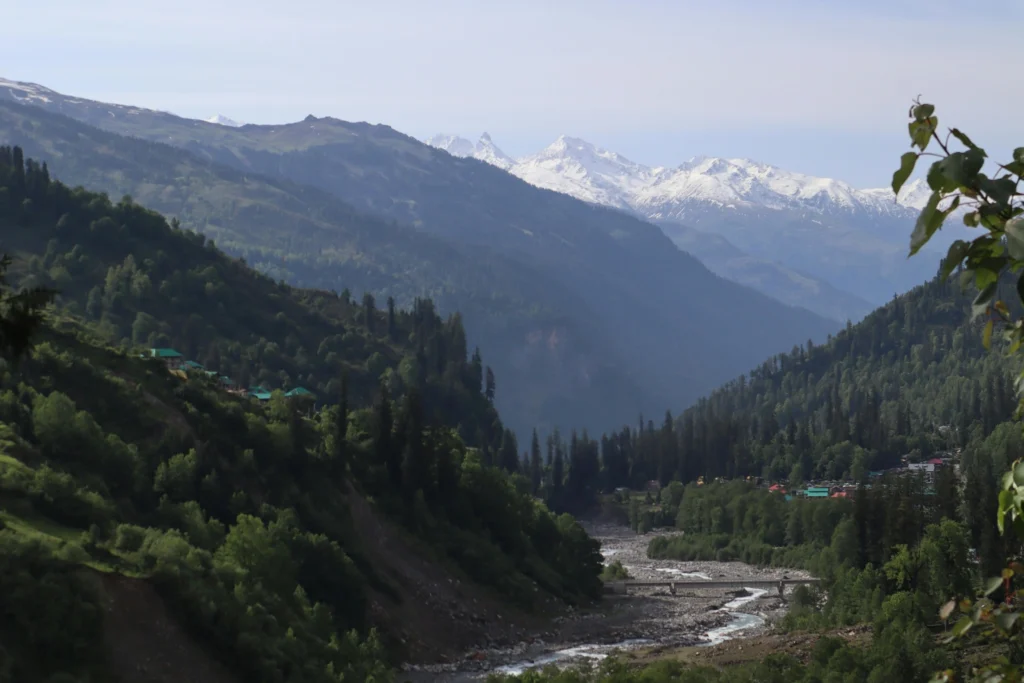
Kasol is where a lot of first-timers land, and it earns its reputation. The village sits on the Parvati River in a narrow valley of deodar and pine, and its particular atmosphere — unhurried, international, conversational — is hard to manufacture.
It’s genuinely easy to lose several days here without a plan, which is either a warning or a recommendation depending on your temperament.
The trek to Kheerganga is the main event: 12–14 kilometres through forest and stream crossings, gaining about 1,100 metres, ending at a natural hot spring at 2,960 metres.
Basic tent accommodation at the top runs ₹200–₹300. Get there before sunset, soak in the thermal pool when it empties out at dawn, and you’ll understand why people keep coming back to this valley.
Budget: ₹500–₹700/day including trek costs.
Manali — specifically Old Manali
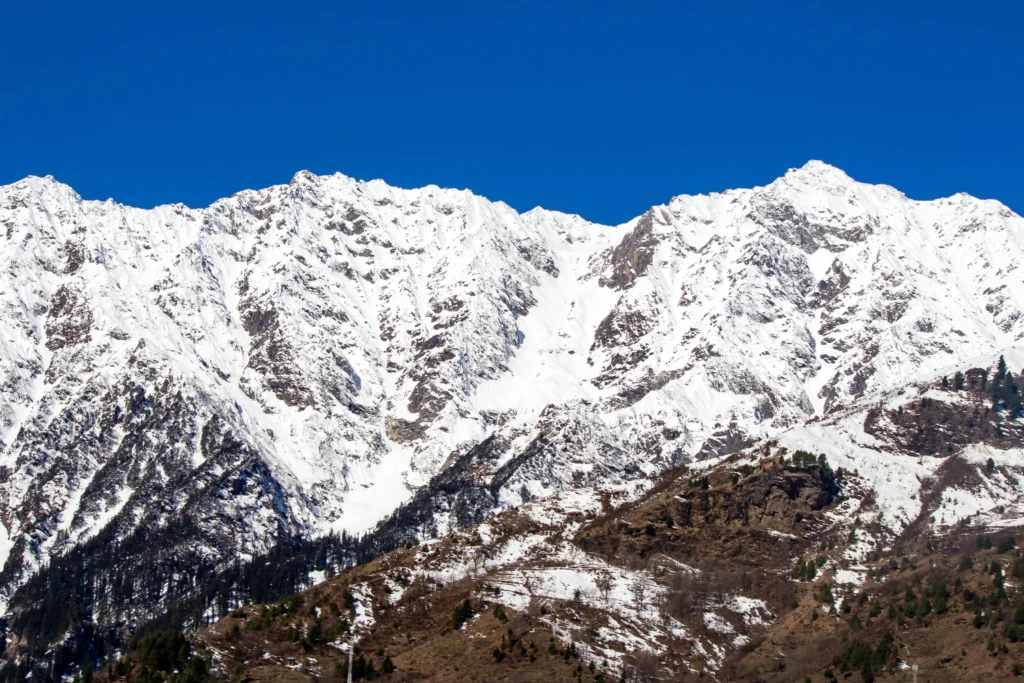
The main Manali bazaar is worth half a day and little else. Old Manali, a 3-kilometre walk across the Manalsu nullah, is a different proposition: quiet lanes, family-run guesthouses at ₹250–₹350/night, bakeries that have been feeding backpackers since the 1980s, and a pace that makes it easy to think.
It’s the base for Beas Kund, Hampta Pass, and the Atal Tunnel route to Lahaul — all accessible cheaply by local bus (₹20 to Solang Valley) or on foot.
The Hadimba Devi Temple, the old village market, and the Manu Temple are free and genuinely worth your time. Everything else in Manali is optional.
Budget: ₹600–₹800/day.
Spiti Valley
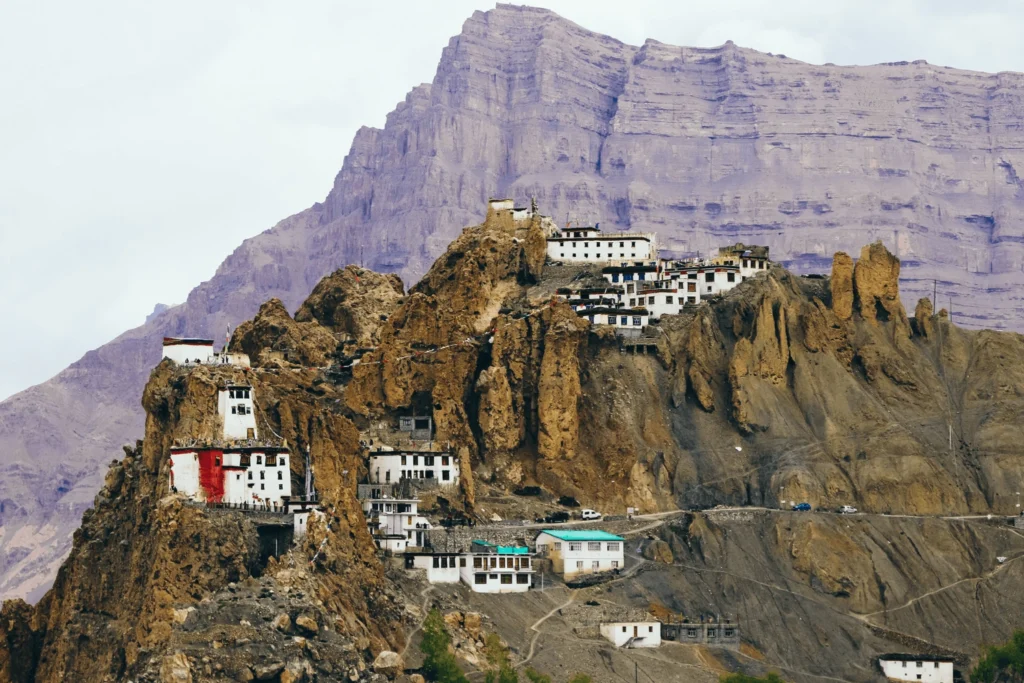
Spiti is what people imagine Tibet looked like before it became accessible. Brown mountains, monasteries balanced on cliff edges, a river of an impossible shade of blue, villages where the fields are terraced by hand at 4,000 metres.
It is remote, it is cold even in summer, and it is one of the most compelling places in Asia.
Getting there by bus from Shimla — via Reckong Peo to Kaza — takes two days and costs under ₹600 total. It passes through Kinnaur, which is spectacular in its own right and worth a night’s stop.
In Kaza, guesthouses run ₹200–₹350/night. Homestays in the surrounding villages — Langza, Hikkim, Komic — cost ₹400–₹600 including meals and offer something money genuinely can’t buy anywhere else.
Key Monastery, Dhankar Lake, Pin Valley, and Chandratal are best done by grouping with other travellers for shared jeeps, bringing per-person costs to ₹100–₹200 per excursion. Do not rush acclimatization. A day lost to altitude sickness costs more than a day spent adjusting properly.
Budget: ₹700–₹900/day including shared transport excursions.
Dharamshala and Mcleod Ganj
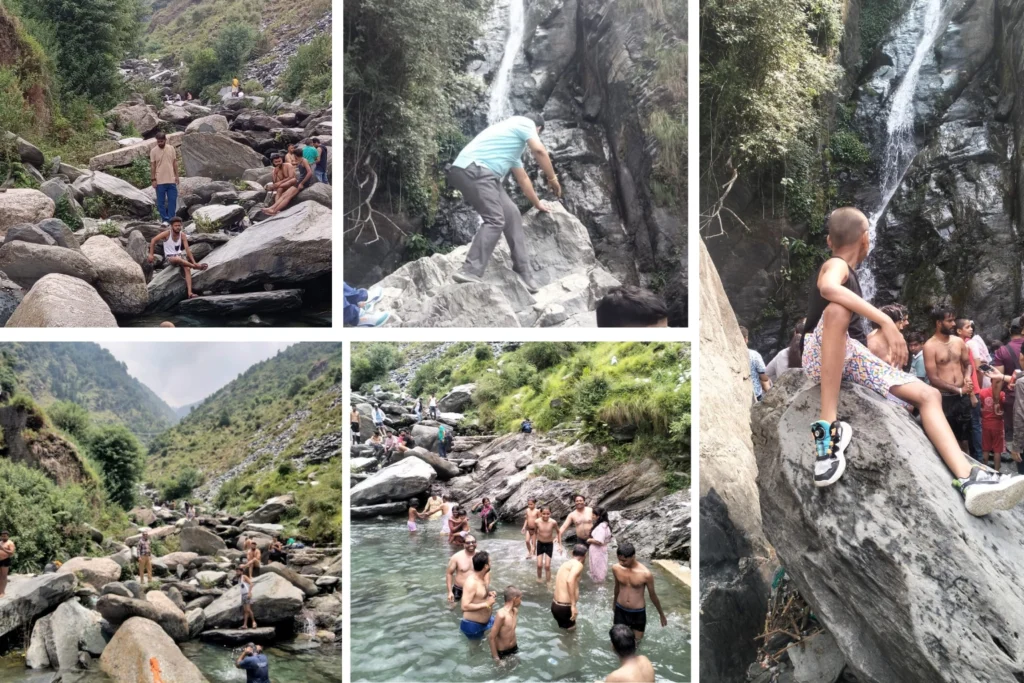
Home to the Tibetan government-in-exile and a working Tibetan monastery town, McLeod Ganj offers an immersion in a culture that no longer fully exists in its place of origin.
The institutions here — the Namgyal Monastery, the Tibet Museum, the Library of Tibetan Works and Archives — are substantive, not decorative. You can spend a week here following threads and not run out of them.
The Triund Trek (18 kilometres return, free) is one of the state’s most satisfying day hikes — a steady climb through oak and rhododendron to a ridge with views across the Kangra Valley and back toward the Dhauladhar range. Camping at the top costs ₹200–₹300.
Stay in Bhagsu Nag or Dharamkot rather than McLeod Ganj itself for quieter streets and lower guesthouse rates (₹250–₹400/night). Eat momos at the Tibetan joint near the bus stand for ₹60–₹80. Spend nothing at the souvenir stalls until your last day.
Budget: ₹550–₹750/day.
Chitkul
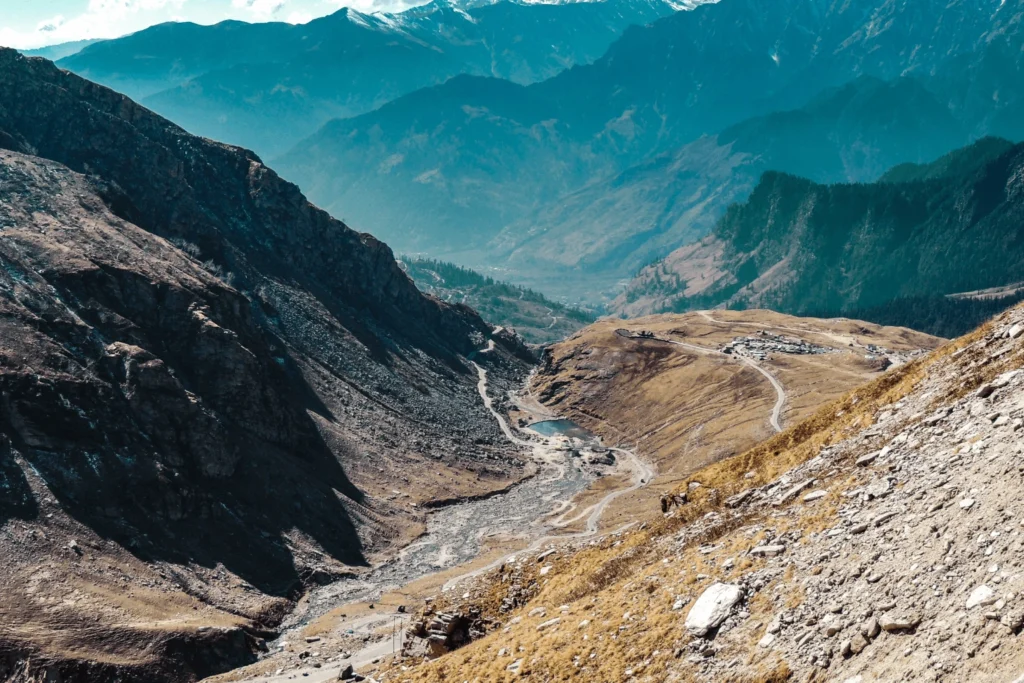
The last inhabited village on the Indo-Tibetan border sits at 3,450 metres at the head of the Baspa Valley, and its particular quality is stillness.
Green meadows running to the river, wooden temples weathered silver, the Kinnaur Kailash range closing off the valley to the north. There is almost nothing to do here in the transactional sense, which is the entire point.
Getting here from Shimla via Sangla costs ₹300–₹400 in shared transport. Guesthouses charge ₹200–₹350/night. Come for two nights minimum — one to recover from the journey, one to actually be here.
Budget: ₹450–₹650/day.
Bir Billing
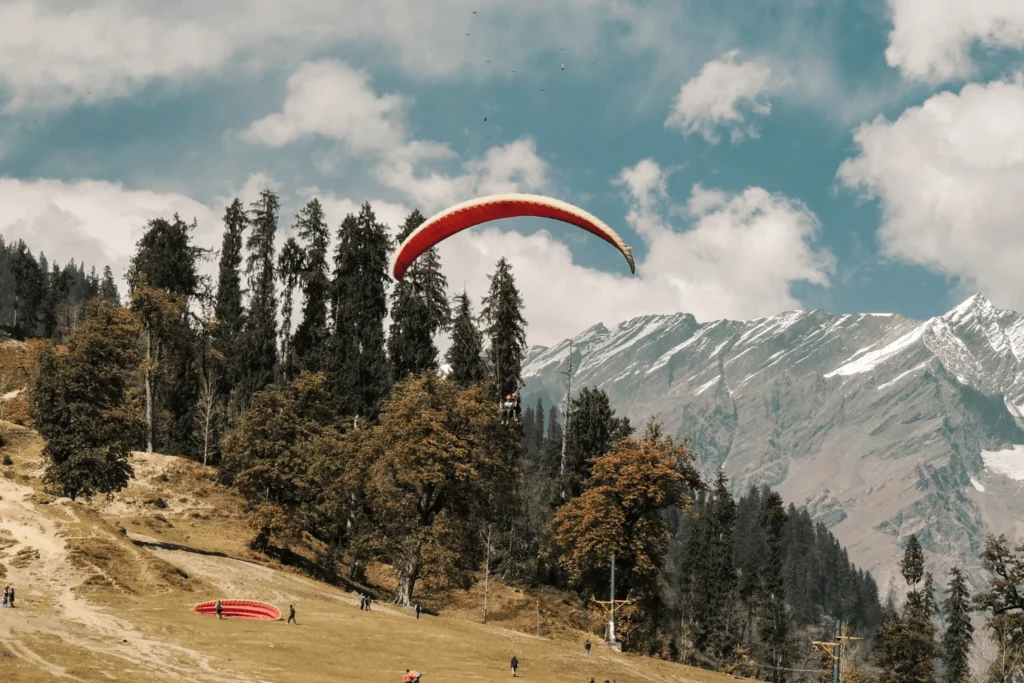
Bir is a small Tibetan settlement that’s become Asia’s paragliding capital, and it’s a natural fit for a backpacking route — cheap, laid-back, and easy to combine with McLeod Ganj or Kangra on the way through.
Zostel Bir and a handful of similar hostels run ₹500–₹900 for a dorm bed. A tandem paragliding flight from the Billing takeoff site costs ₹2,500–₹3,500, which is a reasonable one-time splurge even on a tight budget — most backpackers do it exactly once and consider it money well spent. Beyond the flying, Bir’s Tibetan monasteries and small cafés are worth a slow day on their own.
Budget: ₹500–₹700/day, plus the paragliding splurge if you choose to do it.
Common Backpacking Mistakes to Avoid
Over-planning the route. Himachal punishes rigid itineraries — road closures, weather, and altitude all have a say in your plans. Build in slack days, especially around Spiti.
Skipping acclimatization to save a day. This is the single most common regret among backpackers heading into Spiti or Kinnaur. Altitude sickness costs far more time and money than the extra night ever would.
Assuming Jio or Airtel will work everywhere. Both have real dead zones in Spiti and parts of Kinnaur. Don’t rely on data connectivity for bookings or navigation once you’re past Reckong Peo.
Carrying too little cash. ATMs thin out fast in remote areas, and card payments are far from universal outside the bigger towns.
Booking mid-range hotels out of habit. The value gap between a ₹300 dorm/homestay and a ₹2,000 hotel room is enormous; the gap between a ₹2,000 hotel and a genuinely nice ₹4,000 one is much smaller. Pick a lane.
Internet & Mobile Network
BSNL in Spiti, Jio or Airtel everywhere else. Get a BSNL SIM before leaving for Spiti — Jio and Airtel have genuine dead zones across the valley. BSNL has gaps too, but noticeably fewer.
Download offline maps in advance. Google Maps’ offline mode for Himachal is reliable enough to navigate by once you’re out of signal range.
Don’t count on hostel Wi-Fi in remote villages. It exists in Kasol, Manali, and McLeod Ganj, but in Spiti and Kinnaur it’s inconsistent at best. Plan work or bookings around the towns with better connectivity.
Safety Tips for Backpacking Himachal
Is backpacking Himachal safe? Broadly, yes — it’s one of the more traveller-friendly states in India, with an established backpacker circuit and a low rate of serious incidents. That said, a few practical points are worth keeping in mind.
Solo travellers generally do well here, particularly along the well-worn Kasol–Manali–McLeod Ganj route, where you’ll rarely be the only backpacker around. Remote treks (Kheerganga, Triund, anything in Spiti) are safer done with at least one other person or a local guide, especially outside peak season when trails are quieter.
Women travellers report Himachal as one of the more comfortable states in India for solo travel, though the usual precautions apply — avoid isolated stretches after dark, share your route with someone before a trek, and trust your instincts around any guesthouse or driver that feels off.
Night buses are generally safe and heavily used by locals, not just tourists, but keep valuables on your person rather than in overhead storage, and confirm your stop with the conductor in advance if you’re getting off somewhere unmarked.
Altitude sickness is the most common real risk on this route, particularly heading into Spiti or Kinnaur. Symptoms include headache, nausea, and breathlessness — if these appear, stop ascending and rest at your current altitude rather than pushing on. Severe symptoms (confusion, extreme breathlessness at rest) need a descent and medical attention.
Emergency numbers: 112 (national emergency number), 108 (ambulance), 1077 (Himachal Pradesh disaster management helpline).
Packing Checklist
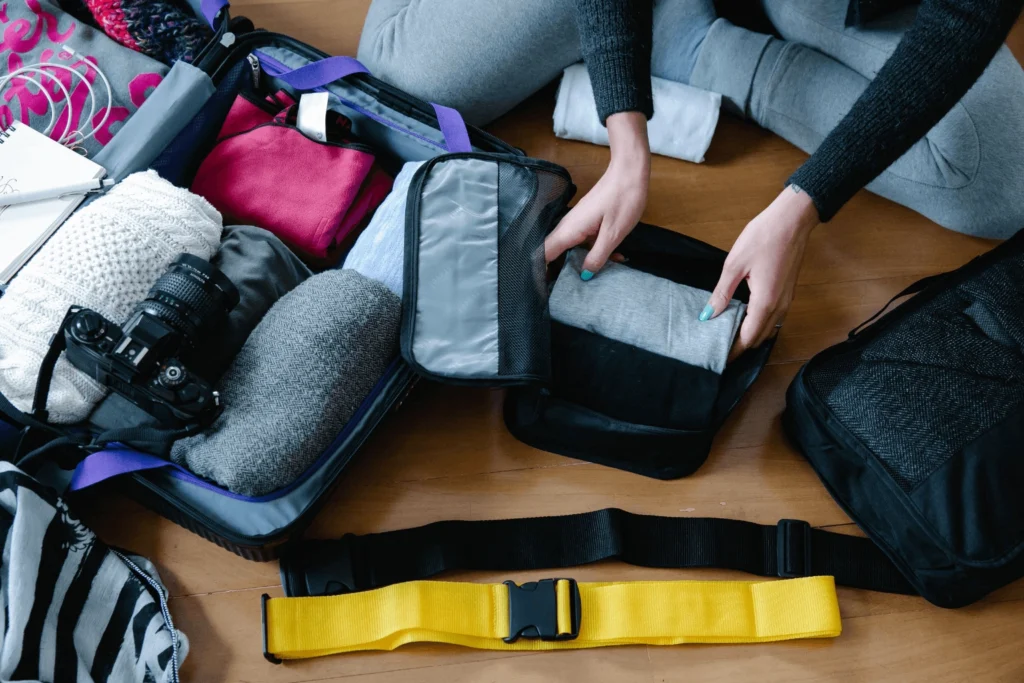
- Rain jacket (weather turns fast, even outside monsoon)
- Power bank (charging points are scarce on long bus days)
- Trekking shoes with real grip, broken in before you arrive
- Reusable water bottle (tap and stream water is often fine at altitude with a filter or purification tablets)
- Cash, more than you think you’ll need
- BSNL SIM card (buy before Spiti)
- Warm layers, even for summer — nights above 2,500m get cold fast
- Basic first-aid kit, including altitude sickness medication if advised by a doctor
- Headlamp or torch (villages beyond the main towns have limited street lighting)
- A physical map or offline map download as backup
Sample 10-Day Itinerary
| Day | Route | Approx. Cost |
|---|---|---|
| 1 | Chandigarh → Kasol (HRTC overnight bus) | ₹600 |
| 2 | Kasol — settle in, walk the river trail | ₹500 |
| 3 | Trek to Kheerganga, overnight | ₹600 |
| 4 | Return to Kasol → Manali (bus) | ₹650 |
| 5 | Old Manali — explore at leisure | ₹700 |
| 6 | Solang Valley day trip (local bus) | ₹600 |
| 7 | Manali → Kaza via HRTC (long day) | ₹700 |
| 8 | Kaza base — Langza and Hikkim villages | ₹700 |
| 9 | Key Monastery, Kibber, shared jeep day | ₹650 |
| 10 | Kaza rest day, depart | ₹500 |
| Total | ₹6,200 |
This leaves roughly ₹1,800 of headroom on an ₹8,000 trip — for a splurge dinner, an unplanned extra night, or the wool cap you’ll definitely need. For a longer trip, our 5-day Himachal itinerary and full list of best places to visit in Himachal Pradesh are good places to plan an extension from.
Practical Notes
Book buses, not taxis. The HRTC network reaches almost everywhere that matters. Check schedules through the HRTC website or, more reliably, by asking at the nearest bus stand the evening before.
Carry cash before entering the hills. ATMs become sparse past Bhuntar in Parvati Valley, past Reckong Peo in Kinnaur, and are unreliable throughout Spiti. Withdraw enough in Shimla, Manali, or Bhuntar to cover your full stay in remote areas, plus a buffer.
Travel April–June or September–October. Peak summer (July–August) brings crowds to Kasol and Manali and rain to the roads. The shoulder seasons offer better weather, lower prices, and the small satisfaction of not queuing for anything. For a month-by-month breakdown, see our guide to the best time to visit Himachal Pradesh.
Acclimatize properly. Spend at least one night at each significant altitude gain before going higher. This costs nothing except a day, and it will save you a miserable 48 hours and potentially a medical evacuation.
FAQ
Yes, Himachal Pradesh is one of the best backpacking destinations in India. It offers affordable accommodation, well-connected transport, and a strong backpacker culture in places like Kasol, Manali, and McLeod Ganj. The mix of mountains, treks, and budget-friendly cafes makes it ideal for solo and group backpackers.
Backpacking in Himachal Pradesh typically costs between ₹800 to ₹2,000 per day. This includes hostel stays or budget guesthouses, local food, and public transport. Costs can be even lower if you travel off-season and use shared taxis or buses.
Some of the best places for backpacking in Himachal Pradesh include Kasol, Manali, McLeod Ganj, Bir Billing, and Spiti Valley. These destinations offer cheap stays, vibrant traveler communities, and plenty of free or low-cost activities like trekking and exploring local villages.
The best time for backpacking Himachal Pradesh is March to June and September to November. During these months, the weather is pleasant, roads are accessible, and budget options are widely available. Off-season months like February and November are even cheaper but colder.
A Final Note
The best thing about traveling Himachal on this budget is not the money saved. It’s the access it buys.
When you’re on the same bus as the schoolteacher from Kaza and the apple farmer from Sangla, you’re moving through the place the way it actually works — not above it, not around it.
That’s the experience no amount of money can replicate, and Himachal, more than almost anywhere, makes it available to anyone willing to show up and pay attention.
The bus leaves at 6am. Get a window seat.