
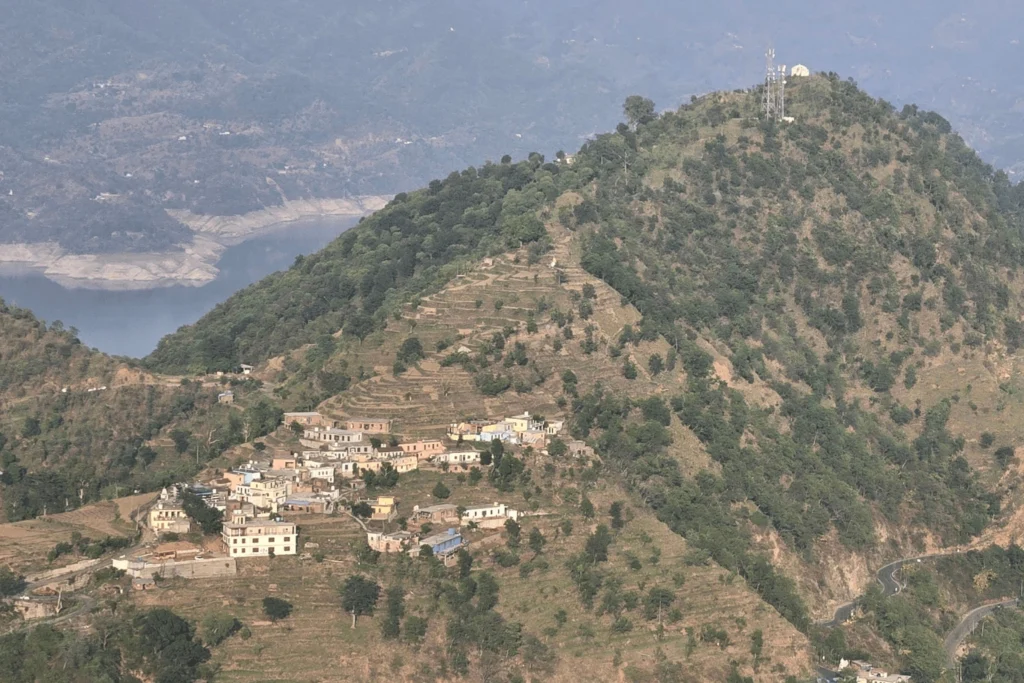
Himachal Pradesh does not have one face. It has thirty.
The state stretches from subtropical foothills near Solan to cold desert plateaus above 4,000 metres — and between those extremes lie 30 hill stations that each offer something the others cannot. Some are colonial and grand. Some are silent and remote. Some are a single village where the only sound at night is the river below.
This guide covers all 30 honestly — what each place delivers, what it costs, who it suits, and what no travel brochure tells you before you arrive.
Find Your Perfect Hill Station
What kind of trip are you planning?
Quick Comparison — All 30 Hill Stations
Use this to compare elevation, crowd level, and budget at a glance before reading the full reviews below.
| # | Hill Station | Elev. | Best For | Crowd | Budget/Night |
|---|---|---|---|---|---|
| 1 | Shimla | 2,200 m | First-timers, families | Very High | ₹1,500–₹3,500 |
| 2 | Manali | 2,050 m | Adventure, couples | Very High | ₹600–₹8,000 |
| 3 | Dharamshala | 1,457 m | Culture, trekking | Moderate | ₹500–₹4,000 |
| 4 | Dalhousie | 2,036 m | Peace, photography | Low | ₹1,200–₹2,500 |
| 5 | Kasauli | 1,795 m | Weekend escape | Low (weekdays) | ₹1,500–₹3,000 |
| 6 | Chail | 2,250 m | Solitude, history | Very Low | ₹1,500–₹6,000 |
| 7 | Narkanda | 2,708 m | Skiing, orchards | Very Low | ₹800–₹3,500 |
| 8 | Kufri | 2,622 m | Family day trip | Moderate | ₹1,200–₹2,500 |
| 9 | Palampur | 1,220 m | Tea gardens, nature | Very Low | ₹1,000–₹2,500 |
| 10 | Bir | 1,400 m | Paragliding | Low–Moderate | ₹500–₹5,000 |
| 11 | Jibhi | 1,600 m | Offbeat, forests | Very Low | ₹800–₹2,000 |
| 12 | Shoja | 2,692 m | Hidden gem, trekking | Very Low | ₹700–₹1,500 |
| 13 | Naggar | 1,760 m | Art, history | Very Low | ₹1,000–₹3,000 |
| 14 | Sarahan | 1,920 m | Temple, apple views | Very Low | ₹800–₹2,000 |
| 15 | Pragpur | 400 m | Heritage village | Very Low | ₹2,000–₹5,000 |
| 16 | Karsog | 1,400 m | Offbeat temples | Very Low | ₹600–₹1,200 |
| 17 | Rohru | 1,525 m | Apple country | Very Low | ₹700–₹1,500 |
| 18 | Mashobra | 2,146 m | Near Shimla, quiet | Low | ₹1,500–₹4,000 |
| 19 | Naldehra | 2,044 m | Golf, views | Very Low | ₹1,200–₹3,000 |
| 20 | Tattapani | 655 m | Hot springs | Low | ₹800–₹2,000 |
| 21 | Barot | 1,800 m | Trout fishing, camping | Very Low | ₹600–₹1,000 |
| 22 | Tirthan Valley | 1,600 m | Eco-tourism, GHNP | Very Low | ₹800–₹1,500 |
| 23 | Khajjiar | 2,000 m | Mini Switzerland | Low–Moderate | ₹1,000–₹2,500 |
| 24 | Chamba | 996 m | Heritage, temples | Low | ₹400–₹3,500 |
| 25 | Keylong | 3,114 m | Gateway to Leh | Very Low | ₹800–₹2,000 |
| 26 | Sissu | 3,100 m | Waterfall, highway | Very Low | ₹700–₹1,500 |
| 27 | Kalpa | 2,960 m | Kinnaur views | Very Low | ₹1,000–₹4,000 |
| 28 | Sangla | 2,680 m | Offbeat, orchards | Very Low | ₹800–₹1,500 |
| 29 | Kaza | 3,800 m | Cold desert | Very Low | ₹500–₹3,000 |
| 30 | Kandaghat | 1,372 m | Weekend stopover | Very Low | ₹800–₹1,500 |
All 30 Hill Stations — Full Reviews
Each destination includes honest caveats, transport details, and a “Don’t come if…” to help you decide before you book.
Shimla — The Queen of Hills
No hill station in India carries more history than Shimla. The Ridge, Scandal Point, Christ Church, and the narrow lanes of Lakkar Bazaar give it a texture that newer tourist towns simply cannot manufacture.
The Kalka–Shimla toy train — a UNESCO World Heritage railway — covers 96 km through 103 tunnels and 864 bridges in about five hours. Book well in advance on IRCTC, particularly the Shivalik Deluxe Express for the best experience.
| Category | Shimla | Manali |
|---|---|---|
| Accessibility | ✓ Easier | Slightly harder |
| Best for families | ✓ Winner | — |
| Best for adventure | — | ✓ Winner |
| Best for snow | — | ✓ Winner (Solang/Rohtang) |
| Best for culture | ✓ Winner | — |
| Crowd level | Very High | Very High |
| Budget (avg/night) | ₹1,500–₹3,500 | ₹600–₹8,000 |
Manali — Adventure Capital of the North
Manali is where most people picture when they think of Himachal Pradesh — and the reality is both better and worse than the expectation. Better, because Old Manali and Vashisht village genuinely deliver: quieter lanes, apple orchards, riverside cafés, and a pace of life that Shimla surrendered to tourism long ago. Worse, because the main tourist strip in July–August resembles a mountain-shaped traffic jam.
The Rohtang Pass corridor, Solang Valley snow activities, and river rafting on the Beas are well-organised and worth doing. Hadimba Devi Temple — set inside a cedar forest — is best visited at dawn, before tour groups arrive.
Dharamshala & McLeod Ganj — Where Tibet Meets the Himalayas
Dharamshala is two towns in one. The lower town is a busy commercial centre. Upper Dharamshala — McLeod Ganj — is the seat of the Tibetan government-in-exile, home to the Dalai Lama’s residence, and a place where Tibetan monks, Western backpackers, and Indian pilgrims share the same narrow streets without any of it feeling forced.
Namgyal Monastery, the Tibet Museum, and the Library of Tibetan Works and Archives anchor the cultural experience. The Triund Trek (9 km one way, 2,350 m summit) is the most rewarding day hike accessible from any hill station in the state.
Dalhousie — Five Hills, One Slower World
Dalhousie was established by the British in 1854 across five distinct hills, and that unusual geography gives it a rambling, unhurried quality that more purpose-built hill stations lack. Victorian bungalows, Gothic-style St. Francis Church, and chestnut-lined avenues survive largely intact.
The Bakrota Hills walk (5 km loop) at golden hour is the single best thing to do in Dalhousie — quiet, forested, and genuinely beautiful. Khajjiar, 22 km away, makes a natural half-day addition.
| Category | Dalhousie | Shimla |
|---|---|---|
| Crowd level | ✓ Low | Very High |
| Colonial charm | ✓ More intact | Partially commercialised |
| Value for money | ✓ Better | Expensive in season |
| Connectivity | Moderate | ✓ Better |
| Best for | Couples, peace | First-timers, families |
Kasauli — 77 km From Chandigarh, a World Away
Kasauli resists its own popularity with quiet determination. Just 77 km from Chandigarh, it somehow maintains a sleepiness that Shimla and Manali long ago traded for tourist infrastructure. The Monkey Point temple offers views across to Chandigarh’s flat plains — a genuinely strange and satisfying sight.
The Kasauli Brewery, established in 1820, is one of Asia’s oldest distilleries and offers guided tours. Come midweek — weekends bring crowds that the town’s narrow lanes were not designed for.
Chail — Higher Than Shimla, Quieter Than Anywhere
Chail was built by Maharaja Bhupinder Singh of Patiala in 1891 after Lord Kitchener banned him from Shimla following a disagreement. His response was to build a palace at 2,250 metres — higher than Shimla — with views over the Shivalik range that require no improvement.
The world’s highest cricket ground sits inside a pine forest here, still used for matches. The Chail Wildlife Sanctuary has a small deer park and forest trails that rarely see more than a handful of visitors. The heritage Chail Palace Hotel is one of Himachal’s finest places to stay.
Narkanda — Apples, Snow & Zero Crowds
Narkanda at 2,708 metres sits on the old Hindustan–Tibet Road and has spent decades being overlooked by travellers heading straight to Shimla or Manali. That oversight is their loss. The Hatu Peak trek (3,400 m summit, 4 km one way) is manageable in half a day and delivers panoramic views of the Great Himalayan and Zanskar ranges. Apple harvest in September turns the surrounding orchards spectacular. Winter skiing on HPTDC-managed slopes starts from ₹500/day for equipment rental.
Kufri — Snow Day Base Near Shimla
Kufri at 2,622 metres, 16 km from Shimla, functions best as a half-day or day trip rather than a standalone destination. Its value is specific: winter snow activities, the Himalayan Nature Park (good for families with children), and panoramic views that on clear days include Shimla, Chail, and distant high peaks simultaneously.
Palampur — The Tea Capital of North India
Palampur is the only commercially tea-growing town in the entire Himalayan region. Rows of tea bushes climbing the lower Dhauladhar slopes, with snow peaks rising directly behind them, are genuinely as striking as they sound.
The Wah Tea Estate offers guided tours for around ₹100 — in an hour, you will understand why Kangra tea earned a Geographical Indication tag. Palampur also serves as the best base for the Kareri Lake trek — far less crowded than Triund and significantly more rewarding.
| Category | Palampur | Dharamshala |
|---|---|---|
| Crowds | ✓ Very Low | Moderate–High |
| Price | ✓ Cheaper | Moderate |
| Unique feature | Tea gardens | Tibetan culture |
| Trekking base | Kareri Lake | Triund |
| Best for | Nature, slow travel | Culture, spirituality |
Bir — Asia’s Paragliding Capital
Bir is a small Tibetan settlement that became world-famous for one reason: paragliding. The Billing launch site, at 2,400 metres above the Bir landing zone, is considered one of the finest natural flight corridors in Asia and has hosted the Paragliding World Cup multiple times.
The practical tip most booking sites omit: the best thermals build between 10 AM and 1 PM. Book your tandem flight in that window. Beyond flying, Bir’s Tibetan colony, Chokling Monastery, and relaxed café scene make it worthwhile even for non-paragliders.
Jibhi — The Forest Hideaway
Jibhi is a small Tirthan Valley village that has quietly become one of Himachal’s most beloved offbeat escapes without yet becoming overrun. Wooden guesthouses sit directly over the stream. The surrounding forest — oak, rhododendron, pine — closes in immediately. A small waterfall is a ten-minute walk from most accommodations.
What Jibhi offers that larger destinations cannot is proportion: small enough to cover thoroughly in a day, unhurried enough that most visitors end up staying longer than planned.
Shoja — Above the Tree Line, Below the Radar
Shoja sits 14 km above Jibhi at 2,692 metres and is quieter still. The Jalori Pass (3,120 m), a 5 km drive from Shoja, opens to meadows and ridge walks with views that rank among the finest in the Kullu district. Raghupur Fort, a short trek from the pass, is almost entirely unknown outside local hiking circles.
Apple orchards, meadow camping, and rhododendron forests in spring make Shoja a genuinely special destination for travellers who have learned to look past the obvious.
Naggar — What Manali Used to Feel Like
Naggar, 22 km south of Manali, offers what Manali has largely lost: quiet lanes, apple orchards, and mountain views without a crowd in front of them. The Naggar Castle — built in 1460, now a heritage hotel run by HPTDC — overlooks the full sweep of the Kullu Valley from its stone terrace.
The Nicholas Roerich Art Gallery beside the castle holds original paintings by the Russian artist who made Naggar his permanent home.
Sarahan — Gateway to Kinnaur
Sarahan at 1,920 metres is the first major stop on the Kinnaur circuit and one of the most dramatically situated towns in the state. The Bhimakali Temple — combining Himalayan wooden architecture and pagoda styling across two towers — is architecturally unlike anything else in Himachal Pradesh. Surrounding apple orchards and unobstructed views of the Shrikhand Mahadev peak (5,155 m) make Sarahan a destination in its own right.
Pragpur — India’s First Officially Declared Heritage Village
Pragpur in Kangra district was declared India’s first heritage village in 1997 — a designation that protected its cobblestone lanes, slate-roofed medieval houses, and ornate havelis from unregulated development. The result is a place that genuinely feels preserved rather than restored.
The Judge’s Court heritage property — a restored colonial manor now operating as a boutique hotel — is one of the most characterful places to stay in all of Himachal Pradesh. At 400 metres, Pragpur is warmer than most hill stations, making it a good winter destination.
Karsog — The Forgotten Temple Valley
Karsog at 1,400 metres in Mandi district is among the least-visited hill stations in Himachal Pradesh despite being easily accessible from Shimla. Ancient temples — Mahunag, Kamakhya Devi, Triloknath — sit in forested valleys with almost no tourist infrastructure around them.
For travellers who want genuine offbeat experience rather than the performance of offbeat experience, Karsog delivers. The silence here is not manufactured — it is simply the result of almost no one coming.
Rohru — Apple Blossoms and Pabbar Trout
Rohru at 1,525 metres follows the Pabbar River through one of Himachal’s most scenic and least-visited valleys. Apple orchards dominate the landscape — blossom season in April turns the entire valley pink and white, and harvest in September fills the roadsides with fruit. The Pabbar River offers brown and rainbow trout fishing with permits available locally.
The drive from Shimla through Rampur Bushahr is one of the state’s finest road journeys and itself justifies the trip.
Mashobra — Shimla’s Quieter Neighbour
Mashobra at 2,146 metres sits just 12 km from Shimla but operates at a completely different pace. The Craignano Nature Reserve, largely unknown even to regular Shimla visitors, offers forest walks through oak and rhododendron with views of the snow ranges. Several heritage properties and forest rest houses here offer the Shimla experience without the Shimla noise.
Naldehra — Lord Curzon’s Golf Course
Naldehra at 2,044 metres is home to one of India’s oldest golf courses, laid out personally by Lord Curzon in 1905. The nine-hole course is still operational and bookable for visitors. The surrounding meadows, oak forests, and unobstructed views of the Shivalik and Himalayan ranges make it one of the most scenic short drives from Shimla — and one of the least-visited despite that proximity.
Tattapani — Riverside Hot Springs
Tattapani at 655 metres on the banks of the Sutlej River was historically famous for sulphur hot springs. The original springs are now submerged beneath the Koldam reservoir, but the area has developed resort infrastructure with artificially heated mineral pools. The riverside setting — steep forested hillsides, the wide Sutlej, and warmer temperatures than most Himachal destinations — makes it a pleasant winter escape.
Barot — The Most Genuinely Undiscovered Valley
Barot in the Uhl River basin was developed as a British hydro project site in the 1920s and then largely left alone for a century. That benign neglect is its greatest asset. Trout fishing in the Uhl River, jungle camping, and trails into Nargu Wildlife Sanctuary offer genuine wilderness access without the infrastructure or crowds of more famous destinations.
If Barot appears on mainstream travel lists five years from now, the people discovering it today will be quietly satisfied.
Tirthan Valley — Eco-Tourism Done Right
The Tirthan River at 1,600 metres runs clear enough to see the riverbed at three metres depth — a rarity in any mountain region. The valley borders the Great Himalayan National Park, a UNESCO World Heritage Site, and homestay families here have been hosting travellers for two and three generations. Fresh trout from the river, local rajma, and homemade butter appear at every meal without being asked.
| Category | Tirthan Valley | Jibhi |
|---|---|---|
| Setting | River valley | Forest village |
| GHNP access | ✓ Direct | Nearby |
| Homestay culture | ✓ Stronger | Good |
| Trout fishing | ✓ Yes | Limited |
| Best for | Eco-tourism, GHNP | Forest walks, relaxing |
Khajjiar — The Meadow That Earned Its Nickname
Khajjiar at 2,000 metres near Dalhousie is a circular meadow plateau blanketed in grass with a central lake and ringed by thick cedar forest. Switzerland’s honorary consul to India bestowed the “Mini Switzerland” designation in 1992 — one of only 160 places globally to receive it — and on a clear summer day, the comparison is fair.
Most visitors come as a day trip from Dalhousie (24 km). Staying overnight changes the experience entirely: the day-trippers leave by 5 PM and the meadow belongs to the mist and the mountains until morning.
Chamba — Six Centuries of Continuous History
Chamba on the Ravi River has been a living town since the 6th century — not preserved, not reconstructed, but genuinely inhabited and continuously evolving. The Lakshmi Narayan temple complex, built between the 10th and 19th centuries, contains six distinct shrines with stone carvings of a quality that would make Chamba internationally famous if it were anywhere else.
Chamba Rumal embroidery — a pahari art form using double-sided thread work — is listed as an Intangible Cultural Heritage and still practised by local artisans whose work can be purchased directly.
Keylong — High Altitude Without the Spiti Commitment
Keylong at 3,114 metres is the district headquarters of Lahaul, now accessible year-round from Manali via the Atal Tunnel — a significant change since 2020. Surrounded by glaciers, ancient gompas, and the confluence of the Bhaga and Chandra rivers, Keylong rewards those who stop rather than pass through.
For travellers curious about high-altitude Himalayan landscapes but not ready for the full Spiti commitment, Keylong delivers comparable scenery with better access and shorter travel times.
Sissu — The Village the Tunnel Revealed
Sissu at 3,100 metres became properly accessible when the Atal Tunnel opened in 2020. Before that, it was reachable only in summer via the Rohtang Pass. The Sissu waterfall — visible from the main road and dramatic in the June–August melt season — and turquoise Chenab River views make it one of Himachal’s most photogenic roadside stops. It warrants more than a photograph and a drive-through.
Kalpa — Sunrise on Kinnaur Kailash
Kalpa at 2,960 metres sits directly below the Kinnaur Kailash peak (6,050 m). At dawn, when the summit catches the first light and turns a deep fiery orange while the entire valley below remains in pre-dawn darkness, it produces one of the most dramatic natural spectacles in Himachal Pradesh. Set an alarm for 5:30 AM and stand outside. You will not regret it.
The old village of Roghi, 6 km below Kalpa, has apple orchards and a hanging bridge over the Sutlej that few visitors bother to find.
Sangla — The Valley Before the Border
Sangla Valley at 2,680 metres follows the Baspa River through pine and deodar forest past apricot and apple orchards toward Chitkul — the last permanently inhabited village before the Indo-Tibetan border. Kamru Fort, above Sangla village, dates to the 10th century and holds a copper statue of Kamakhya Devi alongside local deity figures from across Kinnaur.
Kaza — The Capital of Elsewhere
Kaza at 3,800 metres is the administrative headquarters of Spiti Valley and the base for one of India’s most extraordinary travel circuits. Key Monastery (1,000+ years old), Kibber Village (one of the world’s highest motorable villages), Pin Valley National Park, and Chandratal Lake form a loop that takes a minimum of five serious days to do properly.
Kandaghat — The Stopover That Deserves to Be a Destination
Kandaghat at 1,372 metres is almost universally treated as a transit point on the Chandigarh–Shimla road — which is precisely why it retains the qualities that more famous destinations have lost. An 1897-era Presbyterian church, apple orchards, a small bazaar that closes by 8 PM, and forest walks with almost no other walkers make Kandaghat the most accidentally charming hill station in Himachal Pradesh.
Stay one night. You will understand what this entire region felt like before tourism found it.
Best Hill Stations Near Chandigarh
Under 4 hours from Chandigarh — ranked by ease and value for a weekend trip.
| Hill Station | Distance | Drive Time | Best For |
|---|---|---|---|
| Kandaghat | 65 km | 1 hr | Quick escape, orchards |
| Kasauli | 77 km | 1.5 hrs | Weekend peace, colonial walks |
| Shimla | 115 km | 3 hrs | First-timers, toy train |
| Narkanda | 180 km | 3.5 hrs | Skiing, apple views |
| Palampur | 240 km | 5 hrs | Tea gardens, trekking |
| Bir | 230 km | 6 hrs | Paragliding |
Best Hill Stations for Snowfall
Not all snow is equal — here’s where to go for reliable snowfall versus overpriced disappointment.
| Hill Station | Snow Season | Snow Quality | Accessibility |
|---|---|---|---|
| Narkanda | Dec–Feb | Consistent, reliable | Easy (NH5) |
| Kufri | Jan–Feb | Good, but crowded | Easy (16 km from Shimla) |
| Chail | Dec–Feb | Moderate | Moderate |
| Manali | Dec–Mar | Excellent | Road or flight to Bhuntar |
| Sissu/Keylong | Nov–Mar | Heavy, reliable | Via Atal Tunnel (year-round) |
Best Hill Stations Under ₹2,000/Day (All-In)
Total daily cost including stay, meals, and basic activities.
| Hill Station | Stay/Night | Food/Day | Total/Day | Why It Works |
|---|---|---|---|---|
| Tirthan Valley | ₹800–₹1,200 | Included | ₹800–₹1,200 | Best value overall — meals usually included in homestay |
| Barot | ₹600–₹1,000 | ₹300–₹500 | ₹900–₹1,500 | Forest rest house, river camping |
| Karsog | ₹600–₹900 | ₹300–₹400 | ₹900–₹1,300 | Genuine offbeat with ancient temples |
| Jibhi | ₹800–₹1,200 | ₹400–₹600 | ₹1,200–₹1,800 | Forest walks, stream-side stays |
| Rohru | ₹700–₹1,000 | ₹350–₹500 | ₹1,050–₹1,500 | Apple country, trout fishing permits |
| Shoja | ₹700–₹1,000 | ₹350–₹500 | ₹1,050–₹1,500 | Jalori Pass access, meadow camping |
When to Go — Month-by-Month Calendar
Green = ideal time. Yellow = possible but with caveats. Red = closed or not recommended.
Frequently Asked Questions
Pack Layers. Carry Cash. Leave One Day Unplanned.
From the colonial elegance of Shimla to the last-road quiet of Kandaghat, from the paragliding skies of Bir to the pre-dawn fire on Kinnaur Kailash — the best hill stations in Himachal Pradesh offer something the others cannot replicate, and no single trip reaches all thirty.
The well-known destinations carry the weight of their own fame and deliver reliably. The quieter ones ask more of you in planning and flexibility, and return more in experience.