
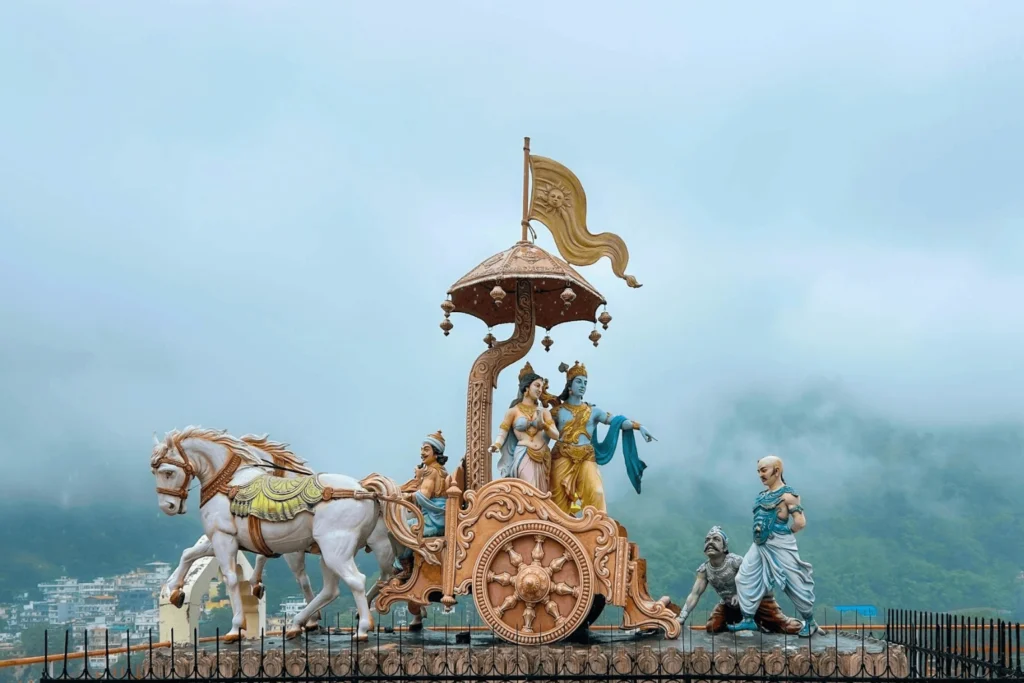
There’s a moment most Rishikesh regulars describe the same way: standing on Ram Jhula at dawn, the Ganges still grey in the early light, a sadhu moving silently along the opposite bank, and a faint smell of woodsmoke mixing with marigolds from last night’s aarti.
Beneath your feet, the bridge sways just slightly. Nothing about it feels like a postcard. It feels entirely, disarmingly real.
I’ve visited Rishikesh multiple times across different seasons — in June, in December, and in between. Every visit has felt completely different.
The best time to visit Rishikesh is not a single window on a calendar. It is a question about who you are as a traveller and what you’re actually looking for. This guide goes month by month, with the kind of specific, on-the-ground detail that actually helps you decide.
Find the best season to visit Rishikesh for rafting, yoga retreats, festivals, trekking, budget travel, and peaceful Ganga-side experiences with this detailed monthly guide.
Find the best season to visit Rishikesh for rafting, yoga retreats, festivals, trekking, budget travel, and peaceful Ganga-side experiences with this detailed monthly guide.
First: What Kind of Trip Are You Planning?
Before diving into seasons, be honest about your priorities:
| Your goal | Best months |
|---|---|
| White water rafting | Sep–Nov, Feb–Apr |
| Yoga immersion / ashram stay | Oct–Mar |
| Trekking in the Garhwal foothills | Mar–May, Sep–Nov |
| Attending the International Yoga Festival | First week of March |
| Pilgrimage and spiritual tourism | Oct–Mar |
| Solitude and budget travel | Jul–Aug |
| Festivals (Mahashivratri) | February |
| Photography — Himalayan views | Oct–Nov, Feb–Mar |
Spring (February – April): The Season That Earns Its Hype
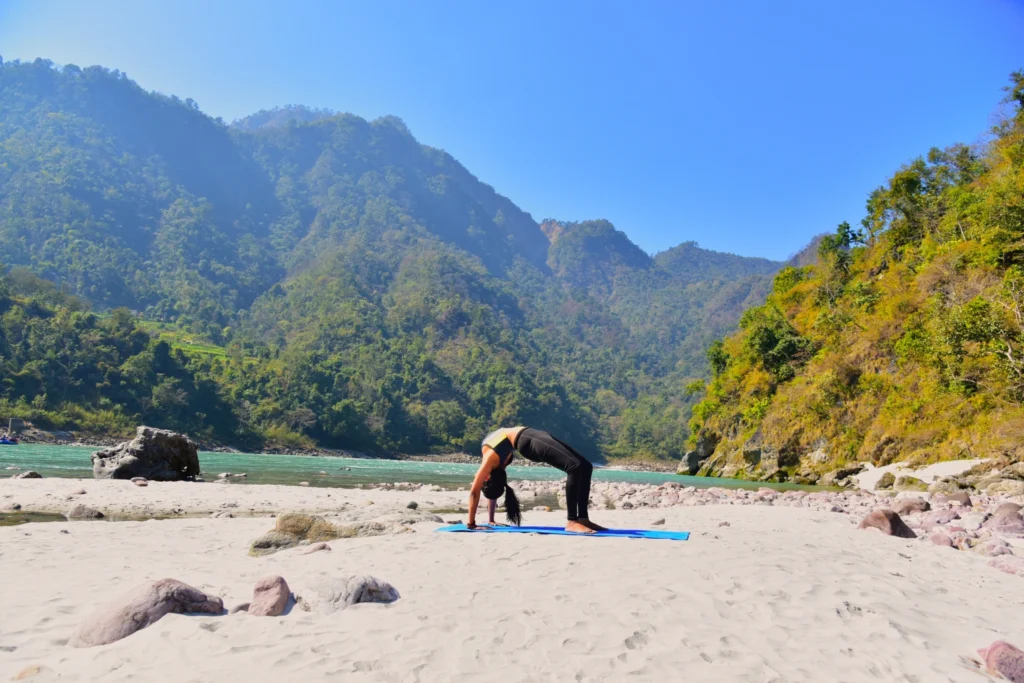
February in Rishikesh carries a particular mood — cool enough for a fleece in the morning, warm enough by noon to sit on a café rooftop over the river.
The town is alert but not yet overwhelmed. Local shopkeepers on the Tapovan stretch know what’s coming, and you can feel the season shifting gears.
By March, Rishikesh feels completely different. The International Yoga Festival, held every year at Parmarth Niketan, attracts thousands of visitors from more than 100 countries.
Visitors spend the week attending sunrise yoga sessions, kirtan evenings, and workshops on Ayurveda, meditation, and sound healing.
It is, without exaggeration, one of the most significant yoga gatherings on the planet. Book accommodation two to three months ahead; the ashrams fill first, then the guesthouses.
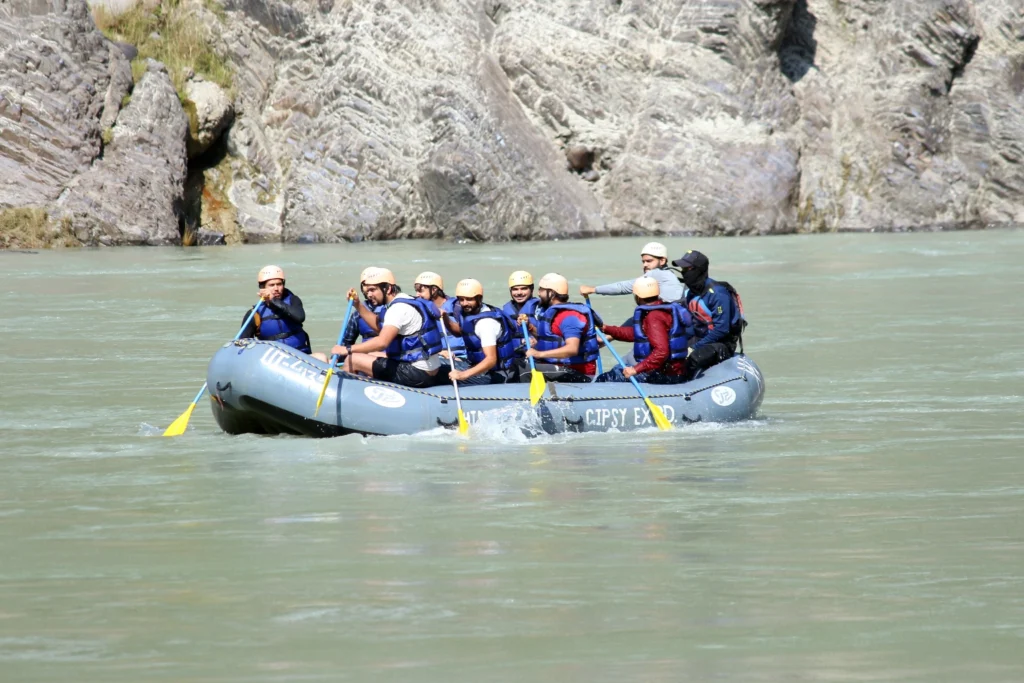
Outside the festival period, spring is one of the best times for rafting in Rishikesh. The Ganges turns a clear emerald green and flows swiftly through the valley.
Along this stretch, the Grade 3–4 rapids provide excitement without feeling excessively dangerous for most travellers.
The 36-kilometre Marine Drive stretch is the most dramatic: you camp overnight on a white sand bank, eat dal and rice cooked over a driftwood fire, and fall asleep to the sound of the river.
The food scene in spring
The cafés along Laxman Jhula — Café Ivy, Little Buddha, the nameless place with the best lemon ginger tea — are all fully operational.
But don’t overlook the lane just behind Swargashram, where a clutch of dhabas serve aloo puri breakfasts that cost under ₹60 and taste better than anything fancier nearby.
Spring is also when the street food near Triveni Ghat is at its most varied — hot pakoras and jalebi, masala chai in clay cups, and the deep-fried kachori that the pilgrims eat standing up.
One spring experience worth seeking out is sunrise at Kunjapuri Temple. The temple sits about 45 minutes from Rishikesh, followed by a short 20-minute climb.
On a clear March morning, the rising sun lights up Himalayan peaks like Bandarpoonch, Kedarnath, and Chaukhamba, while the valley below remains covered in shadow.
Very few of the people staying in Rishikesh make the effort. Almost none regret it.
Summer (May – June): Underestimated and Genuinely Useful
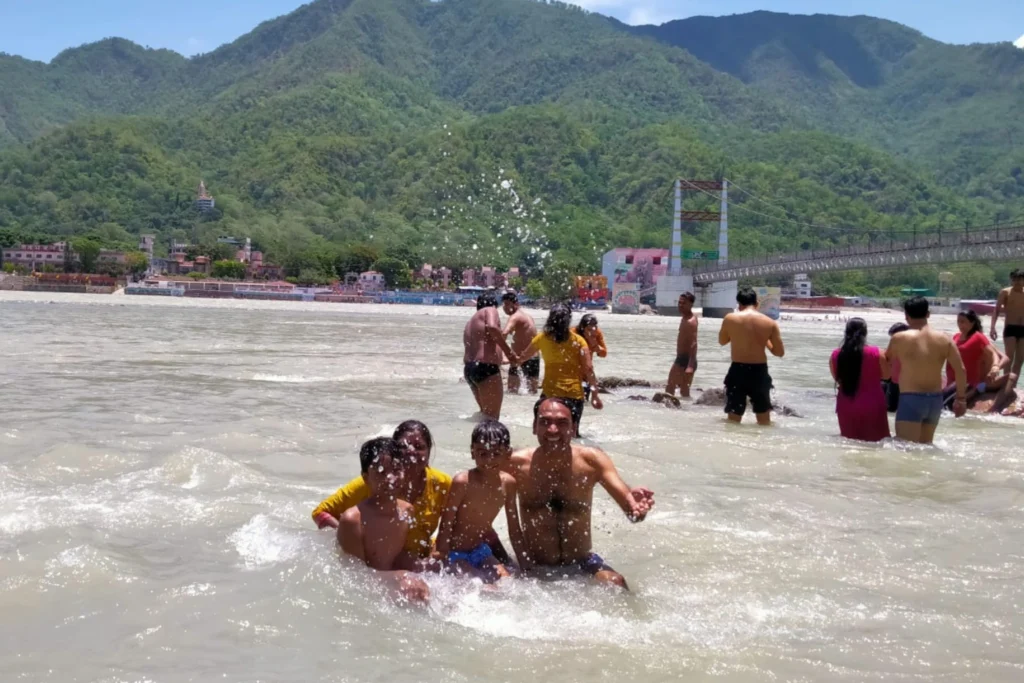
When I visited in June, Laxman Jhula was closed due to safety concerns — worth knowing before you plan your route. Ram Jhula was open, and crossing it is an experience in itself — the bridge sways gently as you walk, which surprises first-timers but becomes enjoyable quickly.
After crossing Ram Jhula, we spent time at the ghat nearby. The water level near the banks is manageable and we bathed there — the children had a wonderful time.
Right on the ghat, maggi and bhelpoori stalls are set up. We ordered both. Maggi ₹80, bhelpoori ₹50. Sitting on the banks of the Ganga in June, feet in the water, eating maggi — it sounds simple and it was, and that was exactly why it worked.
🌉 2026 Update: The historic Lakshman Jhula has remained closed since 2019 due to safety concerns. In 2026, the new Bajrang Setu serves as its modern replacement for crossing the Ganga.
Monsoon (July – September): The Season Nobody Tells You About Honestly
Here is the unvarnished truth about monsoon in Rishikesh: it is beautiful in a way that photographs struggle to capture, and difficult in ways that guidebooks tend to understate.
From July through mid-August, the Ganges becomes a different river — swollen, copper-brown with Himalayan silt, moving with a power that makes the cliffs and bridge pillars look suddenly modest.
All river rafting is suspended, by both regulation and basic survival instinct. The valley goes green so fast it seems unreal: every surface — hillside, wall, rooftop — sprouts something.
Mist rolls in from the higher ranges by mid-morning and sometimes doesn’t leave until noon the next day.
Byasi, a quieter riverside village upstream from Rishikesh, feels especially peaceful during the monsoon season.
Most day-trippers and rafting camps disappear at this time of year. What remains is the sound of the river and the occasional farmer guiding cattle along muddy village tracks.
Walking the 8 km between Byasi and Rishikesh along the river trail is one of those experiences that costs nothing and is worth everything — though you’ll want waterproof footwear and a willingness to get drenched.
Budget travellers who know this town well time their trips deliberately to July or August. Accommodation prices drop by 30–40%.
Guesthouses that charge ₹2,500 per night in October negotiate freely. The yoga centres are quiet. The ghats belong to the locals and the pilgrims again.
During the monsoon, it’s better to skip adventure sports in Rishikesh. Instead, spend quiet mornings at Gita Bhawan in the Swargashram area.
This riverside ashram is known for prayer, meditation, spiritual study, and simple hospitality along the banks of the Ganges.
It runs a free Ayurvedic dispensary that makes medicines from herbs and Ganges water, open to all visitors regardless of whether they’re staying there.
The walls are painted with scenes from the Mahabharata and Ramayana. Pick up a book from the attached Gita Press outlet — texts on Vedanta, Hindu philosophy, or the epics, priced at whatever they’ve cost for the last fifty years. It is a genuinely unusual place.
September is the transition month, and it rewards patience. By the third week, the rains ease, the Ganges begins to clear and settle, and the valley smells like the earth just exhaled.
Adventure operators cautiously reopen toward late September. Crowds haven’t arrived yet. Prices haven’t climbed. For a narrow window of about ten days — the last week of September — Rishikesh is arguably its most perfect self.
Autumn (October – November): The Month Everyone Agrees On, For Good Reason
Ask any serious traveller who has been to Rishikesh more than once and October almost always wins.
The reasons are simple. The monsoon rains leave the valley fresh and green around Rishikesh. By early autumn, the Ganges settles into ideal rafting conditions, while temperatures stay comfortably between 15–26°C.
The Himalayan peaks become clearly visible, and the town feels lively without the exhausting crowds of peak season.
The river in October is the river at its best. The 16-kilometre stretch from Shivpuri to Rishikesh offers reliable Grade 3 rapids — Roller Coaster, Golf Course, Club House — with enough space between them to drift and watch kingfishers work the banks.
The Marine Drive overnight trip, impossible in monsoon and crowded in March, hits its sweet spot.
Campsites on the gravel banks are operational, nights are cool enough for a sleeping bag, and the sky is so clear that the stars over the river feel close enough to touch.
Two experiences specific to October and November that rarely make it into travel pieces:
The first is Rishikund — a natural hot spring near Triveni Ghat, said to have therapeutic properties, where locals come to bathe in warm water while the Ganges rushes nearby. It’s not glamorous.
It’s not listed prominently anywhere. In October, with the air turning cool, sitting in those warm waters while river mist drifts past is one of the quietly memorable things Rishikesh offers.
The second is Brahmapuri — a wooded stretch of the Ganges about 3 km from the main town, accessible by a short walk through forest, where the river runs fast and clear over rocks.
Local boys cliff-jump here in the post-monsoon months. It is not organised, not supervised, and not advertised.
Cliff jumping here is not supervised and can be dangerous. Visitors should avoid attempting it.
Rajaji National Park reopens in October, following its monsoon closure. The forest covers over 800 square kilometres of the Shivalik range and supports elephants, leopards, and over 400 species of birds.
A morning jeep safari in October — when the undergrowth has thinned slightly and animals move more freely — is worth the two-hour logistics.
Winter (December – February): Cold, Quiet, and Spiritually Serious
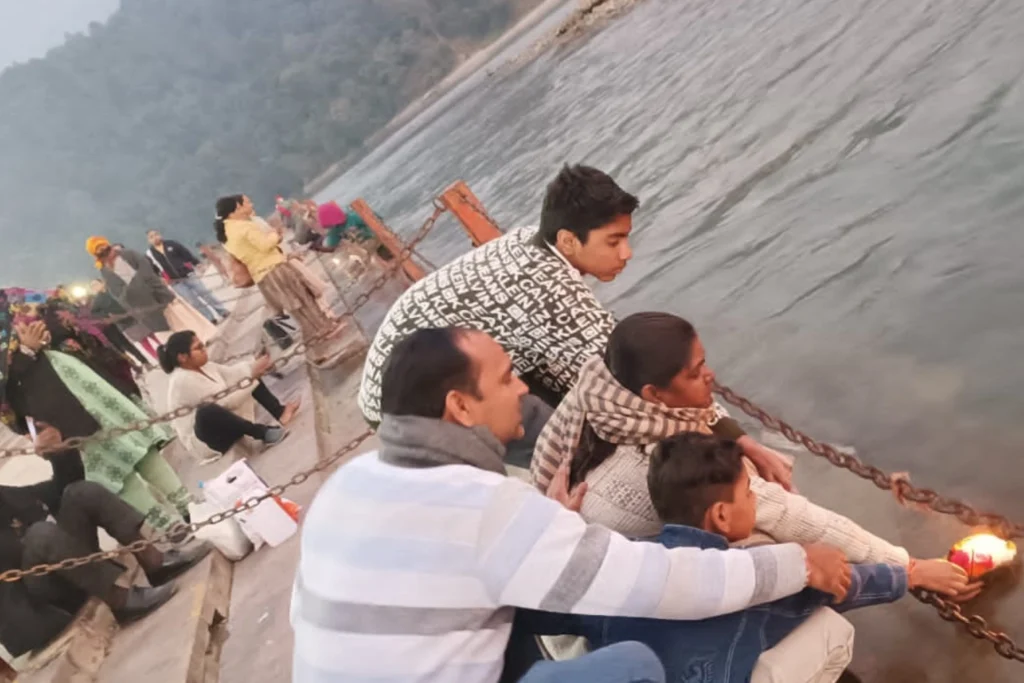
I visited in December, coming down from Neelkanth Mahadev Temple. The altitude had given me and the children slight headaches — blocked ears, mild dizziness, the usual signs of a climb.
By the time we reached Triveni Ghat, I was genuinely tired. A woman near the entrance was selling bhutta — soft, warm corn — and I bought one along with a chai. That simple combination, after a long day in the hills, was exactly what was needed.
The Triveni Ghat aarti that evening was everything Har Ki Pauri is not. The crowd was small. The ceremony was on one side, and directly across — filling the entire opposite bank — was nothing but green hills, mountains beyond, and the Ganga flowing quietly between.
Your eyes had nowhere to go except nature. That stillness, combined with the ceremony, is something I haven’t experienced quite the same way anywhere else.
🏛️ Local Tip — Triveni Ghat: The crowd here is significantly smaller than Har Ki Pauri. The aarti happens on one side while the opposite bank remains completely natural — green hills, mountains, and the Ganga between. For a peaceful aarti experience, this is genuinely hard to beat.*
Practical Reference
Getting there
- Jolly Grant Airport, Dehradun is 35 km away, with daily flights from Delhi, Mumbai, and Bengaluru
- Haridwar railway junction (25 km) connects to most major Indian cities; shared taxis and autos run to Rishikesh frequently
- By road: approximately 5–6 hours from Delhi via NH58; overnight Volvo buses from ISBT Kashmere Gate are cheap and reliable
Where to eat beyond the obvious
- Aloo Puri breakfast at Swargashram — filling, cheap, beloved by pilgrims and long-term residents alike
- Chotiwala Restaurant near Ram Jhula — a Rishikesh landmark, the thali is enormous and inexpensive
- Hot pakoras and masala chai at the stalls surrounding Triveni Ghat during evening aarti — not pretty, entirely perfect
Packing by season
- Oct–Feb: Thermal base layer, fleece, light down jacket (essential for evenings and early mornings)
- Mar–Jun: Light cotton, sunscreen, wide-brimmed hat
- Jul–Sep: Serious rain gear, waterproof sandals or trekking shoes, mosquito repellent — not negotiable
Booking ahead
- Yoga Festival (first week of March): book 2–3 months ahead
- Mahashivratri weekend: book at least 6 weeks ahead
- October–November weekends: Delhi day-trippers fill guesthouses fast; mid-week arrivals are significantly calmer
FAQ
The monsoon season, especially July and August, is usually considered the least ideal time to visit Rishikesh. Heavy rainfall can cause landslides, river rafting closures, and travel disruptions. If you want adventure activities and clear weather, October to March is a better time.
A perfect 3-day trip to Rishikesh can look like this:
Day 1: Visit Bajrang Setu, Ram Jhula, Triveni Ghat, and attend the evening Ganga Aarti.
Day 2: Enjoy river rafting, bungee jumping, ziplining, or camping by the Ganges.
Day 3: Explore yoga cafés, Beatles Ashram, waterfalls like Neer Garh, and relax at riverside cafés.
Yes, Rishikesh is great for a 2-day trip. In two days, you can cover major attractions, try adventure sports, enjoy café culture, and experience the spiritual atmosphere without feeling rushed.
Popular things to buy in Rishikesh include:
-Rudraksha beads and spiritual items
-Handmade jewelry
-Ayurvedic products and herbal oils
-Yoga clothing and accessories
-Tibetan handicrafts
-Organic teas and local souvenirs
A Final Word
The question of when to go to Rishikesh is really a question of which version of Rishikesh you need. The town in October is efficient, luminous, and fully alive — the river at its best, the trails clear, the camps humming.
The town in January is stripped back, honest, and slightly severe; it requires something from you. The town during the Yoga Festival week in March is a kind of controlled beautiful chaos that doesn’t exist anywhere else on earth.
And the town in late September — in that brief window just as the monsoon loosens its grip — is as close to the valley’s true face as most visitors ever get.
Go when the version of Rishikesh you’re ready for is waiting. It almost certainly is.
All seasonal activity information reflects standard operational patterns; always confirm rafting and adventure sport availability directly with operators before booking, as schedules vary with actual water levels each year.