
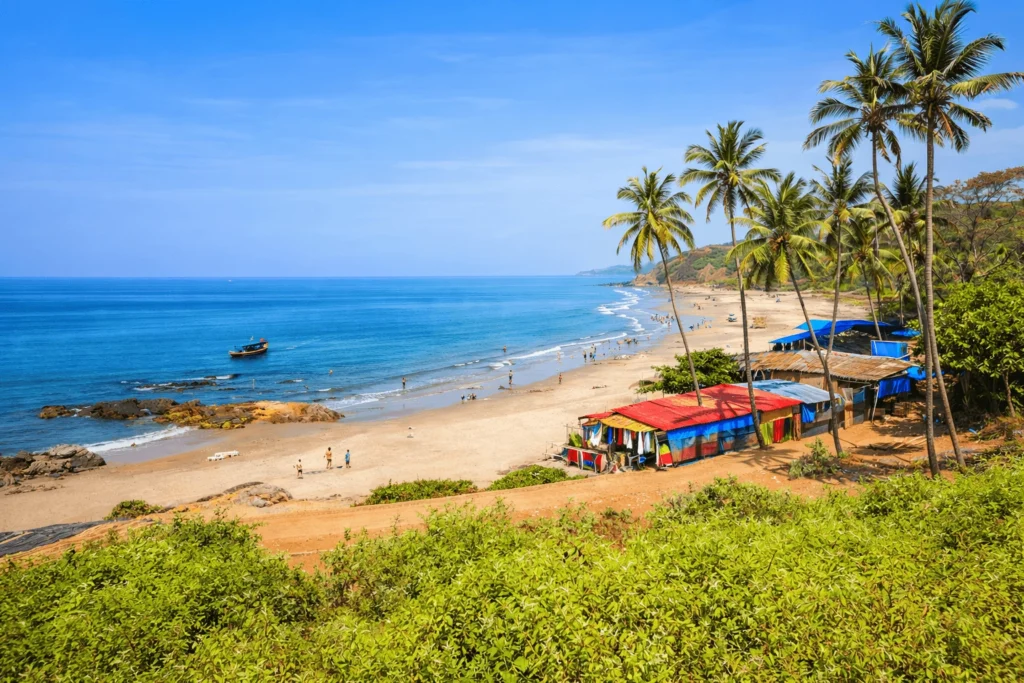
Planning a trip to Goa? The month you choose matters more than your hotel, your budget, or your itinerary. Here’s everything the glossy travel guides leave out.
The best time to visit Goa is from November to February, when the weather is pleasant, beach shacks are fully open, and water activities are available across North and South Goa.
This period offers the ideal balance of sunshine, nightlife, sightseeing, and beach conditions for most travelers.
Why Timing is Goa’s Most Underrated Variable
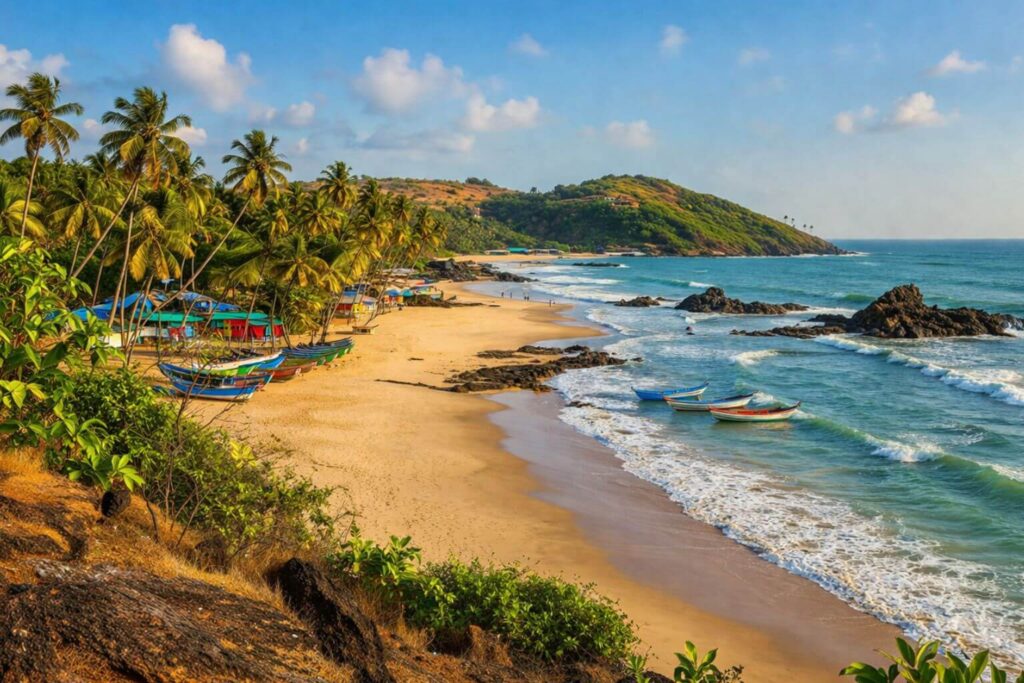
Most people pick their Goa dates around work leave and flight prices. That’s understandable — but it’s also why so many visitors land during a sweltering April, wonder why half the beach shacks are shut, and vow to “come back in December next time.”
Goa isn’t just one destination. It’s four or five different places depending on when you show up. The December version is electric, heaving, and expensive.
However, the July version is empty, ethereal, and completely misunderstood. Meanwhile, the October version might be the best-kept secret in Indian travel.
This guide is built on one premise: the right time to visit Goa depends entirely on what you want from it.
Goa’s Three Seasons — The Real Picture
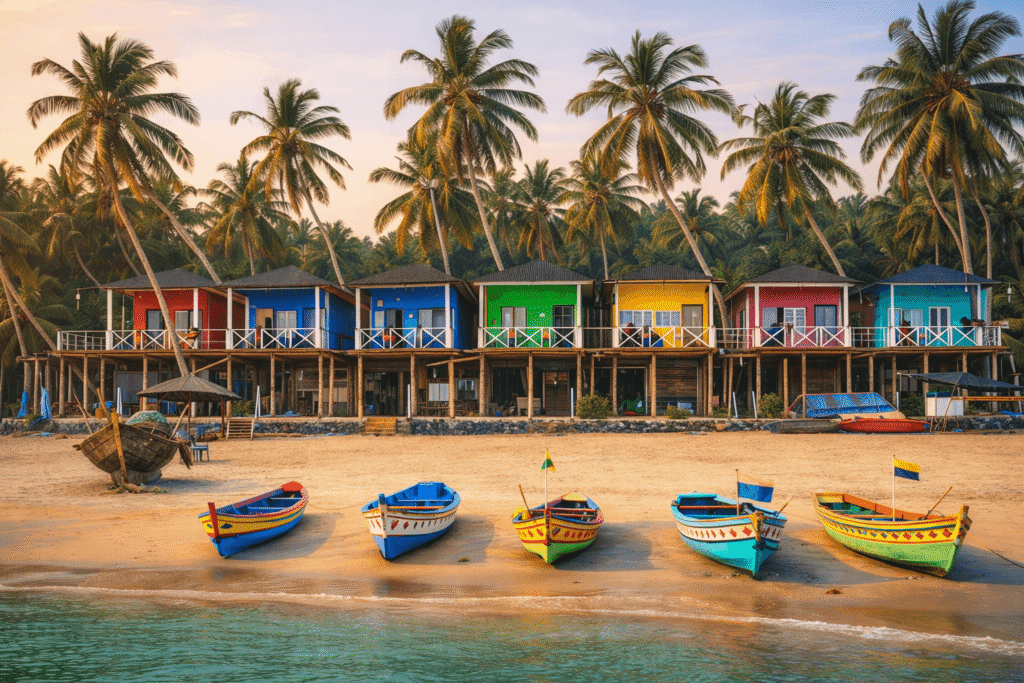
Peak Season (November – February): Cool, dry, 19–33°C. Everything is open, everything is full, and prices reflect that. This is the Goa most people imagine.
Shoulder Season (March – May): Temperatures climb to 35–38°C. Crowds thin, prices drop by 30–50%, and the experience shifts from party destination to something quieter and more personal.
Monsoon (June – October): Heavy southwest rainfall, rough seas, closed shacks — and some of the most dramatic, beautiful landscapes you’ll find anywhere in India. Widely misunderstood. Often magical.
Month by Month — The Unfiltered Version
November — The Sweet Spot Nobody Talks About
Weather: 24–33°C | Humidity low | Zero rain
Early November is the single most underrated window in Goa’s calendar. The monsoon has cleared, the air is clean and cool, the beaches are freshly washed, and the tourist machine hasn’t fully cranked back up yet.
Beach shacks reopen around the first or second week. Water sports vendors return. The sea is calm and clear — visibility for snorkelling can be exceptional.
And critically: you can still walk on Baga or Anjuna beach without navigating around a hundred sunbeds.
Practically speaking:
- Hotels in North Goa: ₹2,500–6,000/night for decent mid-range options
- Flights from Delhi/Mumbai: noticeably cheaper than December by 25–40%
- Crowds: manageable and enjoyable rather than overwhelming
By mid-to-late November, prices start climbing and the crowds build. Early November is the window.
Best for: First-timers, couples, anyone who hates queues
December — The Full Goa Experience (If You Can Afford It)
Weather: 21–32°C | Perfect | Zero rain
December is Goa at full volume. Christmas transforms the old Portuguese churches and village squares into something genuinely lovely — this isn’t manufactured tourism, it’s a living cultural tradition rooted in Goa’s 450-year Catholic heritage.
New Year’s Eve on the beach at Vagator or Anjuna is one of India’s great communal experiences.
But let’s be honest about the trade-offs. A beach shack villa that costs ₹4,000/night in October will cost ₹12,000–18,000 in the last week of December.
Baga Road on a Saturday night in Christmas week is not relaxing. And if you haven’t booked accommodation by October, you’re choosing between leftovers and paying extortionate last-minute rates.
Practically speaking:
- Book accommodation by September for Christmas week. October at the latest.
- Budget: ₹8,000–20,000/night for decent stays in North Goa in peak week
- The Arpora Saturday Night Market is worth going to once — chaotic, fun, genuinely local in parts
- For NYE parties: Hilltop in Vagator and SinQ in Candolim are reliable; smaller beach bonfires at Palolem are more atmospheric
Best for: Party-goers, honeymooners with budget, first-timers who want the full experience
January — Peak Season Without the Madness
Weather: 19–31°C | Dry | Occasional cool evenings
January is, weather-wise, the most comfortable month Goa offers. The festive frenzy has settled, sensible tourists have gone home, and the state exhales slightly.
You still get fully operational beach shacks, excellent water clarity for diving (visibility can reach 15–20 metres at some sites), and long warm evenings.
South Goa genuinely shines in January. Palolem and Agonda are quieter than North Goa at any time of year, and in January they hit a perfect balance: active enough to have good restaurant options and evening life, calm enough to feel like a proper escape.
Practically speaking:
- Mid-range hotels in South Goa: ₹3,000–7,000/night
- Best month for scuba diving — try Barracuda Diving at Grande Island
- Rent a scooter (₹300–400/day) rather than relying on taxis; Goa’s roads are genuinely manageable on two wheels
Best for: Couples, divers, anyone wanting the best weather with slightly less chaos
February — Culture Takes Centre Stage
Weather: 22–33°C | Dry | Warming gradually
February is when Goa’s Portuguese past comes alive in the most spectacular way. The Goa Carnival — a four-day parade of floats, music, cross-dressing, satire, and street dancing — rolls through Panaji, Margao, and Mapusa.
It traces back to pre-Lenten festivities introduced by the Portuguese in the 16th century, and it’s the real thing: not a tourist reconstruction, but a genuine cultural event that locals plan for months.
The King Momo parade in Panaji is the centrepiece. Arrive early on the main drag, find a spot near the Mandovi River end, and prepare to be surprised by how joyful and anarchic it gets.
Beach conditions remain excellent. Prices are slightly lower than January. Crowds are manageable.
Practically speaking:
- Carnival dates shift annually — check the Goa Tourism calendar and book accommodation 6–8 weeks out
- Margao’s Carnival is less touristy than Panaji’s and worth experiencing for that reason
- February evenings cool down nicely — pack one light layer
Best for: Culture lovers, couples, travellers who want more than just beach time
March — The Sensible Budget Window
Weather: 26–35°C | Dry | Humidity building
The crowds thin dramatically in March. As a result, flights and hotels drop by 30–40% compared to January. The beach shacks are still open, water sports are still running, and the sea is still swimmable.
It’s warmer — no question — but early mornings and evenings are genuinely pleasant.
Holi, falling in mid-March, is spectacular in Goa. Unlike the somewhat chaotic celebrations in Delhi, Goa’s Holi tends to combine the colour festivities with beach parties and live music.
Several resorts in North Goa run dedicated Holi events.
Practically speaking:
- Good hotel deals: ₹1,800–4,000/night for solid mid-range in North Goa
- South Goa in March is as close to a private beach experience as Goa gets
- Start beach time before 10am — by noon it’s fierce
Best for: Budget travellers, backpackers, Holi festival seekers
April — Underestimated, Genuinely Rewarding
Weather: 28–37°C | Very hot | Humidity rising
April is where honest travel writing diverges from tourist board brochures. It is hot. Stepping outside at 2pm feels like opening an oven.
But here’s what the brochures won’t tell you: some of Goa’s best beachside properties — places that cost ₹15,000/night in December — are available for ₹4,000–6,000 in April.
The beaches are quiet. Meanwhile, the restaurants are unhurried, and the staff actually have time for you.
If you adjust your schedule to the climate (beach before 10am, long lunch, back out after 4:30pm), April is a genuinely luxurious way to experience Goa on a fraction of the December budget.
Practically speaking:
- SPF 50+ sunscreen is non-negotiable — the April sun is brutal even through cloud cover
- Palolem beach in April: you might have 200 metres of sand largely to yourself by 7am
- Some North Goa shacks begin closing by late April — South Goa stays more reliably operational
Best for: Budget luxury seekers, those who handle heat well, slow travellers
May — Stripped Back and Authentic
Weather: 29–38°C | Very hot | Pre-monsoon showers begin
May is the threshold month. Businesses close in waves. The tourist infrastructure retreats. Locals reclaim their state. If this sounds unappealing, it probably means May isn’t your month.
But for a specific kind of traveller — one who wants to see Goa without its performance face on — May has a raw quality that’s genuinely interesting.
Pre-monsoon showers arrive mid-to-late May: sudden, intense, and over quickly. The mangoes are extraordinary — Goa’s Mankurad variety is some of the best in India, and May is peak season.
Best for: Very adventurous budget travellers, off-season explorers
June – September — The Monsoon Truth
Weather: 26–32°C | Heavy rain | Very high humidity
The travel industry has done monsoon Goa a disservice. While the beaches are closed, the dramatic scenery and waterfalls make the season surprisingly rewarding. Yes, some roads flood and some areas become difficult.
But the landscape transforms in a way that’s genuinely hard to describe. The Western Ghats behind Goa turn an impossible green.
Dudhsagar Falls — one of India’s four highest waterfalls, where a river appears to fall from the sky in four tiers — is at full, thundering glory.
The waterfalls at Arvalem and Tambdi Surla temple (a 12th-century Kadamba-era structure hidden deep in the forest) are extraordinary in the rains.
The festival of Sao Joao in June is one of Goa’s most joyful cultural events: locals jump into flooded wells and rivers wearing flower crowns, celebrating the feast of St John the Baptist.
It’s entirely local, entirely genuine, and completely spectacular to witness.
Practically speaking:
- Hotel rates drop 50–70%; a ₹12,000/night resort in December may be ₹3,500 in July
- Dudhsagar is best reached by jeep safari from Mollem (book through Jungle Book resort area)
- Keep a rain poncho and dry bags for electronics
- Avoid road travel after very heavy overnight rain until conditions are assessed
Best for: Nature lovers, photographers, solo travellers seeking solitude, adventure hikers
October — Goa’s Best-Kept Secret
Weather: 27–33°C | Rains tapering | Humidity easing
The monsoon retreats progressively through the month. Meanwhile, the landscape stays lush and green, while temperatures remain manageable. And the prices haven’t yet snapped back to peak season rates.
By mid-October, beach shacks begin reopening. By late October, most of the tourism infrastructure is functional.
You’re getting the best of both worlds: monsoon Goa’s beauty without monsoon Goa’s logistical complications, at prices that won’t return until next June.
Practically speaking:
- Aim for the second half of October for the best weather-to-value ratio
- Mid-range hotels: ₹2,000–4,500/night; negotiate directly with properties for better rates
- The sea takes a few weeks to clear after monsoon — water clarity improves toward November
Best for: Savvy travellers, nature lovers, anyone who researches before they book
North Goa vs South Goa: It Actually Matters

This isn’t just a vibe distinction — it’s a practical one that affects everything from your daily budget to how much sleep you get.
North Goa (Calangute, Baga, Anjuna, Vagator, Morjim) is where the action concentrates. It’s louder, more commercial, and the beach infrastructure is denser. In peak season this is electric.
In shoulder season, some of it starts to feel like a theme park with the power off.
South Goa (Palolem, Agonda, Benaulim, Cavelossim) operates on a different frequency. The beaches are longer and less crowded at almost any time of year.
The accommodation skews toward boutique rather than budget party hostels. It’s meaningfully calmer — Agonda beach in January is the kind of place that makes people reconsider their city lives.
The practical rule: If you’re visiting March–May, base yourself in South Goa. You’ll have stretches of beach almost to yourself, restaurants with genuine time for you, and a pace that makes the heat feel like ambiance rather than punishment.
Quick Reference by Travel Type
| What You Want | Best Months | Budget Signal |
|---|---|---|
| Best weather + full experience | November – February | ₹₹₹ |
| Best weather + lower cost | October, March | ₹₹ |
| Nightlife & festivals | December – January | ₹₹₹₹ |
| Honeymoon | November, February | ₹₹₹ |
| Nature, waterfalls, hiking | July – September | ₹ |
| Cultural festivals | February (Carnival), June (Sao Joao) | ₹₹ |
| Quiet beaches, slow travel | October, March–April | ₹–₹₹ |
| Budget luxury | April | ₹₹ |
| Family travel | November – January | ₹₹₹ |
FAQ
May is generally considered the least comfortable month to visit Goa because of extreme heat, rising humidity, and the gradual closure of many tourist businesses before monsoon season begins.
Goa is usually cheapest from June to September during the monsoon season, when hotel prices can drop by 50–70% compared to the peak winter months.
Goa is famous for handmade souvenirs, beachwear, cashew nuts, spices, feni, shell crafts, bamboo products, and hippie-style jewelry available in local flea markets and beach bazaars.
January is typically the coldest month in Goa, with pleasant temperatures ranging between 19°C and 31°C, making it one of the best times for beaches and sightseeing.
The Honest Verdict
For most travellers: November to February. The weather is as good as it gets, everything works, and Goa’s energy is infectious.
For budget-conscious travellers: October and March offer a genuinely compelling balance of good conditions and real savings — often 40–50% cheaper than December with 80% of the experience.
For the traveller who wants something different: July or August will give you a Goa that almost nobody else has seen — dramatic, green, empty, and completely your own.
Every version of Goa rewards a traveller who comes prepared. The question is which version matches who you are right now.
Plan your dates first. Everything else follows.