
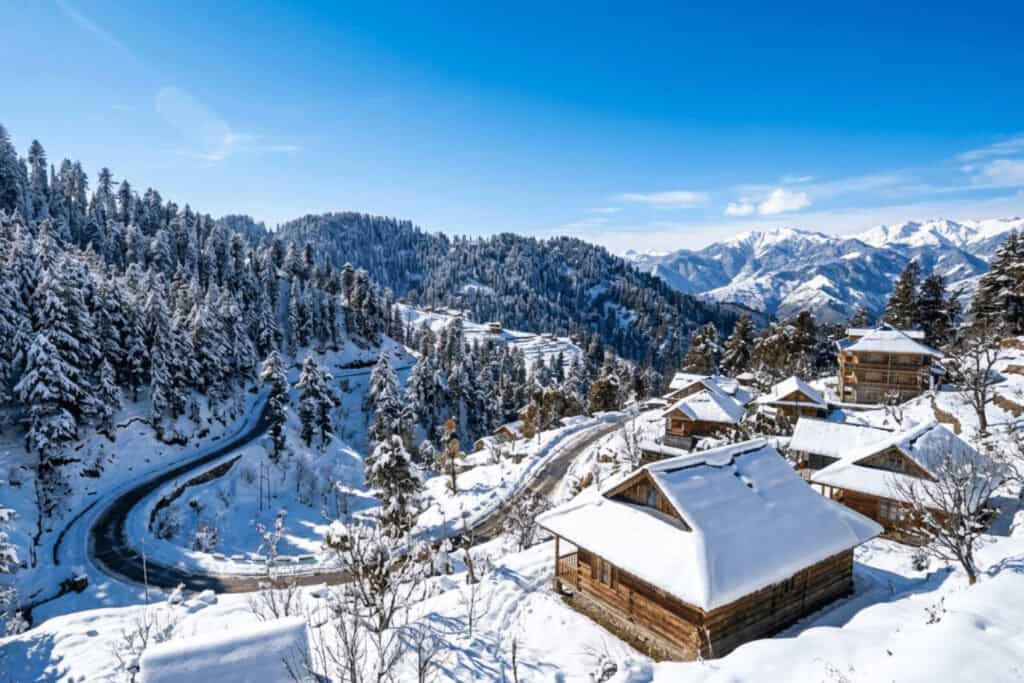
Cheapest places to visit in Himachal Pradesh are perfect for travelers looking for scenic mountains, adventure, and peaceful stays on a budget.
From the backpacker vibes of Kasol and McLeod Ganj to affordable hidden gems like Jibhi and Tirthan Valley, Himachal offers incredible experiences without expensive hotels or luxury spending.
Whether you want snow views, café culture, trekking, or riverside camping, this guide covers the best budget-friendly destinations, travel costs, money-saving tips, and the ideal time to visit Himachal Pradesh in 2026.
The cheapest places to visit in Himachal Pradesh are Kasol, McLeod Ganj, Jibhi, Tosh, and Tirthan Valley. These budget-friendly destinations offer cheap stays, scenic mountain views, trekking, and affordable local food, making them perfect for low-cost travel in 2026.
What to Realistically Expect: Daily Budget
| Travel Style | Daily Budget |
|---|---|
| Backpacker | ₹800–₹1,500 |
| Budget Traveller | ₹1,500–₹3,000 |
| Comfortable Budget | ₹3,000–₹5,000 |
These numbers are honest. They include food, accommodation, and basic local transport. They do not include the Volvo bus from Delhi, alcohol, or impulse paragliding sessions.
The Best Affordable Places in Himachal Pradesh
From peaceful riverside villages to lively backpacker hubs, these budget-friendly destinations offer the best mix of scenic beauty, cheap stays, local food, and unforgettable Himalayan experiences.
1. Kasol — The Backpacker Village That Still Works
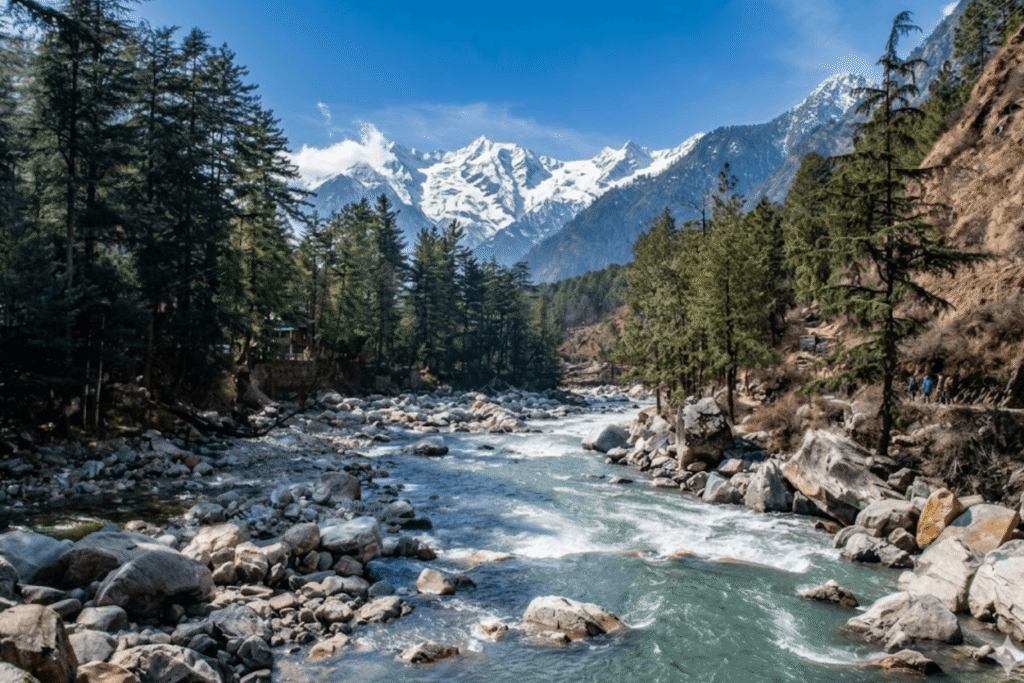
Kasol should not work as well as it does. It is tiny, occasionally overcrowded in May, and has no real sightseeing to speak of. And yet people arrive for three days and leave three weeks later.
The village sits along the Parvati River in the Kullu district, hemmed in by pine-covered hillsides. What makes it special is not any single attraction — it is the accumulation of small moments.
A meal at a riverside café where your table is literally four feet from the water. The walk to Chalal through pine forest so quiet you can hear your own breathing. The way evenings slow down here in a way they simply do not in cities.
What it costs:
- Dorm bed: ₹300–₹500 per night
- Private guesthouse room: ₹700–₹1,500
- Meals at riverside cafés: ₹100–₹250 per meal
- Local transport: essentially zero — the village is entirely walkable
Honest tip: Manikaran Sahib, the Sikh gurudwara just 4 km away, offers free langar meals to everyone. It is not a tourist trick — it is a genuine act of community hospitality that has fed travellers and pilgrims alike for decades. Go, eat, and leave a donation if you can.
2. Bir Billing — Slow Living at High Altitude
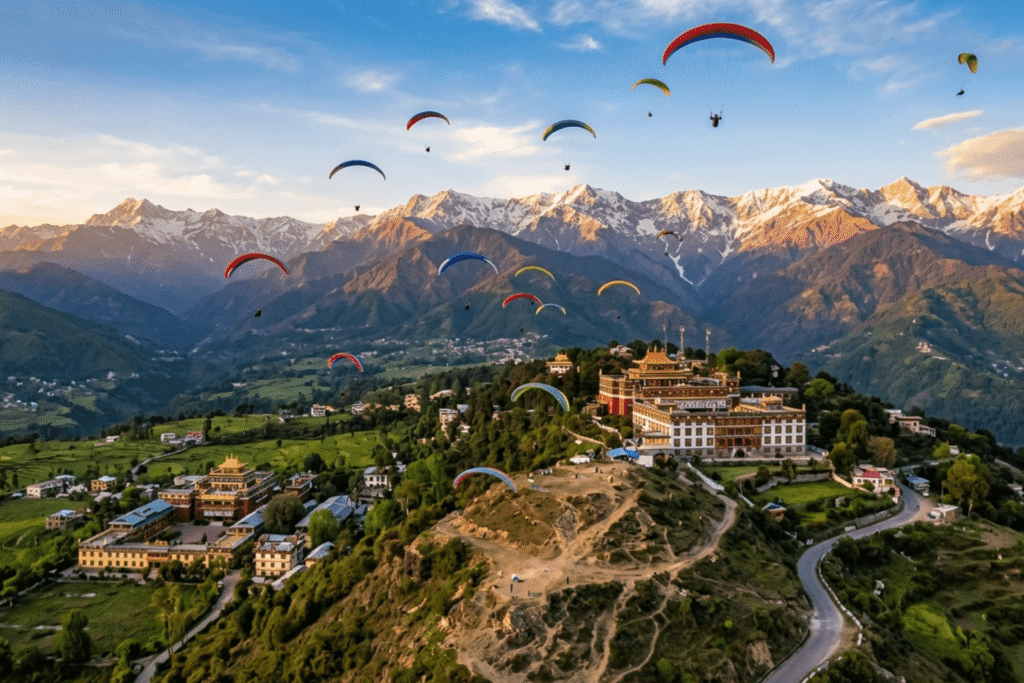
Most people come to Bir for the paragliding. Many end up staying for the momos.
Bir is a Tibetan settlement in Kangra district that has grown into one of Himachal’s most relaxed long-stay destinations. The lower village is where you eat, sleep, and wander.
Billing, up above, is where paragliders launch off one of the highest take-off sites in the world. You do not have to jump off anything to enjoy Bir — watching the gliders drift across the valley at sunset from a café table is one of those experiences that quietly becomes a core memory.
What makes Bir genuinely different from Kasol is the Tibetan influence. The monasteries here — Chokling and Sherab Ling in particular — are not tourist attractions with entry queues.
They are working religious spaces where monks go about their day around you. The incense, the prayer wheels, the low hum of chanting — it is calming in a way that is hard to manufacture.
What it costs:
- Budget guesthouse or café-with-rooms: ₹400–₹600 per night
- Momos and thukpa along the main street: ₹80–₹150
- Scooter rental to explore nearby villages: ₹400–₹600 per day
Honest tip: If you visit between November and February, the tourist crowd evaporates and prices drop noticeably. It is cold, yes — but the valley is clear, the monasteries are peaceful, and you will have Billing almost entirely to yourself.
3. Tirthan Valley — The One That Stays With You
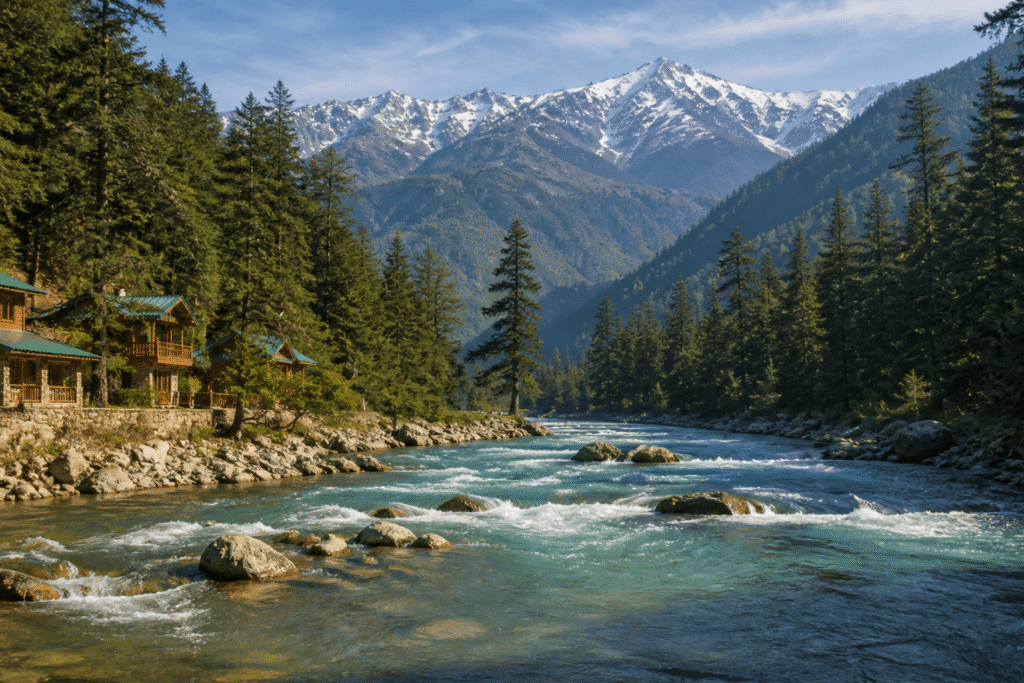
Tirthan Valley is what Himachal looked like before Instagram found it. Located near the Great Himalayan National Park in Kullu district, it has stayed genuinely quiet — partly because it is slightly harder to reach, and partly because it does not have the hostel-and-party infrastructure that Kasol and Manali do.
The valley is built around a river. Small family-run guesthouses sit along its banks, and most of them will cook you dinner with vegetables from their own garden if you ask nicely.
There are no luxury chains here, no tour operators with laminated price lists, no hawkers outside. Just the sound of water, birdsong, and the occasional goat.
The Great Himalayan National Park is a UNESCO World Heritage Site and entry fees are nominal. Riverside camping can be arranged for ₹500–₹800 per person per night. A day trip to nearby Jibhi fits naturally into any Tirthan itinerary without extra accommodation costs.
What it costs:
- Family guesthouse including home-cooked meals: ₹600–₹1,500 per night
- National park entry: nominal
- Daily expenses beyond accommodation: very low — there is genuinely not much to spend on
Honest tip: This is a place for people who want to sit still. If you need Wi-Fi, nightlife, or a busy café scene, go elsewhere. If you want to read a book on a rock above a glacial river with no noise except wind, Tirthan is yours.
4. McLeod Ganj and Dharamshala — Culture at a Backpacker Price
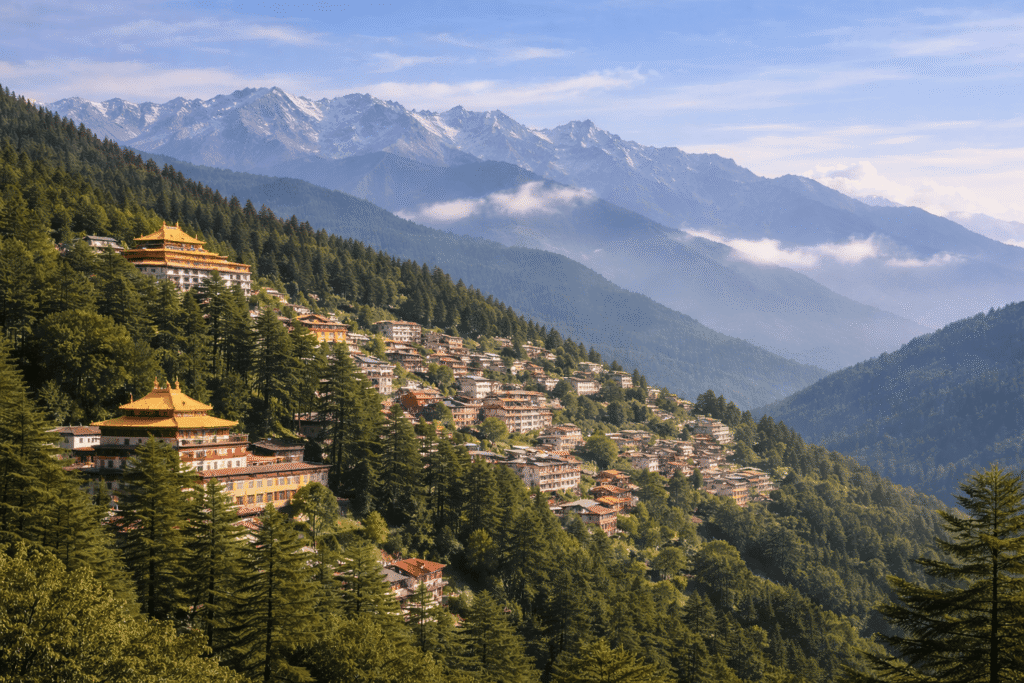
McLeod Ganj is one of the most culturally loaded places in India, and it charges you almost nothing for the privilege of being in it.
The seat of the Tibetan government-in-exile, home to the Dalai Lama, draped in prayer flags and smelling permanently of butter tea and incense — it is unlike anywhere else in the country.
The food alone justifies the trip. Tibetan cafés along Jogibara Road and Temple Road serve thukpa, momos, and thenthuk at prices that make no financial sense given how good they are.
A full, filling meal rarely crosses ₹200. The hostels are excellent — well-established, backpacker-oriented, and genuinely social.
Namgyal Monastery is open to visitors with voluntary donations. Bhagsu Waterfall is a free 2 km walk from town. The Triund Trek — one of the best day treks in the entire state — starts right here, needs no guide, and costs nothing beyond a minimal forest permit fee.
What it costs:
- Hostel dorm: ₹350–₹600 per night
- Budget guesthouse private room: ₹800–₹1,800
- Full meal at a Tibetan café: under ₹200
Honest tip: Spend at least one morning simply sitting in the courtyard of Namgyal Monastery. Watch the monks, listen to the chanting, and let the place exist around you without treating it as a photo opportunity. You will remember it longer than any trek.
5. Old Manali — The Sane Version of Manali
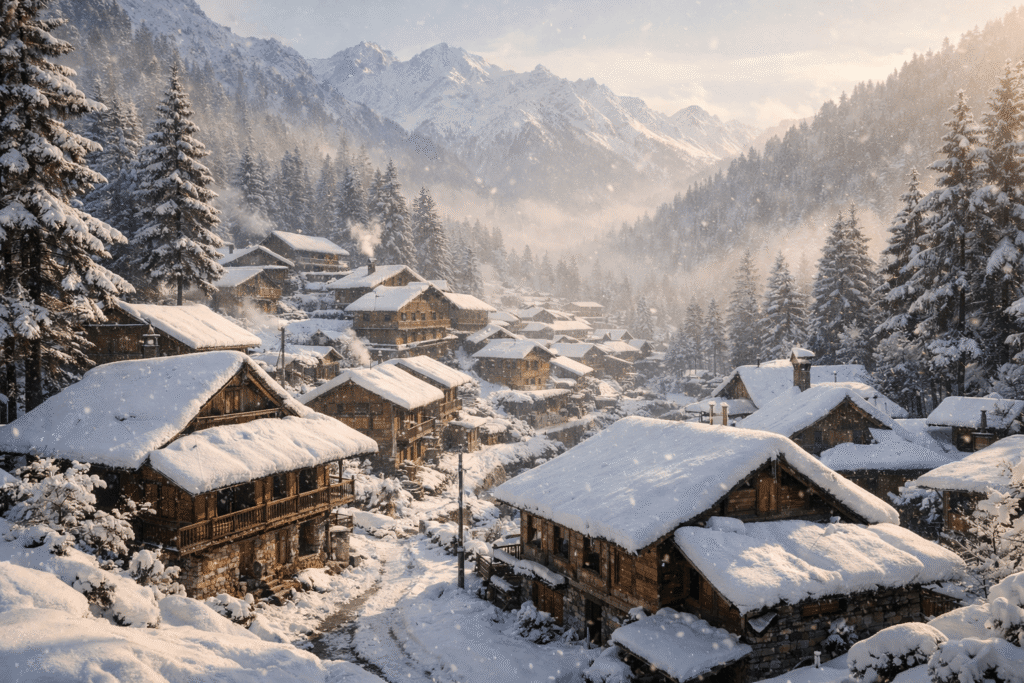
Manali has a reputation for being expensive, touristy, and chaotic — and the main town earns that reputation. Old Manali, sitting above it all on a quieter hillside, is a different matter entirely.
The lanes are tree-lined and calm. The guesthouses are small and often run by families who have been here for generations. The cafés are cosy, slightly eccentric, and serve excellent food at prices that bear no relation to what you would pay on Mall Road below. Staying in Old Manali lets you access the mountains, the Solang Valley, and Rohtang without paying the inflated rates that come with being in the tourist centre.
What it costs:
- Hostel or guesthouse: ₹400–₹1,000 per night
- Meals at local cafés: ₹80–₹200
- Bike rental for Solang Valley or nearby: ₹500–₹800 per day
Honest tip: Eat at local dhabas rather than the cafés catering to tourists — the food is the same quality or better, and the price difference is significant. A full dal-rice-sabzi meal at a dhaba costs ₹80–₹120. The same thing at a tourist café costs three times more.
6. Jibhi — Himachal’s Best-Kept Budget Secret
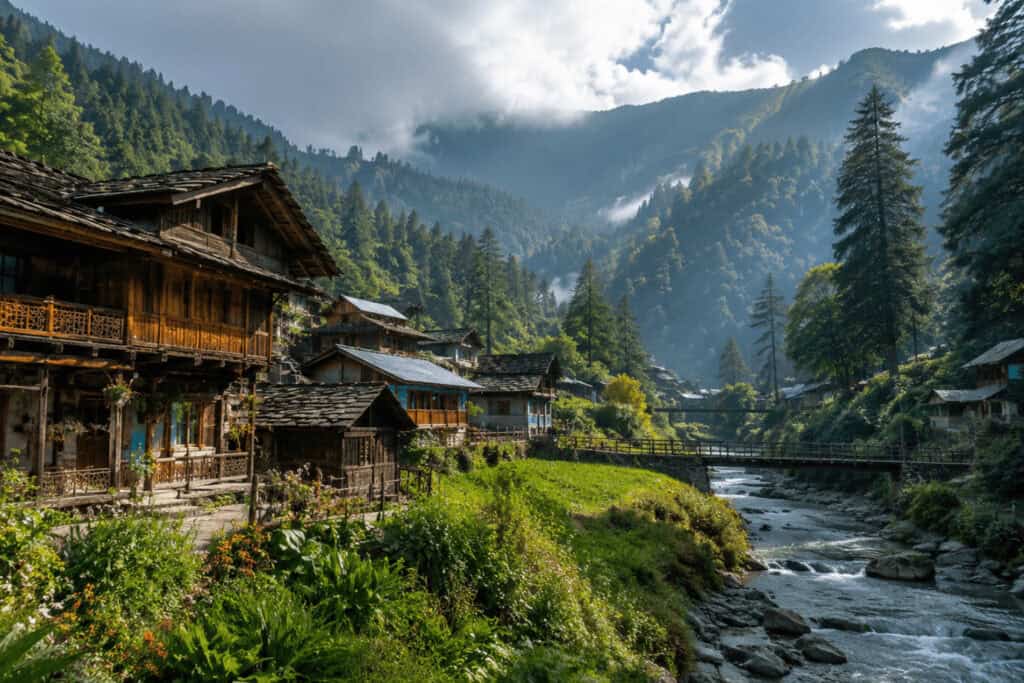
If you told most people outside of backpacker circles that Jibhi exists, they would not believe a place like this was real.
A tiny village in the Banjar Valley, built almost entirely of traditional Himachali wood and stone architecture, surrounded by dense forest, with a waterfall you can hear from your room at night.
It is genuinely quiet here. No touts, no traffic, no aggression. The wooden homestays and small guesthouses feel like staying in someone’s actual home — because you often are.
Prices reflect the simplicity and the warmth rather than the Instagram following the village has slowly been gathering.
Jalori Pass, at around 3,120 metres, is just 12 km away and reachable by shared taxi. The trail to Serolsar Lake near the pass is one of the most beautiful short treks in Himachal.
Mini Thailand — an unexpected meadow-and-lake combination nearby — costs practically nothing to visit and is far less crowded than anything near Manali.
What it costs:
- Wooden homestay often including breakfast: ₹700–₹1,500 per night
- Meals at local cafés: very low
- Shared taxi to Jalori Pass: ₹80–₹150 per person
7. Kasauli — The Civilised Weekend Escape
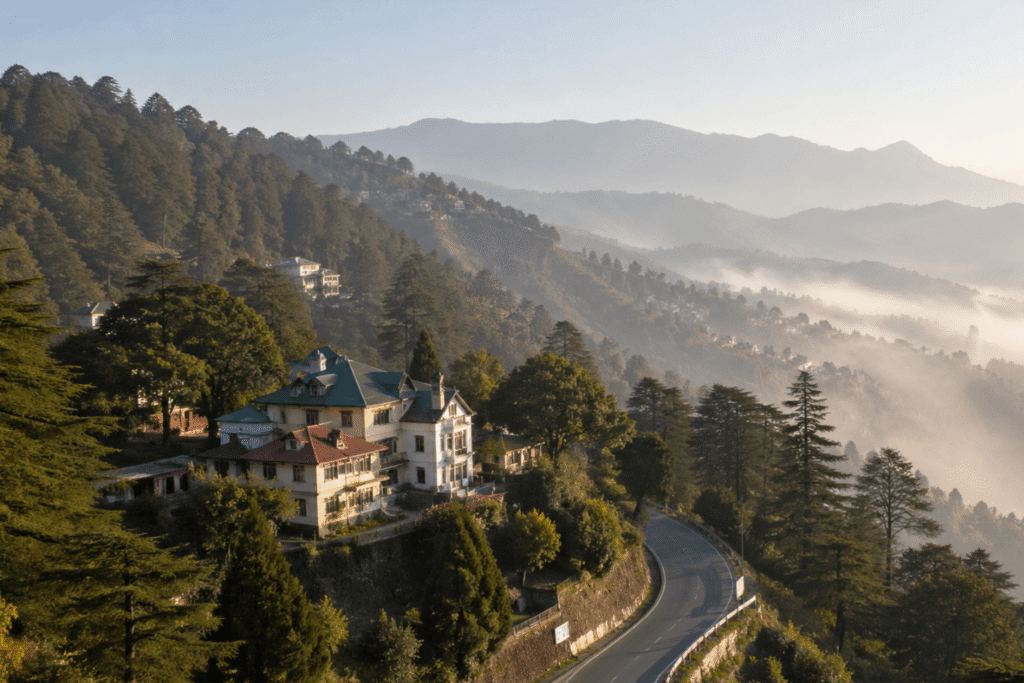
For travellers coming from Delhi, Chandigarh, or Punjab, Kasauli is the most sensible and affordable quick escape in Himachal.
Just 65 km from Chandigarh, it requires no overnight journey, no advance planning, and no tolerance for altitude sickness.
Kasauli’s Mall Road is nothing like the chaos of Shimla’s — it is a quiet, colonial-era promenade lined with old trees and Anglican-era architecture.
Christ Church, built in 1853, is free to visit and genuinely beautiful. Sunset Point offers views across the Shivalik range that cost nothing and disappoint nobody.
What it costs:
- Budget hotel: ₹1,000–₹2,500 per night
- Food and local expenses: moderate — no tourist trap pricing
- Bus from Chandigarh: under ₹200
When to Go: Honest Seasonal Advice
Peak season (May–July and December–January) brings crowds and prices that can double or triple, particularly in Manali and Kasol. If your budget matters, avoid these windows unless you book months ahead.
Shoulder season (March–April and September–November) is the real sweet spot. October and November especially — the post-monsoon sky is exceptionally clear, the crowds have thinned, and accommodation rates drop sharply. These are the best months to visit most of Himachal.
Monsoon (July–August) brings landslide risk on mountain roads but rock-bottom prices. If you are comfortable with disrupted plans and want the lowest possible costs, stick to lower-altitude places — Kasauli, Dharamshala, Bir — where the rain is dramatic but not dangerous.
Budget Snapshot
| Expense | Budget Range |
|---|---|
| Hostel / Dorm | ₹300–₹800 per night |
| Budget hotel | ₹1,000–₹2,500 per night |
| Food | ₹300–₹800 per day |
| Local transport | ₹100–₹500 per day |
| Trekking / activities | ₹0–₹1,500 per activity |
Practical Money-Saving Advice
Take HRTC buses. The Himachal Road Transport Corporation connects almost every corner of the state at a fraction of private operator prices. Chandigarh to Manali costs under ₹700 on HRTC versus ₹1,500–₹2,500 with private operators. For shorter routes, local buses cost almost nothing.
Use shared taxis. On popular routes — Bhuntar to Kasol, Dharamshala to McLeod Ganj — shared cabs leave frequently and cost a fraction of private hire. Ask locals at the taxi stand rather than approaching the driver directly.
Book Volvo buses early. For overnight journeys from Delhi to Manali or Shimla, Volvo AC buses are the most comfortable budget option. Book at least a week ahead during peak season to get the ₹700–₹1,200 range before prices climb.
Eat where locals eat. The price gap between a local dhaba and a tourist restaurant in Himachal is enormous. Dal rice at a dhaba costs ₹80–₹120. The gurudwara langar at Manikaran costs nothing and is often better than anything you will pay for.
Stay longer in fewer places. The biggest budget drain in Himachal is movement — taxis between towns, new accommodation every night, rushed meals at bus stops. Stay three or four days in each place. You will spend less, see more, and actually absorb something.
Frequently Asked Questions
Yes, you can easily visit Himachal Pradesh on a budget by using HRTC buses, staying in hostels or homestays, and eating at local dhabas. Many backpackers travel across Himachal for around ₹500–₹1500 per day.
The “₹1500 scheme” usually refers to different government financial assistance schemes announced in Himachal Pradesh from time to time, especially for women or eligible beneficiaries. The details and eligibility can change, so it’s best to check official Himachal Pradesh government announcements for updated information.
Khajjiar is known as the “Mini Switzerland of India” because of its lush green meadows, cedar forests, and scenic landscapes.
You can explore budget-friendly destinations like Rishikesh, Kasol, McLeod Ganj, and Pushkar under a ₹5000 budget if you use budget transport, hostels, and local food options.
Final Thoughts
The mistake most first-time visitors make in Himachal is trying to do too much. Six destinations in seven days, three taxi rides a day, a different guesthouse every night. You end up spending more and experiencing less.
The cheapest and most rewarding version of Himachal is the slow one. One valley for four days. One river to sit beside every morning.
One set of mountains to watch change colour at dusk. The bus, not the cab. The dhaba, not the café with the English menu. The homestay where the owner’s mother brings you chai you did not ask for.
That version does not require much money. It requires the willingness to stop moving long enough to let a place actually reach you.