
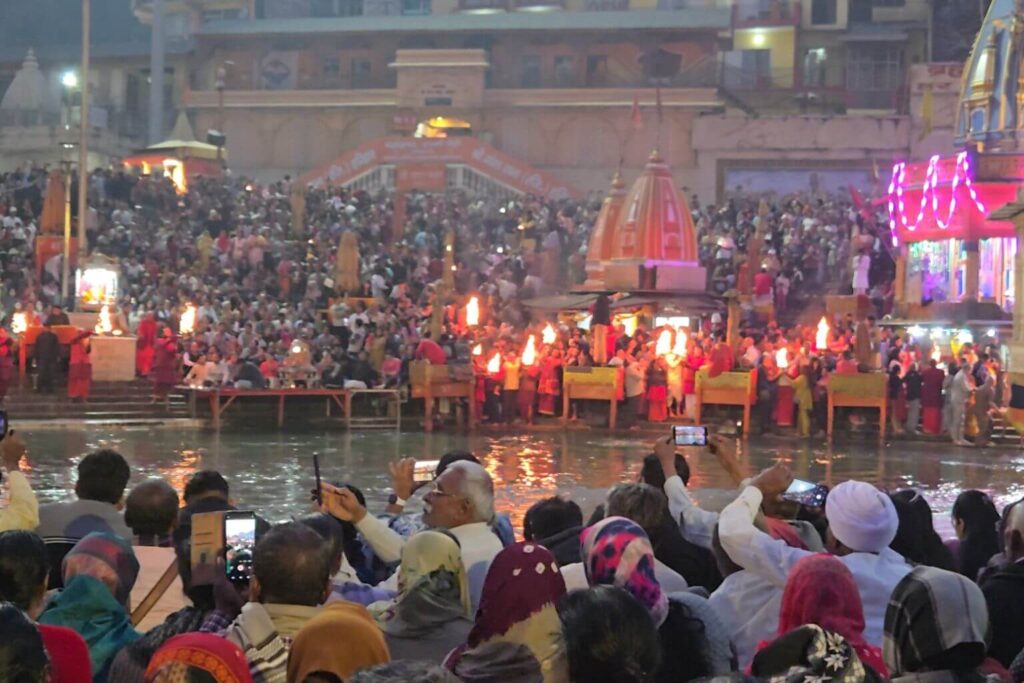
If you are planning a visit to Haridwar and want to witness the most sacred ritual on the banks of the Ganges, knowing the exact Ganga Aarti timing in Haridwar is the first thing you need. The evening Ganga Aarti at Har Ki Pauri is not just a religious ceremony — it is one of the most visually and spiritually overwhelming experiences in all of India.
Hundreds of brass lamps swaying over the fast-moving river, conch shells echoing off stone ghats, thousands of devotees releasing flower-laden diyas onto the current — this is Haridwar at its most alive. This guide covers everything you need to know: month-by-month timings, the best spots to watch, what to expect, morning versus evening aarti, and practical tips to make the most of your visit.
Ganga Aarti Timing in Haridwar: Month by Month
The Ganga Aarti in Haridwar takes place twice every day — once at dawn and once at sunset — without exception, 365 days a year. Because the ceremony is tied to sunrise and sunset, the timing shifts with the seasons. Below is a month-by-month breakdown of the evening aarti timings for 2026:
| Month | Evening Aarti Time |
|---|---|
| January | 6:00 PM |
| February | 6:30 PM |
| March | 6:30 PM |
| April | 7:00 PM |
| May | 7:00 PM |
| June | 7:15 PM |
| July | 7:15 PM |
| August | 7:00 PM |
| September | 6:30 PM |
| October | 6:00 PM |
| November | 5:45 PM |
| December | 5:30 PM |
Important note: These timings are approximate and follow the local sunset schedule. Always verify the exact time on the day of your visit with your hotel or at the ghat itself, as timings can shift by 10–15 minutes around seasonal transitions. The morning aarti (dawn aarti) is held at sunrise, typically between 5:00 AM and 6:30 AM depending on the season.
Where Is the Ganga Aarti Held?
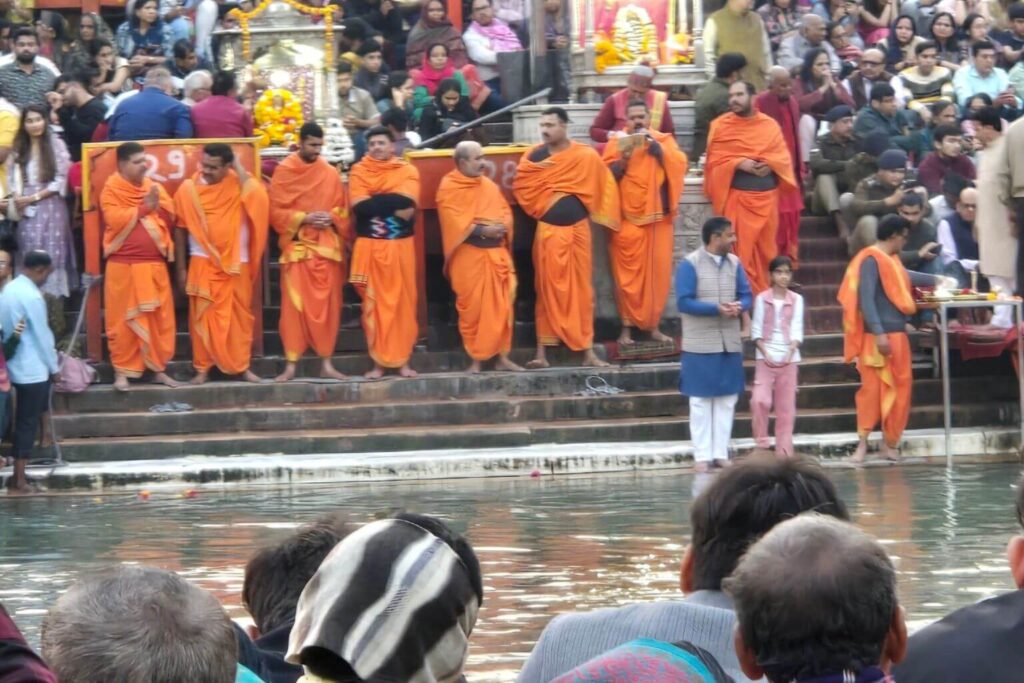
The main and most celebrated Ganga Aarti in Haridwar is held at Har Ki Pauri, also called Brahma Kund. This is the most sacred ghat in Haridwar — the point where the Ganges is believed to have touched the feet of Lord Vishnu, and where a footprint in the stone marks the spot. The ghat is located in the heart of the old city, about 15 minutes on foot from Haridwar Junction railway station.
Har Ki Pauri is the correct and primary venue. Smaller aartis also take place at other ghats along the river — Kushavarta Ghat, Birla Ghat, and Subhash Ghat among them — but none of these match the scale, organisation, or spiritual intensity of the Har Ki Pauri ceremony. If you are visiting Haridwar specifically for the Ganga Aarti, Har Ki Pauri is the only destination that matters.
Morning Aarti vs Evening Aarti: Which Should You Attend?
Both the morning and evening aartis are genuine and moving ceremonies, but they offer very different experiences.
Evening Aarti is the more famous of the two and for good reason. The combination of fading light, the glow of hundreds of lamps, the mass of devotees, and the sound of bells and chanting creates an atmosphere of extraordinary intensity.
The crowd at the evening aarti is large — on weekends and festival days it can number in the tens of thousands. The visual spectacle is at its peak here: the river is dark, the flames are bright, and the leaf boats carrying lit diyas drift downstream like a river of stars.
Morning Aarti is held at dawn and attended by a fraction of the evening crowd. What it loses in visual drama it more than compensates for in atmosphere. The Ganges in the early morning light, the cold air, the sound of bells in near-silence, priests performing the ritual with the same devotion they bring every evening — this is a profoundly meditative experience.
Solo travellers, photographers, and those seeking a more contemplative connection with the place will often find the morning aarti more meaningful. It is also logistically easier: you can stand close to the ghat, move freely, and take photographs without the press of thousands of bodies around you.
The ideal approach, if your schedule allows, is to attend both — the morning aarti on your first day and the evening aarti on your second. The contrast between the two will give you a complete picture of what this ritual means to those who perform and attend it.
What Happens During the Ganga Aarti?
Understanding the structure of the ceremony helps you engage with it more fully rather than simply watching it as a spectacle.
The aarti begins with the blowing of conch shells, which signals the start of the ceremony and is said to drive away negative energies. Priests — typically four to six at the main ghat — take their positions on the stone steps in saffron robes.
Each priest holds a large multi-tiered brass lamp (called a aarti diya or deepak) containing multiple wicks soaked in ghee. As the chanting begins, the lamps are lit simultaneously.
The chanting follows a sequence of devotional hymns to the Ganges — Ganga Stuti — recognising the river as a goddess (Ganga Mata) rather than simply a body of water. As the hymns build in intensity, the priests begin rotating the large lamps in circular arcs over the river, the flames tracing patterns in the darkening air.
Bells are rung continuously by attendants. Incense fills the air. The crowd, many of them with hands pressed together in prayer, sways gently with the rhythm of the chanting.
At various points during the ceremony, devotees release diyas — small clay or leaf boats carrying a flower and a lit wick — onto the current of the Ganges. Watching these float downstream, their flames holding against the fast current before eventually being extinguished by the water, is for many visitors the single most moving image of their India journey.
The entire ceremony lasts approximately 45 minutes. It concludes with the distribution of prasad (sacred food offering, typically sugar crystals or flower petals) to those present.
Best Spots to Watch the Ganga Aarti at Har Ki Pauri
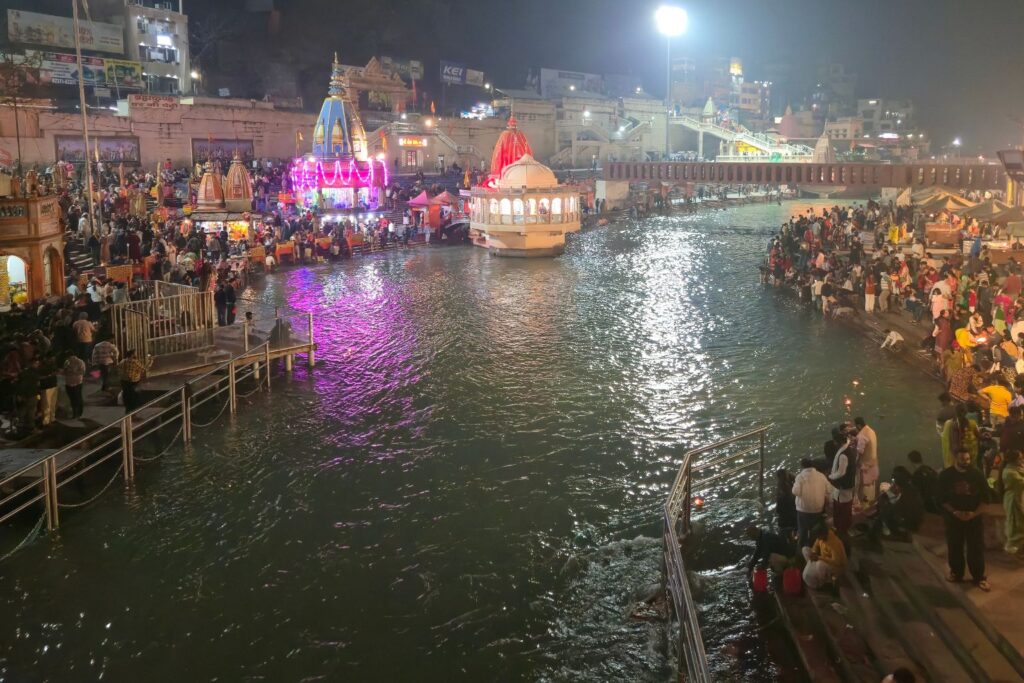
The geography of Har Ki Pauri gives you several options depending on what kind of experience you want.
Upper Ghat Steps: The elevated stone steps on the eastern bank offer the best elevated view of the entire ceremony. You can see the priests, the river, and the crowd simultaneously. Arrive 45 minutes early to claim a good position here, especially on weekends.
Riverside at Ghat Level: Standing at the water’s edge gives you the most immersive experience — you are among the devotees, close to the priests, and can hear every nuance of the chanting and bells. This is the most crowded position and requires patience, but the proximity is unmatched.
Bridge Over the Ghat: The footbridge adjacent to Har Ki Pauri offers an aerial view of the ceremony and the river. This is an excellent position for photography and for watching the diya boats float downstream. The bridge fills up quickly; arrive early.
Opposite Bank: The western bank of the Ganges offers a view of the ghat from across the water. The perspective here is different — you see the entire ghat face illuminated by the aarti lamps reflected in the river. Less crowded than the main ghat side and surprisingly beautiful.
Tips for Attending the Ganga Aarti
Arrive Early: For the evening aarti, aim to arrive at Har Ki Pauri at least 30 to 45 minutes before the scheduled time. The area fills rapidly, especially on Saturdays, Sundays, and any festival day. On a busy weekend evening, the crowd can make movement near the ghat almost impossible if you arrive late.
Remove Footwear: Shoes and sandals must be removed before entering the ghat area. Bring a small bag or use the paid shoe storage counters near the ghat entrance (typically ₹10–₹20). Wearing slip-on footwear makes this easier.
Dress Modestly: Covered shoulders and legs are expected and respected. Avoid shorts and sleeveless tops. A light dupatta or shawl serves multiple purposes — modesty, warmth in winter evenings, and sitting on ghat steps.
Photography: Photography and videography are permitted at the Ganga Aarti. However, be mindful that you are in the middle of a living religious ceremony, not a staged show. Keep your phone or camera unobtrusive during the most devotional moments and avoid using flash close to the priests or the lamps.
Diya Offering: You can purchase small diya boats from vendors near the ghat for ₹10–₹20. Lighting and releasing a diya on the Ganges is a simple act that most visitors find unexpectedly moving, regardless of their religious background.
Avoid Festival Weekends If Crowds Overwhelm You: Mahashivaratri, Kumbh Mela dates, Diwali, and long weekends bring enormous crowds to Har Ki Pauri. The aarti on these occasions is spectacular but the density of people requires significant patience. If you prefer a calmer experience, visit on a Tuesday or Wednesday in the off-season.
Security and Belongings: The crowd at the evening aarti is dense enough to warrant keeping your valuables — phone, wallet, passport — in a secure inner pocket or money belt. Pickpocketing, while not rampant, is a minor risk in any large Indian crowd.
Ganga Aarti on Special Occasions
The Ganga Aarti takes on an even greater scale and significance on certain dates throughout the year.
Mahashivaratri (February/March): The night-long festival of Shiva draws hundreds of thousands to Haridwar. The aarti on Mahashivaratri night is performed with additional priests and extended chanting — an overwhelming sensory and spiritual experience.
Ganga Dussehra (May/June): This ten-day festival celebrates the descent of the Ganges from heaven to earth. The aarti during Ganga Dussehra is performed with special elaborate rituals and the ghats are decorated with flowers and lights from dusk to midnight.
Kartik Purnima (October/November): The full moon in the month of Kartik is one of the most auspicious bathing days in the Hindu calendar. The evening aarti on Kartik Purnima, performed under a full moon with the entire ghat area illuminated, is considered among the most beautiful of the year.
Diwali (October/November): The festival of lights transforms Har Ki Pauri into something extraordinary — the ghat steps lined with diyas, the river surface covered in floating lamps, and the aarti performed against this backdrop of light is an experience that is genuinely difficult to describe in words.
Getting to Har Ki Pauri for the Aarti
Har Ki Pauri is located in the centre of old Haridwar and is easily walkable from most accommodation in the city. From Haridwar Junction railway station, the ghat is approximately 1.5 kilometres on foot — a 15 to 20 minute walk through the bazaar streets. From the ISBT bus stand it is slightly farther at about 2 kilometres.
Auto-rickshaws and e-rickshaws run throughout the city and will drop you at the nearest vehicle access point to the ghat, from where you walk the final few hundred metres. The area immediately around Har Ki Pauri is pedestrianised in the evenings before the aarti.
If you are staying further from the city centre — near Sapt Sarovar or on the Rishikesh highway side — allow extra travel time, particularly on busy evenings when traffic on the approach roads can slow to a crawl.
Ganga Aarti in Haridwar vs Varanasi: Which Is Better?
This is one of the most common questions travellers ask when planning a northern India itinerary. Both cities hold nightly Ganga Aartis that are among the most powerful experiences India offers, but they are different in character.
The Varanasi Ganga Aarti at Dashashwamedh Ghat is more elaborate and theatrical — performed by a larger number of priests in perfect synchrony, with a more choreographed visual quality.
Haridwar’s aarti is rawer, more intimate in feeling despite the large crowds, and the setting — the fast-flowing Ganges straight from the mountains, the stone ghats, the backdrop of the Shivaliks — is arguably more dramatic. Haridwar also has the advantage of the morning aarti experience, which Varanasi’s version does not replicate as effectively.
If you can visit both, do. If you must choose, the Ganga Aarti timing in Haridwar and the overall atmosphere of Har Ki Pauri make Haridwar the slightly more accessible and in some ways more moving of the two for first-time visitors.
Practical Summary
The Ganga Aarti timing in Haridwar ranges from 5:30 PM in December to 7:15 PM in June and July, always aligned with sunset. The ceremony is held at Har Ki Pauri twice daily — at dawn and at dusk — every single day of the year without interruption.
Arrive early, dress modestly, leave your shoes at the entrance, and if possible attend both the morning and evening versions during your stay.
However you arrive at Haridwar — by faith, by curiosity, or simply by chance — the Ganga Aarti will be the moment you remember longest.
Last updated: February 2026. Timings are approximate and may vary by 10–15 minutes around seasonal transitions.
FAQ
Ganga Aarti is held twice daily — around 5:30–6:30 AM in the morning and around sunset (6:00–7:00 PM), depending on the season.
The Ganga Aarti usually lasts about 45 minutes to 1 hour.
The best spot is Brahma Kund at Har Ki Pauri, as it is the main ghat where the ceremony takes place.
Yes, Ganga Aarti is performed every day throughout the year, including weekends and most festivals.
Pingback: Haridwar Travel Guide 2026: Temples, Ganga Aarti, Best Time & Things to Do - exploreworldtrip.com
Pingback: Top Places to Visit in Rishikesh -2026 Travel Guide - exploreworldtrip.com
Pingback: Best Hotels Near Har Ki Pauri (2026 Guide) — Budget, Mid-Range & Luxury - exploreworldtrip.com