
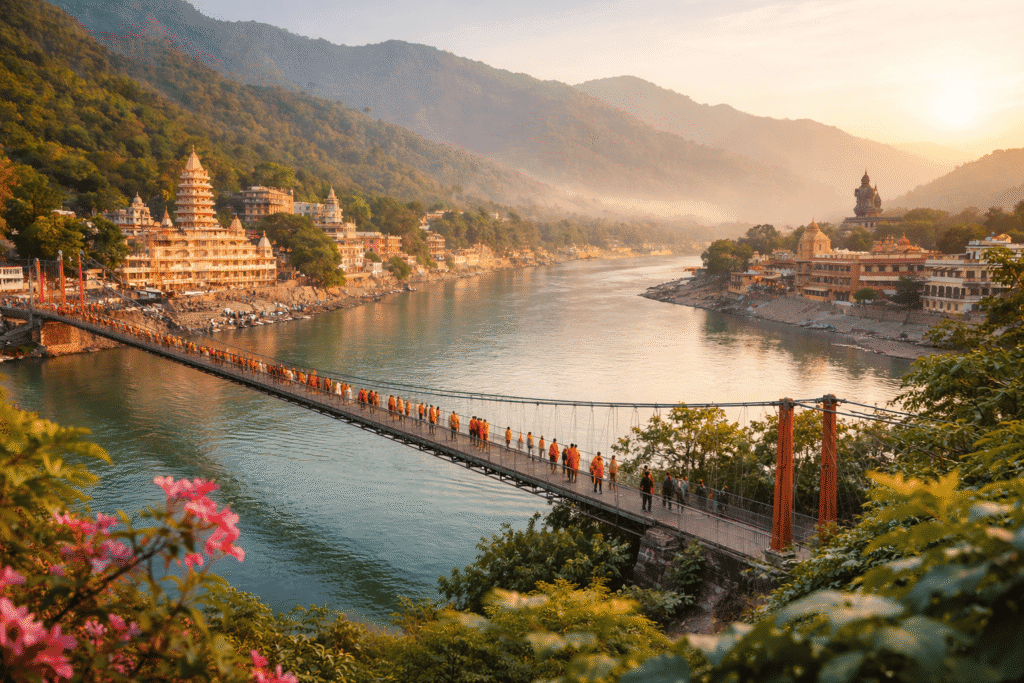
Nestled in the foothills of the Himalayas, Rishikesh city stands as one of India’s most spiritual and adventure-filled destinations. Located in Rishikesh Uttarakhand, this sacred town sits along the banks of the holy Ganges River, where the rushing waters descend from the mountains into the plains.
Known as the “Yoga Capital of the World,” Rishikesh attracts seekers, adventurers, and pilgrims from across the globe who come to experience its unique blend of ancient spirituality and natural beauty. The city’s iconic suspension bridges, such as Laxman Jhula and Ram Jhula, connect the riverbanks while offering breathtaking views of the surrounding mountains.
Whether you’re drawn to the evening Ganga Aarti ceremonies, world-class white-water rafting, renowned yoga ashrams, or simply the serene atmosphere of this Himalayan gateway, Rishikesh Uttarakhand offers a transformative experience that nourishes both body and soul.
Laxman Jhula: The Iconic Suspension Bridge
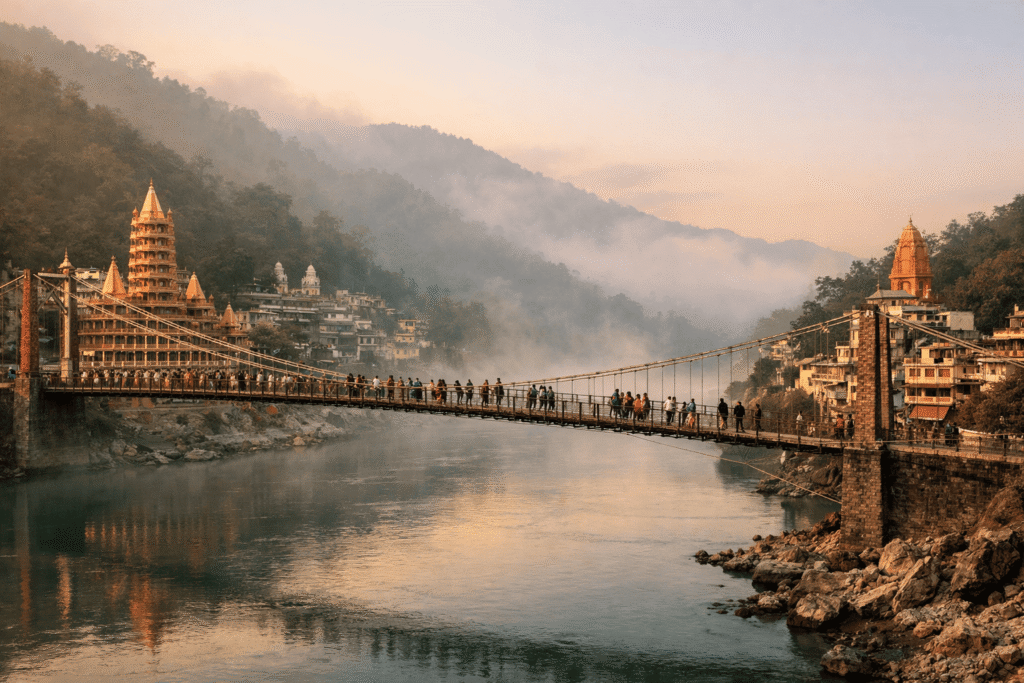
No visit to Rishikesh is complete without walking across the legendary Laxman Jhula, one of the most photographed landmarks in the city. This 450-foot-long iron suspension bridge stands 70 feet above the mighty Ganges, swaying gently as pilgrims, tourists, and locals cross it daily. Built in 1929, the bridge connects the villages of Tapovan in Tehri Garhwal and Jonk in Pauri Garhwal.
According to Hindu mythology, this is the exact spot where Lord Rama’s younger brother Laxman crossed the river using jute ropes, giving the bridge its name. As you walk across, you’ll witness breathtaking views of the turquoise Ganges flowing beneath, surrounded by lush green hills. The area around Laxman Jhula buzzes with activity, featuring numerous temples, ashrams, cafes, and shops selling spiritual items, making it a central hub for Rishikesh sightseeing.
The bridge connects to several important temples including the 13-story Trayambakeshwar Temple and Lakshman Temple on either side. Early morning or sunset visits offer the most magical experiences, when the golden light bathes the bridge and the surrounding landscape in warm hues.
Ram Jhula: The Spiritual Sister Bridge
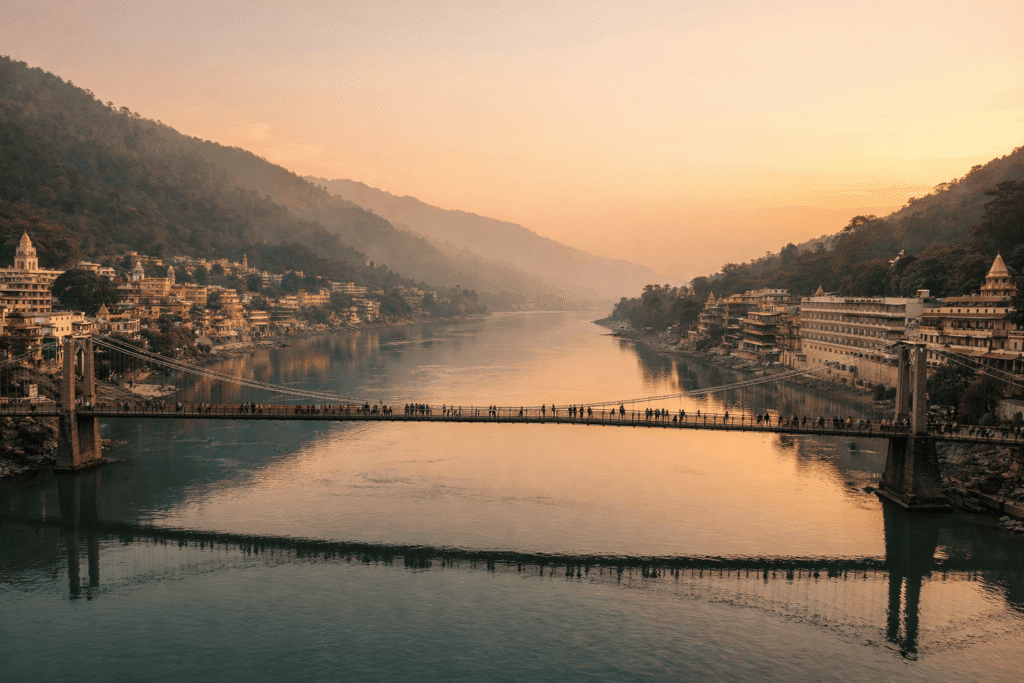
Similar to its more famous counterpart, Ram Jhula is another impressive suspension bridge that spans the Ganges River. Located about two kilometers downstream from Laxman Jhula, this bridge was built in 1986 and is slightly longer, measuring about 750 feet. Ram Jhula serves as a vital link between the Swargashram area on the eastern bank and Sivananda Ashram on the western bank.
The bridge offers equally stunning views of the river and mountains, but with a slightly calmer atmosphere compared to the bustling Laxman Jhula. The area around Ram Jhula is dotted with renowned ashrams, yoga centers, and the famous Beatles Ashram. Walking across this bridge during sunrise provides a serene experience as the first rays of sunlight illuminate the Himalayas in the distance.
Triveni Ghat: The Sacred Confluence
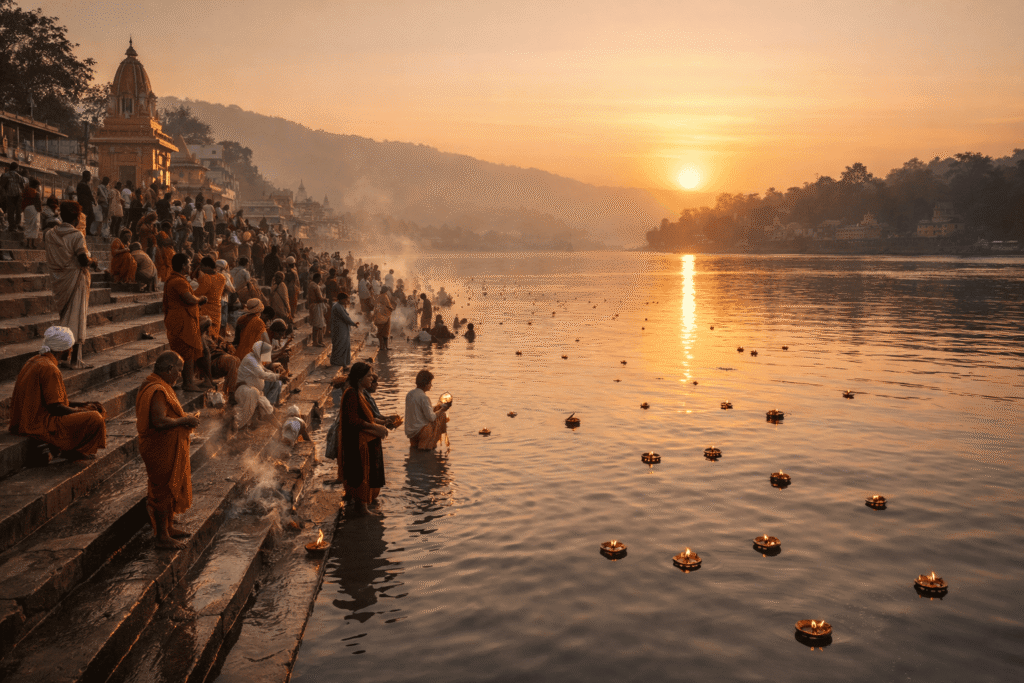
Triveni Ghat holds immense religious significance as it is believed to be the confluence point of three holy rivers: Ganga, Yamuna, and Saraswati. This sacred bathing spot is one of the most revered Rishikesh tourist places, attracting thousands of devotees who come to take a holy dip in the purifying waters of the Ganges.
The highlight of visiting Triveni Ghat is the mesmerizing Ganga Aarti ceremony held every evening at sunset. As dusk descends, hundreds of devotees gather on the ghats, and priests dressed in traditional attire perform the aarti with large brass lamps, accompanied by devotional songs and the rhythmic sound of bells. The sight of countless diyas (oil lamps) floating on the river creates an ethereal atmosphere that touches the soul.
The ghat features numerous steps leading down to the river, making it easily accessible for pilgrims and visitors. Many people visit Triveni Ghat for a spiritual bath, believing it washes away sins and brings blessings. The area also has several temples and shops selling puja materials, making it a complete spiritual experience.
Parmarth Niketan Ashram: Spiritual Sanctuary
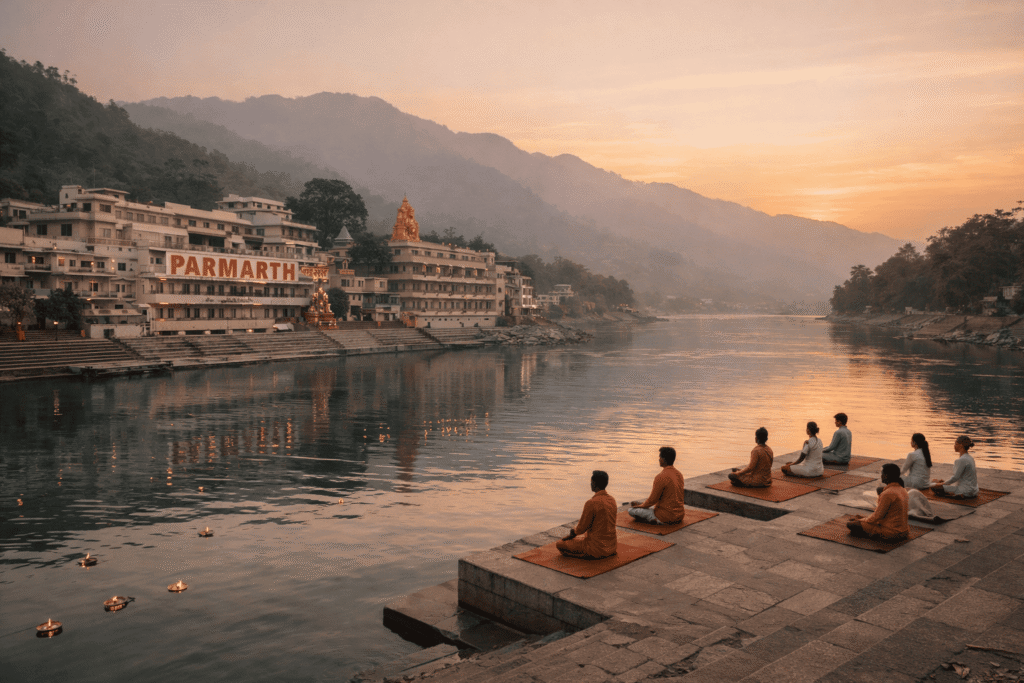
Parmarth Niketan is the largest ashram in Rishikesh, sprawling across acres of beautifully maintained gardens along the banks of the Ganges. Founded in 1942, this ashram has become a global center for spiritual learning, yoga, and meditation. The ashram accommodates over 1,000 pilgrims and features more than 1,000 rooms, making it a city within a city.
The ashram’s peaceful environment, with its lush gardens filled with flowering plants and spiritual statues, creates an ideal atmosphere for introspection and spiritual practice. Visitors can participate in daily yoga and meditation sessions, attend spiritual discourses, and experience the renowned Ganga Aarti ceremony conducted at the ashram’s ghat every evening.
One of the unique features of Parmarth Niketan is its museum displaying photographs and artifacts related to Himalayan spirituality. The ashram also hosts the annual International Yoga Festival every March, attracting yoga enthusiasts and spiritual seekers from around the world. Whether you’re staying at the ashram or just visiting for a few hours, Parmarth Niketan offers a genuine experience of traditional Indian spirituality.
Beatles Ashram (Chaurasi Kutiya): Where Music Met Meditation
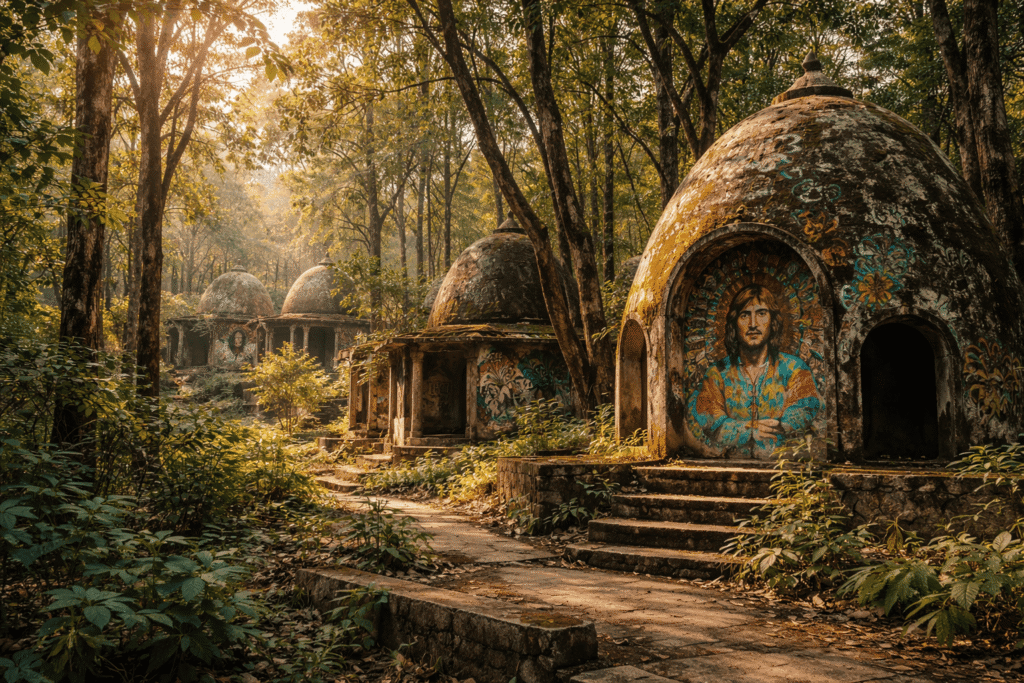
The Beatles Ashram, officially known as Chaurasi Kutiya or Maharishi Mahesh Yogi Ashram, is where the legendary Beatles stayed in 1968 to learn transcendental meditation. This abandoned ashram has now become one of the most unique places to visit in Rishikesh, attracting music lovers and spiritual seekers alike.
The ashram, built in the 1960s, features distinctive dome-shaped meditation cells, lecture halls, and residential quarters, all now covered in vibrant graffiti and street art depicting the Beatles and various spiritual themes. Walking through the overgrown pathways and exploring the crumbling structures gives visitors a hauntingly beautiful experience, combining nature reclaiming its space with pop culture history.
During their stay, the Beatles composed numerous songs, including many tracks from the “White Album.” The peaceful environment and spiritual teachings they received here significantly influenced their music and philosophy. Today, the ashram has been reopened to the public and stands as a testament to the meeting of Eastern spirituality and Western pop culture.
Neelkanth Mahadev Temple: The Lord’s Abode
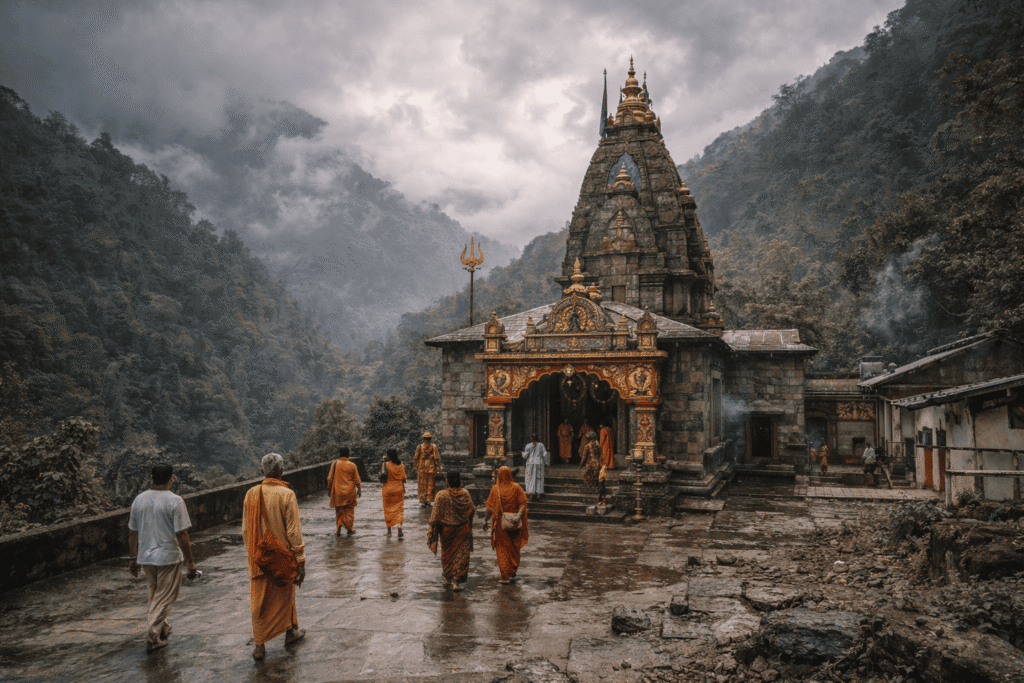
Perched at an altitude of 1,330 meters amidst dense forests, the Neelkanth Mahadev Temple is one of the most sacred Shiva temples in India. Located about 32 kilometers from Rishikesh, this ancient temple draws thousands of devotees, especially during the Shravan month and Maha Shivaratri festival.
According to legend, this is the place where Lord Shiva consumed the poison that emerged during the churning of the ocean, which turned his throat blue, giving him the name Neelkanth (blue throat). The temple sits at the confluence of the Pankaja and Madhumati rivers, adding to its scenic beauty.
The journey to the temple itself is an adventure, offering spectacular views of the surrounding mountains and valleys. The temple complex features intricate architecture and is surrounded by natural beauty, with the sound of the flowing rivers and chirping birds creating a peaceful ambiance. While the trek can be challenging, many devotees undertake the journey on foot as an act of devotion.
Rajaji National Park: Wildlife Adventure
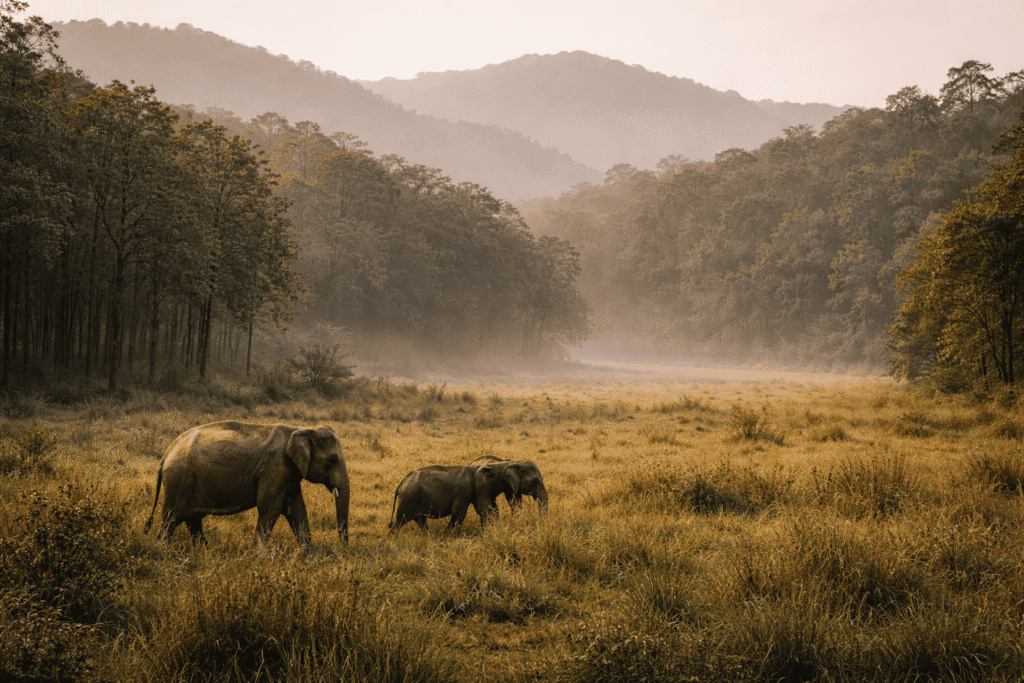
For nature and wildlife enthusiasts, Rajaji National Park offers a refreshing break from the spiritual circuit of Rishikesh. Spread across 820 square kilometers, this national park is home to elephants, tigers, leopards, deer, and over 400 species of birds, making it a paradise for wildlife lovers and photographers.
The park, formed by the amalgamation of three sanctuaries, features diverse ecosystems ranging from sal forests to riverine vegetation. Visitors can explore the park through jeep safaris that take you deep into the wilderness, offering chances to spot majestic Asian elephants, the elusive Bengal tiger, and if you’re lucky, the rare king cobra.
The best time to visit is from November to June when the park remains open to tourists. Early morning safaris offer the best wildlife viewing opportunities. The park also has several watchtowers and nature trails for those who prefer walking through the wilderness. Rajaji National Park adds an exciting dimension to Rishikesh sightseeing, proving the city offers more than just spiritual experiences.
Kunjapuri Temple: Sunrise Spectacular
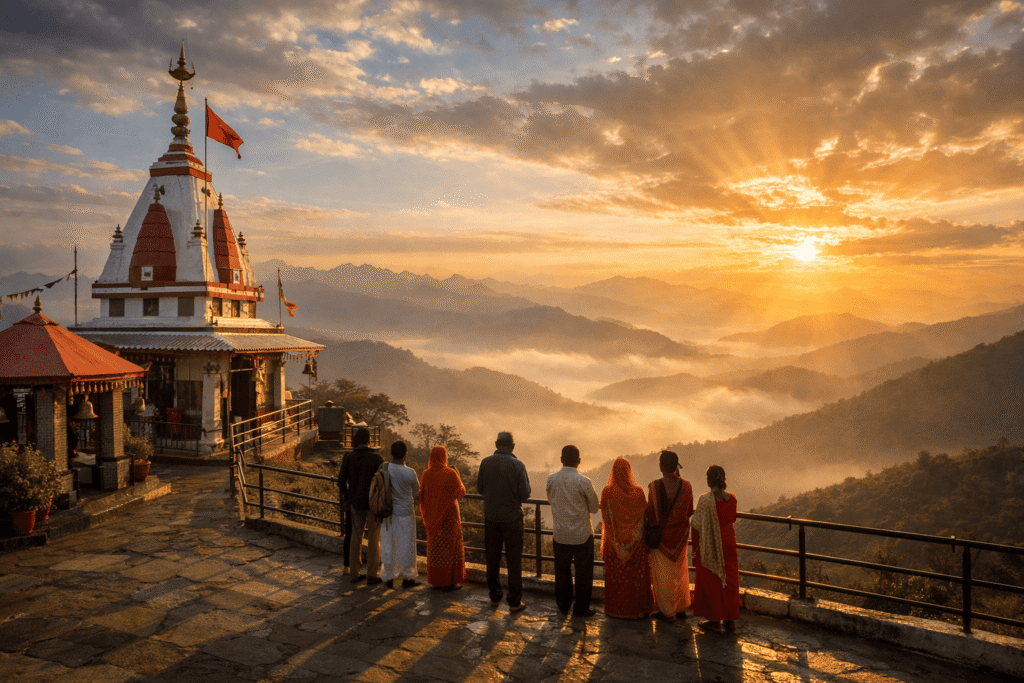
Situated at an altitude of 1,676 meters, Kunjapuri Temple is one of the 52 Shakti Peethas and offers one of the most spectacular sunrise views in Rishikesh. This ancient temple dedicated to Goddess Durga requires an early morning start, but the panoramic views of the Himalayan peaks including Gangotri, Banderpoonch, and Chaukhamba make every moment worthwhile.
The temple holds religious significance as it is believed that Goddess Sati’s chest fell here when Lord Vishnu cut her body into pieces with his Sudarshan Chakra. Pilgrims visit throughout the year, but the Navratri festivals see particularly large crowds.
The trek to Kunjapuri Temple starts from Narendra Nagar and takes about 6 kilometers of hiking through pine forests and mountain trails. Many visitors combine this with a visit to nearby villages to experience the local Garhwali culture. The sunrise viewed from the temple premises, with the first rays illuminating the snow-capped Himalayas, creates a memory that lasts a lifetime.
Neer Garh Waterfall: Nature’s Cascade
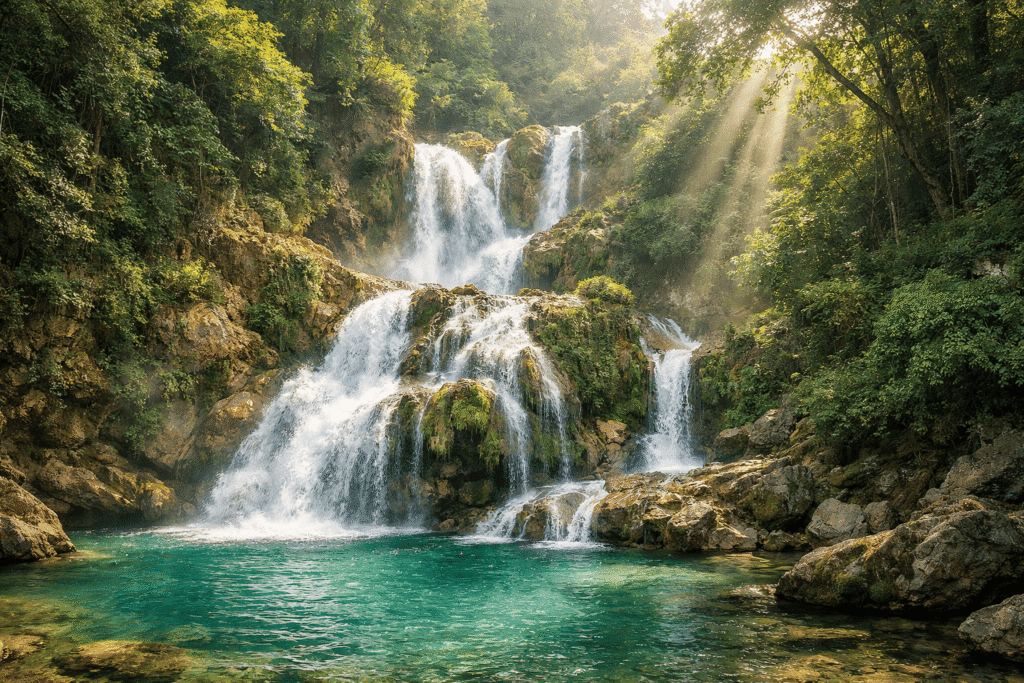
For those seeking a refreshing natural escape, Neer Garh Waterfall provides the perfect retreat. Located about 6 kilometers from Laxman Jhula, this beautiful waterfall cascades down from a height of 25 feet, creating natural pools where visitors can take a dip and cool off from the heat.
The trek to the waterfall takes approximately 45 minutes through scenic forest trails, offering glimpses of local flora and fauna. The path winds through small villages where you can observe rural Himalayan life. The sound of the cascading water grows louder as you approach, building anticipation for the spectacular sight ahead.
The waterfall area has two levels, each with its own charm. The upper level is quieter and less crowded, while the lower level has larger pools perfect for swimming. The surrounding rocks provide excellent spots for picnics and photography. Visiting during monsoon offers the most dramatic views with increased water flow, though the trek becomes more challenging during this season.
Adventure Activities: Thrills on the Ganges
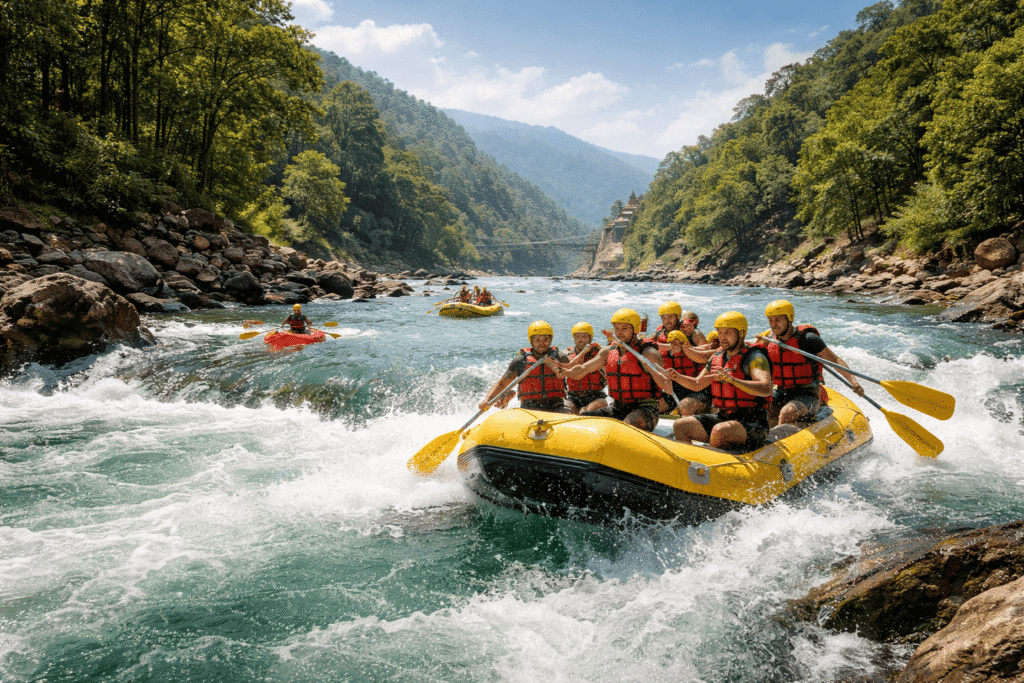
Rishikesh has earned international acclaim as India’s adventure capital, particularly for white water rafting on the Ganges. The river offers various stretches suitable for different skill levels, from beginners to advanced rafters. The most popular rafting routes include the 16-kilometer stretch from Shivpuri to Rishikesh and the shorter 9-kilometer route from Brahmapuri to Rishikesh.
The rapids range from Grade I to Grade IV, with exciting names like Roller Coaster, Golf Course, Club House, and The Wall. Rafting season runs from September to mid-November and from March to May when water levels are ideal. Professional guides ensure safety while making the experience thrilling and memorable.
Beyond rafting, Rishikesh offers bungee jumping from India’s highest platform at 83 meters, zip-lining across the valley, cliff jumping, kayaking, and rock climbing. These adventure activities attract thrill-seekers from around the world, making Rishikesh a perfect destination for those who want to combine spiritual exploration with adrenaline-pumping adventures.
Swarg Ashram: Spiritual Learning Center
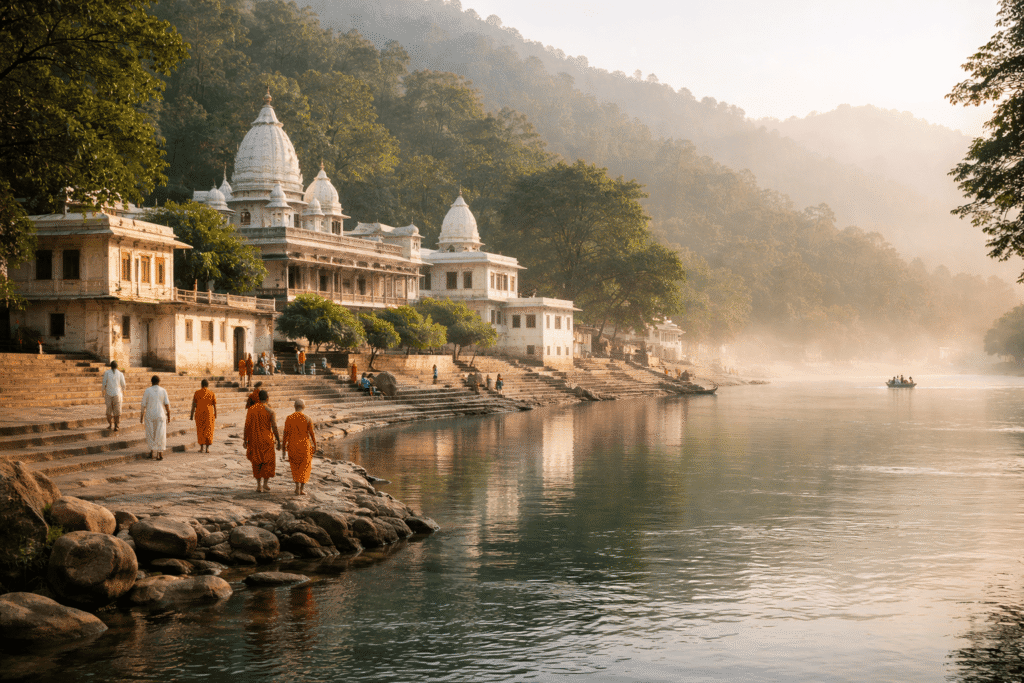
Swarg Ashram, meaning “Heaven’s Ashram,” is a spiritual hub on the eastern bank of the Ganges near Ram Jhula. This area houses numerous ashrams, temples, and yoga centers, creating a concentrated zone of spiritual energy. The ashram was established in memory of Swami Vishudhananda, whose samadhi (final resting place) is located here.
The area is vehicle-free, making it ideal for peaceful walks and meditation. Narrow lanes are lined with shops selling spiritual books, rudraksha beads, yoga mats, and ayurvedic medicines. You’ll find numerous German bakeries and cafes serving healthy vegetarian food, as the area has become popular among international travelers seeking authentic yoga and meditation experiences.
Swarg Ashram serves as a base for exploring nearby attractions and offers affordable accommodation options in various ashrams. The atmosphere here is markedly calmer than the main town, allowing visitors to truly disconnect from worldly distractions and focus on their spiritual journey.
Vashishta Cave: Meditation in Solitude
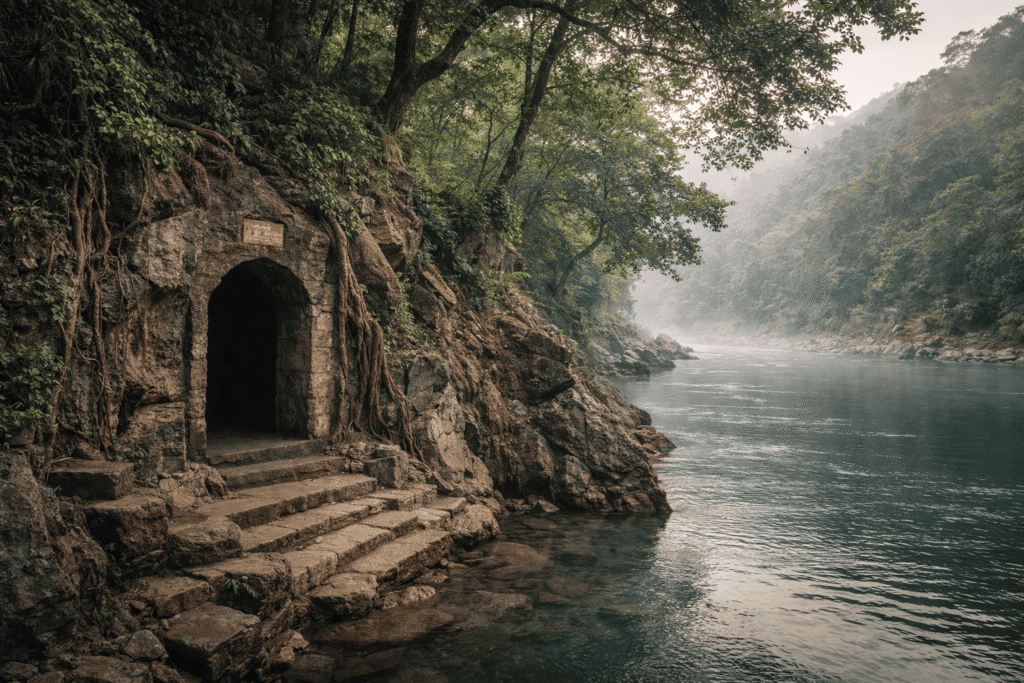
For those seeking deeper meditation experiences, Vashishta Cave (Gufa) offers a powerful environment for spiritual practice. Located about 25 kilometers from Rishikesh, this ancient cave is where sage Vashishta is believed to have meditated for years. The cave maintains a cool temperature year-round and emanates a palpable spiritual energy.
The cave is spacious enough to accommodate several meditators simultaneously, though it’s best experienced in solitude or small groups. Many spiritual seekers spend hours or even days here in deep meditation. The surrounding area is tranquil, with the sound of the nearby stream and chirping birds creating natural white noise perfect for contemplation.
A small ashram near the cave provides basic facilities for those wishing to stay longer. The journey to reach the cave itself becomes a meditation, as you leave behind the bustle of Rishikesh and immerse yourself in the serene Himalayan foothills.
Geeta Bhawan: The House of Bhagavad Gita
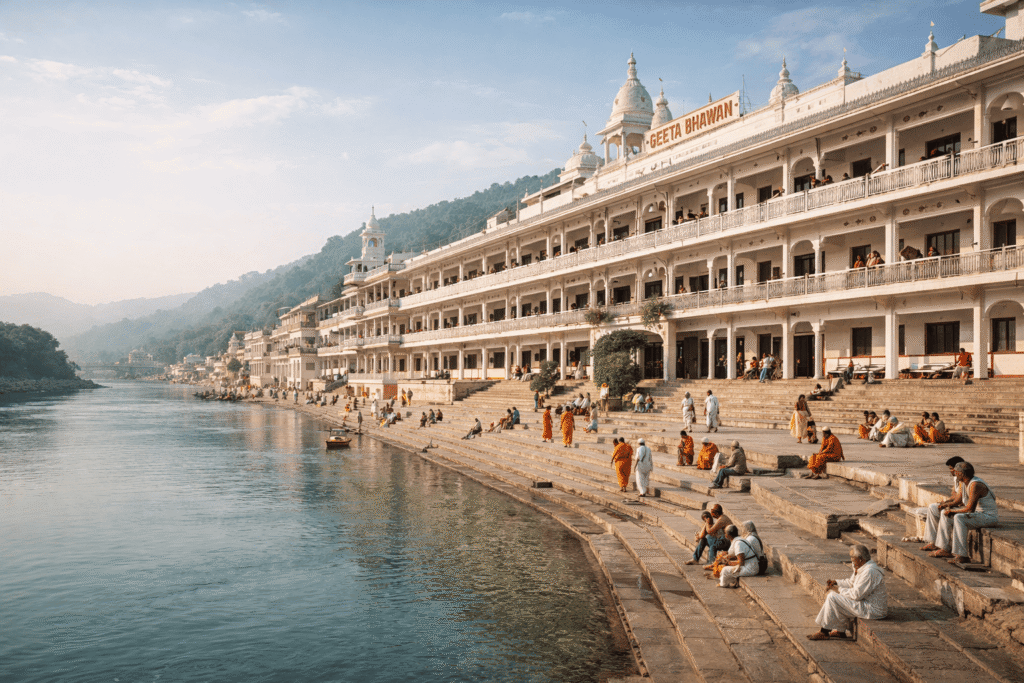
Geeta Bhawan stands as one of the most important religious and cultural centers among Rishikesh tourist places. This large complex, built in 1969, is dedicated to the study and propagation of the Bhagavad Gita, the sacred Hindu scripture. The bhawan features over 1,000 rooms that provide free accommodation to pilgrims, along with free meals in its community kitchen.
The complex houses beautiful temples, including a stunning multi-story temple featuring idols of various deities. The walls are adorned with verses from the Bhagavad Gita and paintings depicting scenes from Hindu mythology. Daily spiritual discourses, bhajans (devotional songs), and prayer sessions attract hundreds of devotees.
What makes Geeta Bhawan special is its democratic approach to spirituality, where everyone regardless of caste, creed, or economic status is welcome to stay, eat, and participate in spiritual activities. This embodies the true spirit of Indian hospitality and spirituality, making it a must-visit for those seeking authentic cultural experiences.
Practical Tips for Exploring Rishikesh
When planning your Rishikesh sightseeing itinerary, consider visiting during the shoulder seasons of March-April or September-November when the weather is pleasant and adventure activities are in full swing. Summer months can be hot, while winter brings cold temperatures, especially in the mornings and evenings.
Rishikesh is well-connected by road to major cities. The nearest airport is Jolly Grant Airport in Dehradun, about 35 kilometers away, while Haridwar Railway Station, 25 kilometers from Rishikesh, serves as the nearest major rail junction. Local transportation includes auto-rickshaws, taxis, and motorcycles available on rent.
Most areas in Rishikesh are vegetarian and alcohol-free zones, respecting the city’s spiritual nature. Dress modestly when visiting temples and ashrams, covering shoulders and knees. Remove footwear before entering religious sites, and always ask permission before photographing monks, sadhus, or religious ceremonies.
Conclusion
Exploring the Top Places to Visit in Rishikesh provides more than just sightseeing—it offers insight into a city that balances devotion, wellness, and adventure with remarkable ease. Each landmark contributes to the larger spiritual and cultural landscape that makes the destination so distinctive. By covering the Top Places to Visit in Rishikesh, travelers can experience the essence of the city in a way that is both enriching and memorable, regardless of the purpose or duration of their visit.
From walking across the iconic suspension bridges to witnessing the divine Ganga Aarti, from meditating in ancient caves to rafting through challenging rapids, Rishikesh creates memories that resonate long after you’ve left. The city invites you not just to visit but to experience a transformation, whether through yoga, meditation, or simply by immersing yourself in its sacred atmosphere.
FAQ
March–April and September–November offer the best weather for sightseeing and adventure activities.
Yes. Rishikesh is considered one of the safest destinations in North India, especially for solo and female travelers.
2–3 days are ideal for covering major attractions and adventure activities.
Because of its large number of internationally recognized yoga schools and ashrams.
Most of the city is designated alcohol-free due to its religious significance.