
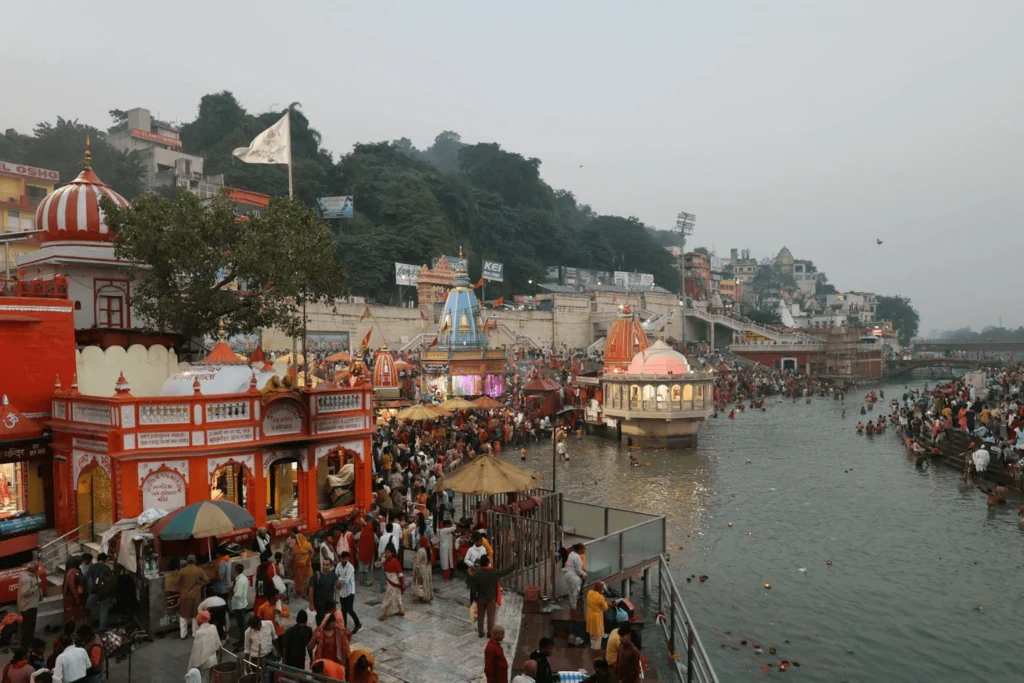
Imagine arriving at dawn at Har Ki Pauri — cool air, drifting incense, and temple bells echoing across the Ganges. Before you step into this sacred space in Haridwar, understanding the Har Ki Pauri rules is essential.
These rules cover dress code, Ganga Aarti etiquette, safety, and cleanliness, helping you experience the ghat respectfully and without any issues.
The main rules at Har Ki Pauri include wearing modest clothing, removing shoes before entering, avoiding non-vegetarian food and alcohol, maintaining silence during Ganga Aarti, not littering, and respecting religious customs.
Visitors must also follow safety guidelines while bathing in the Ganga and avoid photographing devotees without permission.
- Dress modestly (cover shoulders and knees)
- No alcohol or non-vegetarian food
- Remove footwear before entering
- Maintain silence during Aarti
- No littering or smoking
- Bathe only in designated areas
What Is Har Ki Pauri?
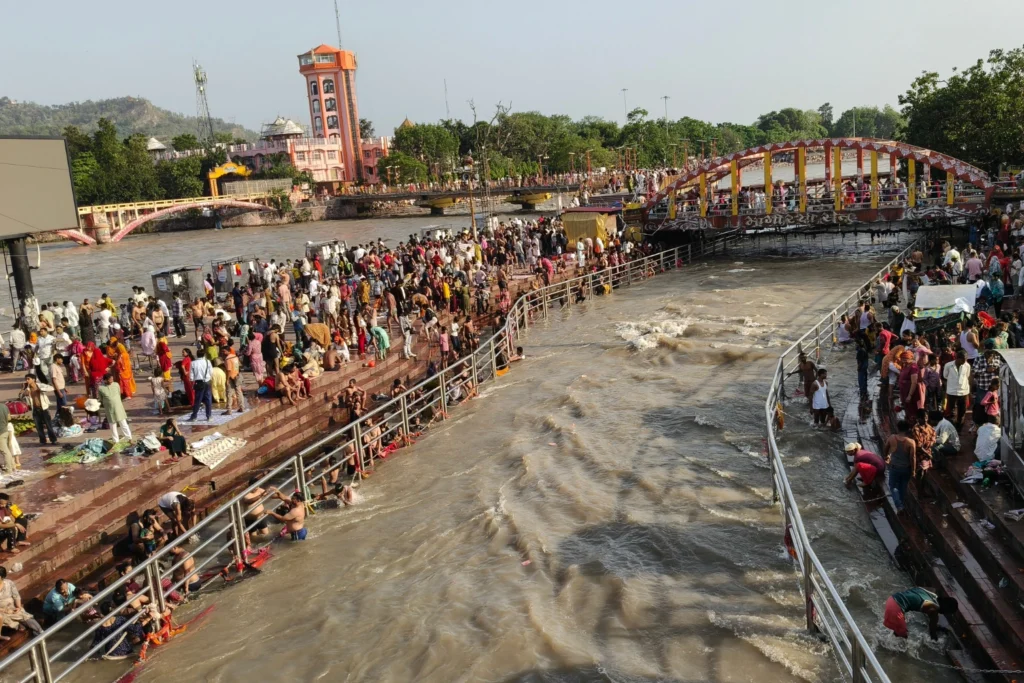
Har Ki Pauri, literally meaning “Steps of Lord Shiva,” is the most revered ghat in Haridwar. It is believed that Lord Vishnu left his footprint here — making it one of the holiest spots in Hinduism.
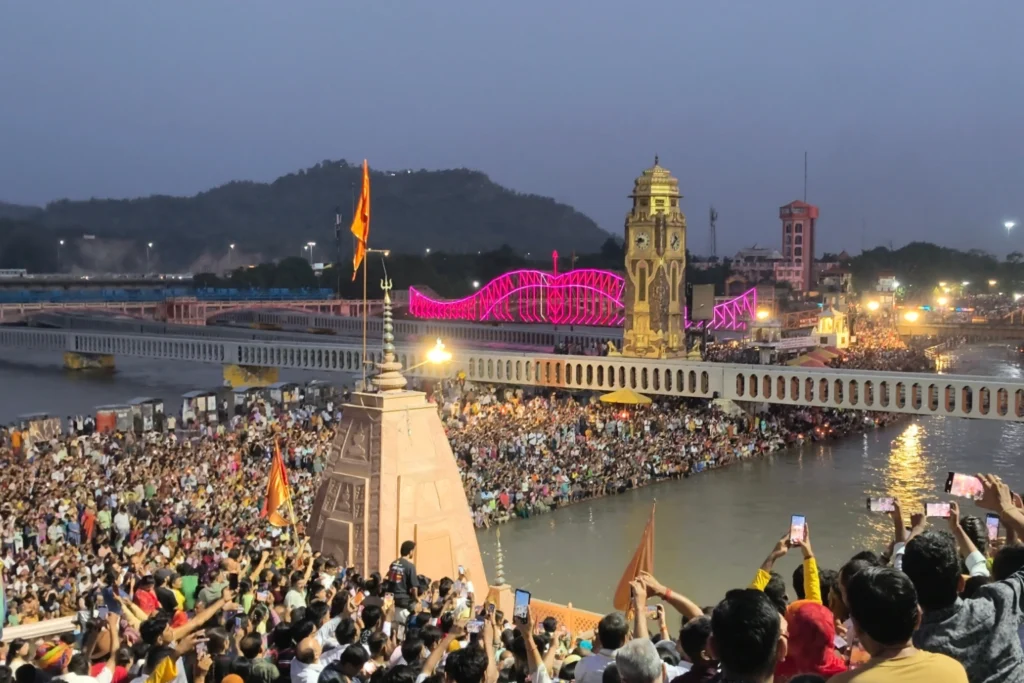
The ghat sits on the banks of the Ganges and serves as the central stage for the breathtaking Ganga Aarti, a fire worship ceremony held every evening at sunset that draws thousands of devotees and curious visitors daily.
The site is managed by local temple authorities and the Uttarakhand government, both of which have established clear guidelines for all visitors. Understanding them ensures a smooth, respectful, and spiritually fulfilling experience.
Quick Info: Har Ki Pauri
- Location: Har Ki Pauri, Haridwar, Uttarakhand
- Ganga Aarti Timing:
- Morning (Pratah Aarti): 5:30 AM – 6:30 AM
- Evening (Sandhya Aarti): 6:00 PM – 7:00 PM (varies by season)
- Entry Fee: Free
- Best Time to Visit: October to March
Rules You Must Follow at Har Ki Pauri
1. No Non-Vegetarian Food or Alcohol
One of the most strictly enforced ghat rules is the complete prohibition on non-vegetarian food and alcohol — not just at the ghat, but across all of Haridwar. The entire city is a declared “dry zone” and “vegetarian zone.”
You will find no meat, eggs, or liquor sold anywhere. Visitors carrying these items can face on-the-spot fines and confiscation by local authorities. This applies to everyone, regardless of nationality or religion.
2. Dress Modestly and Appropriately
Haridwar is a deeply religious city, and the ghat demands modesty. Avoid shorts, short skirts, sleeveless tops, or any revealing clothing. Both men and women should cover their shoulders and knees.
Traditional Indian attire — salwar kameez, sarees, or kurta-pajamas — is appreciated but not mandatory; modest Western clothing works too. Shops near the entrance rent and sell appropriate clothing if you arrive unprepared.
3. Remove Your Shoes Before Entering
Like all Hindu religious sites, footwear must be removed before stepping onto the main ghat. Designated shoe storage stalls are available nearby for a small fee.
Walking barefoot is a sign of respect and is non-negotiable. Keep your belongings secure, as crowded areas can occasionally attract pickpockets.
4. No Photography of Devotees Without Permission
Photography at the ghat is a sensitive issue. While you can photograph the scenery, the river, and the Ganga Aarti, photographing devotees during prayer, bathing, or rituals without explicit consent is deeply disrespectful.
Some areas have marked photography restrictions. Drones are strictly prohibited. Commercial photography or videography requires prior permission from district authorities.
5. Maintain Silence and Discipline During Aarti
The Ganga Aarti is not a tourist performance — it is a sacred ceremony. During the aarti, visitors are expected to stand respectfully, refrain from loud conversation, and keep mobile phones on silent. Large groups must remain disciplined.
The aarti takes place twice daily — early morning (Pratah Aarti) and at sunset (Sandhya Aarti) — and both demand the same level of reverence.
6. No Littering — Keep the Ghat Clean
Littering is strictly prohibited at Har Ki Pauri. Do not throw plastic bottles, food wrappers, flowers, or any other waste into the Ganga or around the ghat premises. Help preserve the cleanliness and sanctity of this sacred site by using the dustbins provided throughout the area.
Avoid leaving plastic sheets, disposable items, or other belongings behind after the Ganga Aarti. Local authorities regularly monitor the ghat, and visitors may face penalties for littering or creating a public nuisance.
Keeping Har Ki Pauri clean is a shared responsibility. A small effort from every visitor helps protect the Ganga and ensures this holy place remains clean and welcoming for everyone.
7. Bathing Rules at the Ghat
Taking a holy dip in the Ganga is one of the most spiritually significant acts a devotee can perform, but it must be done safely. Bathe only in designated areas.
Hold the iron chains provided along the ghat — the current can be dangerously strong, especially during monsoon season. Children must be supervised at all times. Leisure swimming is strictly not permitted.
⚠️ Safety Tip: Always bathe at Brahma Kund or the Clock Tower ghat — the water level is shallower and safer here than at other points. This is especially important when travelling with children or elderly family members.
8. Respect the Priests and Pandits
You will encounter many priests (pandits) offering pujas, rituals, and blessings. Many are genuine religious figures. If you do not wish to participate, a polite decline is perfectly acceptable.
If you do choose to take part in a puja, agree on the dakshina (offering) beforehand to avoid misunderstandings later.
9. Keep Noise to a Minimum
Loud phone calls, music, or phone speakers anywhere on the ghat are considered disrespectful and are frowned upon by authorities and fellow devotees alike. Keep your phone on silent mode — particularly during aarti timings. Signage in certain areas may enforce stricter rules, so always follow posted guidelines.
10. No Smoking on the Premises
Smoking — cigarettes, bidis, cigars, or any tobacco product — is strictly prohibited within the ghat premises and the surrounding area.
Haridwar has several enforced no-smoking zones under the municipal corporation’s jurisdiction. Violations attract fines and social disapproval from those around you.
The Unwritten Rules of Bathing at Har Ki Pauri
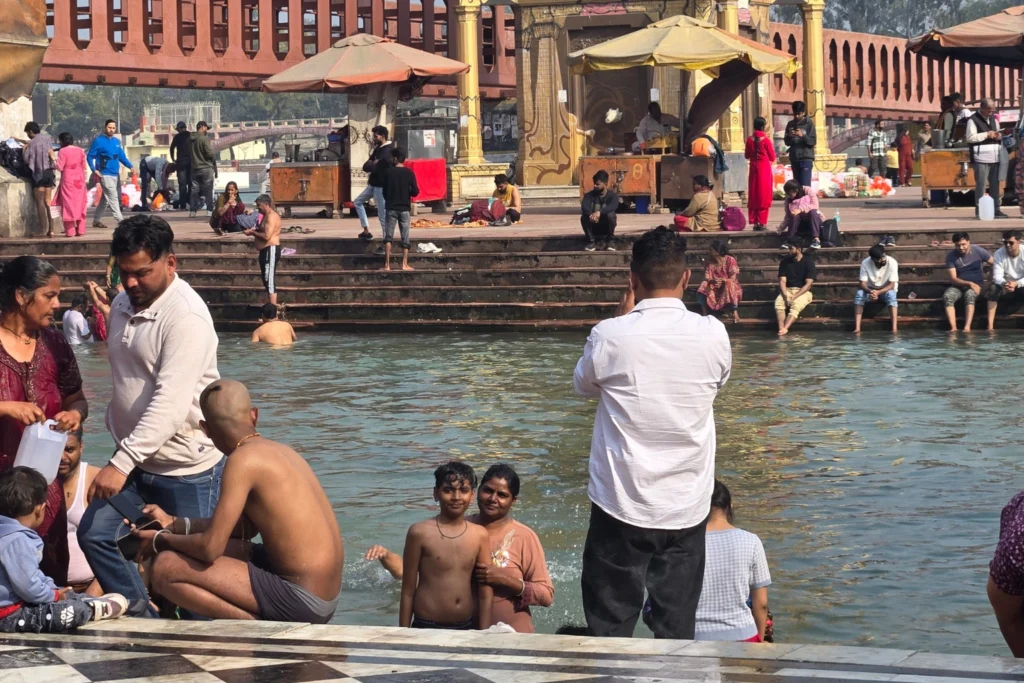
Har Ki Pauri — from “Har” (Lord Shiva/Vishnu) and “Pauri” (steps) — literally means “Steps of God.” The main bathing point here is Brahma Kund, one of the holiest spots in Hinduism. When you step into this water, remember: you are entering a sacred river, not a water park.
In recent years, I’ve seen more visitors arriving to escape the summer heat and treating the Ganga as a place for leisure swimming and water play. This is deeply disrespectful to the crores of pilgrims who come here with genuine devotion. The dignity of this place must be maintained.
1. No soap, shampoo, or washing clothes
Using soap or shampoo while bathing in the Ganga is prohibited. I’ve personally seen women washing their clothes in the same water they just bathed in — doing so directly pollutes Ganga Maa. Please don’t do this.
2. The plastic sheet problem
Vendors near the ghat sell plastic sheets for ₹30–₹50 for sitting during the aarti. People buy them, then leave them behind when they go. Every abandoned sheet adds to the filth on the ghat. If you buy one, carry it back with you. Keeping Har Ki Pauri clean is our collective responsibility.
3. Respect women’s privacy
When women bathe, their wet clothing naturally becomes fitted to their body. In recent years, some people — under the cover of making reels and vlogs — have been filming women in these vulnerable moments. This is completely wrong. In our culture, women are revered. Please maintain the dignity of this public sacred space.
4. Keep children and elderly close
The crowds at Har Ki Pauri can be genuinely intense. Hold your child’s hand at all times — it is very easy to get separated. When helping elderly family members bathe, hold them firmly throughout.
Best Time to Visit
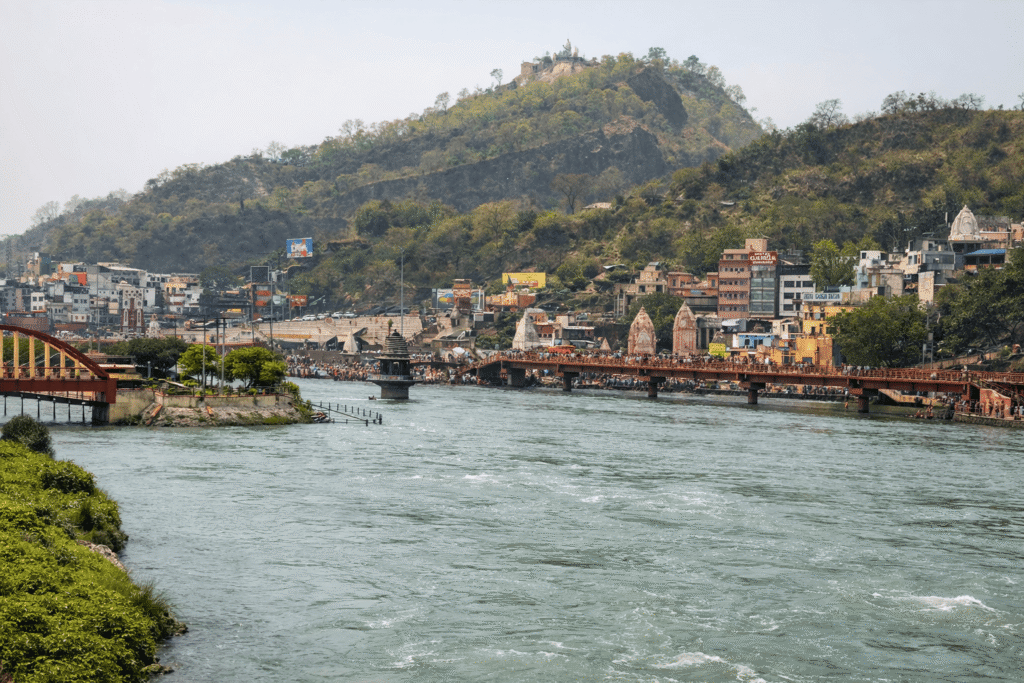
The ghat is open year-round, but the ideal time is October to March, when the weather is cool and crowds are manageable. Weekday visits offer a quieter, more personal experience compared to weekends.
Crowd surges during:
- Kumbh Mela (every 12 years; Ardh Kumbh every 6 years)
- Kanwar Yatra (July–August)
- Makar Sankranti (January)
- Kartik Purnima (October–November)
During these festivals, attendance can reach millions. Additional security and movement restrictions are put in place.
Getting There

Haridwar is well-connected by road, rail, and air. The nearest airport is Jolly Grant Airport in Dehradun, roughly 35 km away.
Haridwar Railway Station is just 1.5 km from the ghat and is one of the major junctions in Uttarakhand. Once in the city, the ghat area is best explored on foot — vehicle access near the main entrance is restricted.
What to Carry (and What to Leave Behind)
Bring:
- Modest, comfortable clothing
- Small-denomination cash (for donations, shoe storage, small purchases)
- A reusable water bottle
- Sunscreen or umbrella if visiting in summer
- A light raincoat during July–August
Leave behind:
- Alcohol or non-vegetarian food
- Plastic bags (use cloth or paper alternatives)
- Expensive jewellery or large amounts of cash
- Drones or professional camera gear (without prior permit)
Tips for a Safe and Respectful Visit
- Arrive early for the morning aarti (around 5:30–6:00 AM) to witness sunrise over the Ganges — genuinely one of the most beautiful sights in India.
- Book a puja in advance during festival season to avoid delays.
- Watch out for scams — some individuals pose as priests or guides and overcharge. Use government-registered guides when needed.
- Save emergency numbers — Haridwar Police: 112 | Tourist Helpline: 1364.
Why These Guidelines Exist
These rules are not arbitrary restrictions. They exist to preserve the sanctity of a site that has functioned as a spiritual center for thousands of years, to protect the ecology of the Ganges, and to ensure that millions of pilgrims can access this space with peace and dignity.
When visitors honor these guidelines, they contribute to the preservation of one of humanity’s oldest living traditions — one that continues to draw seekers, scholars, saints, and ordinary people from every corner of the world.
FAQ
Yes, mobile phones are generally allowed, but avoid using them during the Ganga Aarti. Photography and videography may be restricted during peak hours or ceremonies.
Yes, taking a holy dip is allowed and common. However, be cautious of strong currents and use chains or railings for safety.
Wear modest and respectful clothing. Avoid shorts or revealing outfits, especially near temples and during Aarti.
Yes. Visitors are expected to:
-Maintain silence and discipline
-Avoid pushing or crowding
-Not use flash photography
Final Thoughts
A visit to Har Ki Pauri is unlike anything else — the chanting of mantras, the flickering lamps of the Ganga Aarti reflected on the sacred river, temple bells in the distance, and the collective stillness of thousands of people seeking the same thing: peace.
To truly absorb that, you have to arrive the right way. Dress modestly, tread lightly, speak softly — and let the river do the rest.
Planning a trip to Haridwar? Share this guide with your travel companions so everyone arrives informed and ready for a meaningful visit.