
You don’t actually need weeks in Rishikesh to feel like it’s left a mark on you. Tucked into the Himalayan foothills along the Ganga, this is one of the few towns in India that manages to be both a spiritual retreat and an adventure hub — and even on a tight 48-hour trip, you get a real taste of both.
Whether you’re driving down from Delhi for the weekend, a solo traveler squeezing in a detour, or a couple after a quick escape, a 2-day Rishikesh trip in 2026 covers more ground than you’d expect.
In two days, you can realistically fit in the Ganga Aarti, river rafting, a visit to the Beatles Ashram, some riverside café time, and a bit of local sightseeing — which makes it a solid weekend trip from Delhi if your schedule is tight.
This itinerary is built to make the most of those 48 hours, from the Ganga Aarti to the adrenaline of white-water rafting, from cozy cafés to the slightly eerie, overgrown ruins of the Beatles Ashram. No filler — just a plan that actually works for a short trip.
Is Two Days Really Enough for Rishikesh?
Yes — with some smart planning, two days gets you the best of Rishikesh.
In 48 hours, you can cover the Ganga Aarti at Parmarth Niketan, a walk across Lakshman Jhula or Ram Jhula, a rafting run on the Ganga, the Beatles Ashram, meals at a couple of the well-known riverside cafés, and some time browsing the local markets.
What you won’t manage: a multi-day trek, a proper yoga retreat, or a side trip to Haridwar. Those need more time. But for a first visit or a weekend getaway, two days gives you a genuine feel for what Rishikesh is about, even if it doesn’t cover everything.
Quick Plan Overview
| Day | Focus | Highlights |
|---|---|---|
| Day 1 | Spiritual side + cafés | Ganga Aarti, Lakshman Jhula, café time |
| Day 2 | Adventure | River rafting, Beatles Ashram, markets |
Getting to Rishikesh
Rishikesh is well connected from Delhi and most major cities in North India.
From Delhi (roughly 250 km):
- By bus — Volvo and semi-sleeper buses run regularly from ISBT Kashmere Gate, taking about 6–7 hours. This is the cheapest option, usually ₹400–₹700.
- By train — Take a train to Haridwar, which is well connected to Delhi, then a shared taxi or local bus for the remaining 25 km to Rishikesh. The Shatabdi Express and Jan Shatabdi are both popular choices. Total travel time from Delhi runs around 5–6 hours.
- By cab — If you’re traveling as a group or just want the comfort, a cab from Delhi costs around ₹2,500–₹3,500 and takes about 5 hours, traffic depending.
For a 2-day trip specifically, an overnight bus or an early morning train works best — you land in Rishikesh by mid-morning instead of burning half your first day on the road. On Day 2 evening, you can catch a return bus or cab back without much hassle.
Day 1: The Spiritual Side, and a Lot of Cafés
Morning: Arrival
Try to reach Rishikesh by 9 or 10 AM — Tapovan is where most short-trip travelers end up staying, and it’s easy to see why once you’re there. It puts you close to cafés, adventure operators, and the river, without the crowds you’ll find right around the main ghats.
Once you’ve dropped your bags, skip the urge to plan the next few hours down to the minute. Just walk. The lanes in Tapovan are lined with yoga studios, tattoo parlors, organic cafés, and small spiritual bookstores, and half the fun is not knowing what’s around the next corner.
Afternoon: The Bridges and Lunch
Head over to Lakshman Jhula, the suspension bridge that’s become almost synonymous with Rishikesh itself. From the bridge, you’ll see the Ganga flowing below with temples on one side and forested hills on the other. If you’re visiting in the morning, the light makes this one of the best photo spots in Rishikesh.
Worth knowing: the original Lakshman Jhula bridge was closed in 2019 for safety reasons, and a new bridge has since been built nearby. It’s still very much worth visiting, even if it’s not the exact structure from the old photos.
From there, walk or take an auto to Ram Jhula — a slightly wider, busier bridge with several temples and ghats around it worth poking around.
By lunchtime, you’ll probably want a break after walking around the bridges. The cafés near Lakshman Jhula are a good place to slow down, whether you’re in the mood for a simple thali or something like pasta, pizza, or a smoothie bowl. Little Buddha Café, Café Organica, and Bistro Nirvana are all popular here, most with a river view thrown in.
Evening: Ganga Aarti at Parmarth Niketan
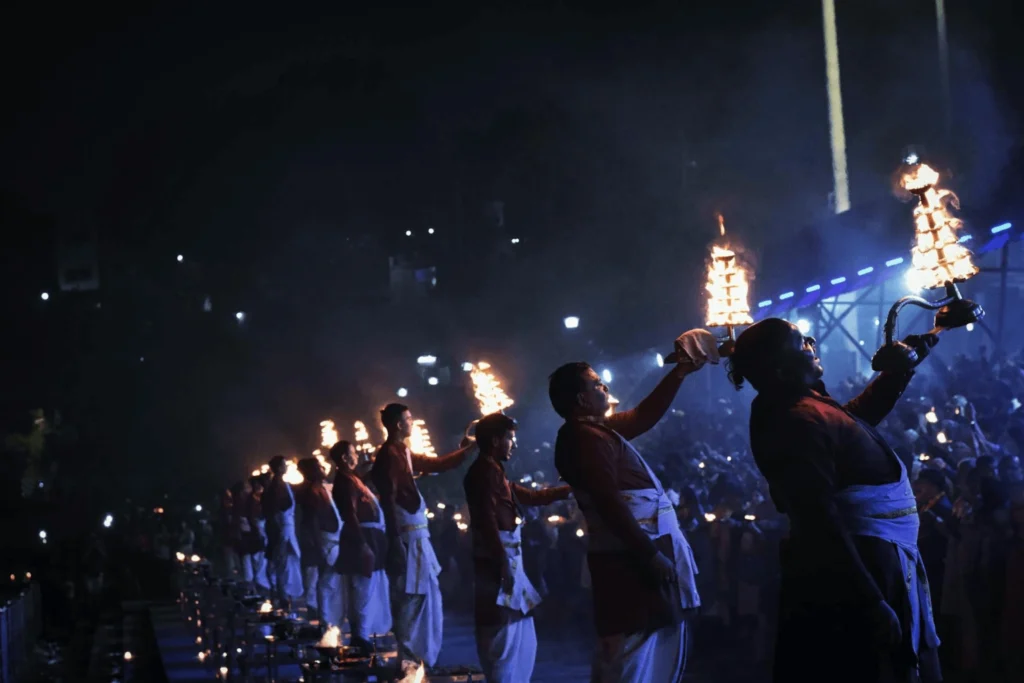
This is the centerpiece of Day 1, and arguably of the whole trip. The Ganga Aarti at Parmarth Niketan begins around sunset — usually somewhere between 6 and 6:30 PM depending on the season.
Get there at least 30 minutes early if you want a decent spot near the ghat. As the sky turns orange and the priests start their chanting, incense fills the air, flower petals drift on the water, and hundreds of small oil lamps get set afloat on the river.
We found the crowd tends to pack in tightly near the fire itself, with people standing several rows deep along the edges by the time the ceremony actually starts — if you’d rather sit than stand through the whole thing, aim for the steps rather than the open ground further back. It’s a moving experience even if you’re not religious, so dress modestly and keep the volume down; this is a genuine act of worship, not a show.
After the aarti wraps up, it’s worth walking along the ghat for a bit. The river at dusk looks different — quieter, and somehow larger.
Night: Dinner by the River
Close out Day 1 with dinner at one of Rishikesh’s café favorites. The Sitting Elephant, Ooh La La, or really any rooftop café in Tapovan with a Ganga view will do the job. Most places serve a mix of Indian, Continental, and Israeli food. Budget around ₹300–₹600 per person for a good meal.
Day 2: Adventure and Sightseeing
Morning: Rafting or Bungee Jumping
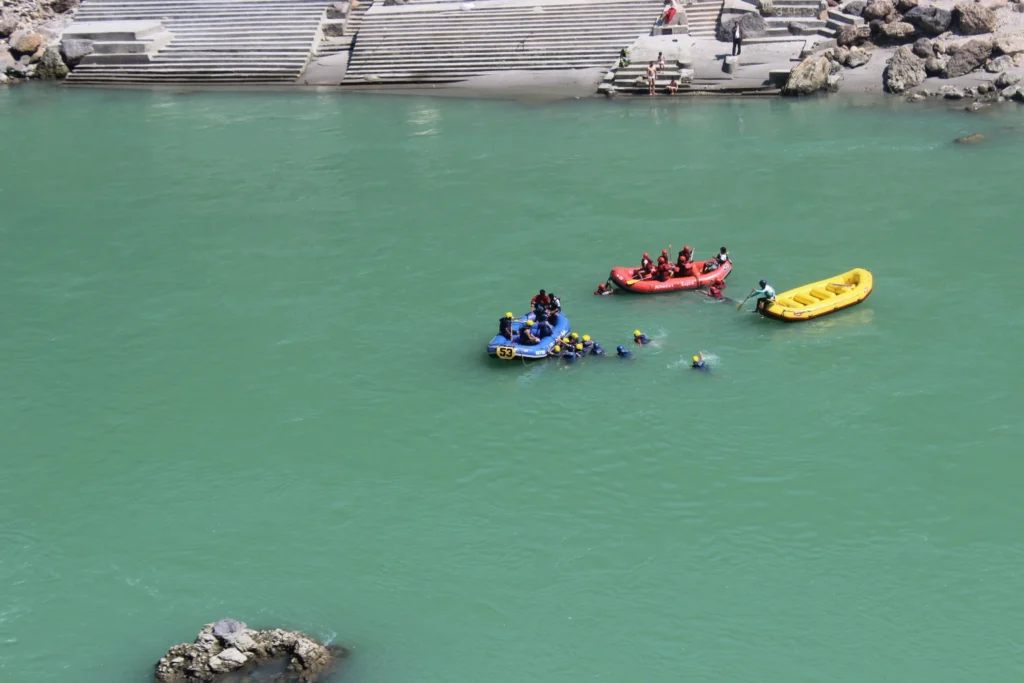
If there’s one day to set an alarm, it’s this one. Most adventure activities start in the morning, and getting an early slot usually means cooler weather and less waiting around. White-water rafting on the Ganga is the headline activity here, with stretches ranging from a gentle 9 km run to a full 36 km for people chasing bigger rapids.
Most operators based in Tapovan and around Lakshman Jhula offer packages starting from ₹600 up to ₹1,500 per person, depending on the distance you pick.
If rafting isn’t really your thing, Rishikesh also has bungee jumping — at 83 metres, one of the highest in India — along with cliff jumping and zip-lining, mostly clustered around the Mohan Chatti area. These need to be pre-booked, especially on weekends.
Whatever you choose, book your slot online in advance. Between October and March, things fill up fast and walk-ins aren’t guaranteed.
Afternoon: Beatles Ashram and Lunch
After your morning activity, head to the Beatles Ashram — officially Chaurasi Kutia, also known as the Maharishi Mahesh Yogi Ashram. This is where the Beatles stayed in 1968 and wrote a large part of the White Album.
The ashram today is partly in ruins, with trees growing through some of the old structures and walls covered in psychedelic murals and street art. It has an odd, half-forgotten atmosphere that’s hard to find anywhere else in town.
Entry is ticketed — ₹150 for Indian visitors, ₹600 for foreigners — and it’s open from 9 AM to 5 PM. Give yourself at least 45 minutes to an hour to walk through properly.
Afterward, grab lunch nearby. Chotiwala Restaurant near Ram Jhula is something of a local institution — simple North Indian food, filling and cheap.
Evening: Markets and Departure
With a couple of hours left, this is a good time to just browse rather than rush toward any one thing. The markets around Lakshman Jhula and Ram Jhula are full of rudraksha beads, Tibetan singing bowls, hand-painted journals, bohemian clothing, and local honey and herbal teas — and prices here are rarely fixed, so a bit of bargaining is expected, not rude.
Once you’re done, start making your way toward the bus stand or your taxi pickup point by 5 or 6 PM. If you’re taking an overnight bus back to Delhi, departures from Rishikesh ISBT are usually around 8–9 PM, getting you into Delhi by early morning.
Budget for a 2-Day Trip
Budget traveler (₹3,000–₹5,000 per person): dorm beds, local dhabas, shared cabs, and one paid activity like rafting. Entirely doable if you plan a little.
Mid-range traveler (₹6,000–₹10,000 per person): a private hotel room, café meals, private cab or auto, rafting plus one more activity thrown in — comfortable without much compromise.
Where to Stay
Tapovan is the better pick for a short trip — close to cafés and adventure operators, and generally quieter than the areas right around the main ghats. Good options include backpacker hostels like Zostel and a handful of mid-range guesthouses along the riverbank.
The Lakshman Jhula area puts you right in the middle of things — close to the bridge, temples, and cafés. It’s busier, but that convenience matters a lot when your time is limited.
Try not to stay too far outside either of these two zones. On a 2-day trip, every extra kilometer of commute eats into time you don’t have to spare.
Where to Eat
Budget eats: Chotiwala Restaurant, the local dhabas near Ram Jhula, and the street stalls along the ghats selling aloo puri, kachori, and chai.
Cafés with Ganga views: Little Buddha Café, Café Organica, The Sitting Elephant, and Bistro Nirvana are all solid choices for an unhurried meal with a river view.
Travel Tips for a Short Trip
- Start early, every day. Rishikesh genuinely rewards early risers — the morning light on the Ganga is worth seeing, and you’ll beat the crowds at popular spots like the Beatles Ashram and the bridges.
- Pre-book your adventure activities. Don’t assume you’ll be able to walk in and grab a rafting or bungee slot, especially on weekends. Book at least 2–3 days ahead online.
- Avoid weekends if you can. Saturdays and Sundays bring a heavy rush of tourists from Delhi and nearby cities. A weekday trip usually means smaller crowds, easier café seating, and a calmer Aarti.
- Carry cash. Plenty of small cafés, dhabas, and activity operators still prefer cash, particularly for smaller amounts. Keep enough on hand.
- Dress appropriately near the ghats. This is a sacred town — avoid shorts or revealing clothing near temples and ghats. Most cafés are fine with casual wear.
FAQs
Yes. Two days is enough to cover the Ganga Aarti, rafting, Beatles Ashram, cafes, and sightseeing — making it a perfect weekend escape.
Day 1: Tapovan walk, Lakshman Jhula, cafe lunch, Ganga Aarti, riverside dinner. Day 2: River rafting, Beatles Ashram, local market shopping, departure.
Absolutely. River rafting fits easily into a 2-day itinerary — schedule it for the morning of Day 2 and book in advance to secure your slot.
Rishikesh is one of the best weekend destinations from Delhi. It’s within 5 to 6 hours by road, offers a mix of spiritual and adventure experiences, and has excellent accommodation and food options across all budgets.
Final Thoughts
Two days may not be enough to see everything Rishikesh has to offer, but it’s enough to understand why so many travelers come back. You’ll leave with a mix of peaceful moments by the Ganga, a bit of adventure, and plenty of reasons to plan another trip.