
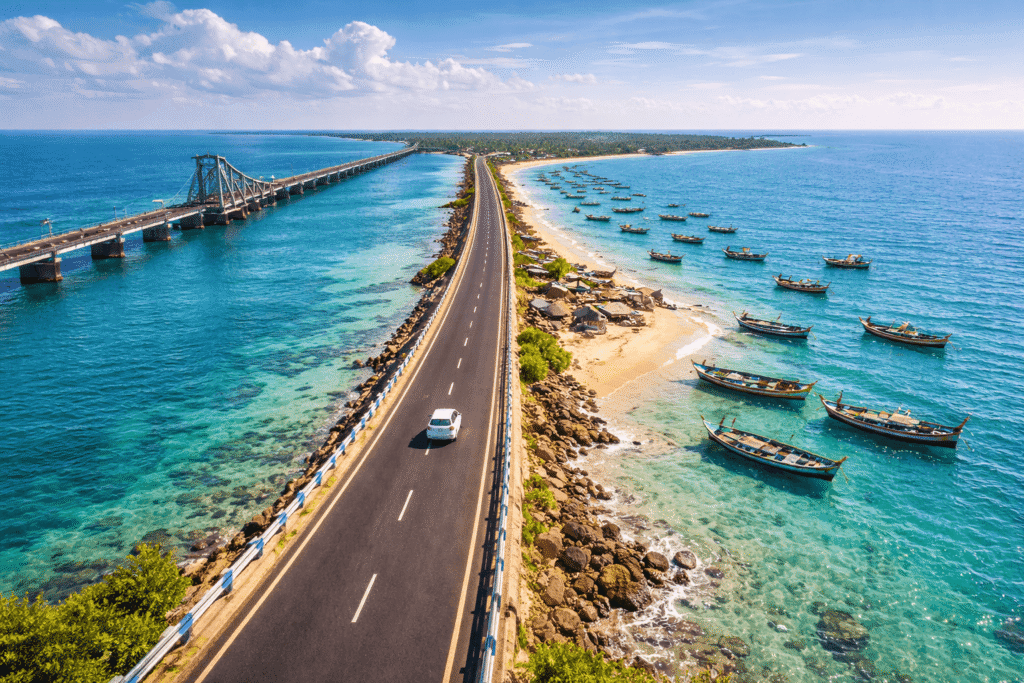
India continues to be one of the world’s most diverse and exciting travel destinations, offering everything from Himalayan adventures and tropical beaches to historic cities and cultural landmarks.
If you’re planning your next trip, exploring the best travel destinations in India for 2026 will take you to some of the country’s most breathtaking and trending locations.
From the dramatic landscapes of Ladakh and Spiti Valley to the serene backwaters of Kerala and the vibrant culture of Rajasthan, these destinations promise unforgettable experiences for every traveler in 2026.
1. Ladakh, Jammu & Kashmir — The Roof of the World
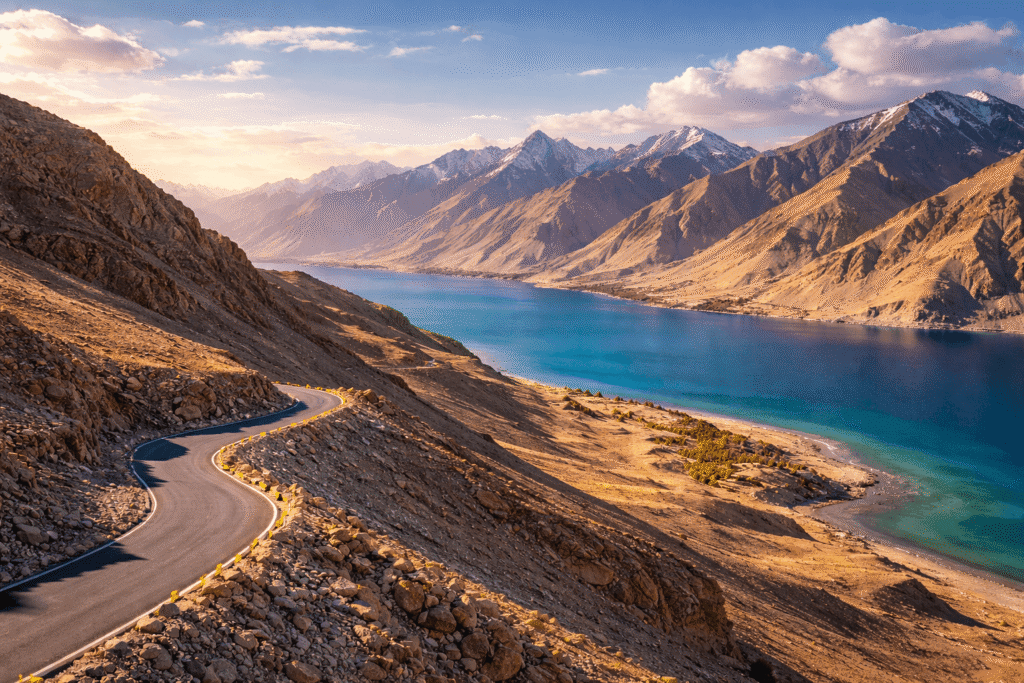
At 3,500 metres above sea level, Ladakh has a way of making you feel simultaneously tiny and completely alive.
The air is thin, the skies are an improbable shade of blue, and the silence — broken only by the flutter of prayer flags — is the kind you rarely find anywhere on earth.
Pangong Lake is the headline attraction, and rightly so: its colour shifts from turquoise to cobalt to steel-grey over a single afternoon depending on light and cloud.
But the less-photographed Tso Moriri lake, 220 km to the south, delivers an equally stunning experience with a fraction of the crowds.
Nubra Valley is accessible via the Khardung La pass. It surprises every visitor who arrives. Sand dunes stretch across the valley floor.
Double-humped Bactrian camels roam freely. The Himalayas rise sharply behind them. The combination seems impossible. You won’t believe it until you’re standing there.
The monasteries demand time. Thiksey Monastery, modelled loosely on Lhasa’s Potala Palace, is best visited at dawn when monks gather for morning prayers. Hemis Monastery hosts a vivid festival in June or July — if your dates align, don’t miss it.
Pro tip: Acclimatise for at least two full days before trekking or high-altitude drives. Altitude sickness is real and can cut a trip short fast.
Best time to visit: June to September
Getting there: Direct flights to Leh from Delhi, Mumbai, and Srinagar — book early, seats sell out in peak season.
2. Spiti Valley, Himachal Pradesh — Where the Mountains Hold Their Breath
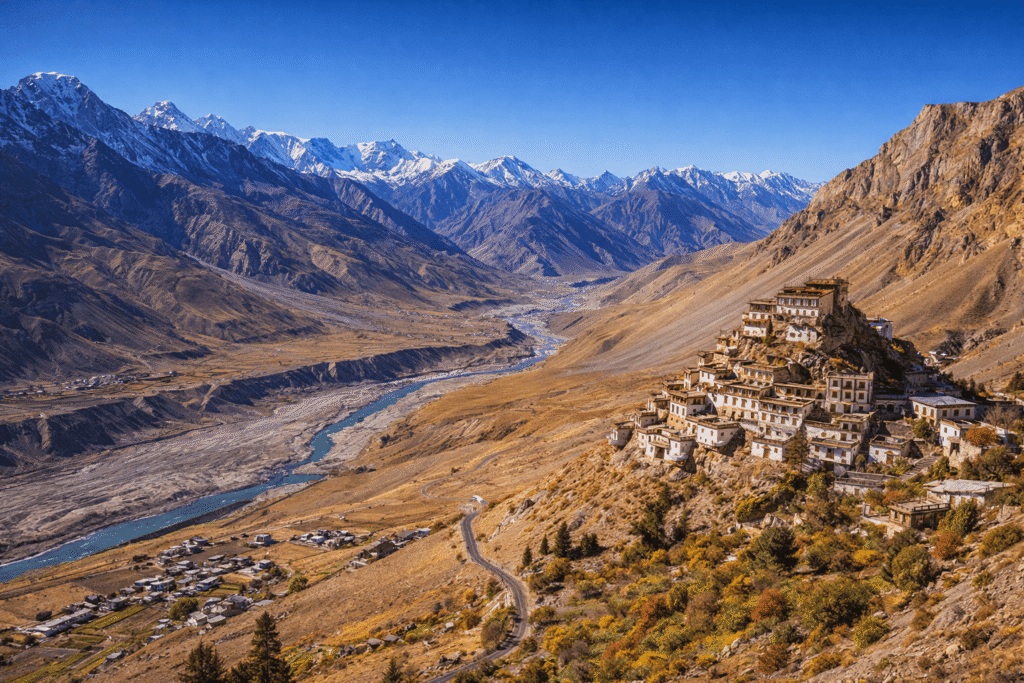
There is a quality of light in Spiti Valley that photographers chase for years. It is a high-altitude desert. Thousand-year-old Buddhist monasteries dot the landscape.
Roads wind through dramatic scenery. The beauty here is almost violent. Spiti is the kind of place that makes you stop and think. It makes you question why you live wherever you live.
The drive from Manali to Kaza is itself the experience: a full day of switchbacks, river crossings, and lunar landscapes. Key (Ki) Monastery perches dramatically on a hilltop above the Spiti River and is still home to around 300 monks.
Chandratal Lake, at 4,300 metres, has water so still it mirrors the surrounding peaks perfectly.
The villages of Langza and Komic deserve more attention than they get. Langza is famous among fossil hunters — the terrain was once an ancient seabed. Komic is one of the world’s highest permanently inhabited villages with a 14th-century monastery.
Pro tip: The Manali–Spiti route is open only late May to October. The Shimla–Spiti route is longer but accessible for more of the year.
Best time to visit: May to October
Stay: Homestays in Kaza and Langza offer excellent value and a genuine window into local life.
3. Rann of Kutch, Gujarat — A Desert That Becomes a Mirror
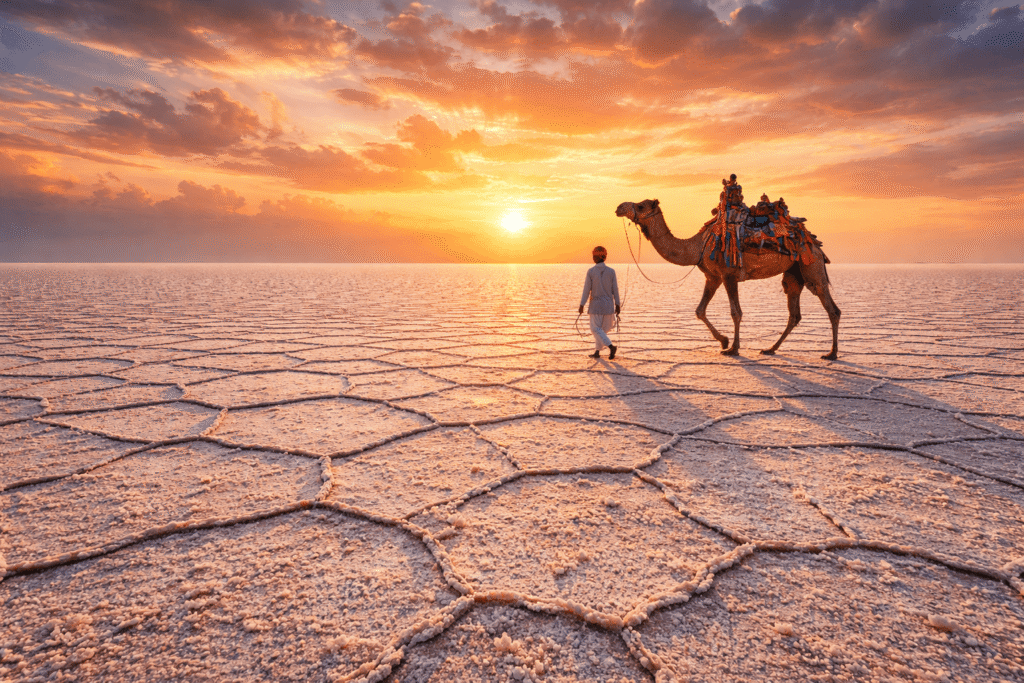
Twice a year, the Rann of Kutch performs a transformation that seems physically impossible. In the monsoon, it floods.
By winter, the water retreats to leave behind a vast, blinding white salt flat — and when the full moon rises over it, the ground reflects the sky so perfectly that you cannot tell where the earth ends and the heavens begin.
The Rann Utsav festival (November to February) is the cultural anchor of any visit. A tented city springs up in the desert showcasing Kutch’s extraordinary handicraft traditions — mirror-work embroidery, Ajrakh block printing, hand-woven shawls.
These aren’t tourist trinkets; they’re living craft traditions practiced by families who’ve done this work for generations.
Don’t overlook Dholavira — a UNESCO World Heritage Site since 2021 and one of the largest preserved cities of the ancient Indus Valley Civilisation.
The scale of what was achieved here 4,500 years ago is quietly astonishing, and it remains far less crowded than better-known archaeological sites.
Pro tip: Plan your trip around a full moon night — the experience on the salt flats is genuinely unlike anything else.
Best time to visit: November to February
4. Kerala Backwaters — A Different Pace Entirely
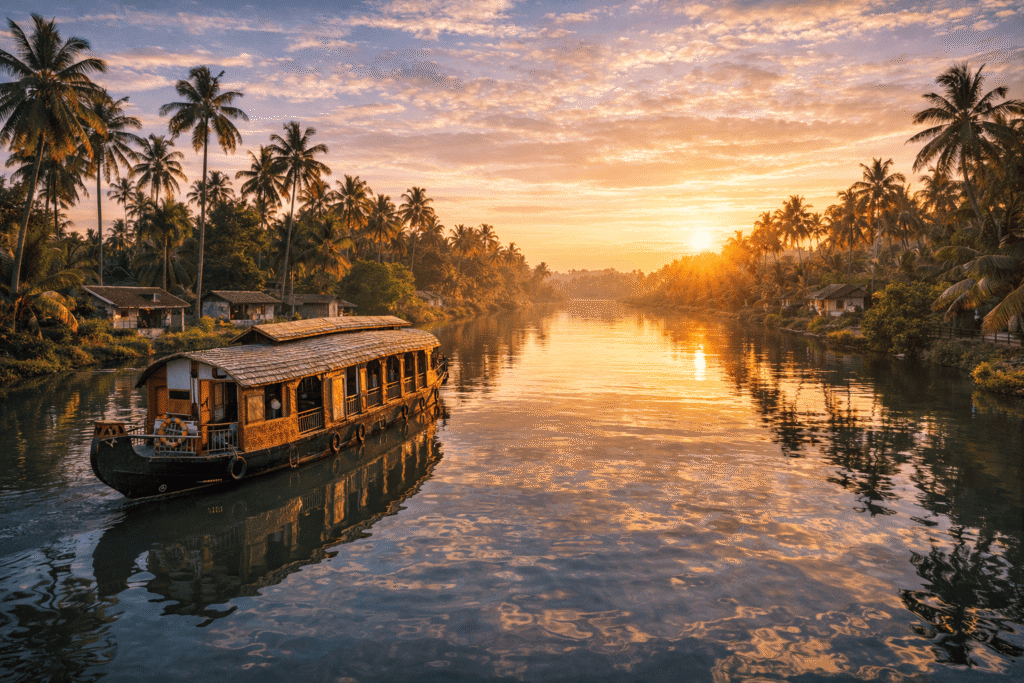
The backwaters of Kerala operate on a different clock. There are no deadlines here. A 900-kilometre network spreads across the region. It is made up of canals, lagoons, and lakes.
They thread through palm-fringed countryside. Villages are connected along the way. Many of these villages have barely changed in generations.
The classic experience is an overnight houseboat cruise. It runs between Alleppey and Kollam. You travel on a traditional kettuvallam. This is a converted rice barge. It has bedrooms, a kitchen, and a sun deck.
Watch the day unfold from the water. Fishermen cast nets at dawn. Children wave from canal banks. Egrets pick through paddy fields.
Beyond the boats, Kerala’s Ayurvedic wellness culture is world-class. Retreats are found around Varkala, Kovalam, and Kumarakom. They offer genuine traditional treatments.
These are not spa-lite approximations. Many practitioners come from families with deep roots in medicine. Some of these families have practiced for centuries.
Pro tip: Avoid the main tourist houseboats in peak season — they can feel like floating traffic jams. Book a smaller, private vessel for a quieter experience.
Best time to visit: October to March
5. Goa — More Than Just Beaches
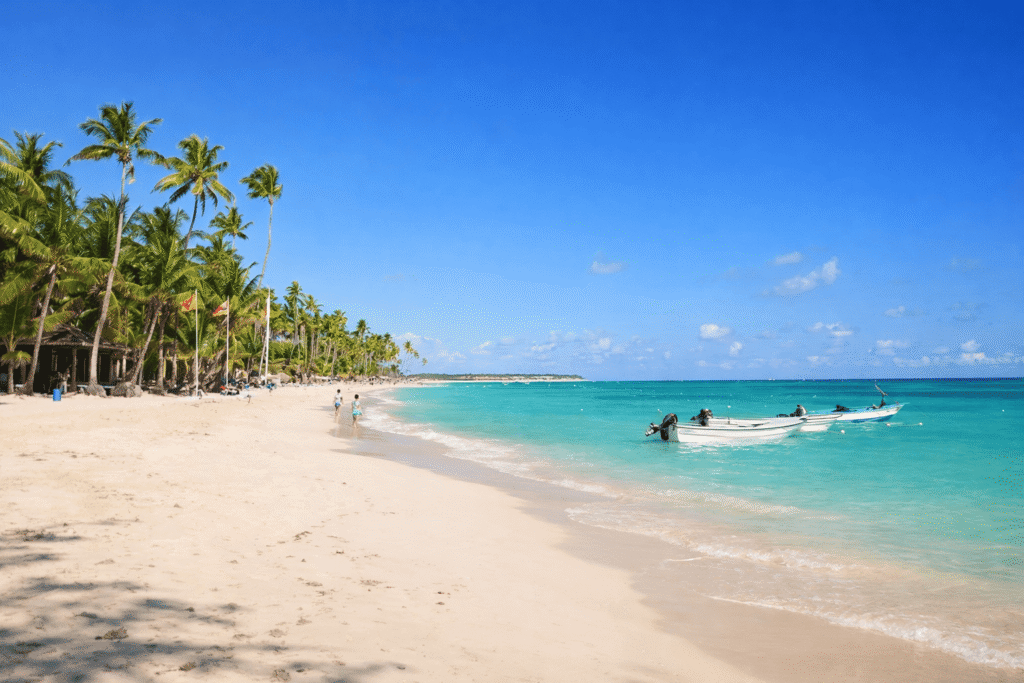
Yes, Goa has beautiful beaches. But reducing it to that misses everything. It has 450 years of Portuguese colonial history. That history sits layered over ancient Hindu culture.
The culinary tradition here is unlike anywhere else in India. And there is a particular quality of afternoon light. Artists have been chasing it for decades.
North Goa delivers the energy — beach parties at Vagator and Anjuna, the chaotic flea market at Mapusa, excellent seafood shacks at Morjim.
South Goa is a different country: quieter beaches at Palolem and Agonda, the UNESCO-listed churches of Old Goa, colonial mansions in Fontainhas quarter where the architecture genuinely transports you to Lisbon.
The food alone justifies the trip. Goan fish curry, pork vindaloo (nothing like the British restaurant version), bebinca cake, and the extraordinary cafés serving strong local coffee and egg-custard pastries — a culinary map of two civilisations meeting on a coast.
Pro tip: Rent a scooter. Goa’s road network is small enough to navigate easily and two wheels open up hidden beaches and villages that tour buses never reach.
Best time to visit: November to February
6. Varanasi, Uttar Pradesh — The City That Never Stops
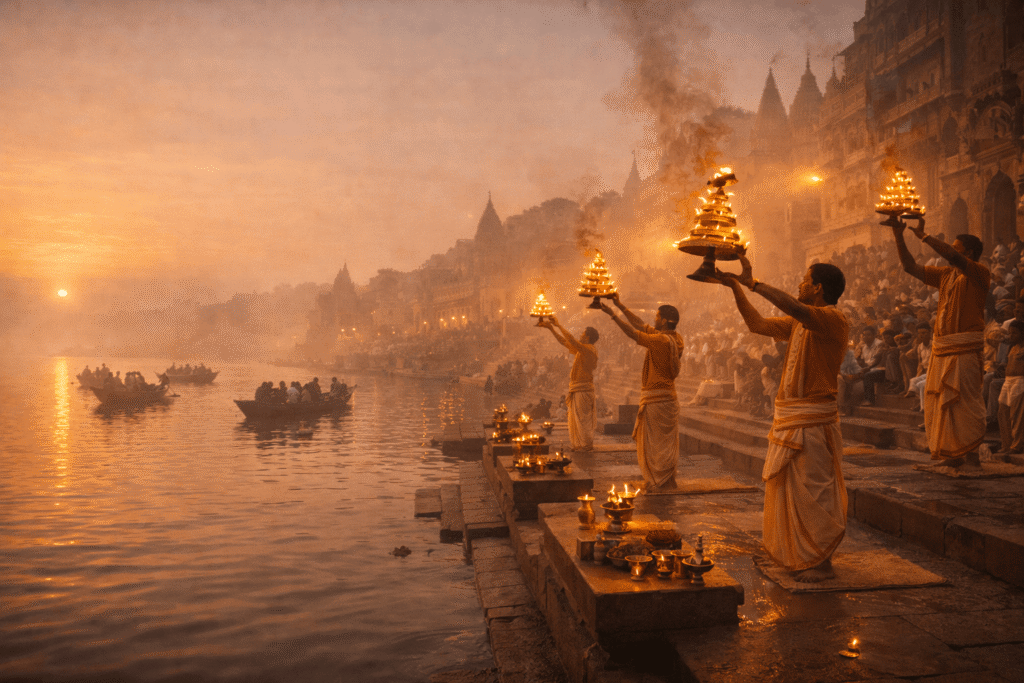
No city in India prepares you for Varanasi. Possibly one of the oldest continuously inhabited cities on earth, it operates at a frequency that feels different from anywhere else — simultaneously chaotic and profoundly calm, ancient and intensely alive.
The ghats are the city’s spine: 88 stone staircases descending to the Ganges, each with its own character and congregation.
The Ganga Aarti ceremony at Dashashwamedh Ghat each evening is one of the most spectacular ritual performances in the world — fire, music, flowers, and hundreds of people moving in synchrony at the river’s edge.
Get lost in the old city lanes deliberately. The alleys behind the ghats are a labyrinth of temples, chai stalls, silk workshops, and incense smoke. Breakfast on a rooftop overlooking the river.
Try the local kachori-sabzi and lassi from the famous Blue Lassi Shop. Hire a boat at 5am and watch the city wake up from the water.
Pro tip: Stay in a guesthouse on the ghats, not in the new city. Proximity to the river is everything here.
Best time to visit: October to March — avoid the monsoon when the ghats flood.
7. Ziro Valley, Arunachal Pradesh — Northeast India’s Best-Kept Secret
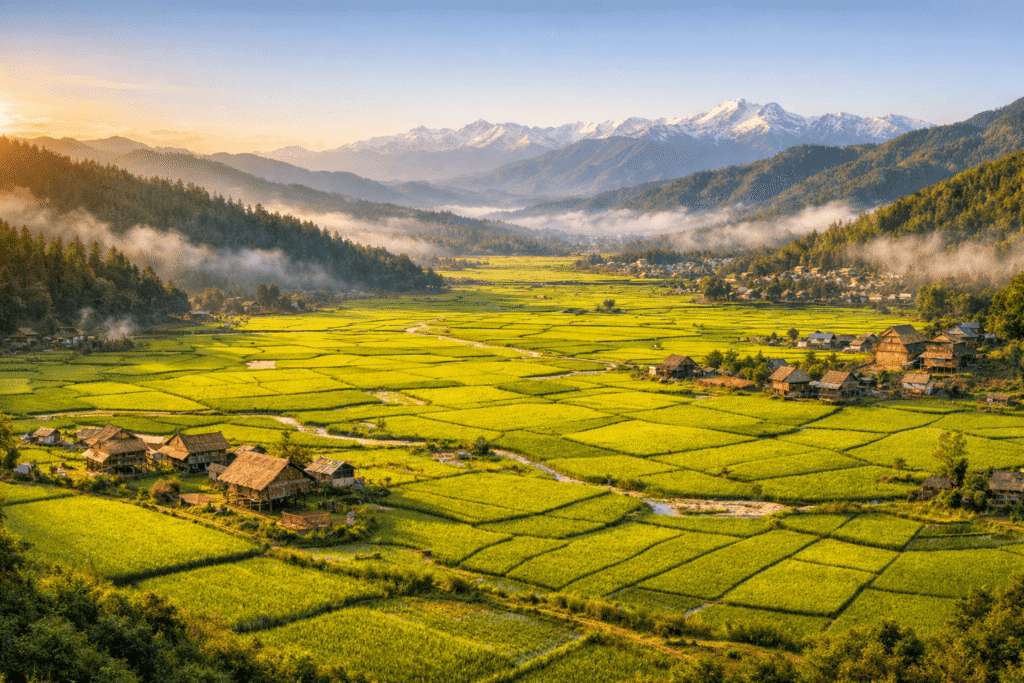
Most visitors to India never make it to Arunachal Pradesh, which means those who do get something increasingly rare: a destination that feels genuinely undiscovered.
Ziro Valley is a UNESCO World Heritage tentative-listed site of extraordinary natural beauty — a wide green bowl of rice terraces and pine forests ringed by low mountains, home to the Apatani tribe, whose distinctive agricultural techniques and cultural traditions have survived centuries of outside influence with remarkable integrity.
The Ziro Music Festival, held annually in late September, has become a cult favourite — a small, intimate festival bringing indie musicians from across India and beyond to perform against the backdrop of those misty mountains. It’s the opposite of a corporate festival experience, and better for it.
Pro tip: An Inner Line Permit (ILP) is required for all Indian citizens and foreigners — apply in advance online. The permit process is straightforward but allow a few days.
Best time to visit: March to October. The music festival is in late September.
8. Udaipur, Rajasthan — Rajasthan’s Most Romantic City
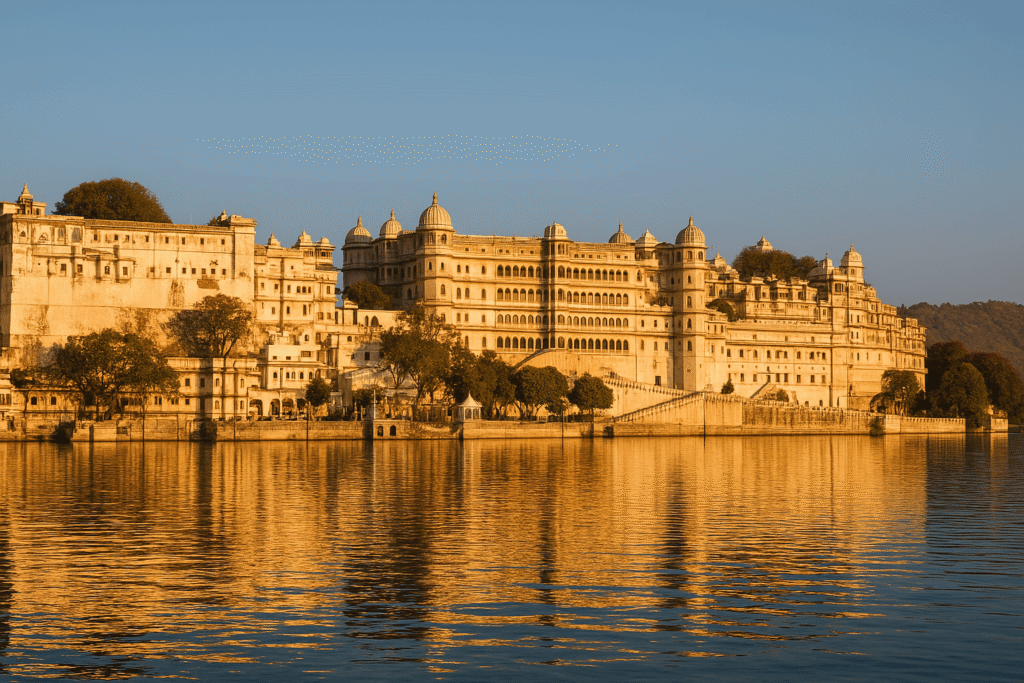
Called the “City of Lakes” for good reason, Udaipur is what happens when medieval royal ambition meets extraordinary natural geography.
The city was built around a series of interconnected lakes ringed by Aravalli hills, and the result — gleaming white palaces rising from still water, narrow lanes of blue and white houses climbing the hillsides — is genuinely beautiful in a way that photographs consistently fail to capture.
The City Palace complex is among the finest in Rajasthan — a layered accumulation of architecture spanning several centuries, with rooftop terraces that offer views across the full lake system.
An evening boat ride on Lake Pichola with the Jag Niwas (Lake Palace) floating in the middle distance is one of India’s iconic images, and it earns that status.
The city rewards slow exploration. The Jagdish Temple, the bazaars around the old city, the puppet workshops in the lanes near the palace, a rooftop dinner in Lal Ghat at sunset — Udaipur offers enough to fill a week without rushing.
Pro tip: The Lake Palace hotel (now Taj) doesn’t require a stay to visit — book a meal or afternoon tea to experience the interior.
Best time to visit: October to March
FAQ
Top places include Jaipur, Goa, Kashmir, Ladakh, Varanasi, Udaipur, Kerala, Agra, Rishikesh, and Manali.
Jaipur is ideal for a 4-day trip with forts, palaces, culture, and nearby attractions like Amer and Nahargarh.
The Taj Mahal is considered India’s No. 1 tourist attraction due to its global fame and historical significance.
Popular international destinations include Dubai, Bali, Paris, Switzerland, and Thailand.
A Final Word
India is not a comfortable country to travel in — the infrastructure can frustrate, the heat can overwhelm, and the sensory intensity can exhaust even the most seasoned travellers.
But that friction is inseparable from what makes it extraordinary. The best travel destinations in India for 2026 aren’t selling fantasy; they’re offering genuine encounters with one of the world’s most complex, ancient, and alive civilisations.
From the frozen stillness of Ladakh’s mountain lakes to the candlelit ghats of Varanasi, from Spiti Valley’s lunar roads to the moonlit salt flats of the Rann of Kutch — these are places that change you in ways you won’t fully understand until you’re back home.
Whether you’re a first-time visitor or returning for the tenth time, the best travel destinations in India for 2026 reward those who arrive with curiosity, patience, and an appetite for the unexpected.
Go slowly. Talk to people. Eat everything. You’ll come back different.