
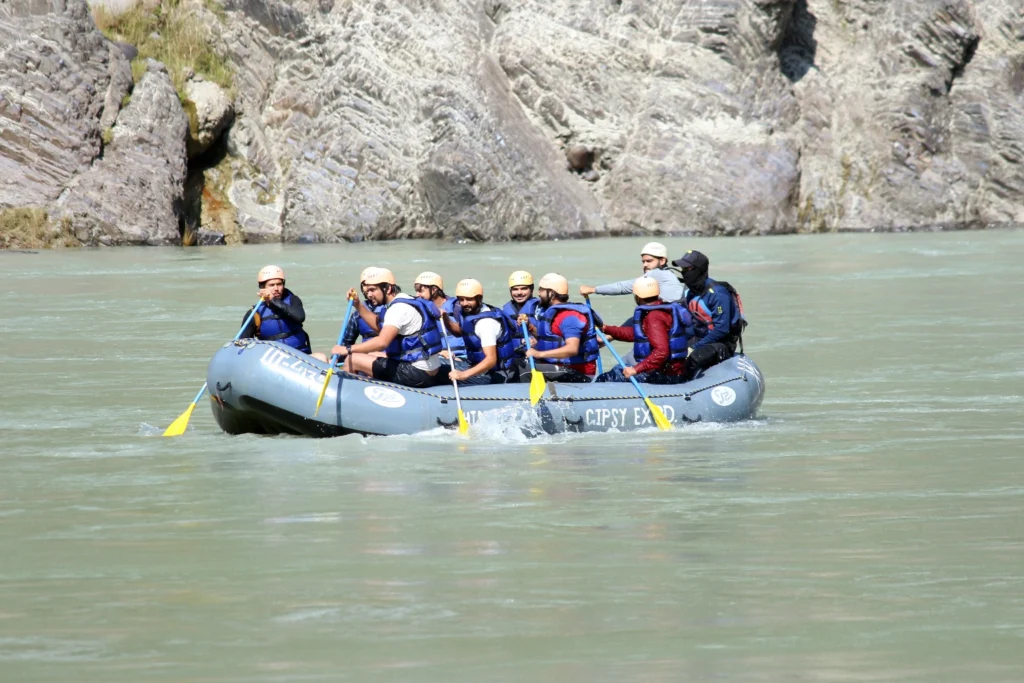
Planning to try river rafting in Rishikesh? Choosing the right rafting stretch can be confusing, especially if it’s your first time. Some routes are suitable for beginners and families, while others include challenging Grade III and IV rapids.
This guide covers the latest rafting prices, route options, safety rules, timings, and practical tips to help you plan your trip.
Quick Overview
| Best season | September–June |
| Rafting closed | July–August (monsoon) |
| Price range | ₹600–₹3,000* |
| Shortest stretch | 9 km (Brahmpuri), 1.5 hrs |
| Longest stretch | 36 km (Kaudiyala), 5.5 hrs |
| Minimum age | 14–65 years |
| Weight limit | 35–100 kg (may vary slightly by operator) |
| Non-swimmers | Allowed, with a life jacket |
Prices may vary depending on the rafting operator and government notifications. Always confirm the latest rates before booking.
The Five Rafting Stretches
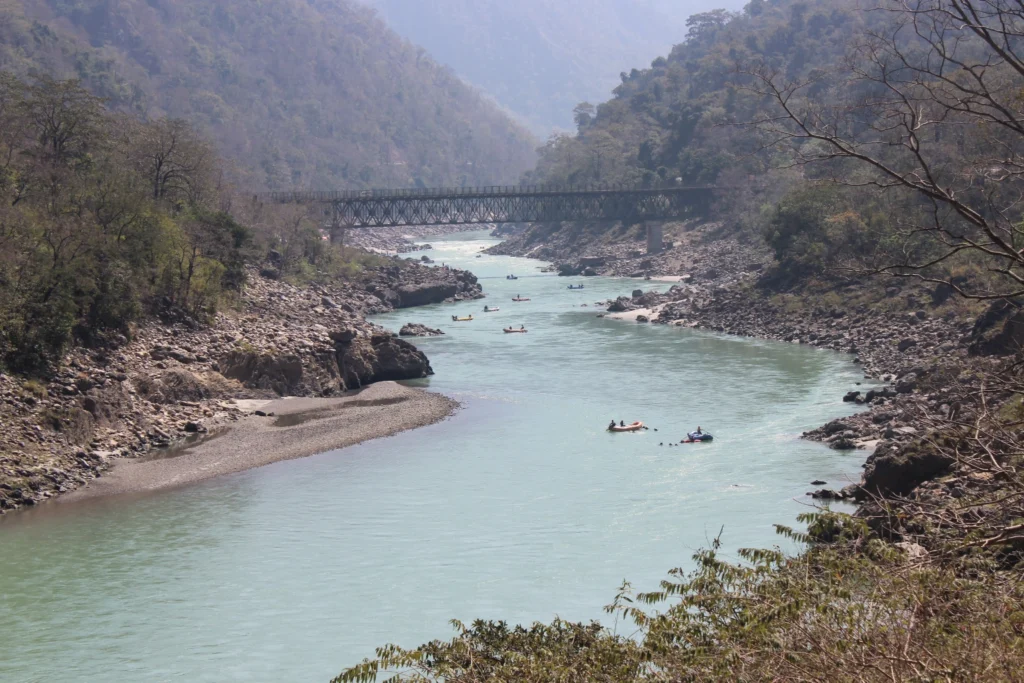
There are five official rafting stretches on the Ganga in Rishikesh, regulated by the Ganga Nadi Rafting Rotation Samiti (GNR). All trips finish at Nim Beach near Ram Jhula. Each stretch offers a different experience, with rapid intensity varying depending on the season, water level, and river conditions.
| Stretch | Distance | General Difficulty | Duration | Government Rate | Best For |
|---|---|---|---|---|---|
| Brahmpuri → Nim Beach | 9 km | Grade I–II | 1.5 hrs | ₹600 | Beginners, families, first-time rafters |
| Shivpuri → Nim Beach | 16 km | Grade I–III (up to III+) | 2–2.5 hrs | ₹1,000 | Most visitors and first-timers looking for adventure |
| Marine Drive → Nim Beach | 24 km | Grade I–III (up to III+) | 3.5–4 hrs | ₹1,500 | Longer and more adventurous rafting experience |
| Byasi → Nim Beach | 30 km | Grade I–III+ | 4.5–5 hrs | ₹2,500 | Experienced rafters |
| Kaudiyala → Nim Beach | 36 km | Grade I–IV (up to Grade IV) | 5–6 hrs | ₹2,500–3,000 | Experienced rafters |
Note: Rapid grades are general classifications and may vary depending on river flow, water level, and season. The grades shown above are intended only as a general guide.
Choosing a Stretch
Brahmpuri (9 km) is the shortest and calmest rafting stretch, making it ideal for beginners and families.
Shivpuri (16 km) is the most popular choice, offering a good balance of exciting rapids and scenic river sections.
Marine Drive (24 km) provides a longer ride with more continuous rapids, making it suitable for visitors looking for a more adventurous experience.
Byasi (30 km) is a longer rafting route recommended for those with some rafting experience.
Kaudiyala (36 km) is the longest and most challenging stretch, suitable only for experienced rafters when river conditions permit.
Best Time to Go
Rafting in Rishikesh operates from September to June.
- September to November offers pleasant weather, fresh river flow after the monsoon, and excellent rafting conditions.
- December to February is one of the best times for rafting. The water is colder (around 10–15°C), but most operators provide wetsuits, making rafting comfortable on all operational stretches.
- March to June is the busiest rafting season, with warmer weather and ideal conditions for first-time visitors.
Rafting remains closed during July and August because of the monsoon and high river levels.
Daily Timings
Rafting departure times vary by operator, season, river conditions, and the stretch you’ve booked. Most companies offer trips between 8:00 AM and 3:00 PM, with morning departures generally being the most popular. It’s best to confirm your exact reporting time when booking.
What’s Included, and What Isn’t
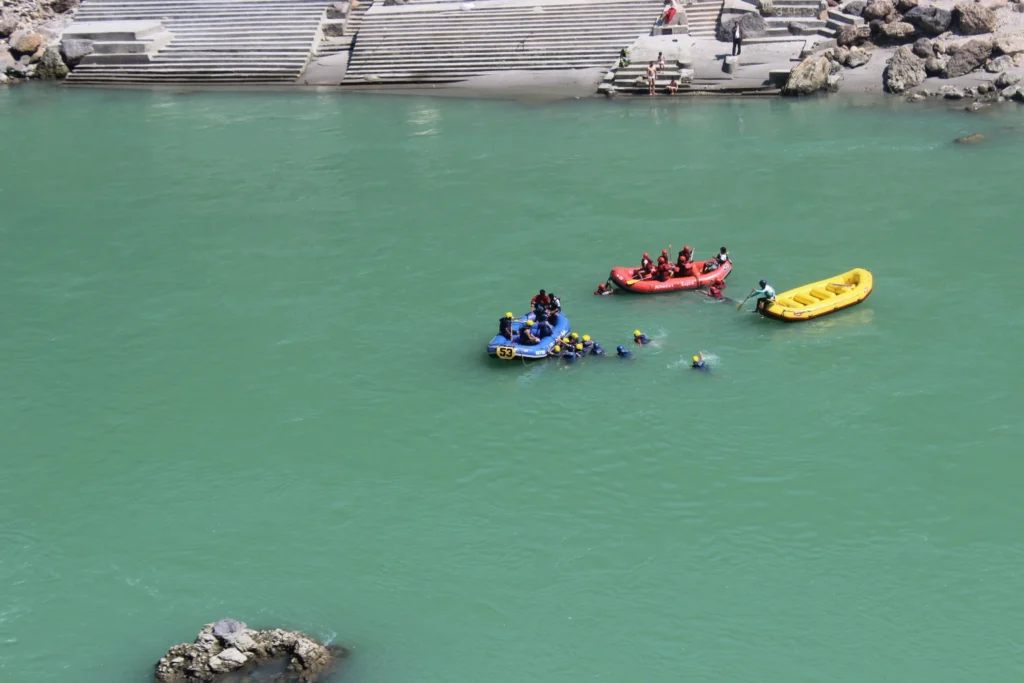
Usually included: Raft, paddles, and gear; life jacket and helmet; a government-licensed guide; a safety kayak accompanying the raft; a first aid kit; a safety briefing; and basic insurance cover.
Usually not included: Transport to the starting point, photos or GoPro footage, meals, cliff jumping or body-surfing add-ons, and camping packages. These vary by operator, so it’s worth confirming exactly what’s covered before paying.
Safety Rules and Requirements
Operators must be registered with both the Uttarakhand Tourism Development Board (UTDB) and the GNR. Asking for a registration number is a reasonable thing to do if you’re unsure about a company, and legitimate operators won’t mind being asked.
Even though life jackets are compulsory, swimming ability is still important. Non-swimmers can also enjoy rafting with a properly fitted life jacket and by following their guide’s instructions. Your operator may recommend a suitable stretch based on your experience, fitness, and current river conditions.
Certain health conditions rule out rafting entirely: heart conditions, back or neck injuries, high blood pressure, epilepsy, asthma, recent fractures, and pregnancy. Guides are trained to ask about these, and honesty here isn’t optional.
Participants must generally be between 14 and 65 years of age and fall within the recommended weight range of 35–100 kg. Some operators may have slightly different requirements based on river conditions and safety policies.
What to wear: Quick-dry synthetic clothing rather than cotton, which gets heavy and cold once wet. Water shoes or strapped sandals — no flip-flops or bare feet.
In winter, a wetsuit plus thermal layers, usually provided by the operator. High-SPF sunscreen, since sun reflection off the water is intense even in cold months, and sunglasses with a strap if you want to keep them.
What to leave behind: Jewellery, watches, loose valuables, and phones unless secured in a proper waterproof pouch.
During the trip: Always follow your guide’s instructions carefully. They’re trained to handle changing river conditions and know how to respond if someone falls into the water.
Hold the paddle with both hands, keep one on the T-grip, and stay seated unless told otherwise. If you go overboard, the standard position is on your back, feet pointing downstream, arms out for balance, waiting for the guide’s instruction rather than trying to swim against the current.
Arms stay inside the raft during rapids, since rocks can cause real injury. Helmet and life jacket stay on and secured at all times.
Government Regulations
Operators need an annually renewed UTDB licence. Every trip requires a certified guide, trained through a recognised institute such as NIM. All participants sign a liability waiver on arrival, and rafting isn’t permitted outside the official season, which runs from September 1 to June 30.
Booking Tips
If you’re visiting during weekends in March–May or October–November, it’s a good idea to book your rafting slot a few days in advance, as these are the busiest months.
You can book online or directly through a GNR-registered operator in Tapovan. Before confirming your booking, make sure the operator is registered with both the UTDB and GNR, and avoid booking through unofficial agents or roadside touts.
If you’re travelling in a group of six or more, ask about group discounts, as many operators offer them. Some also provide camping and rafting packages starting from around ₹2,000 per person, which can be a convenient option if you plan to stay overnight.
Other Activities in the Area
Rafting operators and riverside camps in the area commonly also offer cliff jumping near Shivpuri, body surfing in calmer sections, kayaking, and stand-up paddleboarding.
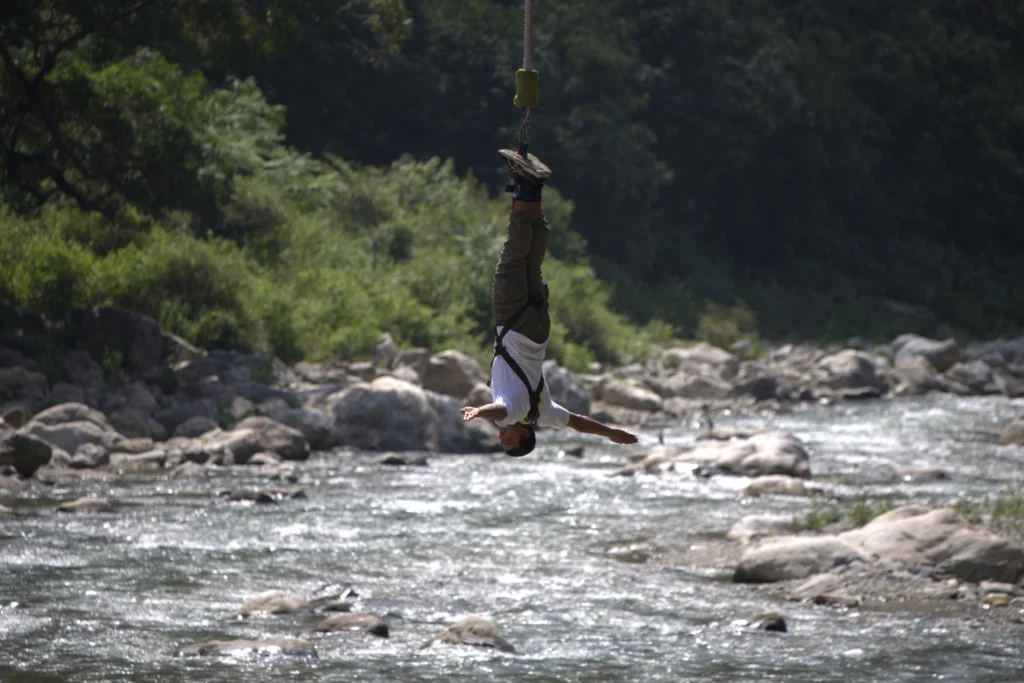
Separately, Jumpin Heights runs India’s highest fixed-platform bungee jump (83m) along with a Valley Rope Jump and Flying Fox at their site in Mohanchatti, about 17 km away — a different operator and location from the rafting stretches themselves.
Getting to Rishikesh
The nearest airport is Jolly Grant Airport in Dehradun, about 22 km away, with regular flights from Delhi, Mumbai, and other major cities. By train, Haridwar (about 25 km away) has better connectivity than Rishikesh’s own station.
By road, it’s roughly 260–280 km from Delhi, a 5–6 hour drive, with frequent buses and taxis available from Delhi, Haridwar, and Dehradun.
Frequently Asked Questions
Yes, provided you choose appropriate Grade I–II stretches (Brahmpuri or Shivpuri) and follow all safety instructions. Life jackets are compulsory and guides are trained in water rescue. That said, stronger stretches like Kaudiyala are strongly recommended only for confident swimmers.
The minimum age limit set by the Ganga Nadi Rafting Rotation Samiti is 14 years. The maximum recommended age is 65 years, and participants must be in good physical and mental health.
Yes. Rafting operates from 1 September to 30 June. Winter is actually one of the best seasons for rafting because of pleasant weather and smaller crowds. Since the water is cold, most operators provide wetsuits to make the experience comfortable.
For weekdays outside peak season, same-day booking is usually possible. For weekends between March–May and October–November, book at least 2–3 days ahead. For large groups, a week’s advance booking is advisable.
Yes. Rafting in Rishikesh is officially closed from 1 July to 31 August every year due to dangerously elevated water levels caused by Himalayan rainfall. Some operators may advertise trips during this period — avoid them entirely.
Conclusion
River rafting is one of the most popular adventure activities in Rishikesh, with options for both beginners and experienced rafters. Choosing the right stretch, booking with a licensed operator, and following the safety guidelines will help you enjoy the experience with confidence.
Whether you’re looking for a short introductory ride or a longer, more challenging run, there’s a rafting route that matches your experience level.
Last updated: July 2026. Prices and schedules are based on GNR government rates for the 2025–26 season and are subject to change — confirm current rates with your operator before booking.