
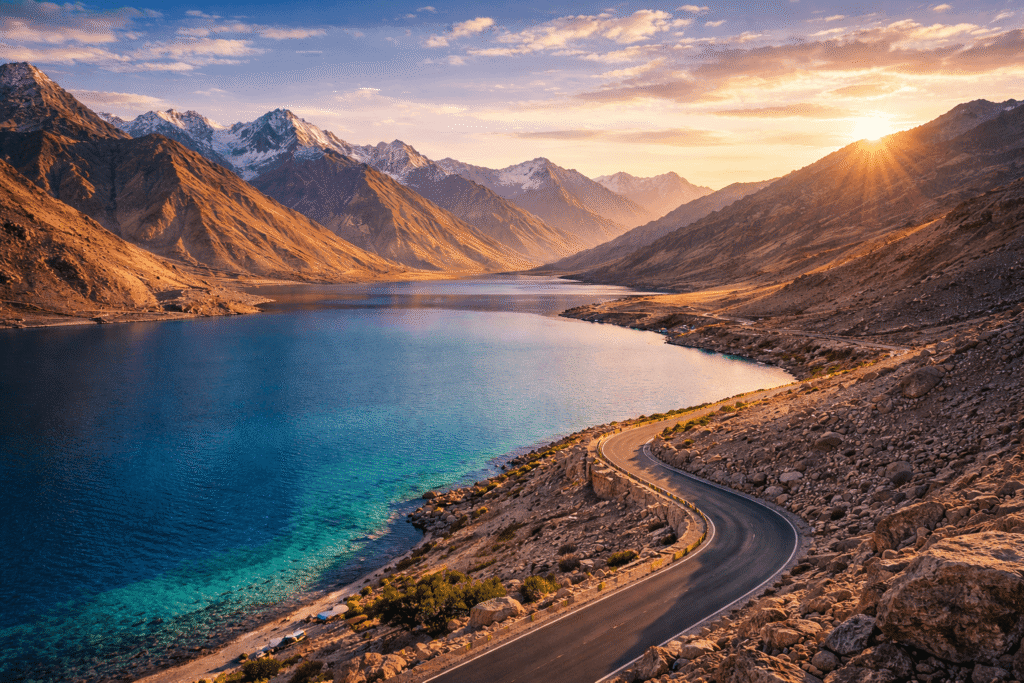
India is home to some of the most beautiful places in the world — and arguably the most varied. Within a single country, you can stand on a glacier, wade through a salt desert, and snorkel above a coral reef, all within the span of a week.
This guide explores the country’s most remarkable destinations, what makes each unique, and practical tips to help you plan your visit.
Kashmir Valley, Jammu & Kashmir
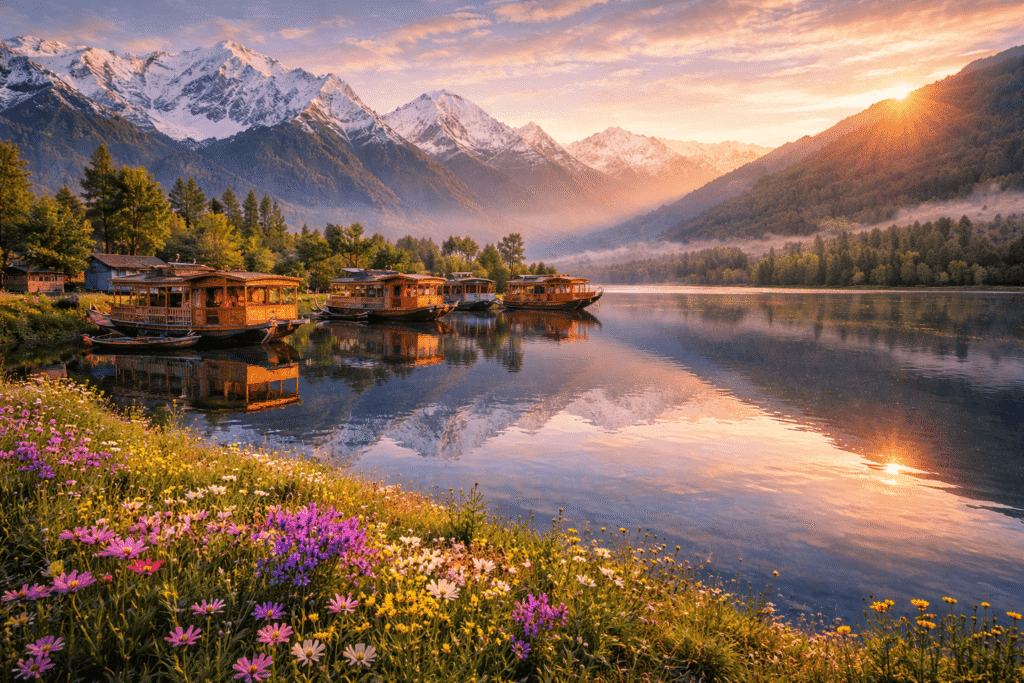
Few places in the world earn the label “paradise” and actually deliver on it. Kashmir Valley sits cradled between the Pir Panjal and Himalayan ranges, and its beauty shifts dramatically with the seasons.
Spring brings the famous Tulip Garden in Srinagar — Asia’s largest, with over 1.5 million blooms. Summer turns the meadows of Gulmarg and Pahalgam lush green, ideal for hiking.
Autumn drapes the valley in gold and amber, and winter buries it under snow, opening up skiing at Gulmarg’s high-altitude slopes.
Best time to visit: March–May for flowers; December–February for skiing.
Don’t miss: A night on a traditional houseboat on Dal Lake.
Ladakh, Jammu & Kashmir
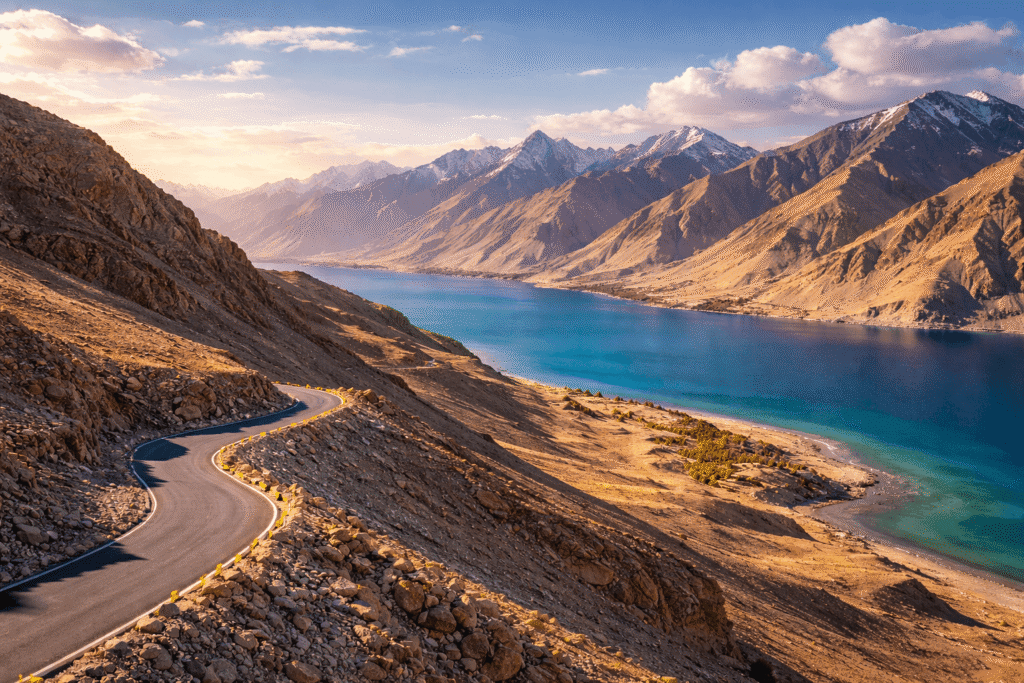
Ladakh is a high-altitude cold desert that feels less like India and more like another planet. At elevations exceeding 3,500 metres, its landscape is stark, silent, and breathtaking — rust-coloured cliffs, turquoise lakes, and whitewashed monasteries perched on impossible ridgelines.
Pangong Lake is the region’s iconic image, its colour shifting from blue to green to grey as clouds pass overhead. The Nubra Valley, accessible via the world’s highest motorable pass (Khardung La), offers sand dunes beside snowy mountains — a surreal contrast unique to Ladakh.
Best time to visit: June–September (roads are closed in winter).
Don’t miss: Sunrise at Thiksey Monastery, which resembles a miniature Potala Palace.
Valley of Flowers, Uttarakhand
This UNESCO World Heritage Site is only accessible on foot, which keeps it wonderfully uncrowded.
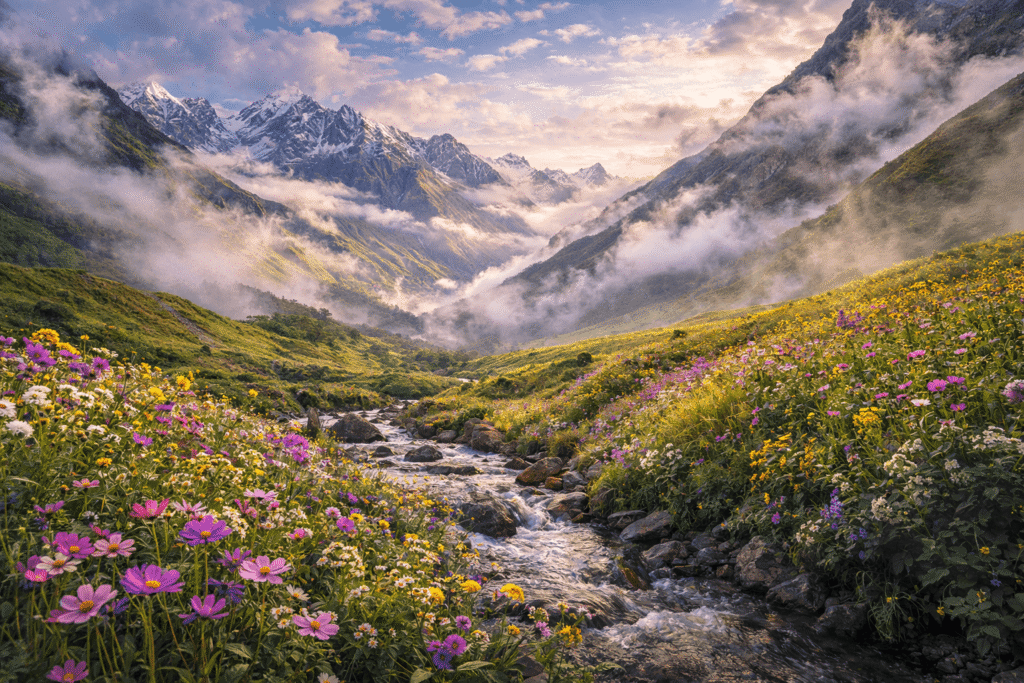
A 17 km trek from Govindghat brings you into a protected valley where, during July and August, over 300 species of wildflowers bloom simultaneously — Himalayan blue poppies, brahma kamal, cobra lilies, and dozens more carpeting the valley floor.
The surrounding Zanskar range provides a dramatic backdrop, and the area is also a corridor for rare wildlife including snow leopards and Asiatic black bears.
Best time to visit: Mid-July to mid-August for peak bloom.
Don’t miss: Combining the trek with a visit to Hemkund Sahib, a Sikh pilgrimage site at 4,300 metres.
Rann of Kutch, Gujarat
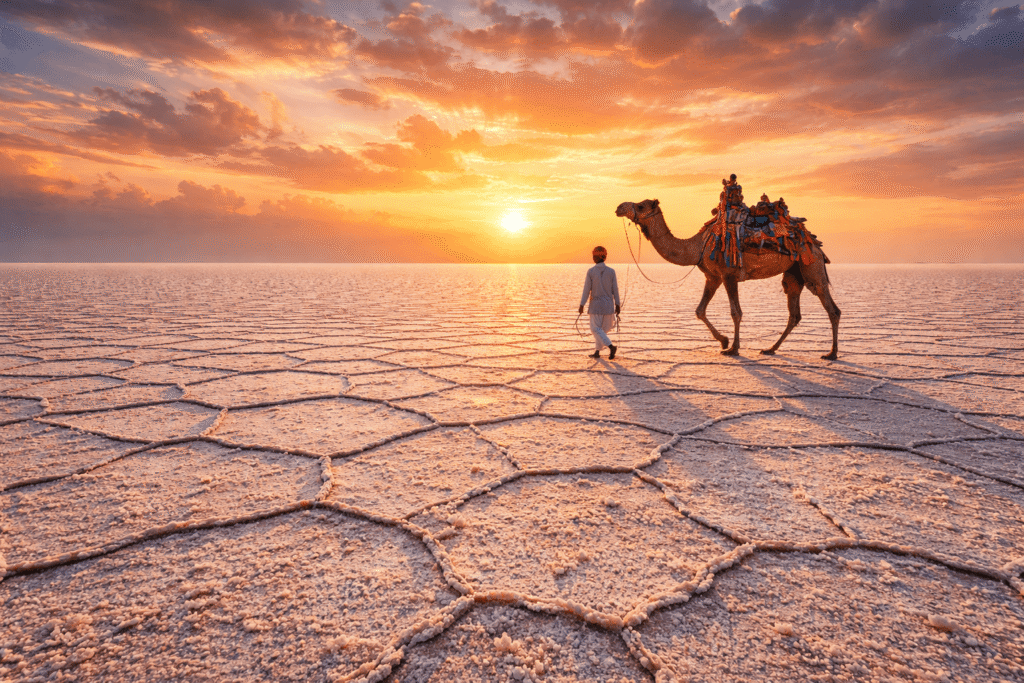
The Great Rann is one of the world’s largest salt marshes — a vast white expanse that stretches to the horizon and disorients your sense of scale.
During the dry season (October to March), the cracked salt flats reflect the sky so perfectly that the boundary between earth and heaven disappears.
The annual Rann Utsav festival (November–February) transforms the desert edge into a cultural hub, with local artisans showcasing Kutchi embroidery, musicians performing folk traditions, and camel rides at sunset.
The flamingo colonies at the nearby Flamingo City sanctuary are also extraordinary.
Best time to visit: November–February.
Don’t miss: A full-moon night on the salt flats — the landscape turns silver and otherworldly.
Munnar, Kerala
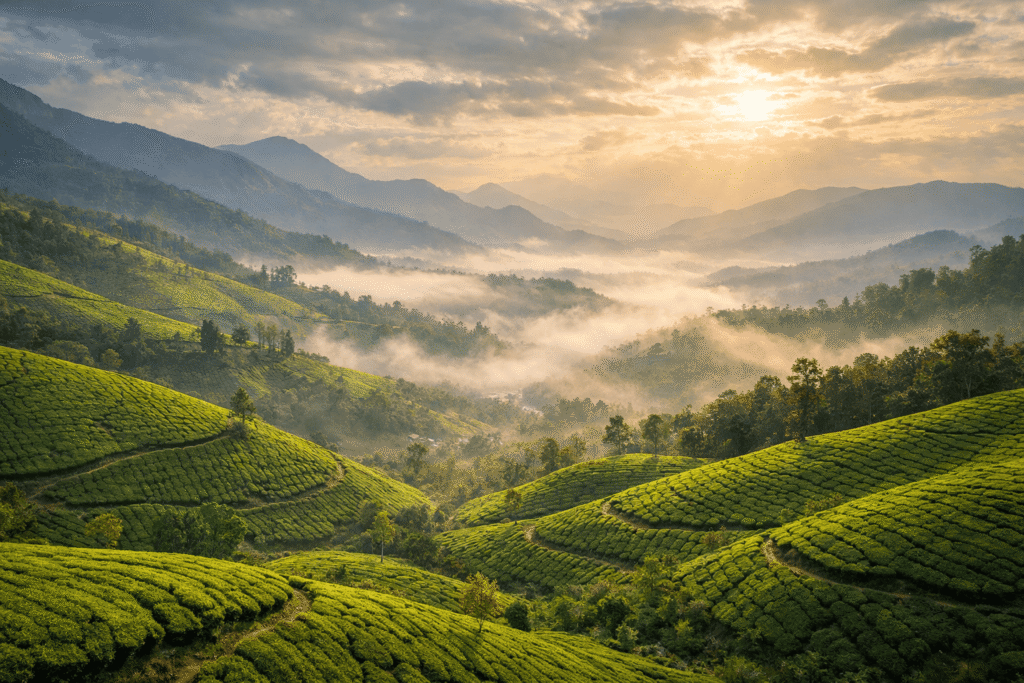
Munnar sits at around 1,600 metres in the Western Ghats, where tea was first cultivated in India by British planters in the 1870s. Today, the rolling hills are a patchwork of perfectly manicured tea bushes interrupted by silver oak trees and waterfalls.
Beyond the tea estates, Eravikulam National Park protects the endangered Nilgiri tahr, and the rare Neelakurinji flower — which blooms only once every 12 years — turns entire hillsides blue when it does appear (next bloom expected around 2030).
Best time to visit: September–March (avoid the monsoon months of June–August).
Don’t miss: A guided walk through a working tea estate and a visit to the processing factory.
Andaman & Nicobar Islands
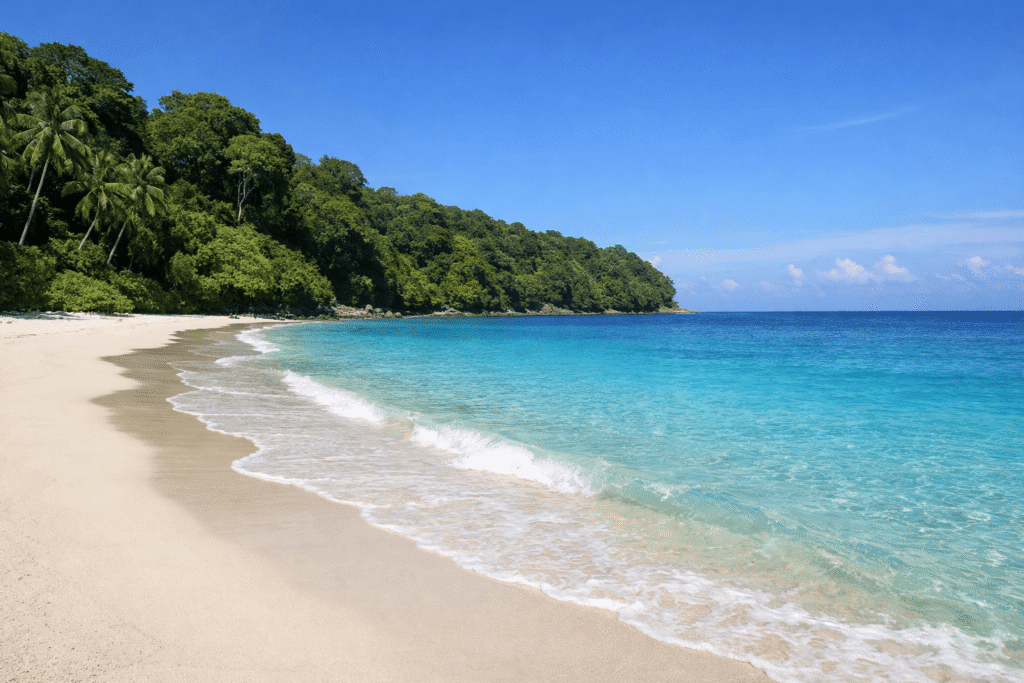
These 572 islands sit in the Bay of Bengal, closer to Thailand than to mainland India.
The underwater world here rivals the Maldives — Havelock Island’s coral reefs are home to reef sharks, sea turtles, manta rays, and some of the most vivid coral formations in Asia.
Radhanagar Beach (Beach No. 7) consistently ranks among Asia’s finest for its powder-white sand and shallow, clear waters. For history, Cellular Jail in Port Blair tells the sobering story of Indian freedom fighters imprisoned here by the British.
Best time to visit: October–May.
Don’t miss: A scuba diving certification course — the waters here are ideal for beginners.
Tawang, Arunachal Pradesh
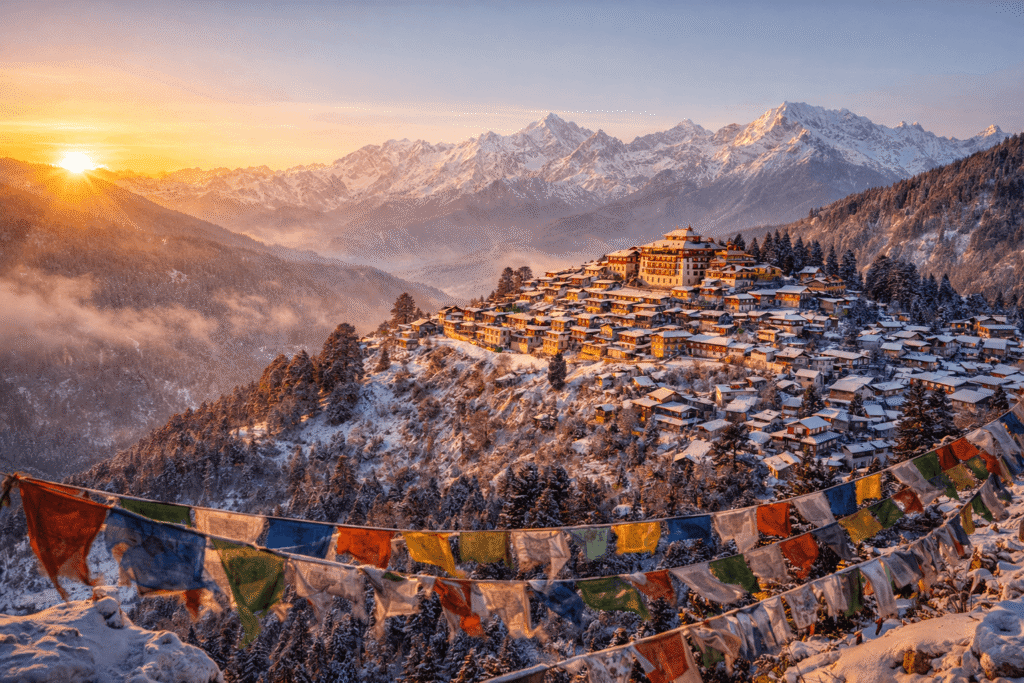
Tawang sits at 3,048 metres near the Tibetan border, and reaching it requires crossing the Sela Pass (4,170 m) — a journey that’s as spectacular as the destination.
The town is dominated by the Tawang Monastery, founded in the 17th century and the largest Buddhist monastery in India, home to around 450 monks.
The surrounding district contains alpine lakes, forested valleys, and war memorials from the 1962 Sino-Indian War. Because Arunachal Pradesh requires a special inner line permit for Indian citizens (and additional permits for foreigners), Tawang remains far less visited than it deserves.
Best time to visit: March–October (the pass can close in winter).
Don’t miss: Shonga-tser Lake (also known as Madhuri Lake), which appeared in a Bollywood film and has been popular with visitors ever since.
Rajasthan — The Land of Maharajas
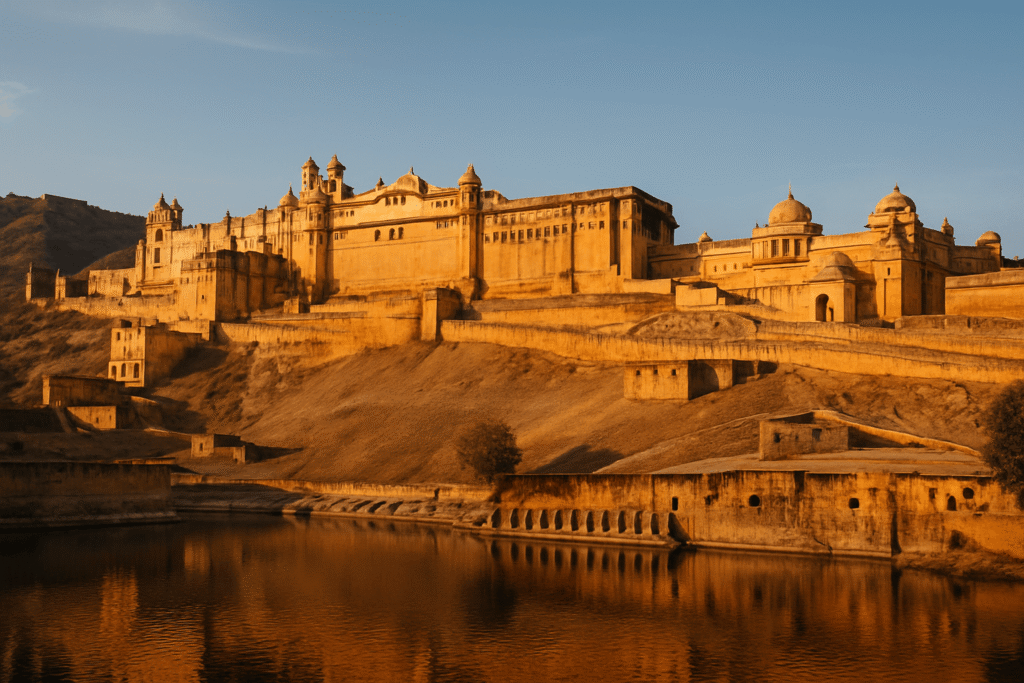
No list of India’s most beautiful places is complete without Rajasthan. The state is an open-air museum of palaces, forts, and desert landscapes that defined the imagery of Mughal and Rajput India for centuries.
Jaisalmer’s golden sandstone fort rises from the Thar Desert as if grown from it. Udaipur’s City Palace reflects in the still waters of Lake Pichola. Jodhpur is a sea of blue-painted houses beneath the looming walls of Mehrangarh Fort.
Each city has its own distinct character, architecture, and cuisine.
Best time to visit: October–February.
Don’t miss: Camping under the stars at the Sam Sand Dunes near Jaisalmer.
Meghalaya — The Abode of Clouds
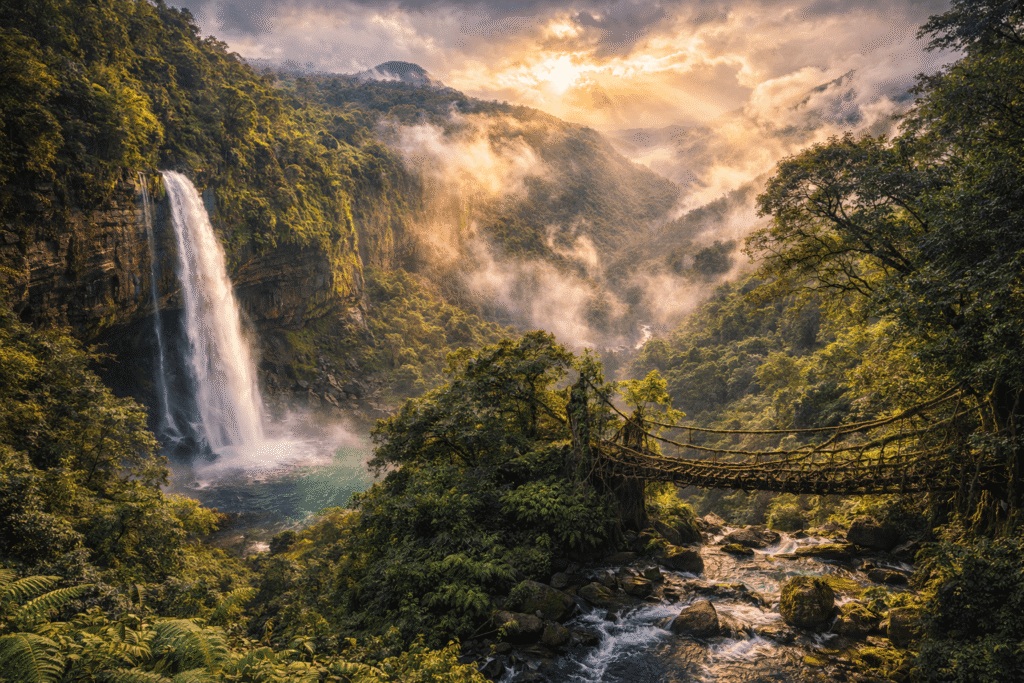
Meghalaya is India’s most underrated state. Cherrapunji and Mawsynram compete for the title of the world’s wettest places, and the rainfall has shaped a landscape of extraordinary living root bridges — ancient structures woven from the roots of rubber trees by the Khasi people over centuries.
Dawki’s Umngot River runs so clear that boats appear to float in mid-air. The caves here — including Mawsmai and Krem Liat Prah — are among the longest in Asia. The state’s capital, Shillong, blends colonial architecture with a thriving music scene.
Best time to visit: October–May (the monsoon is spectacular but travel is difficult).
Don’t miss: The double-decker living root bridge at Nongriat, reached by a 3,000-step descent into the rainforest.
Coorg, Karnataka
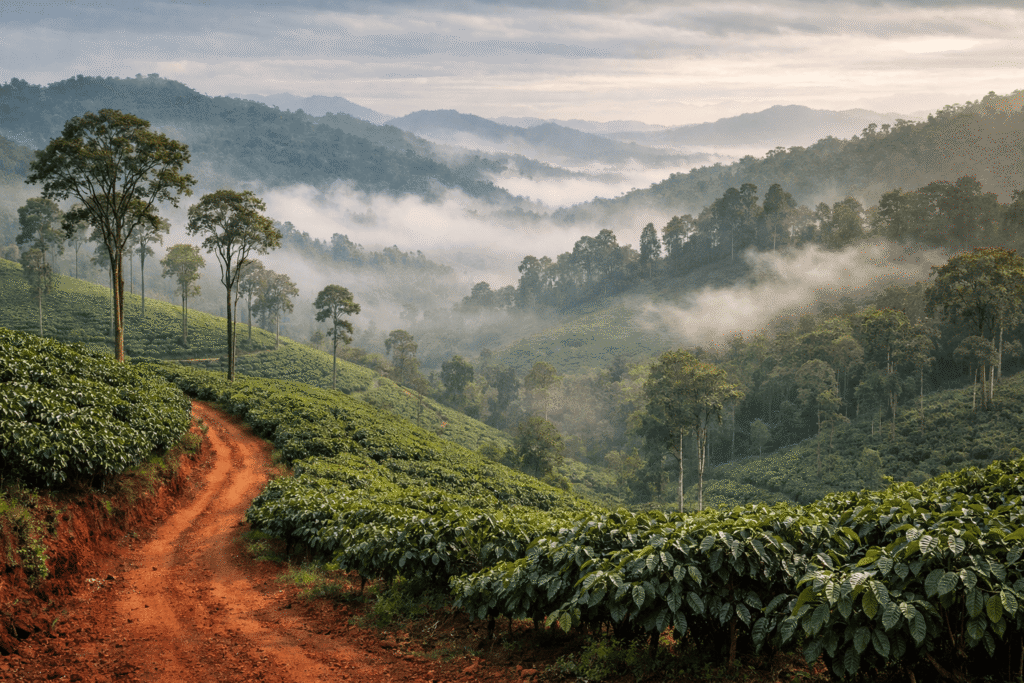
Known as the “Scotland of India” for its mist-covered hills and coffee estates, Coorg (officially Kodagu) is the country’s largest coffee-growing region. The air smells of coffee blossoms and cardamom, and most homestays and resorts sit directly on working plantations.
Abbey Falls and Iruppu Falls are the region’s most dramatic waterfalls, and Nagarhole National Park on the district’s border is one of the best places in South India to spot tigers and elephants in their natural habitat.
Best time to visit: October–March.
Don’t miss: A plantation walk at dawn, when the mist sits low over the coffee bushes.
FAQ
The Taj Mahal is often considered India’s most beautiful place for its iconic architecture and global recognition.
Dubai (UAE) is one of the most liked destinations by Indians due to easy travel, shopping, and luxury experiences.
Some of the most visited cities globally include Bangkok, Paris, London, Dubai, Singapore, New York, Istanbul, Tokyo, Rome, and Barcelona.
Top summer destinations include Ladakh, Manali, Kashmir, Switzerland, and Bali for pleasant weather and scenic beauty.
A Final Word
India’s beauty doesn’t fit neatly into a top-10 list — the country is simply too large and varied for that. From the snow-dusted monasteries of Tawang to the coral reefs of the Andamans, the most beautiful places in India span an extraordinary range of landscapes, climates, and cultures.
What makes exploring the most beautiful places in India so rewarding is precisely this diversity. No two destinations feel alike, and no single trip can cover them all.
Whether you’re drawn to the houseboat-dotted lakes of Kashmir, the living root bridges of Meghalaya, or the golden forts of Rajasthan, each place leaves its own lasting impression.
If you’re planning your journey, use this guide as a starting point — but stay open to detours. Some of the most beautiful places in India are the ones you stumble upon between destinations, far from any itinerary.