

The Rishikesh to Haridwar distance is just 24–25 km, making it one of the easiest and most popular short trips in Uttarakhand.
Depending on traffic, the journey usually takes between 45 minutes and 1.5 hours by road.
Whether you’re travelling for yoga retreats, river rafting, temple visits, or the famous Ganga Aarti, both cities are closely connected and easy to cover in a single trip.
This guide explains the exact Rishikesh to Haridwar distance, best travel routes, taxi fares, buses, train options, and the top places to visit in both destinations.
Rishikesh to Haridwar Distance & Travel Time at a Glance
| Information | Details |
|---|---|
| Distance by road | 24–25 km |
| Average travel time | 45 min – 1.5 hours |
| Best route | NH-334 via Shyampur |
| Taxi fare | ₹600 – ₹1,000 |
| Bus fare | ₹30 – ₹50 |
| Best departure time | Before 8 AM |
Travel Options Between Rishikesh and Haridwar
| Travel Mode | Journey Time | Approx Cost | Notes |
|---|---|---|---|
| Taxi (private) – Most comfortable | 45–60 min | ₹600–₹1,000 | Pre-book during peak season |
| Shared cab | 45–60 min | ₹60–₹100/seat | Departs when full |
| Bus (UTC) – Most budget | 1–1.5 hrs | ₹30–₹50 | Frequent departures all day |
| Train | ~1 hr | ₹20–₹100 | Very few departures; not recommended |
Rishikesh to Haridwar Distance by Road
The road distance from Rishikesh to Haridwar is approximately 24 to 25 kilometres, making it one of the shortest and most scenic intercity journeys in northern India.
Under normal traffic conditions, the drive takes between 45 minutes and 1.5 hours.
This short Rishikesh to Haridwar distance is what makes the twin-city trip such an effortless weekend itinerary.
You can experience Haridwar’s ancient rituals in the morning and be sitting on Rishikesh’s riverside by lunch.
Seasonal note: During major Hindu festivals — Kumbh Mela, Kanwar Yatra, and Navratri — this highway can grind to a near-standstill for hours. Plan early morning departures (before 8 AM) regardless of season.
Best Route from Rishikesh to Haridwar
The most popular route follows National Highway 334, passing through Shyampur on a well-maintained road with good signage.
The distance between Rishikesh and Haridwar via this route is a comfortable 24–25 km.
An alternate route via Raiwala adds a few kilometres but can bypass congestion near Rishikesh town — useful during busy weekends or the Kanwar Yatra pilgrimage season, when the main highway swells with foot traffic.
Rishikesh to Haridwar Taxi Fare
A private taxi covering the Rishikesh to Haridwar distance typically costs ₹600 to ₹1,000 one-way. Rates vary depending on vehicle type, season, and whether you book through your hotel or directly with a driver.
During peak months (October–March) and major festivals, fares can climb toward ₹1,000–₹2,000.
Pre-booking through your hotel or a local cab service is strongly recommended during festivals and peak tourist months. App-based cabs are available but limited on this route.
How to Travel Between Rishikesh and Haridwar
By Bus
Uttarakhand Transport Corporation (UTC) buses run frequently between the two cities at fares of just ₹30 to ₹50 — the most budget-friendly way to cover the Rishikesh to Haridwar distance.
Buses depart regularly from Haridwar Bus Stand and Rishikesh Bus Stand throughout the day.
By Shared Cab
Shared cabs are widely available, especially outside Haridwar Railway Station. Fares run ₹60 to ₹100 per seat, and vehicles depart once full.
A popular choice among backpackers and solo travellers looking for speed without the private taxi cost.
By Train
A passenger train does connect the two cities, but departures are very limited — typically just a few per day.
Combined with the inconveniently located Rishikesh Railway Station, trains are rarely worth the effort when the road distance between Rishikesh and Haridwar is so short and road options so plentiful.
Best Places to Visit in Rishikesh
1. Lakshman Jhula
This iconic suspension bridge crossing the Ganges is Rishikesh’s most photographed landmark. Legend holds that Lord Lakshmana crossed the river here on a jute rope.
Today, the bridge connects the eastern and western banks and offers breathtaking views of the turquoise river below, framed by forested hills and centuries-old ashrams.
The surrounding lanes are lined with cafes, bookshops, yoga studios, and souvenir stalls.
2. Ram Jhula
Slightly wider and busier than Lakshman Jhula, Ram Jhula connects Shivananda Nagar to Swargashram. It is especially atmospheric in the early morning, when sadhus cross in saffron robes and bells ring from the temples below.
The evening aarti near this bridge is quieter and more intimate than Triveni Ghat, making it a favourite for those seeking a personal spiritual moment.
3. Triveni Ghat
The largest and most revered ghat in Rishikesh, Triveni Ghat marks the mythological confluence of three sacred rivers — the Ganga, Yamuna, and the invisible Saraswati.
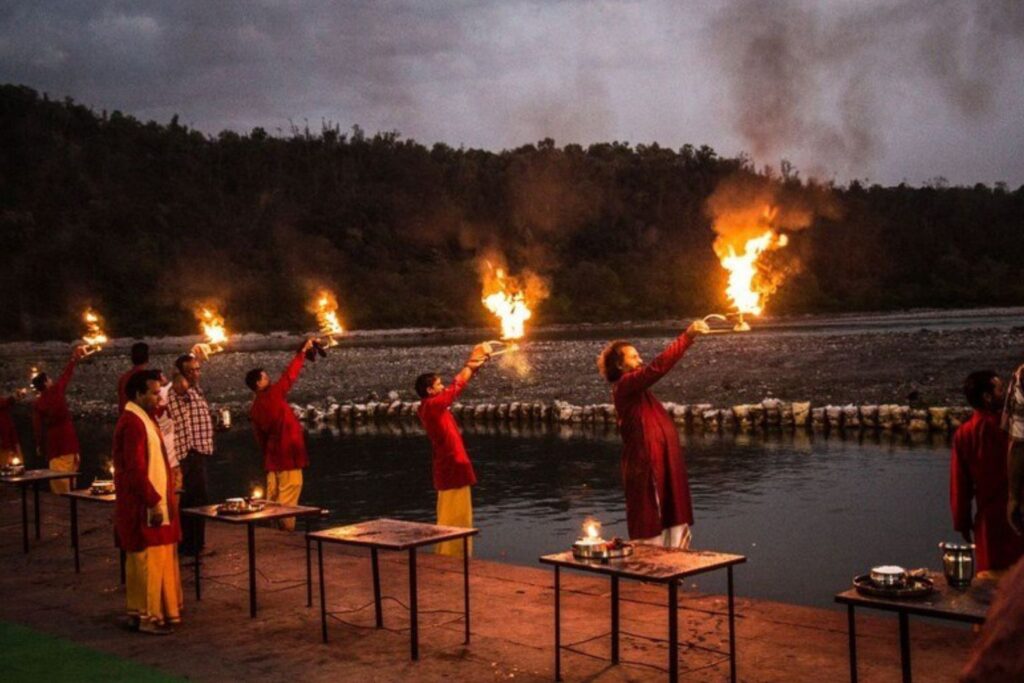
Pilgrims take a holy dip here at dawn, and the Maha Aarti held every evening is a deeply moving spectacle of fire, flowers, and devotional chanting. Arrive early to secure a good vantage point.
4. Neer Garh Waterfall
A gentle 1.5 km forest trek from Lakshman Jhula leads to this beautiful multi-tiered waterfall hidden within dense greenery.
It is a refreshing escape from the town’s spiritual bustle, and the natural pool at the base makes it ideal for a quick dip. Best visited on weekdays to avoid crowds.
5. The Beatles Ashram
In early 1968, The Beatles — John, Paul, George, and Ringo — retreated to this ashram to study Transcendental Meditation under Maharishi Mahesh Yogi.
It was here, surrounded by Himalayan silence, that many songs from the iconic White Album were reportedly composed.
Now open as a heritage site maintained by the forest department, the crumbling buildings are covered in striking murals.
It is one of India’s most unusual pilgrimage sites — equally beloved by rock music fans and spiritual seekers.
6. White Water Rafting
No visit to Rishikesh is complete without tackling the Ganges on a raft. Stretches range from the gentle Grade 1–2 rapids at Brahmpuri (ideal for beginners and families) to the thrilling Grade 3–4 rapids at Shivpuri and Marine Drive.
Most operators offer packages including gear, a guide, and a riverside camp lunch.
Best Places to Visit in Haridwar
1. Har Ki Pauri
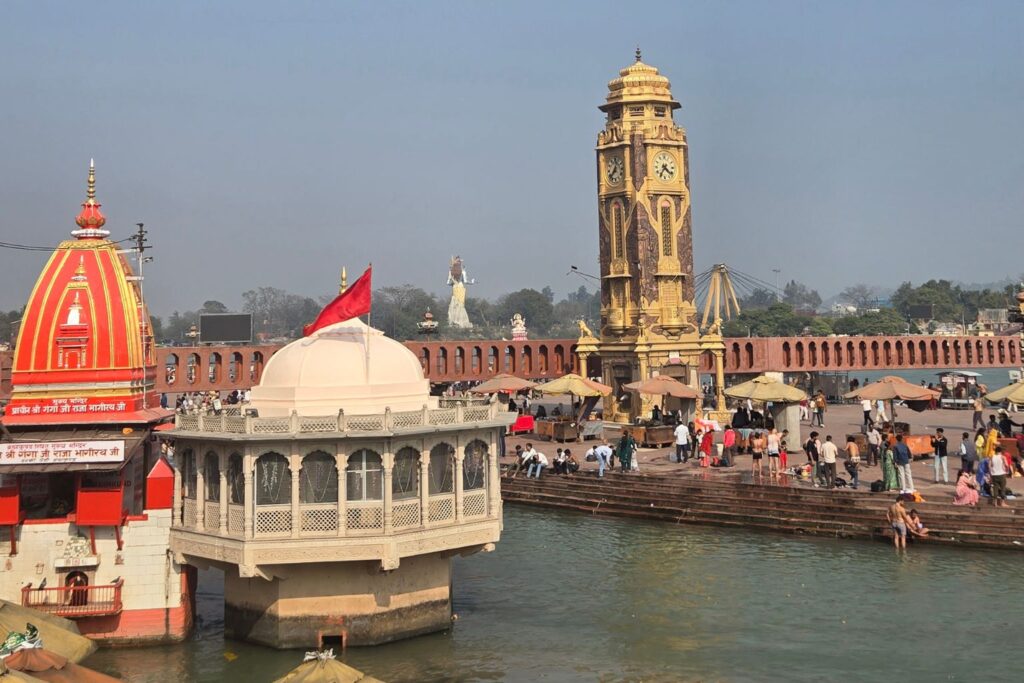
Literally meaning “Footstep of God,” Har Ki Pauri is Haridwar’s holiest ghat and the site of the famous Ganga Aarti every evening at dusk.
Priests swing large fire lamps in synchronised arcs while thousands of devotees release flower-and-diya floats onto the river.
The experience is equal parts spiritual and theatrical — and profoundly moving regardless of faith.
2. Mansa Devi Temple
Perched atop Bilwa Parvat hill, the Mansa Devi Temple is one of the Panch Tirth (five sacred sites) of Haridwar.
Accessible by a scenic ropeway or a steep staircase climb, the temple is dedicated to Goddess Mansa Devi, believed to fulfil the wishes of devoted worshippers.
The panoramic view of Haridwar, the Ganges, and the surrounding hills from the top is spectacular.
3. Chandi Devi Temple
Situated atop Neel Parvat on the opposite side of the city, Chandi Devi Temple is another major Haridwar shrine — also reachable by ropeway.
The combined cable car ride to both Mansa Devi and Chandi Devi is a popular half-day excursion, especially for families.
4. Bara Bazar

Haridwar’s main marketplace is a sensory overload in the best possible way — narrow lanes packed with stalls selling prasad, rudraksha malas, brass idols, Gangajal (sacred Ganges water in copper vessels), and bright festival wear.
Come here to soak in the city’s devout, festive energy and pick up authentic religious souvenirs.
Rishikesh vs Haridwar: Which Is Better?
Haridwar is best for traditional spiritual experiences, sacred rituals, and the famous Ganga Aarti, while Rishikesh is ideal for adventure sports, yoga retreats, riverside cafés, and a calmer mountain atmosphere.
Both are excellent — the better choice depends entirely on what you’re looking for.
Given the short Rishikesh to Haridwar distance, there’s no reason to choose just one. Most travellers explore both on the same trip.
| Feature | Rishikesh | Haridwar |
|---|---|---|
| Atmosphere | Peaceful, adventurous, spiritual | Busy, intensely devotional |
| Best For Adventure | ✅ Excellent | ❌ Very Limited |
| Best For Spirituality | ✅ Strong | ✅ Strongest in India |
| Best For Families | ✅ Yes | ✅ Yes |
| Cafes & Dining | Several excellent options | Very limited |
| Nightlife | Quiet but social | Minimal (alcohol prohibited) |
| Budget Range | Moderate to high | Budget to moderate |
Can You Visit Both in One Trip?
Absolutely — and given the short distance between Rishikesh and Haridwar, it would be a genuine missed opportunity not to.
The two cities sit just 24–25 km apart, meaning you can cover both in a single day or spread them across a comfortable two-day trip.
Suggested 1-Day Itinerary
Start at Har Ki Pauri in Haridwar for a sunrise dip and morning prayers. Take the ropeway up to Mansa Devi Temple, then drive to Rishikesh by late morning.
Spend the afternoon at Lakshman Jhula and the Beatles Ashram. End the evening at the Triveni Ghat Maha Aarti before heading home.
Suggested 2-Day Itinerary
Day 1 – Haridwar: Arrive and check in. Explore Bara Bazar in the afternoon. Attend the Ganga Aarti at Har Ki Pauri at dusk — be there by 5:30 PM to get a good spot. Dinner near the ghat area.
Day 2 – Rishikesh: Leave early (before 8 AM) to beat traffic. Check in near Ram Jhula. Book a morning white water rafting session at Shivpuri. Afternoon: trek to Neer Garh Waterfall or attend a yoga class. Evening Maha Aarti at Triveni Ghat.
Essential Travel Tips
Best Season: October to March offers ideal weather — cool, clear skies and calm river conditions. April to June is manageable but hot.
Avoid July to September if possible: monsoon rains bring landslide risks on mountain roads and all adventure activities are suspended.
Beat the Weekend Rush: Both cities are significantly more crowded on Saturdays and Sundays. If you have flexibility, plan your visit mid-week for a far more relaxed experience at the ghats and key attractions.
Book Ahead During Festivals: Hotels fill up rapidly during Navratri, Diwali, Shivaratri, and the Kanwar Yatra. Book accommodation at least 2–4 weeks in advance during these periods.
In Rishikesh, properties near Lakshman Jhula and Ram Jhula are the most convenient but sell out first.
Carry Cash: Many smaller guesthouses, shared cabs, and riverside eateries in both cities operate on cash only. Keep small denominations handy, especially for bus fares and ghat offerings.
Dress Respectfully: Both cities are deeply religious. Cover your shoulders and knees when visiting temples and ghats. Many sites require you to remove footwear — carry a small bag for your shoes.
FAQ
Yes, the Rishikesh to Haridwar distance is only around 25 km by road, making them neighbouring cities and very easy to visit together on the same trip.
Rishikesh is often considered more scenic because of its green hills, river views, suspension bridges, and peaceful natural setting, while Haridwar is admired more for its spiritual beauty and historic ghats.
A taxi from Rishikesh to Haridwar usually costs around ₹1,000 to ₹2,000 depending on vehicle type, season, and booking method.
Yes, both cities are close to each other, so you can visit Haridwar and Rishikesh in one day, though staying longer lets you enjoy both properly.
Early morning before 8 AM is strongly recommended year-round — traffic is light, the air is cool, and you’ll arrive in time for morning prayers or aarti at whichever destination you visit first.
Conclusion
The Rishikesh to Haridwar distance is just 24–25 km — a journey of under an hour that bridges two entirely different worlds.
Haridwar holds the profound stillness of ancient Hindu devotion, unchanged over centuries. Rishikesh pulses with the energy of yoga, adventure, and a younger, more global spiritual seeking.
Together, they form one of India’s most complete and complementary travel experiences. There is genuinely no reason to choose one over the other.
Visit both, linger on the ghats at dusk, breathe in the mountain air, and let the Ganges — cold, green, and endlessly moving — do the rest.